
Recent from talks
Rudolf Otto
Knowledge base stats:
Talk channels stats:
Members stats:
Rudolf Otto
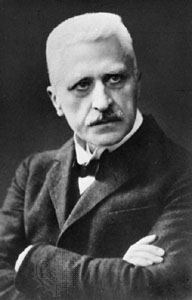
Rudolf Otto (25 September 1869 – 7 March 1937) was a German Lutheran theologian, philosopher, and comparative religionist. He is regarded as one of the most influential scholars of religion in the early twentieth century and is best known for his concept of the numinous, a profound emotional experience he argued was at the heart of the world's religions. While his work started in the domain of liberal Christian theology, its main thrust was always apologetical, seeking to defend religion against naturalist critiques, making him a more conservative figure. Otto eventually came to conceive of his work as part of a science of religion, which was divided into the philosophy of religion, the history of religion, and the psychology of religion.
Born in Peine near Hanover, Otto was raised in a pious Christian family. He attended the Gymnasium Andreanum in Hildesheim and studied at the universities of Erlangen and Göttingen, where he wrote his dissertation on Martin Luther's understanding of the Holy Spirit (Die Anschauung von heiligen Geiste bei Luther: Eine historisch-dogmatische Untersuchung), and his habilitation on Kant (Naturalistische und religiöse Weltansicht). By 1906, he held a position as extraordinary professor, and in 1910 he received an honorary doctorate from the University of Giessen.
Otto's fascination with non-Christian religions was awakened during an extended trip from 1911 to 1912 through North Africa, Palestine, British India, China, Japan, and the United States. He cited a 1911 visit to a Moroccan synagogue as a key inspiration for the theme of the Holy he would later develop. Otto became a member of the Prussian parliament in 1913 and retained this position through the First World War. In 1917, he spearheaded an effort to simplify the system of weighting votes in Prussian elections. He then served in the post-war constituent assembly in 1918, and remained involved in the politics of the Weimar Republic.
Meanwhile, in 1915, he became ordinary professor at the University of Breslau, and in 1917, at the University of Marburg's Divinity School, then one of the most famous Protestant seminaries in the world. Although he received several other calls, he remained in Marburg for the rest of his life. He retired in 1929 but continued writing afterward. On 6 March 1937, he died of pneumonia, after suffering serious injuries falling about twenty meters from a tower in October 1936. There were lasting rumors that the fall was a suicide attempt but this has never been confirmed. He is buried in the Marburg cemetery.
In his early years Otto was most influenced by the German idealist theologian and philosopher Friedrich Schleiermacher and his conceptualization of the category of the religious as a type of emotion or consciousness irreducible to ethical or rational epistemologies. In this, Otto saw Schleiermacher as having recaptured a sense of holiness lost in the Age of Enlightenment. Schleiermacher described this religious feeling as one of absolute dependence; Otto eventually rejected this characterization as too closely analogous to earthly dependence and emphasized the complete otherness of the religious feeling from the mundane world (see below). In 1904, while a student at the University of Göttingen, Otto became a proponent of the philosophy of Jakob Fries along with two fellow students.
Otto's first book, Naturalism and Religion (1904) divides the world ontologically into the mental and the physical, a position reflecting Cartesian dualism. Otto argues consciousness cannot be explained in terms of physical or neural processes, and also accords it epistemological primacy by arguing all knowledge of the physical world is mediated by personal experience. On the other hand, he disagrees with Descartes' characterization of the mental as a rational realm, positing instead that rationality is built upon a nonrational intuitive realm.
In 1909, he published his next book, The Philosophy of Religion Based on Kant and Fries, in which he examines the thought of Kant and Fries and from there attempts to build a philosophical framework within which religious experience can take place. While Kant's philosophy said thought occurred in a rational domain, Fries diverged and said it also occurred in practical and aesthetic domains; Otto pursued Fries' line of thinking further and suggested another nonrational domain of the thought, the religious. He felt intuition was valuable in rational domains like mathematics, but subject to the corrective of reason, whereas religious intuitions might not be subject to that corrective.
These two early works were influenced by the rationalist approaches of Immanuel Kant and Jakob Fries. Otto stated that they focused on the rational aspects of the divine (the "Ratio aeterna") whereas his next (and most influential) book focused on the nonrational aspects of the divine.
Hub AI
Rudolf Otto AI simulator
(@Rudolf Otto_simulator)
Rudolf Otto
Rudolf Otto (25 September 1869 – 7 March 1937) was a German Lutheran theologian, philosopher, and comparative religionist. He is regarded as one of the most influential scholars of religion in the early twentieth century and is best known for his concept of the numinous, a profound emotional experience he argued was at the heart of the world's religions. While his work started in the domain of liberal Christian theology, its main thrust was always apologetical, seeking to defend religion against naturalist critiques, making him a more conservative figure. Otto eventually came to conceive of his work as part of a science of religion, which was divided into the philosophy of religion, the history of religion, and the psychology of religion.
Born in Peine near Hanover, Otto was raised in a pious Christian family. He attended the Gymnasium Andreanum in Hildesheim and studied at the universities of Erlangen and Göttingen, where he wrote his dissertation on Martin Luther's understanding of the Holy Spirit (Die Anschauung von heiligen Geiste bei Luther: Eine historisch-dogmatische Untersuchung), and his habilitation on Kant (Naturalistische und religiöse Weltansicht). By 1906, he held a position as extraordinary professor, and in 1910 he received an honorary doctorate from the University of Giessen.
Otto's fascination with non-Christian religions was awakened during an extended trip from 1911 to 1912 through North Africa, Palestine, British India, China, Japan, and the United States. He cited a 1911 visit to a Moroccan synagogue as a key inspiration for the theme of the Holy he would later develop. Otto became a member of the Prussian parliament in 1913 and retained this position through the First World War. In 1917, he spearheaded an effort to simplify the system of weighting votes in Prussian elections. He then served in the post-war constituent assembly in 1918, and remained involved in the politics of the Weimar Republic.
Meanwhile, in 1915, he became ordinary professor at the University of Breslau, and in 1917, at the University of Marburg's Divinity School, then one of the most famous Protestant seminaries in the world. Although he received several other calls, he remained in Marburg for the rest of his life. He retired in 1929 but continued writing afterward. On 6 March 1937, he died of pneumonia, after suffering serious injuries falling about twenty meters from a tower in October 1936. There were lasting rumors that the fall was a suicide attempt but this has never been confirmed. He is buried in the Marburg cemetery.
In his early years Otto was most influenced by the German idealist theologian and philosopher Friedrich Schleiermacher and his conceptualization of the category of the religious as a type of emotion or consciousness irreducible to ethical or rational epistemologies. In this, Otto saw Schleiermacher as having recaptured a sense of holiness lost in the Age of Enlightenment. Schleiermacher described this religious feeling as one of absolute dependence; Otto eventually rejected this characterization as too closely analogous to earthly dependence and emphasized the complete otherness of the religious feeling from the mundane world (see below). In 1904, while a student at the University of Göttingen, Otto became a proponent of the philosophy of Jakob Fries along with two fellow students.
Otto's first book, Naturalism and Religion (1904) divides the world ontologically into the mental and the physical, a position reflecting Cartesian dualism. Otto argues consciousness cannot be explained in terms of physical or neural processes, and also accords it epistemological primacy by arguing all knowledge of the physical world is mediated by personal experience. On the other hand, he disagrees with Descartes' characterization of the mental as a rational realm, positing instead that rationality is built upon a nonrational intuitive realm.
In 1909, he published his next book, The Philosophy of Religion Based on Kant and Fries, in which he examines the thought of Kant and Fries and from there attempts to build a philosophical framework within which religious experience can take place. While Kant's philosophy said thought occurred in a rational domain, Fries diverged and said it also occurred in practical and aesthetic domains; Otto pursued Fries' line of thinking further and suggested another nonrational domain of the thought, the religious. He felt intuition was valuable in rational domains like mathematics, but subject to the corrective of reason, whereas religious intuitions might not be subject to that corrective.
These two early works were influenced by the rationalist approaches of Immanuel Kant and Jakob Fries. Otto stated that they focused on the rational aspects of the divine (the "Ratio aeterna") whereas his next (and most influential) book focused on the nonrational aspects of the divine.
Recent media