
Recent from talks
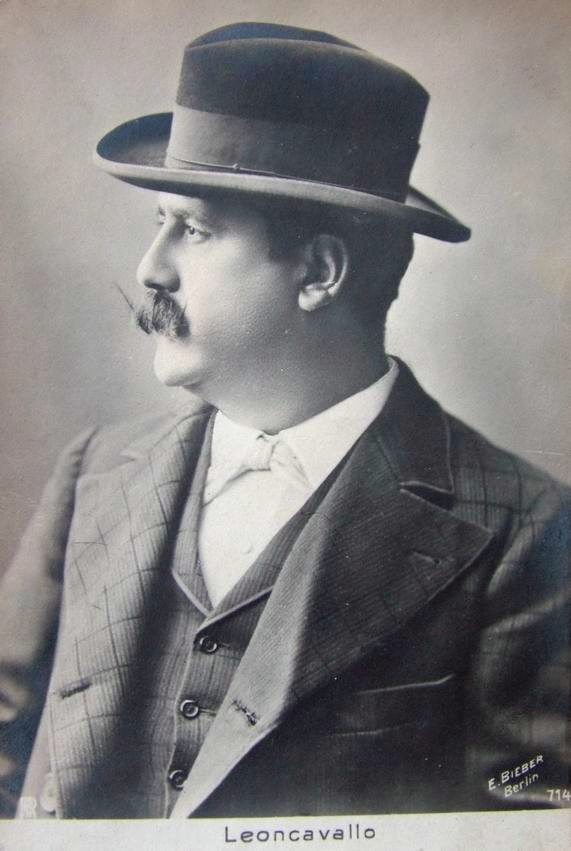
Ruggero Leoncavallo
Knowledge base stats:
Talk channels stats:
Members stats:
Ruggero Leoncavallo
Ruggero (or Ruggiero) Leoncavallo (23 April 1857 – 9 August 1919) was an Italian opera composer and librettist. Throughout his career, Leoncavallo produced numerous operas and songs, but it is his 1892 opera Pagliacci that remained his lasting contribution, despite attempts to escape the shadow of his greatest success.
Today Pagliacci continues to be his most famous opera and one of the most popular and frequently performed works in the operatic repertory. His other notable compositions include the song "Mattinata", popularized by Enrico Caruso, and, to a lesser extent, his version of La bohème which, however, was overshadowed by Puccini's highly successful opera of the same name.
The son of Vincenzo Leoncavallo, a police magistrate and judge, Leoncavallo was born in Naples, Kingdom of the Two Sicilies, on 23 April 1857.
As a child, Leoncavallo moved with his father to the town of Montalto Uffugo in Calabria, where he lived during his adolescence. In 1868 he returned to Naples, where he eventually became a student at San Pietro a Majella Conservatory. From 1876 to 1877, he studied literature under the famed Italian poet Giosuè Carducci at the University of Bologna. He also lived in Potenza, since 1876 until 1878.
In 1879, Leoncavallo's uncle Giuseppe, director of the press department at the Foreign Ministry in Egypt, suggested that his young nephew come to Cairo to showcase his pianistic abilities. Ruggero Leoncavallo arrived in Egypt shortly after the Ottoman Sultan Abdul Hamid II had deposed Khedive Ismail (June 1879) and replaced him as Khedive of Egypt with Ismail's son Tewfik Pasha. Mahmud Hamdi Pasha (1863–1921), the teenage brother of the new Khedive, appointed Ruggero Leoncavallo "as his private musician". His time in Egypt concluded abruptly in mid-1882, as the British intervened in the Urabi revolt of 1879–1882 in Alexandria and Cairo led by Ahmed Urabi; the composer fled and travelled to France. In Paris, Leoncavallo found lodging in Montmartre.
An agent located in the Rue du Faubourg-Saint-Denis secured Leoncavallo employment as an accompanist and instructor for artists who performed in Sunday concerts mostly at cafés. In Paris, Leoncavallo met the singer Berthe Rambaud (1869–1926) who became his "preferred student"; they became partners in Paris in 1888 and married in Milan in 1895. Increasingly inspired by the French romantics, particularly Alfred de Musset, Leoncavallo began work on a symphonic poem based on Musset's poetry entitled La nuit de mai. The work was completed in Paris in 1886 and premiered in April 1887 to critical acclaim. With this success, and now with enough accumulated money, in 1888 Leoncavallo moved to Milan with Rambaud.
Back in Italy, Leoncavallo spent some years teaching and attempting ineffectively to obtain the production of more than one opera, notably Chatterton. In 1890 he saw the enormous success of Pietro Mascagni's Cavalleria rusticana and wasted no time in producing his own verismo work, Pagliacci. (According to Leoncavallo, the plot of this work had a real-life origin: he claimed it derived from a murder trial in Montalto Uffugo, over which his father had presided.)
Pagliacci was performed in Milan in 1892 with immediate success; today it is the only work by Leoncavallo in the standard operatic repertory. Its most famous aria, "Vesti la giubba" ("Put on the costume" or, in the better-known older translation, "On with the motley"), was recorded by Enrico Caruso and laid claim to being the world's first record to sell a million copies (although this is probably a total of Caruso's various versions of it, made in 1902, 1904 and 1907).
Hub AI
Ruggero Leoncavallo AI simulator
(@Ruggero Leoncavallo_simulator)
Ruggero Leoncavallo
Ruggero (or Ruggiero) Leoncavallo (23 April 1857 – 9 August 1919) was an Italian opera composer and librettist. Throughout his career, Leoncavallo produced numerous operas and songs, but it is his 1892 opera Pagliacci that remained his lasting contribution, despite attempts to escape the shadow of his greatest success.
Today Pagliacci continues to be his most famous opera and one of the most popular and frequently performed works in the operatic repertory. His other notable compositions include the song "Mattinata", popularized by Enrico Caruso, and, to a lesser extent, his version of La bohème which, however, was overshadowed by Puccini's highly successful opera of the same name.
The son of Vincenzo Leoncavallo, a police magistrate and judge, Leoncavallo was born in Naples, Kingdom of the Two Sicilies, on 23 April 1857.
As a child, Leoncavallo moved with his father to the town of Montalto Uffugo in Calabria, where he lived during his adolescence. In 1868 he returned to Naples, where he eventually became a student at San Pietro a Majella Conservatory. From 1876 to 1877, he studied literature under the famed Italian poet Giosuè Carducci at the University of Bologna. He also lived in Potenza, since 1876 until 1878.
In 1879, Leoncavallo's uncle Giuseppe, director of the press department at the Foreign Ministry in Egypt, suggested that his young nephew come to Cairo to showcase his pianistic abilities. Ruggero Leoncavallo arrived in Egypt shortly after the Ottoman Sultan Abdul Hamid II had deposed Khedive Ismail (June 1879) and replaced him as Khedive of Egypt with Ismail's son Tewfik Pasha. Mahmud Hamdi Pasha (1863–1921), the teenage brother of the new Khedive, appointed Ruggero Leoncavallo "as his private musician". His time in Egypt concluded abruptly in mid-1882, as the British intervened in the Urabi revolt of 1879–1882 in Alexandria and Cairo led by Ahmed Urabi; the composer fled and travelled to France. In Paris, Leoncavallo found lodging in Montmartre.
An agent located in the Rue du Faubourg-Saint-Denis secured Leoncavallo employment as an accompanist and instructor for artists who performed in Sunday concerts mostly at cafés. In Paris, Leoncavallo met the singer Berthe Rambaud (1869–1926) who became his "preferred student"; they became partners in Paris in 1888 and married in Milan in 1895. Increasingly inspired by the French romantics, particularly Alfred de Musset, Leoncavallo began work on a symphonic poem based on Musset's poetry entitled La nuit de mai. The work was completed in Paris in 1886 and premiered in April 1887 to critical acclaim. With this success, and now with enough accumulated money, in 1888 Leoncavallo moved to Milan with Rambaud.
Back in Italy, Leoncavallo spent some years teaching and attempting ineffectively to obtain the production of more than one opera, notably Chatterton. In 1890 he saw the enormous success of Pietro Mascagni's Cavalleria rusticana and wasted no time in producing his own verismo work, Pagliacci. (According to Leoncavallo, the plot of this work had a real-life origin: he claimed it derived from a murder trial in Montalto Uffugo, over which his father had presided.)
Pagliacci was performed in Milan in 1892 with immediate success; today it is the only work by Leoncavallo in the standard operatic repertory. Its most famous aria, "Vesti la giubba" ("Put on the costume" or, in the better-known older translation, "On with the motley"), was recorded by Enrico Caruso and laid claim to being the world's first record to sell a million copies (although this is probably a total of Caruso's various versions of it, made in 1902, 1904 and 1907).
Recent media