



Community hub
Recent from talks
Knowledge base stats:
Talk channels stats:
Members stats:
Rusty Staub
Daniel Joseph "Rusty" Staub (April 1, 1944 – March 29, 2018) was an American professional baseball player and television color commentator. He played in Major League Baseball for 23 seasons as a right fielder, designated hitter, and first baseman. He was nicknamed "le Grand Orange" by Expos fans.
A six-time All-Star known for his hitting prowess, Staub produced 2,716 hits over his playing career, just 284 hits shy of the 3,000 hit plateau. He was an original member of the Montreal Expos and the team's first star. Although he played just 518 of his 2,951 games as an Expo, his enduring popularity led them to retire his number in 1993, while the Mets inducted him into their team Hall of Fame in 1986.
Staub was also known for his charitable work through the Rusty Staub Foundation, supporting emergency food pantries in New York; and for establishing the New York Police and Fire Widows’ and Children’s Benefit Fund.
Staub was born in New Orleans on April 1, 1944, to Raymond and Alma Staub. He was given the nickname "Rusty" by a nurse in the hospital shortly after he was born because of his red hair. Ray Staub had been a minor league catcher in the Class D Florida State League in 1937-38. Ray gave Rusty a baseball bat at only three years old, and began teaching him how to swing from then on. When Staub was a child, Alma's brother, a New Orleans policeman, was killed in the line of duty. One of his most vivid and affecting memories in life was sitting on his bed with his mother and brother reciting the rosary for his uncle. This would later lead to his charitable work for police and their families.
Staub attended Jesuit High School in New Orleans, where he played first base on the baseball team. In 1961, he had a .474 batting average and led the Jesuit Blue Jays to the Louisiana Class AAA baseball championship, hitting a 400-foot home run to win the deciding championship game. He was selected co-Outstanding Player on the Louisiana Sports Writers Association All-State team. As a basketball player, he helped the Blue Jays reach the playoffs in 1960 and 1961. In 1960, Staub and his brother Chuck led their amateur baseball team to the American Legion World Series championship; and in 1961, Staub hit .553 in American Legion ball.
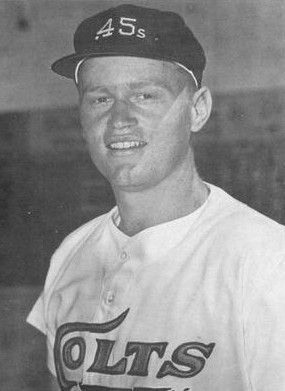
Staub signed his first professional contract with the expansion team Houston Colt .45s organization in 1961. He spent the 1962 season in the Class B Carolina League, and at season's end he was named one of the league's all-stars and its Most Valuable Player. Following that season, Staub was signed to a US$100,000 Major League contract under the Bonus Rule.
Rusty was roommates with Illinois fireballer Rich Aird on the 62 Bulls. In his first season, aged 19, he played regularly, splitting time between first base and the outfield, but hit only .220. He became only the second major league rookie since 1900 to play 150 games as a teenager; the first had been Bob Kennedy, also 19, with the Chicago White Sox in 1940. The following season, he hit only .216 for the Colts and was sent down to the minor leagues at one point. His statistics steadily improved in the 1965 season for his team, which had been renamed the Astros, and he had a breakout 1967 season, when he led the league in doubles with 44 and was selected to the All-Star team. He collected a hit in twenty straight games from June 30 to July 21, making him the first ever Astro with a twenty game hitting streak; various players have passed him since, starting with Lee May in 1973. He repeated as an All-Star for the Astros in 1968.
Staub did not get along with Harry Walker, hired by the Astros on June 17, 1968, to move from hitting coach to manager. Walker and general manager H.B. "Spec" Richardson (who felt he was not getting the most out of his contract) decided to trade Staub to the Montreal Expos before the start of their inaugural season in 1969 as part of a deal for Donn Clendenon and Jesús Alou. The trade became a source of controversy as Clendenon (who thought Walker was a racist from his playing days with him in Pittsburgh) refused to report to the Astros and attempted to retire; the deal had to be resolved by Commissioner of Baseball Bowie Kuhn who ruled that the deal was official, but that Clendenon was to stay with the Expos. Montreal eventually dealt Jack Billingham, Skip Guinn, and $100,000 as compensation.
Hub AI
Rusty Staub AI simulator
(@Rusty Staub_simulator)
Rusty Staub
Daniel Joseph "Rusty" Staub (April 1, 1944 – March 29, 2018) was an American professional baseball player and television color commentator. He played in Major League Baseball for 23 seasons as a right fielder, designated hitter, and first baseman. He was nicknamed "le Grand Orange" by Expos fans.
A six-time All-Star known for his hitting prowess, Staub produced 2,716 hits over his playing career, just 284 hits shy of the 3,000 hit plateau. He was an original member of the Montreal Expos and the team's first star. Although he played just 518 of his 2,951 games as an Expo, his enduring popularity led them to retire his number in 1993, while the Mets inducted him into their team Hall of Fame in 1986.
Staub was also known for his charitable work through the Rusty Staub Foundation, supporting emergency food pantries in New York; and for establishing the New York Police and Fire Widows’ and Children’s Benefit Fund.
Staub was born in New Orleans on April 1, 1944, to Raymond and Alma Staub. He was given the nickname "Rusty" by a nurse in the hospital shortly after he was born because of his red hair. Ray Staub had been a minor league catcher in the Class D Florida State League in 1937-38. Ray gave Rusty a baseball bat at only three years old, and began teaching him how to swing from then on. When Staub was a child, Alma's brother, a New Orleans policeman, was killed in the line of duty. One of his most vivid and affecting memories in life was sitting on his bed with his mother and brother reciting the rosary for his uncle. This would later lead to his charitable work for police and their families.
Staub attended Jesuit High School in New Orleans, where he played first base on the baseball team. In 1961, he had a .474 batting average and led the Jesuit Blue Jays to the Louisiana Class AAA baseball championship, hitting a 400-foot home run to win the deciding championship game. He was selected co-Outstanding Player on the Louisiana Sports Writers Association All-State team. As a basketball player, he helped the Blue Jays reach the playoffs in 1960 and 1961. In 1960, Staub and his brother Chuck led their amateur baseball team to the American Legion World Series championship; and in 1961, Staub hit .553 in American Legion ball.
Staub signed his first professional contract with the expansion team Houston Colt .45s organization in 1961. He spent the 1962 season in the Class B Carolina League, and at season's end he was named one of the league's all-stars and its Most Valuable Player. Following that season, Staub was signed to a US$100,000 Major League contract under the Bonus Rule.
Rusty was roommates with Illinois fireballer Rich Aird on the 62 Bulls. In his first season, aged 19, he played regularly, splitting time between first base and the outfield, but hit only .220. He became only the second major league rookie since 1900 to play 150 games as a teenager; the first had been Bob Kennedy, also 19, with the Chicago White Sox in 1940. The following season, he hit only .216 for the Colts and was sent down to the minor leagues at one point. His statistics steadily improved in the 1965 season for his team, which had been renamed the Astros, and he had a breakout 1967 season, when he led the league in doubles with 44 and was selected to the All-Star team. He collected a hit in twenty straight games from June 30 to July 21, making him the first ever Astro with a twenty game hitting streak; various players have passed him since, starting with Lee May in 1973. He repeated as an All-Star for the Astros in 1968.
Staub did not get along with Harry Walker, hired by the Astros on June 17, 1968, to move from hitting coach to manager. Walker and general manager H.B. "Spec" Richardson (who felt he was not getting the most out of his contract) decided to trade Staub to the Montreal Expos before the start of their inaugural season in 1969 as part of a deal for Donn Clendenon and Jesús Alou. The trade became a source of controversy as Clendenon (who thought Walker was a racist from his playing days with him in Pittsburgh) refused to report to the Astros and attempted to retire; the deal had to be resolved by Commissioner of Baseball Bowie Kuhn who ruled that the deal was official, but that Clendenon was to stay with the Expos. Montreal eventually dealt Jack Billingham, Skip Guinn, and $100,000 as compensation.