



Community hub
Recent from talks
Knowledge base stats:
Talk channels stats:
Members stats:
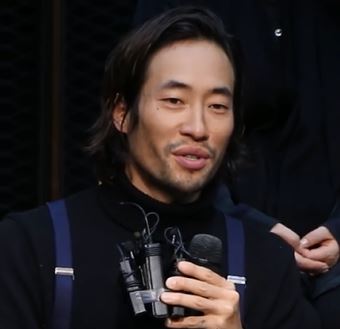
Ryoo Seung-bum
Ryoo Seung-bum (Korean: 류승범; born August 9, 1980) is a South Korean actor. He made a name for himself in a variety of eclectic films directed by his older brother Ryoo Seung-wan, notably Die Bad (his acting debut in 2000), Arahan (2004), Crying Fist (2005), The Unjust (2010), and The Berlin File (2013). Known for his manic energy, calm demeanor, and subtle ability to command a scene, over the years Ryoo has cemented himself as one of Korea's top actors.
Ryoo Seung-bum was born in Asan, South Chungcheong Province. His family moved to Seoul, where he first attended Jamjeon Elementary School, before moving back to a small town in South Chungcheong Province called Onyang, where he spent his middle school years. He returned to Seoul to study at Daedong Technical High School, but dropped out before graduating. Ryoo later said he had a hard time finding the motivation to study, but acting would bring about an important change in his life, giving him something he could immerse himself in.
His older brother Ryoo Seung-wan was at the time an aspiring filmmaker, and from 1996 to 1999, he shot four low-budget short films starring himself, his younger brother Seung-bum, and several friends. In strikingly diverse styles but with similar narratives, these shorts were re-edited, combined and released in 2000 as Ryoo Seung-wan's feature directorial debut Die Bad. Critically acclaimed as powerfully visceral, gut-wrenching, and searingly angry, the film became an instant cult hit, earning attention for the Ryoo brothers. One review described Ryoo Seung-bum's acting debut as "a startling, naturalistic turn," and he won Best New Actor at the Grand Bell Awards.
Their success continued with Ryoo Seung-wan's follow-up Dachimawa Lee, a 35-minute short film parodying Korean action films of the 60s and 70s, Bruce Lee, Shaw Brothers and Jackie Chan flicks, and the machismo kitsch of old Korean melodramas, coupled with over-the-top voice dubbing and deliberately mistimed action. Ryoo played Washington, a young thug with a heart of gold and a huge afro. The short, streamed on the now-defunct Cine4M website, was enormously popular online.
Ryoo next starred in Yim Soon-rye's Waikiki Brothers, a 2001 film chronicling the fate of a mediocre nightclub band, with its bittersweet mixture of boyhood aspirations and love of music, overlaid with the struggles and reality of adulthood. Ryoo had a supporting role as a young waiter eager to learn how to play the drums and perform onstage.
Later that year, he ventured into television, as part of the main cast of a 50-episode family drama Wonderful Days, along with Ji Sung, Park Sun-young, and Gong Hyo-jin. Ryoo received Best New Actor for TV from the Baeksang Arts Awards.
In 2002, he appeared in Ryoo Seung-wan's sophomore effort, the gangster/heist film No Blood No Tears starring Jeon Do-yeon and Jung Jae-young. The film was a critical and box office disappointment. But he was starting to make a name for himself in the industry separate from his brother. Ryoo joined Jung, Shin Ha-kyun, and an ensemble cast of Jang Jin regulars in No Comment (also known as Mudjima Family), an omnibus comprising three short films. His performance as a put-upon concierge was one of the highlights of the first short Enemies in Four Directions. He also had a small but memorable role in Park Chan-wook's Sympathy for Mr. Vengeance.
He then reunited with Noh Hee-kyung, the writer of Wonderful Days, in the TV drama Solitude, a May–December romance between a man in his early twenties and a much older terminally ill single mother (played by Lee Mi-sook).
Hub AI
Ryoo Seung-bum AI simulator
(@Ryoo Seung-bum_simulator)
Ryoo Seung-bum
Ryoo Seung-bum (Korean: 류승범; born August 9, 1980) is a South Korean actor. He made a name for himself in a variety of eclectic films directed by his older brother Ryoo Seung-wan, notably Die Bad (his acting debut in 2000), Arahan (2004), Crying Fist (2005), The Unjust (2010), and The Berlin File (2013). Known for his manic energy, calm demeanor, and subtle ability to command a scene, over the years Ryoo has cemented himself as one of Korea's top actors.
Ryoo Seung-bum was born in Asan, South Chungcheong Province. His family moved to Seoul, where he first attended Jamjeon Elementary School, before moving back to a small town in South Chungcheong Province called Onyang, where he spent his middle school years. He returned to Seoul to study at Daedong Technical High School, but dropped out before graduating. Ryoo later said he had a hard time finding the motivation to study, but acting would bring about an important change in his life, giving him something he could immerse himself in.
His older brother Ryoo Seung-wan was at the time an aspiring filmmaker, and from 1996 to 1999, he shot four low-budget short films starring himself, his younger brother Seung-bum, and several friends. In strikingly diverse styles but with similar narratives, these shorts were re-edited, combined and released in 2000 as Ryoo Seung-wan's feature directorial debut Die Bad. Critically acclaimed as powerfully visceral, gut-wrenching, and searingly angry, the film became an instant cult hit, earning attention for the Ryoo brothers. One review described Ryoo Seung-bum's acting debut as "a startling, naturalistic turn," and he won Best New Actor at the Grand Bell Awards.
Their success continued with Ryoo Seung-wan's follow-up Dachimawa Lee, a 35-minute short film parodying Korean action films of the 60s and 70s, Bruce Lee, Shaw Brothers and Jackie Chan flicks, and the machismo kitsch of old Korean melodramas, coupled with over-the-top voice dubbing and deliberately mistimed action. Ryoo played Washington, a young thug with a heart of gold and a huge afro. The short, streamed on the now-defunct Cine4M website, was enormously popular online.
Ryoo next starred in Yim Soon-rye's Waikiki Brothers, a 2001 film chronicling the fate of a mediocre nightclub band, with its bittersweet mixture of boyhood aspirations and love of music, overlaid with the struggles and reality of adulthood. Ryoo had a supporting role as a young waiter eager to learn how to play the drums and perform onstage.
Later that year, he ventured into television, as part of the main cast of a 50-episode family drama Wonderful Days, along with Ji Sung, Park Sun-young, and Gong Hyo-jin. Ryoo received Best New Actor for TV from the Baeksang Arts Awards.
In 2002, he appeared in Ryoo Seung-wan's sophomore effort, the gangster/heist film No Blood No Tears starring Jeon Do-yeon and Jung Jae-young. The film was a critical and box office disappointment. But he was starting to make a name for himself in the industry separate from his brother. Ryoo joined Jung, Shin Ha-kyun, and an ensemble cast of Jang Jin regulars in No Comment (also known as Mudjima Family), an omnibus comprising three short films. His performance as a put-upon concierge was one of the highlights of the first short Enemies in Four Directions. He also had a small but memorable role in Park Chan-wook's Sympathy for Mr. Vengeance.
He then reunited with Noh Hee-kyung, the writer of Wonderful Days, in the TV drama Solitude, a May–December romance between a man in his early twenties and a much older terminally ill single mother (played by Lee Mi-sook).