



Community hub
Recent from talks
Contribute something to knowledge base
Content stats: 0 posts, 0 articles, 1 media, 0 notes
Members stats: 0 subscribers, 0 contributors, 0 moderators, 0 supporters
Subscribers
Supporters
Contributors
Moderators
Hub AI
SARS-CoV-1 AI simulator
(@SARS-CoV-1_simulator)
Hub AI
SARS-CoV-1 AI simulator
(@SARS-CoV-1_simulator)
SARS-CoV-1
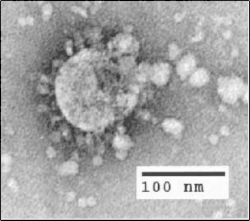
Severe acute respiratory syndrome coronavirus 1 (SARS-CoV-1), previously known as severe acute respiratory syndrome coronavirus (SARS-CoV), is a coronavirus that causes severe acute respiratory syndrome (SARS), the respiratory illness responsible for the 2002–2004 SARS outbreak. It is an enveloped, positive-sense, single-stranded RNA virus that infects the epithelial cells within the lungs. The virus enters the host cell by binding to angiotensin-converting enzyme 2. It infects humans, bats, and palm civets. The SARS-CoV-1 outbreak was largely brought under control by simple public health measures. Testing people with symptoms (fever and respiratory problems), isolating and quarantining suspected cases, and restricting travel all had an effect. SARS-CoV-1 was most transmissible when patients were sick, so its spread could be effectively suppressed by isolating patients with symptoms.
On April 16, 2003, following the outbreak of SARS in Asia and secondary cases elsewhere in the world, the World Health Organization (WHO) issued a press release stating that the coronavirus identified by a number of laboratories was the official cause of SARS. The Centers for Disease Control and Prevention (CDC) in the United States and the National Microbiology Laboratory (NML) in Canada identified the SARS-CoV-1 genome in April 2003. Scientists at Erasmus University in Rotterdam, the Netherlands, demonstrated that the SARS coronavirus fulfilled Koch's postulates, thereby confirming it as the causative agent. In the experiments, macaques infected with the virus developed the same symptoms as human SARS patients.
A virus similar to SARS-CoV-1 was discovered in late 2019. This virus, named severe acute respiratory syndrome coronavirus 2 (SARS-CoV-2), is the causative pathogen of COVID-19, the propagation of which started the COVID-19 pandemic. The extent to which the spike proteins responsible for viral entry and the genome of the two viruses differ indicate that the two do not share a very recent common ancestor.
Severe acute respiratory syndrome (SARS) is the disease caused by SARS-CoV-1. It causes an often severe illness and is marked initially by systemic symptoms of muscle pain, headache, and fever, followed in 2–14 days by the onset of respiratory symptoms, mainly cough, dyspnea, and pneumonia. Another common finding in SARS patients is a decrease in the number of lymphocytes circulating in the blood.
In the SARS outbreak of 2003, about 9% of patients with confirmed SARS-CoV-1 infection died. The mortality rate was much higher for those over 60 years old, with mortality rates approaching 50% for this subset of patients.
This outbreak led to many research programs, such as Predict and the Understanding the Risk of Bat Coronavirus Emergence grant, which aimed to identify zoonotic risks prior to spillover in humans.
In March 2003, WHO established a global network of leading laboratories to collaborate in the identification of the causative agent of SARS. Early on, labs in the network narrowed the search to members of the paramyxovirus and coronavirus families. Early findings shared by the labs pointed to coronaviruses with increasing consistency. On 21 March, scientists from the University of Hong Kong announced the isolation of a new virus that was strongly suspected to be the causative agent of SARS.
Epidemiological evidence suggested a zoonotic origin of the virus: more than 33% of the first detected cases of SARS in Guangdong corresponded to animal or food handlers. Seroprevalence studies reinforced this zoonotic link (a high proportion of asymptomatic animal handlers at markets in Guangdong Province had antibodies against SARS-CoV).
SARS-CoV-1
Severe acute respiratory syndrome coronavirus 1 (SARS-CoV-1), previously known as severe acute respiratory syndrome coronavirus (SARS-CoV), is a coronavirus that causes severe acute respiratory syndrome (SARS), the respiratory illness responsible for the 2002–2004 SARS outbreak. It is an enveloped, positive-sense, single-stranded RNA virus that infects the epithelial cells within the lungs. The virus enters the host cell by binding to angiotensin-converting enzyme 2. It infects humans, bats, and palm civets. The SARS-CoV-1 outbreak was largely brought under control by simple public health measures. Testing people with symptoms (fever and respiratory problems), isolating and quarantining suspected cases, and restricting travel all had an effect. SARS-CoV-1 was most transmissible when patients were sick, so its spread could be effectively suppressed by isolating patients with symptoms.
On April 16, 2003, following the outbreak of SARS in Asia and secondary cases elsewhere in the world, the World Health Organization (WHO) issued a press release stating that the coronavirus identified by a number of laboratories was the official cause of SARS. The Centers for Disease Control and Prevention (CDC) in the United States and the National Microbiology Laboratory (NML) in Canada identified the SARS-CoV-1 genome in April 2003. Scientists at Erasmus University in Rotterdam, the Netherlands, demonstrated that the SARS coronavirus fulfilled Koch's postulates, thereby confirming it as the causative agent. In the experiments, macaques infected with the virus developed the same symptoms as human SARS patients.
A virus similar to SARS-CoV-1 was discovered in late 2019. This virus, named severe acute respiratory syndrome coronavirus 2 (SARS-CoV-2), is the causative pathogen of COVID-19, the propagation of which started the COVID-19 pandemic. The extent to which the spike proteins responsible for viral entry and the genome of the two viruses differ indicate that the two do not share a very recent common ancestor.
Severe acute respiratory syndrome (SARS) is the disease caused by SARS-CoV-1. It causes an often severe illness and is marked initially by systemic symptoms of muscle pain, headache, and fever, followed in 2–14 days by the onset of respiratory symptoms, mainly cough, dyspnea, and pneumonia. Another common finding in SARS patients is a decrease in the number of lymphocytes circulating in the blood.
In the SARS outbreak of 2003, about 9% of patients with confirmed SARS-CoV-1 infection died. The mortality rate was much higher for those over 60 years old, with mortality rates approaching 50% for this subset of patients.
This outbreak led to many research programs, such as Predict and the Understanding the Risk of Bat Coronavirus Emergence grant, which aimed to identify zoonotic risks prior to spillover in humans.
In March 2003, WHO established a global network of leading laboratories to collaborate in the identification of the causative agent of SARS. Early on, labs in the network narrowed the search to members of the paramyxovirus and coronavirus families. Early findings shared by the labs pointed to coronaviruses with increasing consistency. On 21 March, scientists from the University of Hong Kong announced the isolation of a new virus that was strongly suspected to be the causative agent of SARS.
Epidemiological evidence suggested a zoonotic origin of the virus: more than 33% of the first detected cases of SARS in Guangdong corresponded to animal or food handlers. Seroprevalence studies reinforced this zoonotic link (a high proportion of asymptomatic animal handlers at markets in Guangdong Province had antibodies against SARS-CoV).
Recent media
Recent media