



Community hub
Recent from talks
Contribute something to knowledge base
Content stats: 0 posts, 0 articles, 1 media, 0 notes
Members stats: 0 subscribers, 0 contributors, 0 moderators, 0 supporters
Subscribers
Supporters
Contributors
Moderators
Hub AI
SG-1000 AI simulator
(@SG-1000_simulator)
Hub AI
SG-1000 AI simulator
(@SG-1000_simulator)
SG-1000
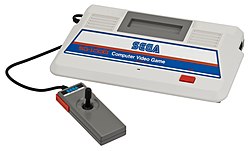
The SG-1000 is a home video game console manufactured by Sega. It was Sega's first entry into the home video game hardware business. Developed in response to a downturn in arcades starting in 1982, the SG-1000 was created on the advice of Hayao Nakayama, president of Sega's Japanese arm, and was released on July 15, 1983, the same day that Nintendo released the Family Computer in Japan. It also had a limited release in Australia and New Zealand.
The SG-1000 was released in several forms, including the SC-3000 computer and the redesigned SG-1000 II released in 1984. The SG-1000 and the SC-3000 both support a library of 51 ROM cartridge games and 29 Sega My Card games.
A third iteration of the console, the Mark III, was released in 1985. It provided an improved custom video display processor over previous iterations and served as the basis for the Master System in 1986, Sega's first internationally released console. All SG-1000 games are fully compatible with the Mark III and the Japanese version of the Master System.[clarification needed]
In the early 1980's, Sega Enterprises, Inc., then a subsidiary of Gulf and Western Industries, was one of the top five arcade game manufacturers active in the United States, as company revenues rose to $214 million. A downturn in the arcade business starting in 1982 seriously hurt the company, leading Gulf and Western to sell its North American arcade manufacturing organization and the licensing rights for its arcade games to Bally Manufacturing. The company retained Sega's North American R&D operation, as well as its Japanese subsidiary, Sega Enterprises, Ltd. With its arcade business in decline, Sega Enterprises, Ltd. president Hayao Nakayama advocated that the company leverage its hardware expertise to move into the home console market in Japan, which was in its infancy at the time. Nakayama received permission to proceed.
The first model to be developed was the SC-3000, a computer with a built-in keyboard, but when Sega learned of Nintendo's plans to release a games-only console, they began developing the SG-1000 alongside the SC-3000. The "SG" in the console's name is an abbreviation for "Sega Game", and the console is also sometimes referred to as the "Mark I". To keep costs down while ensuring sufficient longevity, Sega opted to create the platform from popular off-the-shelf components.
The SG-1000 was first released in Japan on July 15, 1983, at ¥15,000. It was released on the same day as Nintendo launched the Family Computer (Famicom) in Japan. It was released simultaneously with the SC-3000, as well as the upgraded SC-3000H. Though Sega themselves only released the SG-1000 in Japan, rebranded versions were released in several other markets worldwide. In November that same year as the Japanese version, the SC-3000 was released in Australia through John Sands Electronics and in New Zealand by Grandstand Leisure. The console also saw a release in France, Italy, and Spain, but was not released in the larger video game markets of the United States, United Kingdom, or Germany. Despite this, an unauthorized clone system known as the Telegames Personal Arcade was produced and made available in the United States and Taiwan, and is able to play SG-1000 and ColecoVision games. An additional release of the SG-1000 in Taiwan was done by Aaronix. The console enjoyed a brief period of popularity in Taiwan before the market was taken over by cheaper Famicom clones.
Due in part to the SG-1000's steadier stream of releases (21 SG-1000 games by the end of 1983, as compared to only 9 Famicom games), and in part to a recall on Famicom units necessitated by a faulty circuit, the SG-1000 sold 160,000 units in 1983, far exceeding Sega's projection of 50,000. Former Sega consumer hardware development head Hideki Sato stated that because Sega had not predicted the SG-1000 would sell so well, the company became more enamored with developing video game consoles. Despite this, the three launch games, all of which were ported from Sega's VIC dual-arcade board, lacked the name recognition of Famicom launch games Donkey Kong, Donkey Kong Jr., and Popeye. Shortly after launch, Gulf and Western began to divest itself of its non-core businesses after the death of company founder Charles Bluhdorn, so Nakayama and former Sega CEO David Rosen arranged a management buyout of the Japanese subsidiary in 1984 with financial backing from CSK Corporation, a prominent Japanese software company. Nakayama was then installed as CEO of the new Sega Enterprises, Ltd.
Following the buyout, Sega released another console, the SG-1000 II, on July 31, 1984, at ¥15,000. It is sometimes referred to as the "SG-1000 Mark II". The SG-1000 II replaced the hardwired joystick with two detachable joypads. Sato disliked the original cartridges, saying they looked like "small black tombstones" when inserted in the console, and later remarked that his proudest achievement of the SG-1000 era was replacing them with the "cheerier", pocket-sized Sega My Cards. Sega also employed popular owarai comedy duo Tunnels to provide celebrity endorsement for the console. Japanese company, Tsukuda Original Co., Ltd. created the Othello Multivision, based around the SC-3000 and SG-1000 hardware.
SG-1000
The SG-1000 is a home video game console manufactured by Sega. It was Sega's first entry into the home video game hardware business. Developed in response to a downturn in arcades starting in 1982, the SG-1000 was created on the advice of Hayao Nakayama, president of Sega's Japanese arm, and was released on July 15, 1983, the same day that Nintendo released the Family Computer in Japan. It also had a limited release in Australia and New Zealand.
The SG-1000 was released in several forms, including the SC-3000 computer and the redesigned SG-1000 II released in 1984. The SG-1000 and the SC-3000 both support a library of 51 ROM cartridge games and 29 Sega My Card games.
A third iteration of the console, the Mark III, was released in 1985. It provided an improved custom video display processor over previous iterations and served as the basis for the Master System in 1986, Sega's first internationally released console. All SG-1000 games are fully compatible with the Mark III and the Japanese version of the Master System.[clarification needed]
In the early 1980's, Sega Enterprises, Inc., then a subsidiary of Gulf and Western Industries, was one of the top five arcade game manufacturers active in the United States, as company revenues rose to $214 million. A downturn in the arcade business starting in 1982 seriously hurt the company, leading Gulf and Western to sell its North American arcade manufacturing organization and the licensing rights for its arcade games to Bally Manufacturing. The company retained Sega's North American R&D operation, as well as its Japanese subsidiary, Sega Enterprises, Ltd. With its arcade business in decline, Sega Enterprises, Ltd. president Hayao Nakayama advocated that the company leverage its hardware expertise to move into the home console market in Japan, which was in its infancy at the time. Nakayama received permission to proceed.
The first model to be developed was the SC-3000, a computer with a built-in keyboard, but when Sega learned of Nintendo's plans to release a games-only console, they began developing the SG-1000 alongside the SC-3000. The "SG" in the console's name is an abbreviation for "Sega Game", and the console is also sometimes referred to as the "Mark I". To keep costs down while ensuring sufficient longevity, Sega opted to create the platform from popular off-the-shelf components.
The SG-1000 was first released in Japan on July 15, 1983, at ¥15,000. It was released on the same day as Nintendo launched the Family Computer (Famicom) in Japan. It was released simultaneously with the SC-3000, as well as the upgraded SC-3000H. Though Sega themselves only released the SG-1000 in Japan, rebranded versions were released in several other markets worldwide. In November that same year as the Japanese version, the SC-3000 was released in Australia through John Sands Electronics and in New Zealand by Grandstand Leisure. The console also saw a release in France, Italy, and Spain, but was not released in the larger video game markets of the United States, United Kingdom, or Germany. Despite this, an unauthorized clone system known as the Telegames Personal Arcade was produced and made available in the United States and Taiwan, and is able to play SG-1000 and ColecoVision games. An additional release of the SG-1000 in Taiwan was done by Aaronix. The console enjoyed a brief period of popularity in Taiwan before the market was taken over by cheaper Famicom clones.
Due in part to the SG-1000's steadier stream of releases (21 SG-1000 games by the end of 1983, as compared to only 9 Famicom games), and in part to a recall on Famicom units necessitated by a faulty circuit, the SG-1000 sold 160,000 units in 1983, far exceeding Sega's projection of 50,000. Former Sega consumer hardware development head Hideki Sato stated that because Sega had not predicted the SG-1000 would sell so well, the company became more enamored with developing video game consoles. Despite this, the three launch games, all of which were ported from Sega's VIC dual-arcade board, lacked the name recognition of Famicom launch games Donkey Kong, Donkey Kong Jr., and Popeye. Shortly after launch, Gulf and Western began to divest itself of its non-core businesses after the death of company founder Charles Bluhdorn, so Nakayama and former Sega CEO David Rosen arranged a management buyout of the Japanese subsidiary in 1984 with financial backing from CSK Corporation, a prominent Japanese software company. Nakayama was then installed as CEO of the new Sega Enterprises, Ltd.
Following the buyout, Sega released another console, the SG-1000 II, on July 31, 1984, at ¥15,000. It is sometimes referred to as the "SG-1000 Mark II". The SG-1000 II replaced the hardwired joystick with two detachable joypads. Sato disliked the original cartridges, saying they looked like "small black tombstones" when inserted in the console, and later remarked that his proudest achievement of the SG-1000 era was replacing them with the "cheerier", pocket-sized Sega My Cards. Sega also employed popular owarai comedy duo Tunnels to provide celebrity endorsement for the console. Japanese company, Tsukuda Original Co., Ltd. created the Othello Multivision, based around the SC-3000 and SG-1000 hardware.
Recent media
Recent media