


Community hub
Recent from talks
Contribute something to knowledge base
Content stats: 0 posts, 0 articles, 1 media, 0 notes
Members stats: 0 subscribers, 0 contributors, 0 moderators, 0 supporters
Subscribers
Supporters
Contributors
Moderators
Hub AI
HMS Engadine (1911) AI simulator
(@HMS Engadine (1911)_simulator)
Hub AI
HMS Engadine (1911) AI simulator
(@HMS Engadine (1911)_simulator)
HMS Engadine (1911)
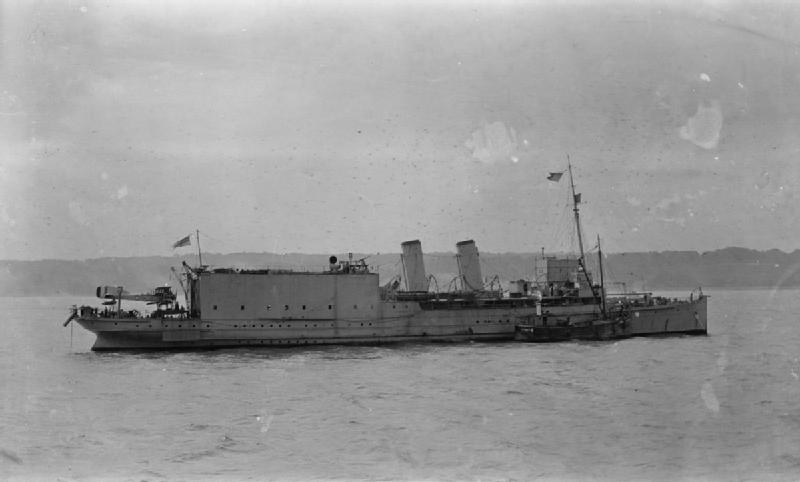
HMS Engadine was a seaplane tender which served in the Royal Navy during the First World War. Converted from the cross-Channel packet ship SS Engadine, she was initially fitted with temporary hangars for three seaplanes for aerial reconnaissance and bombing missions in the North Sea. She participated in the Cuxhaven Raid in late 1914 before she began a more thorough conversion in 1915 that increased her capacity to four aircraft. Engadine was transferred to the Battle Cruiser Fleet in late 1915 and participated in the Battle of Jutland in 1916 when one of her aircraft flew the first heavier-than-air reconnaissance mission during a naval battle. She was transferred to the Mediterranean in 1918.
She was sold back to her original owners in 1919 and resumed her prewar role. Engadine was sold in 1933 to a Philippine company and renamed SS Corregidor. She was sunk with heavy loss of life by a mine in December 1941 during the invasion of the Philippines at the beginning of the Pacific War.
Engadine had an overall length of 323 feet (98.5 m), a beam of 41 feet (12.5 m), and a mean draught of 13 feet 8 inches (4.2 m). She displaced 2,550 long tons (2,590 t) at deep load and was rated at 1,676 gross register tons (GRT). Each of the ship's three sets of direct-drive steam turbines drove one propeller shaft. The ship's six boilers generated enough steam to produce 13,800 shaft horsepower (10,300 kW) from the turbines, enough for a designed speed of 21.5 knots (39.8 km/h; 24.7 mph). Engadine carried 400 tonnes (390 long tons) of coal, enough to give her a range of 1,250 nautical miles (2,320 km; 1,440 mi) at 15 knots (28 km/h; 17 mph).
SS Engadine was laid down by William Denny and Brothers at their Dumbarton, Scotland shipyard as a fast packet for the South East and Chatham Railway's Folkestone-Boulogne run. The ship was launched on 23 September 1911 and completed later that year. She was requisitioned for service by the Admiralty on 11 August 1914, and was commissioned on 1 September after she was modified to handle seaplanes by Chatham Dockyard. Three canvas hangars were installed, one forward and two aft, and there was no flight deck, the aircraft being lowered onto the sea for takeoff and recovered again from the sea after landing by newly installed derricks. In 1918 her crew numbered 197 officers and ratings, including 53 aviation personnel.
Upon completion of the modifications on 1 September, Engadine was assigned to the Harwich Force along with the seaplane tenders Empress and Riviera. On Christmas Day 1914, nine aircraft from all three ships took part in the Cuxhaven Raid on hangars housing Zeppelin airships. Seven of the nine seaplanes successfully took off for the attack, but they inflicted little damage. Only three of the aircraft returned to be recovered, but the crews of the other three ditched safely and were recovered by a British submarine and the Dutch trawler Marta van Hattem. A notable member of Engerdine's crew was Robert Erskine Childers who served as an instructor in coastal navigation to newly trained pilots. He managed to extend his duties to include flying as a navigator and observer and participated in the raid, for which he was mentioned in despatches.
Engadine was purchased in February 1915 by the Admiralty and she was modified by Cunard at Liverpool from 10 February to 23 March 1915 with a permanent, four-aircraft, hangar in the rear superstructure and a pair of cranes were mounted at the rear of the hangar to hoist the seaplanes in and out of the water. Four quick-firing (QF) 12-pounder 12 cwt guns, each with 130 rounds, and two Vickers QF 3-pounder anti-aircraft guns, each with 65 rounds, were fitted for self-defence. She also carried a pigeon loft that housed carrier pigeons to be used by her aircraft if their wireless was broken.
Upon completion of the conversion, she rejoined the Harwich Force; on 3 July, Engadine and Riviera attempted to launch aircraft to reconnoitre the River Ems and lure out a Zeppelin so that it could be attacked. Of Engadine's three Sopwith Schneider floatplanes that she attempted to launch, two wrecked on takeoff and the third was badly damaged. She was transferred to Vice Admiral David Beatty's Battlecruiser Fleet (BCF), based at Rosyth in October. Later that month Engadine carried out trials on high-speed towing of kite balloons for gunnery observations, although she generally served as a base ship for the fleet's seaplanes.
On 30 May 1916, Engadine was attached to the 3rd Light Cruiser Squadron, commanded by Rear Admiral Trevylyan Napier, and carried two Short Type 184 and two Sopwith Baby floatplanes aboard. The two-seat Type 184s were intended for observation and were fitted with a low-power wireless while the Babies were intended to shoot down Zeppelins. Engadine accompanied the cruisers when the Battlecruiser Fleet sortied from Rosyth that evening to intercept the German High Seas Fleet. For a time on 31 May she was actually leading the BCF and may have been one of the first ships to spot the oncoming Germans. Her position in the vanguard was dictated by the requirement for smooth water to successfully launch her aircraft; turbulent water from ships' wakes was enough to ruin a take off attempt. She would also have to come to a complete stop to hoist her aircraft over the side and prepare it for launch, a process that took at least 20 minutes at anchor. Thus she could launch her floatplane in unruffled water and then fall back among the main body of the fleet.
HMS Engadine (1911)
HMS Engadine was a seaplane tender which served in the Royal Navy during the First World War. Converted from the cross-Channel packet ship SS Engadine, she was initially fitted with temporary hangars for three seaplanes for aerial reconnaissance and bombing missions in the North Sea. She participated in the Cuxhaven Raid in late 1914 before she began a more thorough conversion in 1915 that increased her capacity to four aircraft. Engadine was transferred to the Battle Cruiser Fleet in late 1915 and participated in the Battle of Jutland in 1916 when one of her aircraft flew the first heavier-than-air reconnaissance mission during a naval battle. She was transferred to the Mediterranean in 1918.
She was sold back to her original owners in 1919 and resumed her prewar role. Engadine was sold in 1933 to a Philippine company and renamed SS Corregidor. She was sunk with heavy loss of life by a mine in December 1941 during the invasion of the Philippines at the beginning of the Pacific War.
Engadine had an overall length of 323 feet (98.5 m), a beam of 41 feet (12.5 m), and a mean draught of 13 feet 8 inches (4.2 m). She displaced 2,550 long tons (2,590 t) at deep load and was rated at 1,676 gross register tons (GRT). Each of the ship's three sets of direct-drive steam turbines drove one propeller shaft. The ship's six boilers generated enough steam to produce 13,800 shaft horsepower (10,300 kW) from the turbines, enough for a designed speed of 21.5 knots (39.8 km/h; 24.7 mph). Engadine carried 400 tonnes (390 long tons) of coal, enough to give her a range of 1,250 nautical miles (2,320 km; 1,440 mi) at 15 knots (28 km/h; 17 mph).
SS Engadine was laid down by William Denny and Brothers at their Dumbarton, Scotland shipyard as a fast packet for the South East and Chatham Railway's Folkestone-Boulogne run. The ship was launched on 23 September 1911 and completed later that year. She was requisitioned for service by the Admiralty on 11 August 1914, and was commissioned on 1 September after she was modified to handle seaplanes by Chatham Dockyard. Three canvas hangars were installed, one forward and two aft, and there was no flight deck, the aircraft being lowered onto the sea for takeoff and recovered again from the sea after landing by newly installed derricks. In 1918 her crew numbered 197 officers and ratings, including 53 aviation personnel.
Upon completion of the modifications on 1 September, Engadine was assigned to the Harwich Force along with the seaplane tenders Empress and Riviera. On Christmas Day 1914, nine aircraft from all three ships took part in the Cuxhaven Raid on hangars housing Zeppelin airships. Seven of the nine seaplanes successfully took off for the attack, but they inflicted little damage. Only three of the aircraft returned to be recovered, but the crews of the other three ditched safely and were recovered by a British submarine and the Dutch trawler Marta van Hattem. A notable member of Engerdine's crew was Robert Erskine Childers who served as an instructor in coastal navigation to newly trained pilots. He managed to extend his duties to include flying as a navigator and observer and participated in the raid, for which he was mentioned in despatches.
Engadine was purchased in February 1915 by the Admiralty and she was modified by Cunard at Liverpool from 10 February to 23 March 1915 with a permanent, four-aircraft, hangar in the rear superstructure and a pair of cranes were mounted at the rear of the hangar to hoist the seaplanes in and out of the water. Four quick-firing (QF) 12-pounder 12 cwt guns, each with 130 rounds, and two Vickers QF 3-pounder anti-aircraft guns, each with 65 rounds, were fitted for self-defence. She also carried a pigeon loft that housed carrier pigeons to be used by her aircraft if their wireless was broken.
Upon completion of the conversion, she rejoined the Harwich Force; on 3 July, Engadine and Riviera attempted to launch aircraft to reconnoitre the River Ems and lure out a Zeppelin so that it could be attacked. Of Engadine's three Sopwith Schneider floatplanes that she attempted to launch, two wrecked on takeoff and the third was badly damaged. She was transferred to Vice Admiral David Beatty's Battlecruiser Fleet (BCF), based at Rosyth in October. Later that month Engadine carried out trials on high-speed towing of kite balloons for gunnery observations, although she generally served as a base ship for the fleet's seaplanes.
On 30 May 1916, Engadine was attached to the 3rd Light Cruiser Squadron, commanded by Rear Admiral Trevylyan Napier, and carried two Short Type 184 and two Sopwith Baby floatplanes aboard. The two-seat Type 184s were intended for observation and were fitted with a low-power wireless while the Babies were intended to shoot down Zeppelins. Engadine accompanied the cruisers when the Battlecruiser Fleet sortied from Rosyth that evening to intercept the German High Seas Fleet. For a time on 31 May she was actually leading the BCF and may have been one of the first ships to spot the oncoming Germans. Her position in the vanguard was dictated by the requirement for smooth water to successfully launch her aircraft; turbulent water from ships' wakes was enough to ruin a take off attempt. She would also have to come to a complete stop to hoist her aircraft over the side and prepare it for launch, a process that took at least 20 minutes at anchor. Thus she could launch her floatplane in unruffled water and then fall back among the main body of the fleet.
Recent media
Recent media