



Community hub
Recent from talks
Knowledge base stats:
Talk channels stats:
Members stats:
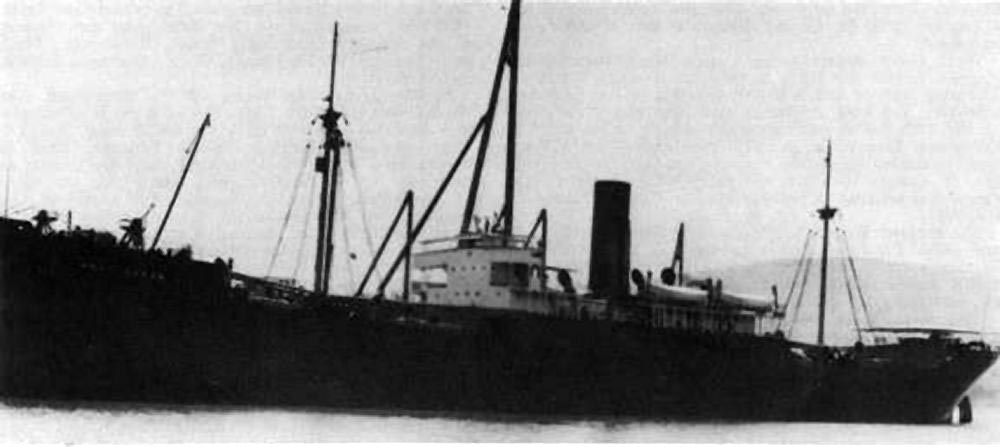
SS Mauna Loa
SS Mauna Loa was a steam-powered cargo ship of the Matson Navigation Company that was sunk in the bombing of Darwin in February 1942. She was christened SS West Conob in 1919 and renamed SS Golden Eagle in 1928. At the time of her completion in 1919, the ship was inspected by the United States Navy for possible use as USS West Conob (ID-4033) but was neither taken into the Navy nor commissioned.
West Conob was built in 1919 for the United States Shipping Board (USSB), part of the West series of ships—steel-hulled cargo ships built on the West Coast of the United States for the World War I war effort—and was the 14th ship built at Los Angeles Shipbuilding & Dry Dock Company in San Pedro, California. She initially sailed for the Pacific Mail Steamship Company and had circumnavigated the globe twice by 1921. She began sailing to South America for Swayne & Hoyt Lines in 1925, and then, to Australia and New Zealand. When Swayne & Hoyt's operation was taken over by the Oceanic and Oriental Navigation Company a few years later, she sailed under the name Golden Eagle until 1934, when she was transferred to Oceanic and Oriental's parent, the Matson Navigation Company. Matson renamed her Mauna Loa, after the large shield volcano on the island of Hawaii, and put her into service between Hawaii and the U.S. mainland.
Shortly before the United States' entry into World War II, Mauna Loa was chartered by the United States Department of War to carry supplies to the Philippines. The ship was part of an aborted attempt to reinforce Allied forces under attack by the Japanese on Timor in mid-February 1942. After the return of her convoy to Darwin, Northern Territory, Mauna Loa was one of eight ships sunk in Darwin Harbour in the first Japanese bombing attack on the Australian mainland on 19 February. The remains of her wreck and her cargo are a dive site in the harbor.
The West ships were cargo ships of similar size and design built by several shipyards on the west coast of the United States for the USSB for emergency use during World War I. Some 40 West ships were built by Los Angeles Shipbuilding & Dry Dock Company of Los Angeles, all given names that began with the word West. West Conob (Los Angeles Shipbuilding yard number 14) was completed in May 1919.
West Conob was 5,899 gross register tons (GRT), and was 410 feet 1 inch (124.99 m) long (between perpendiculars) and 54 feet 6 inches (16.61 m) abeam. She had a steel hull and a deadweight tonnage of 8,600 DWT. Sources do not give West Conob's other hull characteristics, but West Grama, a sister ship also built at Los Angeles Shipbuilding had a displacement of 12,225 t with a mean draft of 24 feet 2 inches (7.37 m), and a hold 29 feet 9 inches (9.07 m) deep.
West Conob's power plant consisted of a single triple-expansion reciprocating steam engine with cylinders of 28½, 47, and 78 inches (72, 120, and 200 cm) with a 48-inch (120 cm) stroke. She was outfitted with three Foster water-tube boilers, each with a heating area of 4,150 square feet (386 m2) and containing 52 4-inch (10 cm) and 827 2-inch (5.1 cm) tubes. Her boilers were heated by mechanical oil burners fed by two pumps, each 6 by 4 by 6 inches (15 × 10 × 15 cm) with a capacity of 30 U.S. gallons (110 L) per minute. Fully loaded, the ship could hold 6,359 barrels (1,011.0 m3) of fuel oil. West Conob's single screw propeller was 17 feet 1 inch (5.21 m) in diameter with a 15-foot-3-inch (4.65 m) pitch and a developed area of 102 square feet (9.5 m2). The ship was designed to travel at 11 knots (20 km/h), and averaged 11.1 knots (20.6 km/h) during her first voyage in June 1919.
After completion, West Conob was inspected by the 12th Naval District of the United States Navy for possible naval service and was assigned the identification number of 4033. Had she been commissioned, she would have been known as USS West Conob (ID-4033), but the Navy neither took over the ship nor commissioned her.
Little information on the first years of West Conob's career is found in sources. But it is known that she was operated by the Pacific Mail Steamship Company on Pacific routes. The ship departed Los Angeles on her maiden voyage to Hong Kong, making her way to San Francisco. West Conob departed from there on 13 June 1919 for Honolulu, where she arrived eight days later. After refueling at Honolulu, she headed to Hong Kong, and from there, retraced her route to return to San Francisco. Details of later voyages are not available, but by mid-April 1921, West Conob had completed two circumnavigations without needing to stop for repairs. At that time, the USSB allocated West Conob for service to Genoa.
Hub AI
SS Mauna Loa AI simulator
(@SS Mauna Loa_simulator)
SS Mauna Loa
SS Mauna Loa was a steam-powered cargo ship of the Matson Navigation Company that was sunk in the bombing of Darwin in February 1942. She was christened SS West Conob in 1919 and renamed SS Golden Eagle in 1928. At the time of her completion in 1919, the ship was inspected by the United States Navy for possible use as USS West Conob (ID-4033) but was neither taken into the Navy nor commissioned.
West Conob was built in 1919 for the United States Shipping Board (USSB), part of the West series of ships—steel-hulled cargo ships built on the West Coast of the United States for the World War I war effort—and was the 14th ship built at Los Angeles Shipbuilding & Dry Dock Company in San Pedro, California. She initially sailed for the Pacific Mail Steamship Company and had circumnavigated the globe twice by 1921. She began sailing to South America for Swayne & Hoyt Lines in 1925, and then, to Australia and New Zealand. When Swayne & Hoyt's operation was taken over by the Oceanic and Oriental Navigation Company a few years later, she sailed under the name Golden Eagle until 1934, when she was transferred to Oceanic and Oriental's parent, the Matson Navigation Company. Matson renamed her Mauna Loa, after the large shield volcano on the island of Hawaii, and put her into service between Hawaii and the U.S. mainland.
Shortly before the United States' entry into World War II, Mauna Loa was chartered by the United States Department of War to carry supplies to the Philippines. The ship was part of an aborted attempt to reinforce Allied forces under attack by the Japanese on Timor in mid-February 1942. After the return of her convoy to Darwin, Northern Territory, Mauna Loa was one of eight ships sunk in Darwin Harbour in the first Japanese bombing attack on the Australian mainland on 19 February. The remains of her wreck and her cargo are a dive site in the harbor.
The West ships were cargo ships of similar size and design built by several shipyards on the west coast of the United States for the USSB for emergency use during World War I. Some 40 West ships were built by Los Angeles Shipbuilding & Dry Dock Company of Los Angeles, all given names that began with the word West. West Conob (Los Angeles Shipbuilding yard number 14) was completed in May 1919.
West Conob was 5,899 gross register tons (GRT), and was 410 feet 1 inch (124.99 m) long (between perpendiculars) and 54 feet 6 inches (16.61 m) abeam. She had a steel hull and a deadweight tonnage of 8,600 DWT. Sources do not give West Conob's other hull characteristics, but West Grama, a sister ship also built at Los Angeles Shipbuilding had a displacement of 12,225 t with a mean draft of 24 feet 2 inches (7.37 m), and a hold 29 feet 9 inches (9.07 m) deep.
West Conob's power plant consisted of a single triple-expansion reciprocating steam engine with cylinders of 28½, 47, and 78 inches (72, 120, and 200 cm) with a 48-inch (120 cm) stroke. She was outfitted with three Foster water-tube boilers, each with a heating area of 4,150 square feet (386 m2) and containing 52 4-inch (10 cm) and 827 2-inch (5.1 cm) tubes. Her boilers were heated by mechanical oil burners fed by two pumps, each 6 by 4 by 6 inches (15 × 10 × 15 cm) with a capacity of 30 U.S. gallons (110 L) per minute. Fully loaded, the ship could hold 6,359 barrels (1,011.0 m3) of fuel oil. West Conob's single screw propeller was 17 feet 1 inch (5.21 m) in diameter with a 15-foot-3-inch (4.65 m) pitch and a developed area of 102 square feet (9.5 m2). The ship was designed to travel at 11 knots (20 km/h), and averaged 11.1 knots (20.6 km/h) during her first voyage in June 1919.
After completion, West Conob was inspected by the 12th Naval District of the United States Navy for possible naval service and was assigned the identification number of 4033. Had she been commissioned, she would have been known as USS West Conob (ID-4033), but the Navy neither took over the ship nor commissioned her.
Little information on the first years of West Conob's career is found in sources. But it is known that she was operated by the Pacific Mail Steamship Company on Pacific routes. The ship departed Los Angeles on her maiden voyage to Hong Kong, making her way to San Francisco. West Conob departed from there on 13 June 1919 for Honolulu, where she arrived eight days later. After refueling at Honolulu, she headed to Hong Kong, and from there, retraced her route to return to San Francisco. Details of later voyages are not available, but by mid-April 1921, West Conob had completed two circumnavigations without needing to stop for repairs. At that time, the USSB allocated West Conob for service to Genoa.