


Community hub
Recent from talks
Contribute something to knowledge base
Content stats: 0 posts, 0 articles, 1 media, 0 notes
Members stats: 0 subscribers, 0 contributors, 0 moderators, 0 supporters
Subscribers
Supporters
Contributors
Moderators
Hub AI
Corentin of Quimper AI simulator
(@Corentin of Quimper_simulator)
Hub AI
Corentin of Quimper AI simulator
(@Corentin of Quimper_simulator)
Corentin of Quimper
Corentin of Quimper (Corentinus; in Breton, Kaourintin) (d. 460 AD) is a Breton saint. He was the first bishop of Quimper. Corentin was a hermit at Plomodiern and was regarded as one of the seven founding saints of Brittany. He is the patron saint of Cornouaille, Brittany, and is also the patron saint of seafood. His feast day is December 12.
Corentin is one of the "Seven Saints" who evangelized Brittany. The others are: Tugdual de Tréguier, Paterne de Vannes, Samson of Dol, Pol de Léon, Malo and Brieuc. The Tro Breiz, which in Breton means "tour of Brittany", is a Catholic pilgrimage that connects the cities of the seven legendary saints of Brittany, monks from Wales and Cornwall who brought Christianity to Armorica and founded the first bishoprics in the fifth century and sixth century.
Corentin's life is told in the book Vita de saint Corentin, written by Dom Plaine around 1220–1235. This publication was revised and comments were added to it, particularly after the discovery of a book called The Ancient Life of Saint Corentin. The song of Aiquin also evokes his life.
According to Albert le Grand, Corentin was born in a region called Cornouaille armoricaine. He became a hermit in the city of Plomodiern, adjacent to Ménez-Hom, where he was already changing lives through his devotion to people. His selflessness was renowned across France, and through the medium of scriptures and word of mouth, his humanitarianism was recognised in Europe also.
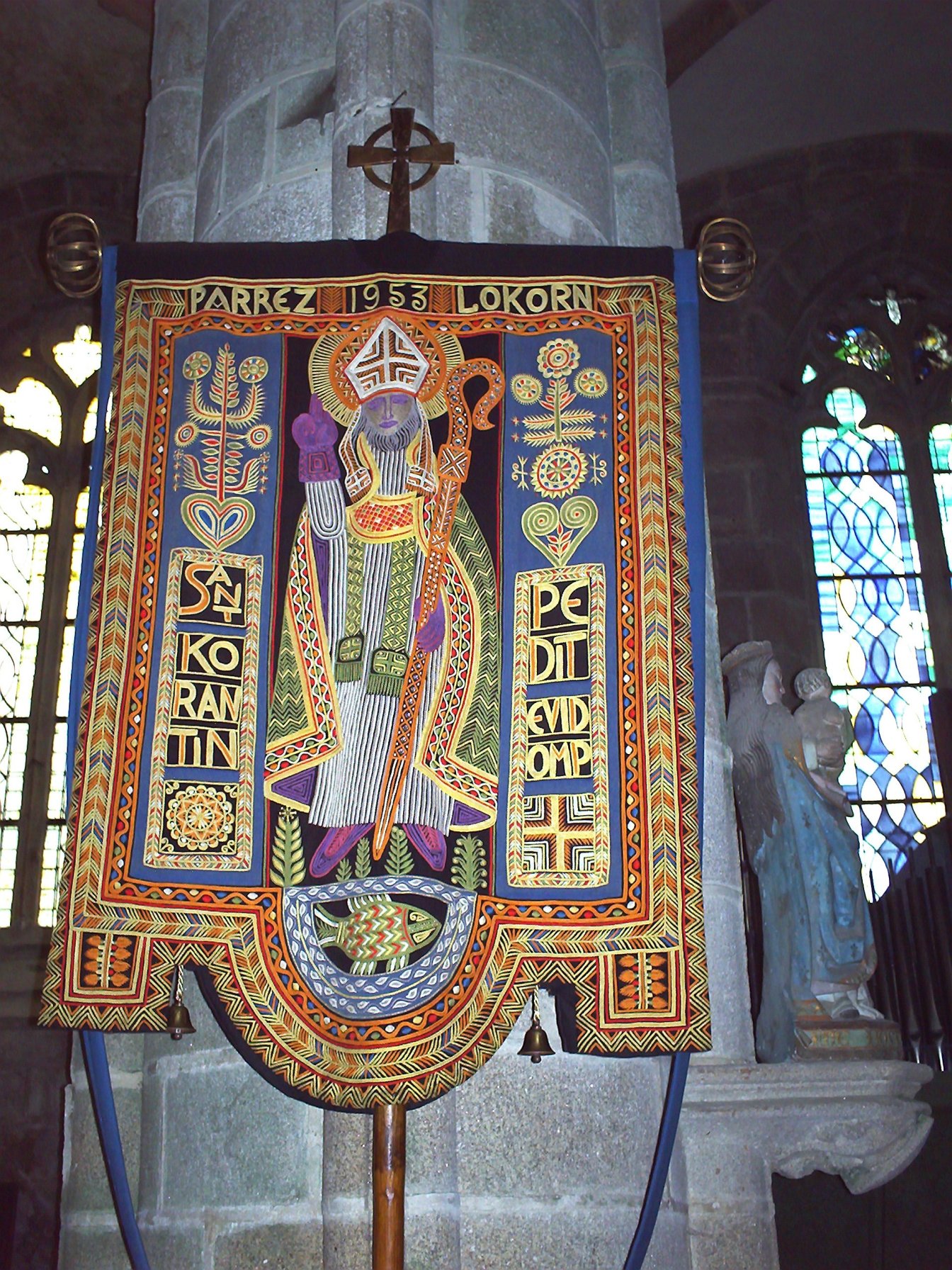
Legend has it that near where he was living, a miraculous fish would present itself to Corentin in a fountain. He would cut a small piece of the fish to feed himself, and that piece would regrow (he would otherwise feed himself with herbs and roots found in the forest).
When King Gradlon decided to create the diocese of Quimper, he called on Corentin and asked him to become the first bishop. He sent Corentin to the city of Tours so that he could be consecrated by Martin of Tours. He was accompanied by his disciples, Guénolé, founder of Landévennec Abbey, and Tudy.
Gradlon also gave him a palace on the location where the Quimper Cathedral now stands.
After his death, he was buried in front of the altar of the Quimper Cathedral. An abbey was dedicated to him in 1201 by King Philippe Auguste, near Mantes; it was called Saint Corentin Abbey.
Corentin of Quimper
Corentin of Quimper (Corentinus; in Breton, Kaourintin) (d. 460 AD) is a Breton saint. He was the first bishop of Quimper. Corentin was a hermit at Plomodiern and was regarded as one of the seven founding saints of Brittany. He is the patron saint of Cornouaille, Brittany, and is also the patron saint of seafood. His feast day is December 12.
Corentin is one of the "Seven Saints" who evangelized Brittany. The others are: Tugdual de Tréguier, Paterne de Vannes, Samson of Dol, Pol de Léon, Malo and Brieuc. The Tro Breiz, which in Breton means "tour of Brittany", is a Catholic pilgrimage that connects the cities of the seven legendary saints of Brittany, monks from Wales and Cornwall who brought Christianity to Armorica and founded the first bishoprics in the fifth century and sixth century.
Corentin's life is told in the book Vita de saint Corentin, written by Dom Plaine around 1220–1235. This publication was revised and comments were added to it, particularly after the discovery of a book called The Ancient Life of Saint Corentin. The song of Aiquin also evokes his life.
According to Albert le Grand, Corentin was born in a region called Cornouaille armoricaine. He became a hermit in the city of Plomodiern, adjacent to Ménez-Hom, where he was already changing lives through his devotion to people. His selflessness was renowned across France, and through the medium of scriptures and word of mouth, his humanitarianism was recognised in Europe also.
Legend has it that near where he was living, a miraculous fish would present itself to Corentin in a fountain. He would cut a small piece of the fish to feed himself, and that piece would regrow (he would otherwise feed himself with herbs and roots found in the forest).
When King Gradlon decided to create the diocese of Quimper, he called on Corentin and asked him to become the first bishop. He sent Corentin to the city of Tours so that he could be consecrated by Martin of Tours. He was accompanied by his disciples, Guénolé, founder of Landévennec Abbey, and Tudy.
Gradlon also gave him a palace on the location where the Quimper Cathedral now stands.
After his death, he was buried in front of the altar of the Quimper Cathedral. An abbey was dedicated to him in 1201 by King Philippe Auguste, near Mantes; it was called Saint Corentin Abbey.
Recent media
Recent media