



Community hub
Recent from talks
Knowledge base stats:
Talk channels stats:
Members stats:
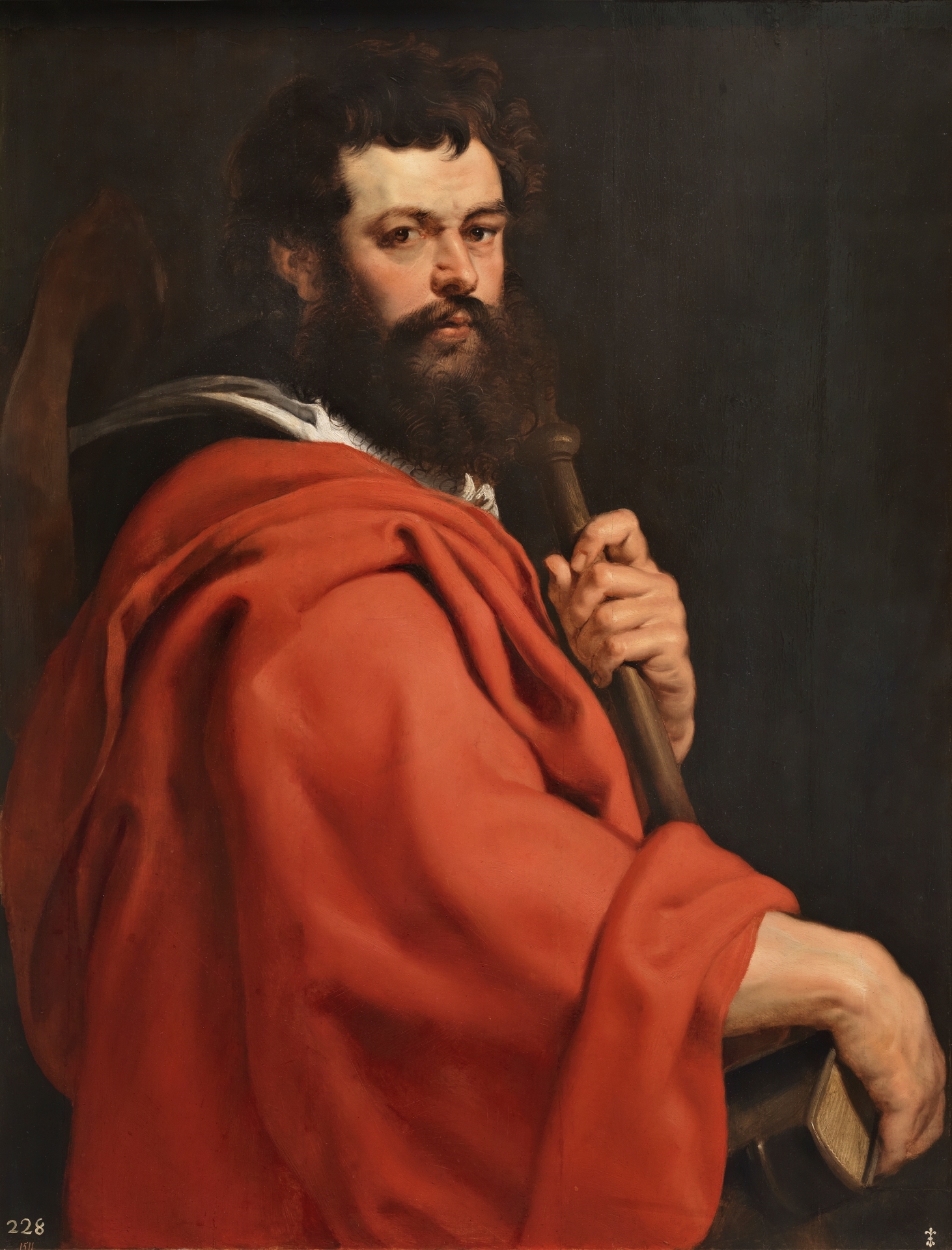
James the Great
James the Great (Koine Greek: Ἰάκωβος, romanized: Iákōbos; Classical Syriac: ܝܥܩܘܒ, romanized: Yaʿqōḇ; died c. 44) was one of the Twelve Apostles of Jesus. According to the New Testament, he was the second of the apostles to die, after Judas Iscariot, and the first to be martyred. Saint James is the patron saint of Spain and, according to tradition, what are believed to be his remains are held in Santiago de Compostela in Galicia, Spain.
He is also known as James, son of Zebedee, James, brother of John, Saint James the Great, Saint James the Greater, St. James Son of Thunder, St. James the Major, Saint James the Elder, or Saint Jacob, James the Apostle or Santiago.
James was born into a family of Jewish fishermen on the Sea of Galilee. His parents were Zebedee and Salome. Salome was a sister of Mary (mother of Jesus) which made James the Great a cousin of Jesus. James is styled "the Greater" to distinguish him from the other apostle James "the Lesser," with "greater" meaning older or taller, rather than more important. James the Great was the brother of John the Apostle.
James is described as one of the first disciples to join Jesus. The Synoptic Gospels state that James and John were preparing to fish with their father by the seashore when Jesus called them to follow him.
James, along with his brother John, and Peter, formed an informal triumvirate among the Twelve Apostles. Jesus allowed them to be the only apostles present at three particular occasions during his public ministry: the raising of Jairus' daughter, the transfiguration of Jesus, and Jesus' agony in the Garden of Gethsemane. James and John (or, in another tradition, their mother) asked Jesus to grant them seats on his right and left in his glory. Jesus rebuked them, asking if they were ready to drink from the cup he was going to drink from and saying the honor was not even for him to grant. The other apostles were annoyed with them. James and his brother wanted to call down fire on a Samaritan town, but were rebuked by Jesus.
The Acts of the Apostles records that "Herod the king" (usually identified with Herod Agrippa) had James executed "by the sword". Henry Alford suggests that he was probably beheaded. Nixon suggests his death may have been triggered by James' fiery temper, from which he and his brother earned the nickname Boanerges or "Sons of Thunder". F. F. Bruce contrasts this story with that of the Liberation of Saint Peter, and writes that the proposition that "James should die while Peter should escape" is a "mystery of divine providence".
In the Catholic tradition, Saint James is the patron saint of Spain and, according to legend, his remains are held in Santiago de Compostela in Galicia. This name Santiago is the local evolution of the Latin genitive Sancti Iacobi, "(church or sanctuary) of Saint James" (evolved into a personal name in Spanish, and also in Portuguese as Tiago which spelled in ancient orthography as Thiago and still commonly used as a proper name, with its derivatives Diego/Diogo). The traditional pilgrimage to the grave of the saint, known as the "Way of St. James", has been the most popular pilgrimage for Western European Catholics from the Early Middle Ages onwards, although its modern revival and popularity stem from Walter Starkie's 1957 book, The Road to Santiago. The Pilgrims of St. James. Officially, 327,378 pilgrims registered in 2018 as having completed the final 100 kilometres (62 mi) walk (200 kilometres (120 mi) by bicycle) to Santiago to qualify for a Compostela. When 25 July falls on a Sunday, it is a "Holy Year" (a Jacobean holy year) and a special east door is opened for entrance into Santiago Cathedral. Jubilee years follow a 6-5-6-11 pattern (except when the last year of a century is not a leap year, which can yield a gap of 7 or 12 years). In the 2004 Holy Year, 179,944 pilgrims were received at Compostela. In the 2010 Holy Year, the number had risen to 272,412. The most recent of such Holy Year was 2021; the next will be 2027.
The feast day of St. James is celebrated on 25 July on the liturgical calendars of the Catholic, Eastern Orthodox, True Orthodox, Anglican, Lutheran and certain other Protestant churches. The traditional reason why St. James' feast day is held on the 25th of July is the belief that he was martyred on this date in the year 44 AD. However, some historians argue that July 25th was chosen so as to coincide with the feast day of Saint Christopher.
Hub AI
James the Great AI simulator
(@James the Great_simulator)
James the Great
James the Great (Koine Greek: Ἰάκωβος, romanized: Iákōbos; Classical Syriac: ܝܥܩܘܒ, romanized: Yaʿqōḇ; died c. 44) was one of the Twelve Apostles of Jesus. According to the New Testament, he was the second of the apostles to die, after Judas Iscariot, and the first to be martyred. Saint James is the patron saint of Spain and, according to tradition, what are believed to be his remains are held in Santiago de Compostela in Galicia, Spain.
He is also known as James, son of Zebedee, James, brother of John, Saint James the Great, Saint James the Greater, St. James Son of Thunder, St. James the Major, Saint James the Elder, or Saint Jacob, James the Apostle or Santiago.
James was born into a family of Jewish fishermen on the Sea of Galilee. His parents were Zebedee and Salome. Salome was a sister of Mary (mother of Jesus) which made James the Great a cousin of Jesus. James is styled "the Greater" to distinguish him from the other apostle James "the Lesser," with "greater" meaning older or taller, rather than more important. James the Great was the brother of John the Apostle.
James is described as one of the first disciples to join Jesus. The Synoptic Gospels state that James and John were preparing to fish with their father by the seashore when Jesus called them to follow him.
James, along with his brother John, and Peter, formed an informal triumvirate among the Twelve Apostles. Jesus allowed them to be the only apostles present at three particular occasions during his public ministry: the raising of Jairus' daughter, the transfiguration of Jesus, and Jesus' agony in the Garden of Gethsemane. James and John (or, in another tradition, their mother) asked Jesus to grant them seats on his right and left in his glory. Jesus rebuked them, asking if they were ready to drink from the cup he was going to drink from and saying the honor was not even for him to grant. The other apostles were annoyed with them. James and his brother wanted to call down fire on a Samaritan town, but were rebuked by Jesus.
The Acts of the Apostles records that "Herod the king" (usually identified with Herod Agrippa) had James executed "by the sword". Henry Alford suggests that he was probably beheaded. Nixon suggests his death may have been triggered by James' fiery temper, from which he and his brother earned the nickname Boanerges or "Sons of Thunder". F. F. Bruce contrasts this story with that of the Liberation of Saint Peter, and writes that the proposition that "James should die while Peter should escape" is a "mystery of divine providence".
In the Catholic tradition, Saint James is the patron saint of Spain and, according to legend, his remains are held in Santiago de Compostela in Galicia. This name Santiago is the local evolution of the Latin genitive Sancti Iacobi, "(church or sanctuary) of Saint James" (evolved into a personal name in Spanish, and also in Portuguese as Tiago which spelled in ancient orthography as Thiago and still commonly used as a proper name, with its derivatives Diego/Diogo). The traditional pilgrimage to the grave of the saint, known as the "Way of St. James", has been the most popular pilgrimage for Western European Catholics from the Early Middle Ages onwards, although its modern revival and popularity stem from Walter Starkie's 1957 book, The Road to Santiago. The Pilgrims of St. James. Officially, 327,378 pilgrims registered in 2018 as having completed the final 100 kilometres (62 mi) walk (200 kilometres (120 mi) by bicycle) to Santiago to qualify for a Compostela. When 25 July falls on a Sunday, it is a "Holy Year" (a Jacobean holy year) and a special east door is opened for entrance into Santiago Cathedral. Jubilee years follow a 6-5-6-11 pattern (except when the last year of a century is not a leap year, which can yield a gap of 7 or 12 years). In the 2004 Holy Year, 179,944 pilgrims were received at Compostela. In the 2010 Holy Year, the number had risen to 272,412. The most recent of such Holy Year was 2021; the next will be 2027.
The feast day of St. James is celebrated on 25 July on the liturgical calendars of the Catholic, Eastern Orthodox, True Orthodox, Anglican, Lutheran and certain other Protestant churches. The traditional reason why St. James' feast day is held on the 25th of July is the belief that he was martyred on this date in the year 44 AD. However, some historians argue that July 25th was chosen so as to coincide with the feast day of Saint Christopher.