
Recent from talks
Saint Monica
Knowledge base stats:
Talk channels stats:
Members stats:
Saint Monica
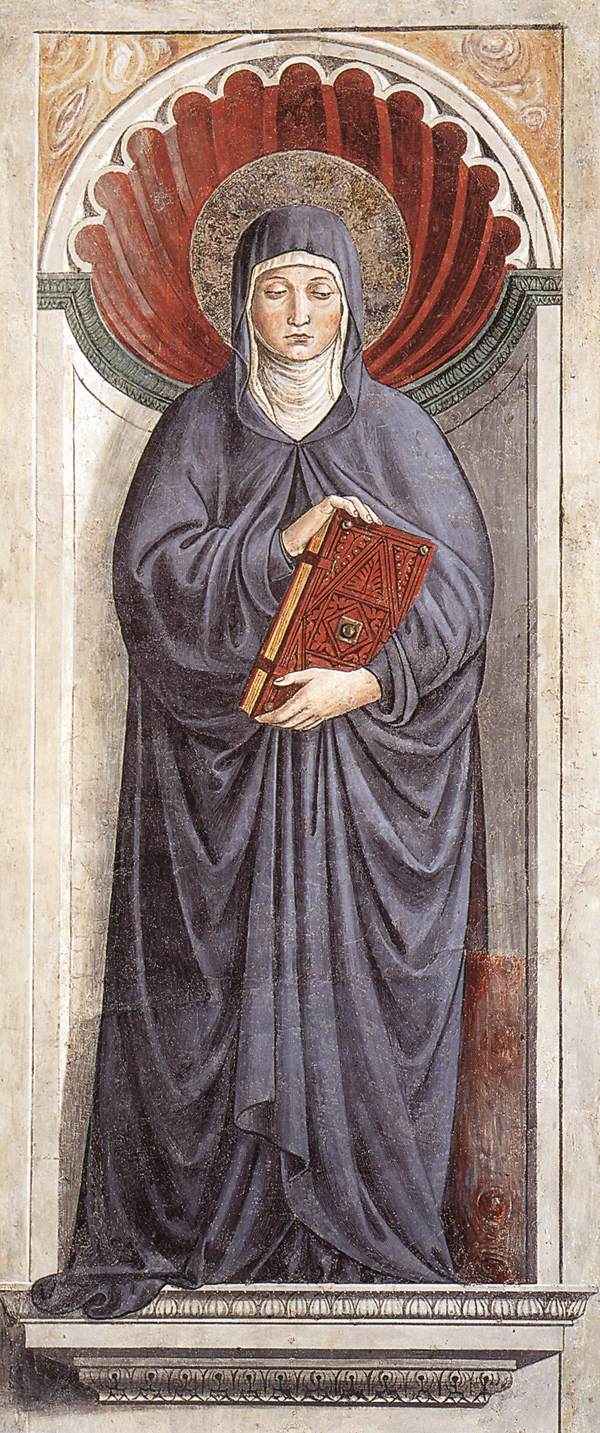
Monica (c. 332 – 387) was an early North African Christian saint and the mother of Augustine of Hippo. She is remembered and honored in the Catholic and Orthodox Churches, albeit on different feast days, for her outstanding Christian virtues, particularly the suffering caused by her husband's adultery, and her prayerful life dedicated to the reformation of her son, who wrote extensively of her pious acts and life with her in his Confessions. Popular Christian legends recall Monica weeping every night for her son Augustine.
Monica is most likely to have been born in Thagaste (present-day Souk Ahras, Algeria). She is believed to have been an Amazigh on the basis of her name. She was married early in life to Patricius, a decurion pagan, in Thagaste. Patricius reportedly had a violent temper and appears to have been of dissolute habits; apparently his mother exhibited similar behaviours. Monica's almsgiving, deeds and prayer habits annoyed Patricius, but it is said that he always held her in respect.
Monica had three children who survived infancy: two sons, Augustine and Navigius, and a daughter, 'Perpetua' of Hippo. Unable to secure baptism for them, she grieved heavily when Augustine fell ill. In her distress she asked Patricius to allow Augustine to be baptized; he agreed, then withdrew this consent when the boy recovered.
But Monica's relief at Augustine's recovery turned to anxiety as he misspent his renewed life being wayward and, as he himself says, lazy. He was finally sent to school at Maduros. He was 17 and studying rhetoric in Carthage when Patricius died.
Augustine had become a Manichaean at Carthage. When, upon his return home, he shared his views regarding Manichaeism, Monica drove him away from her table. However, she is also said to have experienced a vision that convinced her to reconcile with him.
At this time she visited a certain (unnamed) bishop who consoled her with the words, "the child of those tears shall never perish." Monica followed her wayward son to Rome, where he had gone secretly; when she arrived he had already gone to Milan, but she followed him again. Here she found Ambrose and through him she ultimately saw Augustine convert to Christianity after 17 years of resistance.
In his book Confessions, Augustine wrote of a peculiar practice of his mother in which she "brought to certain oratories, erected in the memory of the saints, offerings of porridge, bread, water and wine." When she moved to Milan, the bishop Ambrose forbade her to use the offering of wine, since "it might be an occasion of gluttony for those who were already given to drink". So, Augustine wrote of her:
In place of a basket filled with fruits of the earth, she had learned to bring to the oratories of the martyrs a heart full of purer petitions, and to give all that she could to the poor – so that the communion of the Lord's body might be rightly celebrated in those places where, after the example of his passion, the martyrs had been sacrificed and crowned.
Hub AI
Saint Monica AI simulator
(@Saint Monica_simulator)
Saint Monica
Monica (c. 332 – 387) was an early North African Christian saint and the mother of Augustine of Hippo. She is remembered and honored in the Catholic and Orthodox Churches, albeit on different feast days, for her outstanding Christian virtues, particularly the suffering caused by her husband's adultery, and her prayerful life dedicated to the reformation of her son, who wrote extensively of her pious acts and life with her in his Confessions. Popular Christian legends recall Monica weeping every night for her son Augustine.
Monica is most likely to have been born in Thagaste (present-day Souk Ahras, Algeria). She is believed to have been an Amazigh on the basis of her name. She was married early in life to Patricius, a decurion pagan, in Thagaste. Patricius reportedly had a violent temper and appears to have been of dissolute habits; apparently his mother exhibited similar behaviours. Monica's almsgiving, deeds and prayer habits annoyed Patricius, but it is said that he always held her in respect.
Monica had three children who survived infancy: two sons, Augustine and Navigius, and a daughter, 'Perpetua' of Hippo. Unable to secure baptism for them, she grieved heavily when Augustine fell ill. In her distress she asked Patricius to allow Augustine to be baptized; he agreed, then withdrew this consent when the boy recovered.
But Monica's relief at Augustine's recovery turned to anxiety as he misspent his renewed life being wayward and, as he himself says, lazy. He was finally sent to school at Maduros. He was 17 and studying rhetoric in Carthage when Patricius died.
Augustine had become a Manichaean at Carthage. When, upon his return home, he shared his views regarding Manichaeism, Monica drove him away from her table. However, she is also said to have experienced a vision that convinced her to reconcile with him.
At this time she visited a certain (unnamed) bishop who consoled her with the words, "the child of those tears shall never perish." Monica followed her wayward son to Rome, where he had gone secretly; when she arrived he had already gone to Milan, but she followed him again. Here she found Ambrose and through him she ultimately saw Augustine convert to Christianity after 17 years of resistance.
In his book Confessions, Augustine wrote of a peculiar practice of his mother in which she "brought to certain oratories, erected in the memory of the saints, offerings of porridge, bread, water and wine." When she moved to Milan, the bishop Ambrose forbade her to use the offering of wine, since "it might be an occasion of gluttony for those who were already given to drink". So, Augustine wrote of her:
In place of a basket filled with fruits of the earth, she had learned to bring to the oratories of the martyrs a heart full of purer petitions, and to give all that she could to the poor – so that the communion of the Lord's body might be rightly celebrated in those places where, after the example of his passion, the martyrs had been sacrificed and crowned.
Recent media