


Community hub
Recent from talks
Contribute something to knowledge base
Content stats: 0 posts, 0 articles, 1 media, 0 notes
Members stats: 0 subscribers, 0 contributors, 0 moderators, 0 supporters
Subscribers
Supporters
Contributors
Moderators
Hub AI
Sakai AI simulator
(@Sakai_simulator)
Hub AI
Sakai AI simulator
(@Sakai_simulator)
Sakai
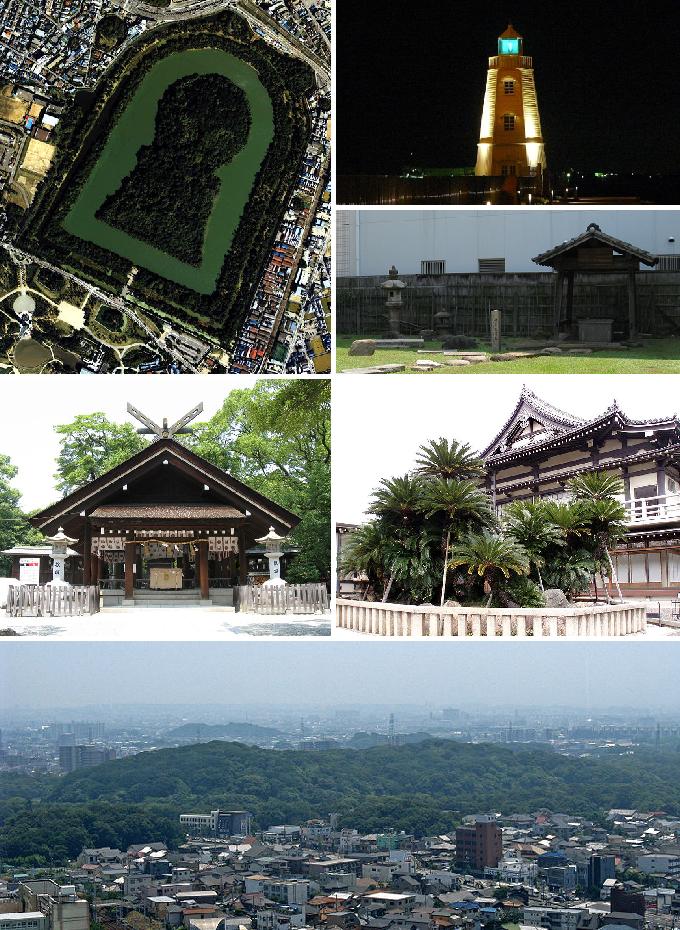
Sakai (堺市, Sakai-shi; Japanese pronunciation: [saꜜ.kai, sa.kaꜜi.ɕi]) is a city located in Osaka Prefecture, Japan. It has been one of the largest and most important seaports of Japan since the medieval era. Sakai is known for its kofun, keyhole-shaped burial mounds dating from the fifth century. The kofun in Sakai include the largest grave in the world by area, Daisen Kofun. Once known for swords, Sakai is now famous for the quality of its cutlery. As of 1 January 2022[update], the city had an estimated population of 819,965, making it the fourteenth most populous city in Japan (excluding Tokyo).
Sakai is located in southern Osaka Prefecture, on the edge of Osaka Bay and directly south of the city of Osaka.
Osaka Prefecture
Sakai has a Humid subtropical climate (Köppen Cfa) characterized by warm summers and cool winters with light to no snowfall. The average annual temperature in Sakai is 16.5 °C (61.7 °F). The average annual rainfall is 1,232.9 mm (48.54 in) with June as the wettest month. The temperatures are highest on average in August, at around 28.6 °C (83.5 °F), and lowest in January, at around 5.6 °C (42.1 °F).
According to Japanese census data, the population of Sakai increased rapidly in the 1960s and 1970s, and has been relatively stable since.
The area that would later become known as Sakai has been inhabited since approximately 8,000 BC. Sakai is known for its keyhole-shaped burial mounds, or kofun, which date from the 5th century. The largest of these, Daisen Kofun, is believed to be the grave of the Emperor Nintoku and is the largest grave in the world by area. During the Kofun period between 300 and 500 AD, the Mozu Tumulus Cluster was built from over one hundred burial mounds. The name "Sakai" appears in Fujiwara Sadoyori's poetry by 1045. Most of the current city is located within ancient Izumi Province; however, the wards of Mihara, Higashi and a portion of Kita are located within ancient Kawachi Province.
Tradition holds that 10,000 homes burned to the ground in 1399.
Medieval Sakai was an autonomous city run by merchant oligarchs. During the Muromachi and Sengoku periods from about 1450 to 1600, Sakai developed into one of richest cities in Japan as a port for foreign trade. It was a leading producer of textiles and ironwork. In those days, it was said that the richest cities were Umi no Sakai, Riku no Imai (tr. "along the sea, Sakai; inlands, Imai"; the latter is now a part of Kashihara, Nara). The famous Zen Buddhist priest Ikkyū chose to live in Sakai because of its free atmosphere. The first reliable account of the city is dated to the 1480s and contains publicly issued legal notices, which suggests that the city had a governing council at that point. By the 1530s, the population was around 40,000 residents, almost all of which earned a living through commercial enterprises and some of whom were the wealthiest people in Japan. At this time, Sakai was administered by an oligarchy of powerful merchants. The government had ten divisions machi that were subordinate to the representative council of wealthy townsmen known as the egōshū.
Sakai
Sakai (堺市, Sakai-shi; Japanese pronunciation: [saꜜ.kai, sa.kaꜜi.ɕi]) is a city located in Osaka Prefecture, Japan. It has been one of the largest and most important seaports of Japan since the medieval era. Sakai is known for its kofun, keyhole-shaped burial mounds dating from the fifth century. The kofun in Sakai include the largest grave in the world by area, Daisen Kofun. Once known for swords, Sakai is now famous for the quality of its cutlery. As of 1 January 2022[update], the city had an estimated population of 819,965, making it the fourteenth most populous city in Japan (excluding Tokyo).
Sakai is located in southern Osaka Prefecture, on the edge of Osaka Bay and directly south of the city of Osaka.
Osaka Prefecture
Sakai has a Humid subtropical climate (Köppen Cfa) characterized by warm summers and cool winters with light to no snowfall. The average annual temperature in Sakai is 16.5 °C (61.7 °F). The average annual rainfall is 1,232.9 mm (48.54 in) with June as the wettest month. The temperatures are highest on average in August, at around 28.6 °C (83.5 °F), and lowest in January, at around 5.6 °C (42.1 °F).
According to Japanese census data, the population of Sakai increased rapidly in the 1960s and 1970s, and has been relatively stable since.
The area that would later become known as Sakai has been inhabited since approximately 8,000 BC. Sakai is known for its keyhole-shaped burial mounds, or kofun, which date from the 5th century. The largest of these, Daisen Kofun, is believed to be the grave of the Emperor Nintoku and is the largest grave in the world by area. During the Kofun period between 300 and 500 AD, the Mozu Tumulus Cluster was built from over one hundred burial mounds. The name "Sakai" appears in Fujiwara Sadoyori's poetry by 1045. Most of the current city is located within ancient Izumi Province; however, the wards of Mihara, Higashi and a portion of Kita are located within ancient Kawachi Province.
Tradition holds that 10,000 homes burned to the ground in 1399.
Medieval Sakai was an autonomous city run by merchant oligarchs. During the Muromachi and Sengoku periods from about 1450 to 1600, Sakai developed into one of richest cities in Japan as a port for foreign trade. It was a leading producer of textiles and ironwork. In those days, it was said that the richest cities were Umi no Sakai, Riku no Imai (tr. "along the sea, Sakai; inlands, Imai"; the latter is now a part of Kashihara, Nara). The famous Zen Buddhist priest Ikkyū chose to live in Sakai because of its free atmosphere. The first reliable account of the city is dated to the 1480s and contains publicly issued legal notices, which suggests that the city had a governing council at that point. By the 1530s, the population was around 40,000 residents, almost all of which earned a living through commercial enterprises and some of whom were the wealthiest people in Japan. At this time, Sakai was administered by an oligarchy of powerful merchants. The government had ten divisions machi that were subordinate to the representative council of wealthy townsmen known as the egōshū.
Recent media
Recent media