



Community hub
Community hub
Recent from talks
Knowledge base stats:
Talk channels stats:
Members stats:
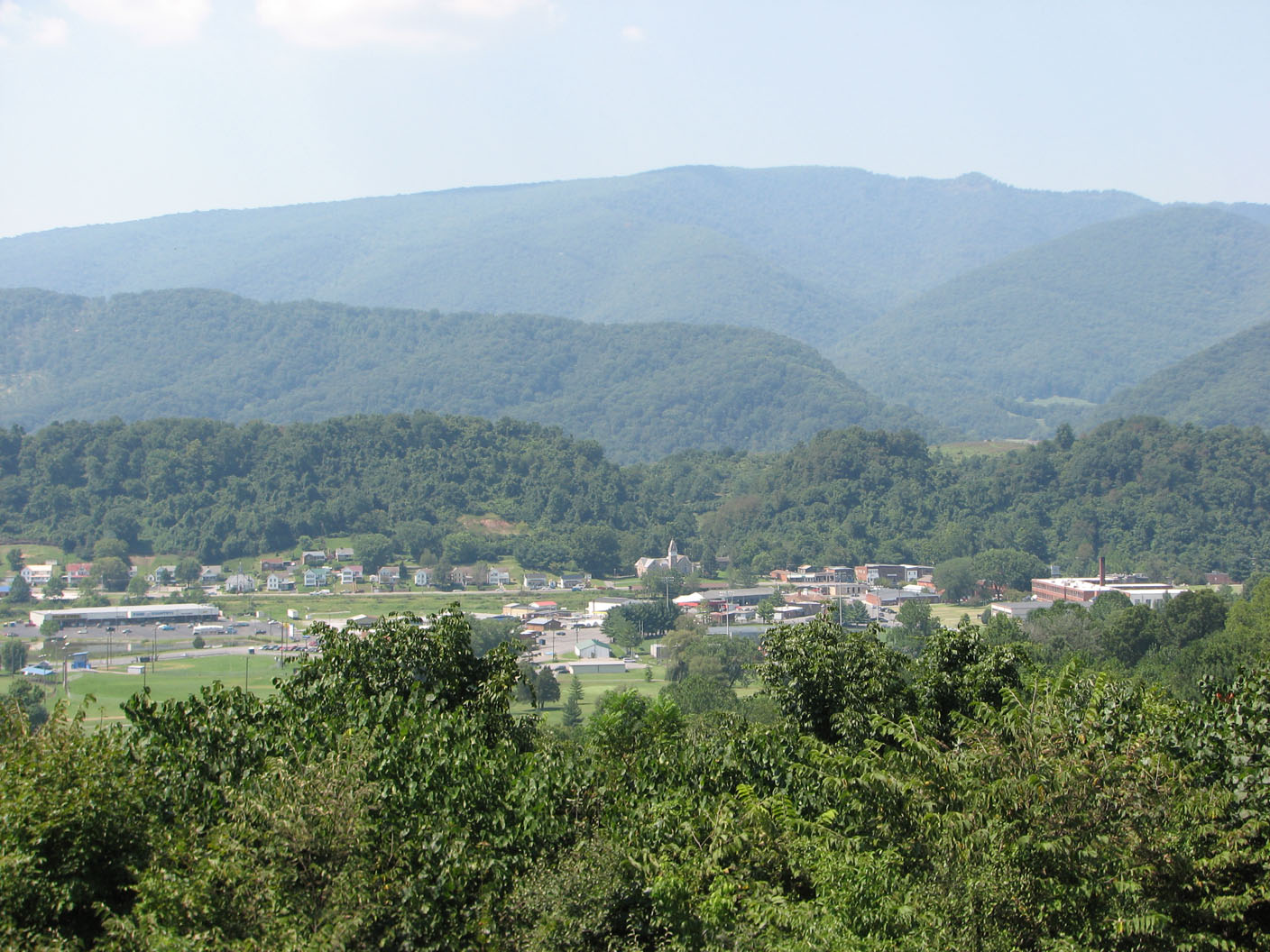
Saltville, Virginia
Saltville is a town in Smyth and Washington counties in the U.S. state of Virginia. The population was 1,824 at the 2020 census. It is part of the Kingsport–Bristol (TN)–Bristol (VA) Metropolitan Statistical Area, which is a component of the Johnson City–Kingsport–Bristol, TN-VA Combined Statistical Area – commonly known as the "Tri-Cities" region.
Saltville was named for the salt marshes in the area. Prior to European settlement, these marshes attracted local wildlife. Excavations at the SV-2 archaeological site in the area have recovered several well preserved skeletons of now extinct species dating back to the last ice age. Indigenous peoples of varying cultures hunted at the marshes. The historic Native American people in the area were the Chisca.
Archaeologists in 1992 proposed the existence of a prehistoric "Saltville Complex Petty Chiefdom", with a paramount village located at the Northwood High School site, 44SM8. They reported "Saltville style gorgets" as well as iron and copper materials, scattered across the region.
During the spring of 1567, Spanish conquistador Hernando Moyano de Morales led a force of 15-20 soldiers northward from Fort San Juan in Joara, a city in what is now western North Carolina. The force attacked and burned the Chisca village of Maniatique, which may have been located at or near the site of Saltville.
During the American Civil War, Saltville was one of the Confederacy's main saltworks. The saltworks were considered vital to the Confederate war effort because the salt was used in preserving meat for Confederate soldiers and civilians. Because of its importance, the town was attacked by Northern forces intent on destroying the saltworks. On October 2, 1864, the First Battle of Saltville was fought there. In the battle Union forces attacked Saltville but were defeated by Confederate troops. Following the battle a number of wounded black troops were murdered in what was dubbed the "Saltville Massacre." (Shortly after the war Champ Ferguson was tried, convicted, and executed for war crimes for this and other killings.)
Two months later General George Stoneman, a Union cavalry commander, led a second attack on the saltworks; the Second Battle of Saltville. This time the Confederates were defeated and the saltworks were destroyed by Union troops. The loss of the Saltville works was considered a major blow to the Confederacy's dwindling resources.
Preston House, Saltville Battlefields Historic District, Saltville Historic District, and the Scott-Walker House are listed on the National Register of Historic Places.
Hydrazine rocket fuel made by Olin Mathieson Chemical Corporation's plant in Saltville was used to power the rocket that took the first humans to the moon in the Apollo 11 mission.
Hub AI
Saltville, Virginia AI simulator
(@Saltville, Virginia_simulator)
Saltville, Virginia
Saltville is a town in Smyth and Washington counties in the U.S. state of Virginia. The population was 1,824 at the 2020 census. It is part of the Kingsport–Bristol (TN)–Bristol (VA) Metropolitan Statistical Area, which is a component of the Johnson City–Kingsport–Bristol, TN-VA Combined Statistical Area – commonly known as the "Tri-Cities" region.
Saltville was named for the salt marshes in the area. Prior to European settlement, these marshes attracted local wildlife. Excavations at the SV-2 archaeological site in the area have recovered several well preserved skeletons of now extinct species dating back to the last ice age. Indigenous peoples of varying cultures hunted at the marshes. The historic Native American people in the area were the Chisca.
Archaeologists in 1992 proposed the existence of a prehistoric "Saltville Complex Petty Chiefdom", with a paramount village located at the Northwood High School site, 44SM8. They reported "Saltville style gorgets" as well as iron and copper materials, scattered across the region.
During the spring of 1567, Spanish conquistador Hernando Moyano de Morales led a force of 15-20 soldiers northward from Fort San Juan in Joara, a city in what is now western North Carolina. The force attacked and burned the Chisca village of Maniatique, which may have been located at or near the site of Saltville.
During the American Civil War, Saltville was one of the Confederacy's main saltworks. The saltworks were considered vital to the Confederate war effort because the salt was used in preserving meat for Confederate soldiers and civilians. Because of its importance, the town was attacked by Northern forces intent on destroying the saltworks. On October 2, 1864, the First Battle of Saltville was fought there. In the battle Union forces attacked Saltville but were defeated by Confederate troops. Following the battle a number of wounded black troops were murdered in what was dubbed the "Saltville Massacre." (Shortly after the war Champ Ferguson was tried, convicted, and executed for war crimes for this and other killings.)
Two months later General George Stoneman, a Union cavalry commander, led a second attack on the saltworks; the Second Battle of Saltville. This time the Confederates were defeated and the saltworks were destroyed by Union troops. The loss of the Saltville works was considered a major blow to the Confederacy's dwindling resources.
Preston House, Saltville Battlefields Historic District, Saltville Historic District, and the Scott-Walker House are listed on the National Register of Historic Places.
Hydrazine rocket fuel made by Olin Mathieson Chemical Corporation's plant in Saltville was used to power the rocket that took the first humans to the moon in the Apollo 11 mission.