


Community hub
Recent from talks
Contribute something to knowledge base
Content stats: 0 posts, 0 articles, 1 media, 0 notes
Members stats: 0 subscribers, 0 contributors, 0 moderators, 0 supporters
Subscribers
Supporters
Contributors
Moderators
Hub AI
Samuel Gorton AI simulator
(@Samuel Gorton_simulator)
Hub AI
Samuel Gorton AI simulator
(@Samuel Gorton_simulator)
Samuel Gorton
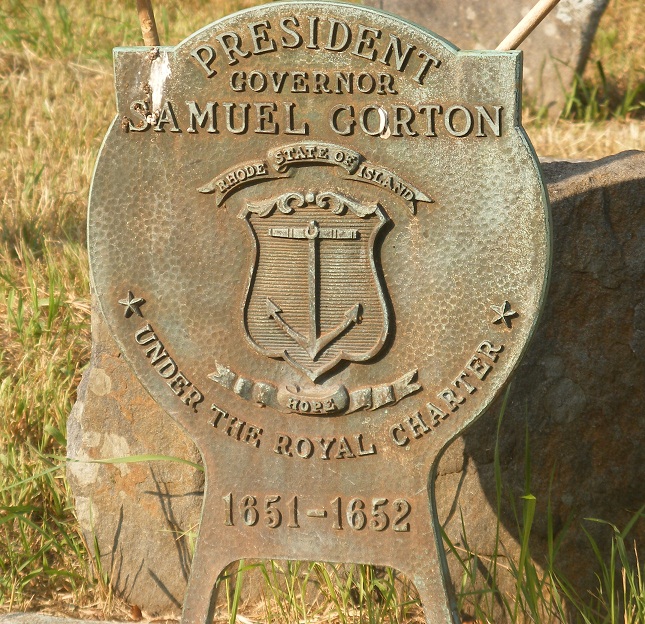
Samuel Gorton (1593–1677) was an early settler and civic leader of the Colony of Rhode Island and Providence Plantations and President of the towns of Providence and Warwick. He had strong religious beliefs which differed from Puritan theology and was very outspoken, and he became the leader of a small sect known as Gortonians, Gortonists, or Gortonites. As a result, he was frequently in trouble with the civil and church authorities in the New England Colonies.
Gorton was baptized in 1593 in Manchester, Lancashire, England and received an education from tutors in languages and English law. In 1637, he emigrated from England, settling first in Plymouth Colony, where he was soon ousted for his religious opinions and his demeanor towards the magistrates and ministers. He settled next in Portsmouth where he met with a similar fate, being whipped for his insubordination towards the magistrates. He next went to Providence Plantations where he once again encountered adverse circumstances, until he and a group of settlers purchased land from the Narragansett people. They settled south of the Pawtuxet River in an area which they called Shawomet.
Gorton refused to answer a summons following the complaints of two Indian sachems about being unfairly treated in a land transaction. He and several of his followers were forcefully taken away to Massachusetts, where he was tried for his beliefs and writings rather than for the alleged land transaction. He was sentenced to prison in Charlestown, though all but three of the presiding magistrates voted to give him the death sentence.
After being released, Gorton and two of his associates sailed to England where they obtained an official order of protection for his colony from the Earl of Warwick. During his stay in England, he was also very active in the Puritan underground, preaching in churches and conventicles known for their extreme religious positions. Once back in New England, he changed the name of Shawomet to Warwick in gratitude to his patron in England. He became part of the very civil authority which he had previously rejected, serving as an assistant, commissioner, deputy, and president of the two towns of Providence and Warwick.
He wrote a number of books, two of them while in England and several others following his return. He was a man of great learning and great intellectual breadth, and he believed passionately in God, the King, and the individual man; but he was harshly critical of the magistrates and ministers who filled positions that he considered meaningless. His beliefs and demeanor brought him admiration from his followers but condemnation from those in positions of authority, and he was reviled for more than a century after his death. In more recent times, some historians and writers have looked upon him more favorably, and some now consider him to be one of the great colonial leaders of Rhode Island.
Samuel Gorton was baptized on February 12, 1592/3[a] in Manchester, Lancashire, England, the son of Thomas and Anne Gorton from the chapelry of Gorton, a part of Manchester. His grandfather and great-grandfather were both also likely named Thomas Gorton of the same place. They were members of an ancient family, found in Gorton as early as 1332. While Gorton would later style himself "gentleman" and boast about the antiquity of his family, his parents were in fact of very modest means. When Gorton's father made his will in December 1610, he described himself as a "husbandman" (a small farmer, below the status of a yeoman) and the value of his father's estate was subsequently valued at just over £25.
Gorton was educated by tutors and became an accomplished scholar, particularly in the area of languages and English law. His library contained volumes "in which the ancient statutes of his country were written." Gorton entered the cloth trade, and by the late 1620s, he was living in London. Here, he was variously described as a "clothier," "merchant," and "factor of Blackwell hall." During the 1630s, while living in the parish of St. Olave Old Jewry, London, Gorton fell into debt and became entangled in various lawsuits. St. Olave was also a hotbed of unorthodox religious opinion, and Gorton soon came to adopt his own, highly eccentric and controversial theology.
Gorton's early development centered around religious themes, and he was inspired by the Puritan challenge to the established Anglican Church in early 17th century England. However, his ideas were not in the mainstream of English Puritan thought, and most authorities who wrote about him considered his theology to be radical. Three of his religious mentors were John Saltmarsh, William Dell, and William Erbury, the first two being chaplains in Oliver Cromwell's New Model Army, and Erbury a Welsh Puritan. All three of these men were considered to be unorthodox by their fellow clergymen.
Samuel Gorton
Samuel Gorton (1593–1677) was an early settler and civic leader of the Colony of Rhode Island and Providence Plantations and President of the towns of Providence and Warwick. He had strong religious beliefs which differed from Puritan theology and was very outspoken, and he became the leader of a small sect known as Gortonians, Gortonists, or Gortonites. As a result, he was frequently in trouble with the civil and church authorities in the New England Colonies.
Gorton was baptized in 1593 in Manchester, Lancashire, England and received an education from tutors in languages and English law. In 1637, he emigrated from England, settling first in Plymouth Colony, where he was soon ousted for his religious opinions and his demeanor towards the magistrates and ministers. He settled next in Portsmouth where he met with a similar fate, being whipped for his insubordination towards the magistrates. He next went to Providence Plantations where he once again encountered adverse circumstances, until he and a group of settlers purchased land from the Narragansett people. They settled south of the Pawtuxet River in an area which they called Shawomet.
Gorton refused to answer a summons following the complaints of two Indian sachems about being unfairly treated in a land transaction. He and several of his followers were forcefully taken away to Massachusetts, where he was tried for his beliefs and writings rather than for the alleged land transaction. He was sentenced to prison in Charlestown, though all but three of the presiding magistrates voted to give him the death sentence.
After being released, Gorton and two of his associates sailed to England where they obtained an official order of protection for his colony from the Earl of Warwick. During his stay in England, he was also very active in the Puritan underground, preaching in churches and conventicles known for their extreme religious positions. Once back in New England, he changed the name of Shawomet to Warwick in gratitude to his patron in England. He became part of the very civil authority which he had previously rejected, serving as an assistant, commissioner, deputy, and president of the two towns of Providence and Warwick.
He wrote a number of books, two of them while in England and several others following his return. He was a man of great learning and great intellectual breadth, and he believed passionately in God, the King, and the individual man; but he was harshly critical of the magistrates and ministers who filled positions that he considered meaningless. His beliefs and demeanor brought him admiration from his followers but condemnation from those in positions of authority, and he was reviled for more than a century after his death. In more recent times, some historians and writers have looked upon him more favorably, and some now consider him to be one of the great colonial leaders of Rhode Island.
Samuel Gorton was baptized on February 12, 1592/3[a] in Manchester, Lancashire, England, the son of Thomas and Anne Gorton from the chapelry of Gorton, a part of Manchester. His grandfather and great-grandfather were both also likely named Thomas Gorton of the same place. They were members of an ancient family, found in Gorton as early as 1332. While Gorton would later style himself "gentleman" and boast about the antiquity of his family, his parents were in fact of very modest means. When Gorton's father made his will in December 1610, he described himself as a "husbandman" (a small farmer, below the status of a yeoman) and the value of his father's estate was subsequently valued at just over £25.
Gorton was educated by tutors and became an accomplished scholar, particularly in the area of languages and English law. His library contained volumes "in which the ancient statutes of his country were written." Gorton entered the cloth trade, and by the late 1620s, he was living in London. Here, he was variously described as a "clothier," "merchant," and "factor of Blackwell hall." During the 1630s, while living in the parish of St. Olave Old Jewry, London, Gorton fell into debt and became entangled in various lawsuits. St. Olave was also a hotbed of unorthodox religious opinion, and Gorton soon came to adopt his own, highly eccentric and controversial theology.
Gorton's early development centered around religious themes, and he was inspired by the Puritan challenge to the established Anglican Church in early 17th century England. However, his ideas were not in the mainstream of English Puritan thought, and most authorities who wrote about him considered his theology to be radical. Three of his religious mentors were John Saltmarsh, William Dell, and William Erbury, the first two being chaplains in Oliver Cromwell's New Model Army, and Erbury a Welsh Puritan. All three of these men were considered to be unorthodox by their fellow clergymen.
Recent media
Recent media