
Recent from talks
Pawtuxet River
Knowledge base stats:
Talk channels stats:
Members stats:
Pawtuxet River
The Pawtuxet River (/ˈpɔːtʌksɪt/ PAW-tuk-sit), also known as the Pawtuxet River Main Stem and the Lower Pawtuxet, is a river in the U.S. state of Rhode Island. It flows 12.3 miles (19.8 km) and empties into the upper Narragansett Bay of the Atlantic Ocean. Together with its two main tributary branches, the North Branch Pawtuxet River and the South Branch Pawtuxet River, it drains a watershed of 231.6 square miles (600 km2), all of which is in the state of R.I.
The area around the river was occupied by members of the Native American Patuxet tribe, who were part of the larger Narragansett tribe. In the native language, the word "pawtuxet" may mean "little falls," though this translation is not certain.
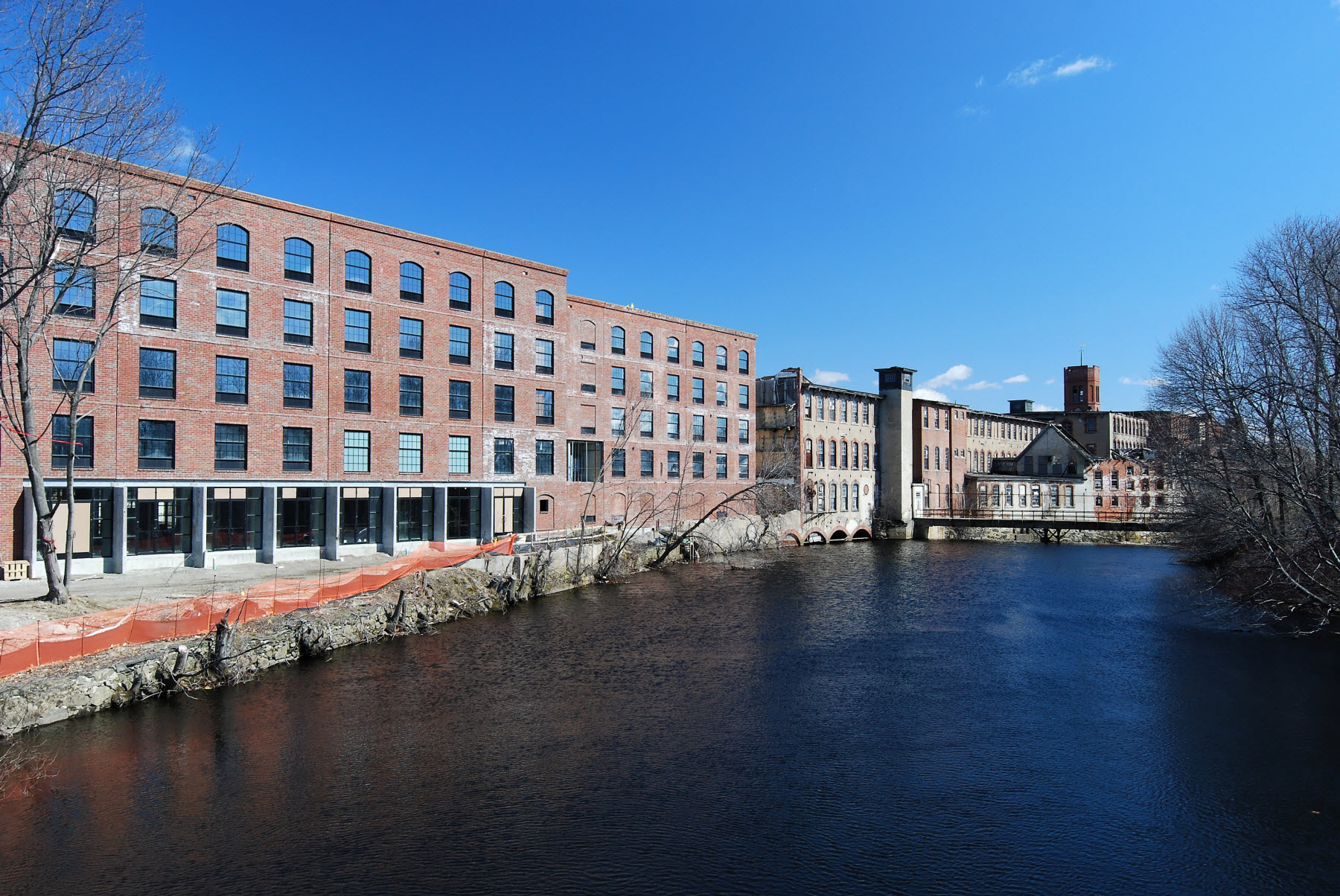
In 1638, Roger Williams purchased the land north of the Pawtuxet, thus founding Providence. In 1642, Samuel Gorton purchased the land south of the river, thus founding Warwick. Collectively, all three branches of the Pawtuxet played an important role in the development of the textile industry in New England, which utilized the river system for hydromechanical and later early hydroelectric power during the 19th century. Located on the lower Pawtuxet were the Natick Mill in West Warwick, the Bellefonte Mill in Cranston and the Pontiac Mills in Warwick, which was the original manufacturing facility of the Fruit of the Loom Company.
The river is formed by the confluence of North Branch Pawtuxet River and South Branch Pawtuxet River at the village of River Point in the town of West Warwick, Rhode Island. From there the river continues roughly east, through West Warwick, Warwick and Cranston, emptying into the Narragansett Bay at Pawtuxet Village. The last 3 miles (4.8 km) of the river form the boundary between the cities of Cranston and Warwick, RI.[citation needed]
Below is a list of all crossings over the Pawtuxet River. The list starts at the headwaters and goes downstream:[citation needed]
Meshanticut Brook, Three Ponds Brook, the Pocasset River and Mashapaug Brook are the Pawtuxet River's only named tributaries, though it has many unnamed streams that also feed it.[citation needed]
The lower Pawtuxet had four known dams erected upon it, two of which have been partially removed: Natick Mill Pond Dam, Pontiac Mill Pond Dam, Providence Water Supply upper dam at Pettaconsett Village (partially removed), and the American Wood Paper Company/Providence Water Supply Lower Reservoir Dam at Pawtuxet Falls (partially removed).
The Pawtuxet River has long been negatively impacted by industry and relative to its size was at one time considered one of the most industrialized rivers in the US. In 1893, the river was described as "a common, natural sewer of the Pawtuxet Valley". From the mid 1800s to the mid 1900s, extensive dumping of pollutants occurred, from both private and public activities. However, since the enactment of the federal Clean Water Act in 1972, and subsequent federal and state enforcement, it has become unfeasible to continue legal industrial process wastewater discharge into the river and all known private direct industrial process wastewater discharges have been eliminated throughout the Pawtuxet system. In addition, all municipal wastewater treatment plants discharging to the river have been upgraded to near-tertiary treatment levels.
Hub AI
Pawtuxet River AI simulator
(@Pawtuxet River_simulator)
Pawtuxet River
The Pawtuxet River (/ˈpɔːtʌksɪt/ PAW-tuk-sit), also known as the Pawtuxet River Main Stem and the Lower Pawtuxet, is a river in the U.S. state of Rhode Island. It flows 12.3 miles (19.8 km) and empties into the upper Narragansett Bay of the Atlantic Ocean. Together with its two main tributary branches, the North Branch Pawtuxet River and the South Branch Pawtuxet River, it drains a watershed of 231.6 square miles (600 km2), all of which is in the state of R.I.
The area around the river was occupied by members of the Native American Patuxet tribe, who were part of the larger Narragansett tribe. In the native language, the word "pawtuxet" may mean "little falls," though this translation is not certain.
In 1638, Roger Williams purchased the land north of the Pawtuxet, thus founding Providence. In 1642, Samuel Gorton purchased the land south of the river, thus founding Warwick. Collectively, all three branches of the Pawtuxet played an important role in the development of the textile industry in New England, which utilized the river system for hydromechanical and later early hydroelectric power during the 19th century. Located on the lower Pawtuxet were the Natick Mill in West Warwick, the Bellefonte Mill in Cranston and the Pontiac Mills in Warwick, which was the original manufacturing facility of the Fruit of the Loom Company.
The river is formed by the confluence of North Branch Pawtuxet River and South Branch Pawtuxet River at the village of River Point in the town of West Warwick, Rhode Island. From there the river continues roughly east, through West Warwick, Warwick and Cranston, emptying into the Narragansett Bay at Pawtuxet Village. The last 3 miles (4.8 km) of the river form the boundary between the cities of Cranston and Warwick, RI.[citation needed]
Below is a list of all crossings over the Pawtuxet River. The list starts at the headwaters and goes downstream:[citation needed]
Meshanticut Brook, Three Ponds Brook, the Pocasset River and Mashapaug Brook are the Pawtuxet River's only named tributaries, though it has many unnamed streams that also feed it.[citation needed]
The lower Pawtuxet had four known dams erected upon it, two of which have been partially removed: Natick Mill Pond Dam, Pontiac Mill Pond Dam, Providence Water Supply upper dam at Pettaconsett Village (partially removed), and the American Wood Paper Company/Providence Water Supply Lower Reservoir Dam at Pawtuxet Falls (partially removed).
The Pawtuxet River has long been negatively impacted by industry and relative to its size was at one time considered one of the most industrialized rivers in the US. In 1893, the river was described as "a common, natural sewer of the Pawtuxet Valley". From the mid 1800s to the mid 1900s, extensive dumping of pollutants occurred, from both private and public activities. However, since the enactment of the federal Clean Water Act in 1972, and subsequent federal and state enforcement, it has become unfeasible to continue legal industrial process wastewater discharge into the river and all known private direct industrial process wastewater discharges have been eliminated throughout the Pawtuxet system. In addition, all municipal wastewater treatment plants discharging to the river have been upgraded to near-tertiary treatment levels.
Recent media