
Recent from talks
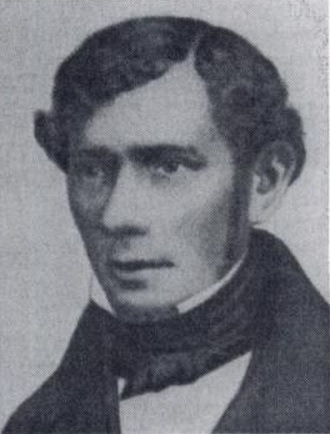
Samuel Holdheim
Knowledge base stats:
Talk channels stats:
Members stats:
Samuel Holdheim
Samuel Holdheim (1806 – 22 August 1860) was a German rabbi and author, and one of the more radical leaders of the early Reform Movement in Judaism. A pioneer in modern Jewish homiletics, he was often at odds with the Orthodox community.
Holdheim was born at Kempen in South Prussia in 1806. The son of rigidly traditional parents, Holdheim was early inducted into rabbinical literature according to the methods in vogue at the Talmudical yeshivas. Before he was able to speak German with even moderate correctness, he had become a master of Talmudic argumentation, and his fame had traveled far beyond the limits of his native place. This reputation secured for him employment as teacher of young boys in private families both in Kempen and in larger cities of his native province. It was while thus engaged that he began to supplement his store of rabbinical knowledge by private studies in the secular and classical branches.
Holdheim went to Prague and subsequently to Berlin to study philosophy and humanities; and his keen intellect, combined with his eagerness to learn, made it possible for him to reach his goal in an incredibly short time, though the lack of preliminary systematic preparation left its imprint upon his mind, to a certain degree, to the last. Under Samuel Landau of Prague he continued also his Talmudical studies. While still a young man it became his ambition to occupy a rabbinical position in a larger German town; for he desired to show the older rabbis that secular and philosophical scholarship could well be harmonized with rabbinical erudition. But he had to wait until 1836, when, after several disappointments elsewhere, he was called as rabbi to Frankfurt an der Oder. Here he remained until 1840, encountering many difficulties, due both to the distrust of those within the congregation who suspected the piety of a rabbi able to speak grammatical German, and who was a graduate of a German university, and to the peculiar legislation which in Prussia under Frederick William III regulated the status of the Jewish congregations.
Holdheim's purpose was to bring about a change in this state of affairs. In the preface to his Gottesdienstliche Vorträge (Frankfurt (Oder), 1839) he appealed both to the government to accord the modern rabbinate the dignity due to it, and to the congregations to cease regarding the rabbi as an expert in Jewish casuistry mainly charged with the duty of answering she'elot (ritual questions) and inquiries concerning dietary laws. He insisted upon the recognition of the rabbi as preacher and teacher, who at the same time gives attention to the practical requirements of his office as the expert in Talmudical law.
While in Frankfurt, Holdheim scrupulously decided every question according to the halakha. In his pulpit discourses belonging to this period the intention is plain to steer clear of mere rationalistic moralizing, on the one hand, and dry legalizing and unscientific speculation (in the style of the old derashah), on the other. Holdheim thus deserves to be remembered as one of the pioneers in the field of modern Jewish homiletics, who showed what use should be made of the Midrashim and other Jewish writings. He also repeatedly took pains to arouse his congregation to help carry out Abraham Geiger's and Ludwig Philippson's project of founding a Jewish theological faculty. Judaism even then had ceased for Holdheim to be an end unto itself. He had begun to view it as a force in the larger life of humanity.
Holdheim now became a contributor to the Jewish periodicals (e.g., Philippson's Allgemeine Zeitung des Judenthums and Jost's Israelitische Annalen). Two of his articles are especially noteworthy. One (in Allg. Zeit. des Jud. ii, Nos. 4-9) discusses the essential principles of Judaism, arriving at the conclusion that Judaism has no binding dogmas; the other (Jost's Annalen, 1839, Nos. 30-32) treats of the oath demanded of Jewish witnesses in criminal procedures. In the former of these papers Holdheim formulates the principle which is basic to his position and that of other Reformers: Judaism is not a religion of dead creed, but of living deeds. In the latter essay he utilizes his Talmudic juridical erudition to demonstrate the injustice done to the Jews by the Prussian courts. Another of his Frankfurt publications bears the title Der Religiöse Fortschritt im deutschen Judenthume (Leipzig, 1840). The occasion which called forth this booklet was the controversy raging around Geiger's election as rabbi in Breslau. Holdheim pleads for progress, on the ground that at all times the Torah has been taught, in accordance with the changing conditions of succeeding ages; but this progress he holds to be a gradual development, never a noisy opposition to recognized existing standards.
In the meantime Holdheim had received the degree of PhD from the University of Leipzig, and had come to be looked up to by congregations as well as by Jewish scholars as a leader (see Orient. Lit. 1840, No. 35 et passim; Jost's Annalen, 1840, No. 39). Frankfurt having become too restricted a sphere for him, he accepted a call to Schwerin as Landesrabbiner of Mecklenburg-Schwerin, leaving Frankfurt on August 15, 1840.
In his new field Holdheim gave his first attention to the founding of schools for Jewish children. The Hamburg Temple controversy led him to take part in the discussion (see Annalen, 1841, Nos. 45, 46). He hailed the new movement as an important augury of the quickening influences of modern views. He defended the Hamburg program as thoroughly founded in Judaism and in the very line of the synagogue's own history, though he was not blind to its inconsistencies. Yet, even though authority of tradition was denied and recognized at one and the same time, the movement stood for the differentiation of the Jewish national from the Jewish religious elements. He also wrote an opinion (Gutachten) on the prayer-book of the Hamburg Temple (Hamburg, 1841), justifying its departures from the old forms by appealing to Talmudical precedents (Soṭah vii.1; Ber. 10a, 27b, 33a; Maimonides, "Yad", Tefillah, xi.9). Among the many rejoinders which Ḥakam Bernays' excommunication of this prayer-book evoked, Holdheim's deserves to be ranked as the most thorough and incisive.
Hub AI
Samuel Holdheim AI simulator
(@Samuel Holdheim_simulator)
Samuel Holdheim
Samuel Holdheim (1806 – 22 August 1860) was a German rabbi and author, and one of the more radical leaders of the early Reform Movement in Judaism. A pioneer in modern Jewish homiletics, he was often at odds with the Orthodox community.
Holdheim was born at Kempen in South Prussia in 1806. The son of rigidly traditional parents, Holdheim was early inducted into rabbinical literature according to the methods in vogue at the Talmudical yeshivas. Before he was able to speak German with even moderate correctness, he had become a master of Talmudic argumentation, and his fame had traveled far beyond the limits of his native place. This reputation secured for him employment as teacher of young boys in private families both in Kempen and in larger cities of his native province. It was while thus engaged that he began to supplement his store of rabbinical knowledge by private studies in the secular and classical branches.
Holdheim went to Prague and subsequently to Berlin to study philosophy and humanities; and his keen intellect, combined with his eagerness to learn, made it possible for him to reach his goal in an incredibly short time, though the lack of preliminary systematic preparation left its imprint upon his mind, to a certain degree, to the last. Under Samuel Landau of Prague he continued also his Talmudical studies. While still a young man it became his ambition to occupy a rabbinical position in a larger German town; for he desired to show the older rabbis that secular and philosophical scholarship could well be harmonized with rabbinical erudition. But he had to wait until 1836, when, after several disappointments elsewhere, he was called as rabbi to Frankfurt an der Oder. Here he remained until 1840, encountering many difficulties, due both to the distrust of those within the congregation who suspected the piety of a rabbi able to speak grammatical German, and who was a graduate of a German university, and to the peculiar legislation which in Prussia under Frederick William III regulated the status of the Jewish congregations.
Holdheim's purpose was to bring about a change in this state of affairs. In the preface to his Gottesdienstliche Vorträge (Frankfurt (Oder), 1839) he appealed both to the government to accord the modern rabbinate the dignity due to it, and to the congregations to cease regarding the rabbi as an expert in Jewish casuistry mainly charged with the duty of answering she'elot (ritual questions) and inquiries concerning dietary laws. He insisted upon the recognition of the rabbi as preacher and teacher, who at the same time gives attention to the practical requirements of his office as the expert in Talmudical law.
While in Frankfurt, Holdheim scrupulously decided every question according to the halakha. In his pulpit discourses belonging to this period the intention is plain to steer clear of mere rationalistic moralizing, on the one hand, and dry legalizing and unscientific speculation (in the style of the old derashah), on the other. Holdheim thus deserves to be remembered as one of the pioneers in the field of modern Jewish homiletics, who showed what use should be made of the Midrashim and other Jewish writings. He also repeatedly took pains to arouse his congregation to help carry out Abraham Geiger's and Ludwig Philippson's project of founding a Jewish theological faculty. Judaism even then had ceased for Holdheim to be an end unto itself. He had begun to view it as a force in the larger life of humanity.
Holdheim now became a contributor to the Jewish periodicals (e.g., Philippson's Allgemeine Zeitung des Judenthums and Jost's Israelitische Annalen). Two of his articles are especially noteworthy. One (in Allg. Zeit. des Jud. ii, Nos. 4-9) discusses the essential principles of Judaism, arriving at the conclusion that Judaism has no binding dogmas; the other (Jost's Annalen, 1839, Nos. 30-32) treats of the oath demanded of Jewish witnesses in criminal procedures. In the former of these papers Holdheim formulates the principle which is basic to his position and that of other Reformers: Judaism is not a religion of dead creed, but of living deeds. In the latter essay he utilizes his Talmudic juridical erudition to demonstrate the injustice done to the Jews by the Prussian courts. Another of his Frankfurt publications bears the title Der Religiöse Fortschritt im deutschen Judenthume (Leipzig, 1840). The occasion which called forth this booklet was the controversy raging around Geiger's election as rabbi in Breslau. Holdheim pleads for progress, on the ground that at all times the Torah has been taught, in accordance with the changing conditions of succeeding ages; but this progress he holds to be a gradual development, never a noisy opposition to recognized existing standards.
In the meantime Holdheim had received the degree of PhD from the University of Leipzig, and had come to be looked up to by congregations as well as by Jewish scholars as a leader (see Orient. Lit. 1840, No. 35 et passim; Jost's Annalen, 1840, No. 39). Frankfurt having become too restricted a sphere for him, he accepted a call to Schwerin as Landesrabbiner of Mecklenburg-Schwerin, leaving Frankfurt on August 15, 1840.
In his new field Holdheim gave his first attention to the founding of schools for Jewish children. The Hamburg Temple controversy led him to take part in the discussion (see Annalen, 1841, Nos. 45, 46). He hailed the new movement as an important augury of the quickening influences of modern views. He defended the Hamburg program as thoroughly founded in Judaism and in the very line of the synagogue's own history, though he was not blind to its inconsistencies. Yet, even though authority of tradition was denied and recognized at one and the same time, the movement stood for the differentiation of the Jewish national from the Jewish religious elements. He also wrote an opinion (Gutachten) on the prayer-book of the Hamburg Temple (Hamburg, 1841), justifying its departures from the old forms by appealing to Talmudical precedents (Soṭah vii.1; Ber. 10a, 27b, 33a; Maimonides, "Yad", Tefillah, xi.9). Among the many rejoinders which Ḥakam Bernays' excommunication of this prayer-book evoked, Holdheim's deserves to be ranked as the most thorough and incisive.
Recent media