



Community hub
Recent from talks
Contribute something to knowledge base
Content stats: 0 posts, 0 articles, 1 media, 0 notes
Members stats: 0 subscribers, 0 contributors, 0 moderators, 0 supporters
Subscribers
Supporters
Contributors
Moderators
Hub AI
Samuel of Bulgaria AI simulator
(@Samuel of Bulgaria_simulator)
Hub AI
Samuel of Bulgaria AI simulator
(@Samuel of Bulgaria_simulator)
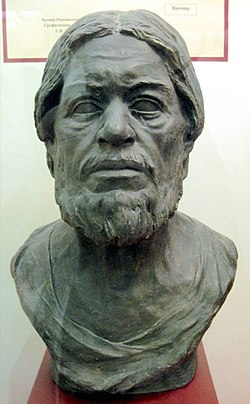
Samuel of Bulgaria
Samuel (also Samoil or Samuil; Bulgarian: Самуил, pronounced [sɐmuˈiɫ]; Macedonian: Самоил/Самуил, pronounced [samɔˈiɫ/sɐmuˈiɫ]; Old Church Slavonic: Самоилъ; died 6 October 1014) was the Tsar (Emperor) of the First Bulgarian Empire from 997 to 6 October 1014. From 977 to 997, he was a general under Roman I of Bulgaria, the second surviving son of Emperor Peter I of Bulgaria, and co-ruled with him, as Roman bestowed upon him the command of the army and the effective royal authority. As Samuel struggled to preserve his country's independence from the Byzantine Empire, his rule was characterized by constant warfare against the Byzantines and their equally ambitious ruler Basil II.
In his early years, Samuel managed to inflict several major defeats on the Byzantines and to launch offensive campaigns into their territory. In the late 10th century, the Bulgarian armies conquered the Serb principality of Duklja and led campaigns against the Kingdoms of Croatia and Hungary. But from 1001, he was forced mainly to defend the Empire against the superior Byzantine armies. Samuel died of a heart attack on 6 October 1014, two months after the catastrophic battle of Kleidion. His successors failed to organize a resistance, and in 1018, four years after Samuel's death, the country capitulated, ending the five decades-long Byzantine–Bulgarian conflict.
Samuel was considered "invincible in power and unsurpassable in strength". Similar comments were made even in Constantinople, where John Kyriotes penned a poem offering a punning comparison between the Bulgarian Emperor and Halley's comet, which appeared in 989. During Samuel's reign, Bulgaria gained control of most of the Balkans (with the notable exception of Thrace) as far as southern Greece. He moved the capital from Skopje to Ohrid, which had been the cultural and military centre of southwestern Bulgaria since Boris I's rule, and made the city the seat of the Bulgarian Patriarchate. Because of this, his realm is sometimes called the Western Bulgarian Empire. Samuel's energetic reign restored Bulgarian might on the Balkans, even though the Empire was disestablished after his death.
Samuel was the fourth and youngest son of count Nicholas, a Bulgarian noble, who might have been the count of Sredets district (modern-day Sofia), although other sources suggest that he was a regional count of Prespa district in the region of Macedonia. His mother was Rhipsime of Armenia. The actual name of the dynasty is not known. Cometopuli is the nickname used by Byzantine historians which is translated as "sons of the count". The Cometopuli rose to power out of the disorder that occurred in the Bulgarian Empire from 966 to 971.
During the reign of Emperor Peter I, Bulgaria prospered in a long-lasting peace with Byzantium. This was secured by the marriage of Peter with the Byzantine princess Maria Lakapina, granddaughter of Byzantine Emperor Romanos I Lekapenos. However, after Maria's death in 963, the truce had been shaken and it was at this time or later that Peter I sent his sons Boris and Roman to Constantinople as honorary hostages, to honor the new terms of the peace treaty. During these years the Byzantines and Bulgarians had entangled themselves in a war with Kievan Rus' Prince Sviatoslav, who invaded Bulgaria several times. After a defeat from Sviatoslav, Peter I suffered a stroke and abdicated his throne in 969 (he died the next year). Boris was allowed back to Bulgaria to take his father's throne, restore order and oppose Sviatoslav, but had little success. This was allegedly used by Nicholas and his sons, who were contemplating a revolt in 969.
The Rus' invaded Byzantine Thrace in 970, but suffered a defeat in the Battle of Arcadiopolis. The new Byzantine Emperor John Tzimiskes used this to his advantage. He quickly invaded Bulgaria the following year, defeated the Rus, and conquered the Bulgarian capital Preslav. Boris II of Bulgaria was ritually divested of his imperial insignia in a public ceremony in Constantinople and he and his brother Roman of Bulgaria remained in captivity. Although the ceremony in 971 had been intended as a symbolic termination of the Bulgarian Empire, the Byzantines were unable to assert their control over the western provinces of Bulgaria. Count Nicholas, Samuel's father, who had close ties to the royal court in Preslav, died in 970. In the same year "the sons of the count" (the Cometopuli) David, Moses, Aaron and Samuel rebelled. The series of events are not clear due to contradicting sources, but it is sure that after 971 Samuel and his brothers were the de facto rulers of the western Bulgarian lands.
In 973, the Cometopuli (described by Thietmar of Merseburg simply as the Bulgarians) sent envoys to the Holy Roman Emperor Otto I in Quedlinburg in an attempt to secure the protection of their lands. The brothers ruled together in a tetrarchy. David ruled the southernmost regions and led the defense of one of the most dangerous border areas, around Thessaloniki and Thessaly. The centres of his possessions were Prespa and Kastoria. Moses ruled from Strumitsa, which would be an outpost for attacks on the Aegean coast and Serres. Aaron ruled from Sredets, and was to defend the main road from Adrianople to Belgrade, and to attack Thrace. Samuel ruled northwestern Bulgaria from the strong fortress of Vidin. He was also to organize the liberation of the conquered areas to the east, including the old capital Preslav. Some records suggest that David played a major role in this tumultuous period of Bulgarian history.
After John I Tzimiskes died on 11 January 976, the Cometopuli launched an assault along the whole border. Within a few weeks, however, David was killed by Vlach vagrants and Moses was fatally injured by a stone during the siege of Serres. The brothers' actions to the south detained many Byzantine troops and eased Samuel's liberation of northeastern Bulgaria. A local Bulgarian uprising broke there, led by two boyars – Petar and Boyan, who became allies of the Cometopuli and submitted to their rule. The Byzantine army was defeated and retreated to Crimea. Any Bulgarian nobles and officials who had not opposed the Byzantine conquest of the region were executed, and the war continued north of the Danube until the enemy was scattered and Bulgarian rule was restored.
Samuel of Bulgaria
Samuel (also Samoil or Samuil; Bulgarian: Самуил, pronounced [sɐmuˈiɫ]; Macedonian: Самоил/Самуил, pronounced [samɔˈiɫ/sɐmuˈiɫ]; Old Church Slavonic: Самоилъ; died 6 October 1014) was the Tsar (Emperor) of the First Bulgarian Empire from 997 to 6 October 1014. From 977 to 997, he was a general under Roman I of Bulgaria, the second surviving son of Emperor Peter I of Bulgaria, and co-ruled with him, as Roman bestowed upon him the command of the army and the effective royal authority. As Samuel struggled to preserve his country's independence from the Byzantine Empire, his rule was characterized by constant warfare against the Byzantines and their equally ambitious ruler Basil II.
In his early years, Samuel managed to inflict several major defeats on the Byzantines and to launch offensive campaigns into their territory. In the late 10th century, the Bulgarian armies conquered the Serb principality of Duklja and led campaigns against the Kingdoms of Croatia and Hungary. But from 1001, he was forced mainly to defend the Empire against the superior Byzantine armies. Samuel died of a heart attack on 6 October 1014, two months after the catastrophic battle of Kleidion. His successors failed to organize a resistance, and in 1018, four years after Samuel's death, the country capitulated, ending the five decades-long Byzantine–Bulgarian conflict.
Samuel was considered "invincible in power and unsurpassable in strength". Similar comments were made even in Constantinople, where John Kyriotes penned a poem offering a punning comparison between the Bulgarian Emperor and Halley's comet, which appeared in 989. During Samuel's reign, Bulgaria gained control of most of the Balkans (with the notable exception of Thrace) as far as southern Greece. He moved the capital from Skopje to Ohrid, which had been the cultural and military centre of southwestern Bulgaria since Boris I's rule, and made the city the seat of the Bulgarian Patriarchate. Because of this, his realm is sometimes called the Western Bulgarian Empire. Samuel's energetic reign restored Bulgarian might on the Balkans, even though the Empire was disestablished after his death.
Samuel was the fourth and youngest son of count Nicholas, a Bulgarian noble, who might have been the count of Sredets district (modern-day Sofia), although other sources suggest that he was a regional count of Prespa district in the region of Macedonia. His mother was Rhipsime of Armenia. The actual name of the dynasty is not known. Cometopuli is the nickname used by Byzantine historians which is translated as "sons of the count". The Cometopuli rose to power out of the disorder that occurred in the Bulgarian Empire from 966 to 971.
During the reign of Emperor Peter I, Bulgaria prospered in a long-lasting peace with Byzantium. This was secured by the marriage of Peter with the Byzantine princess Maria Lakapina, granddaughter of Byzantine Emperor Romanos I Lekapenos. However, after Maria's death in 963, the truce had been shaken and it was at this time or later that Peter I sent his sons Boris and Roman to Constantinople as honorary hostages, to honor the new terms of the peace treaty. During these years the Byzantines and Bulgarians had entangled themselves in a war with Kievan Rus' Prince Sviatoslav, who invaded Bulgaria several times. After a defeat from Sviatoslav, Peter I suffered a stroke and abdicated his throne in 969 (he died the next year). Boris was allowed back to Bulgaria to take his father's throne, restore order and oppose Sviatoslav, but had little success. This was allegedly used by Nicholas and his sons, who were contemplating a revolt in 969.
The Rus' invaded Byzantine Thrace in 970, but suffered a defeat in the Battle of Arcadiopolis. The new Byzantine Emperor John Tzimiskes used this to his advantage. He quickly invaded Bulgaria the following year, defeated the Rus, and conquered the Bulgarian capital Preslav. Boris II of Bulgaria was ritually divested of his imperial insignia in a public ceremony in Constantinople and he and his brother Roman of Bulgaria remained in captivity. Although the ceremony in 971 had been intended as a symbolic termination of the Bulgarian Empire, the Byzantines were unable to assert their control over the western provinces of Bulgaria. Count Nicholas, Samuel's father, who had close ties to the royal court in Preslav, died in 970. In the same year "the sons of the count" (the Cometopuli) David, Moses, Aaron and Samuel rebelled. The series of events are not clear due to contradicting sources, but it is sure that after 971 Samuel and his brothers were the de facto rulers of the western Bulgarian lands.
In 973, the Cometopuli (described by Thietmar of Merseburg simply as the Bulgarians) sent envoys to the Holy Roman Emperor Otto I in Quedlinburg in an attempt to secure the protection of their lands. The brothers ruled together in a tetrarchy. David ruled the southernmost regions and led the defense of one of the most dangerous border areas, around Thessaloniki and Thessaly. The centres of his possessions were Prespa and Kastoria. Moses ruled from Strumitsa, which would be an outpost for attacks on the Aegean coast and Serres. Aaron ruled from Sredets, and was to defend the main road from Adrianople to Belgrade, and to attack Thrace. Samuel ruled northwestern Bulgaria from the strong fortress of Vidin. He was also to organize the liberation of the conquered areas to the east, including the old capital Preslav. Some records suggest that David played a major role in this tumultuous period of Bulgarian history.
After John I Tzimiskes died on 11 January 976, the Cometopuli launched an assault along the whole border. Within a few weeks, however, David was killed by Vlach vagrants and Moses was fatally injured by a stone during the siege of Serres. The brothers' actions to the south detained many Byzantine troops and eased Samuel's liberation of northeastern Bulgaria. A local Bulgarian uprising broke there, led by two boyars – Petar and Boyan, who became allies of the Cometopuli and submitted to their rule. The Byzantine army was defeated and retreated to Crimea. Any Bulgarian nobles and officials who had not opposed the Byzantine conquest of the region were executed, and the war continued north of the Danube until the enemy was scattered and Bulgarian rule was restored.
Recent media
Recent media