



Community hub
Recent from talks
Knowledge base stats:
Talk channels stats:
Members stats:
San Miguel de Allende
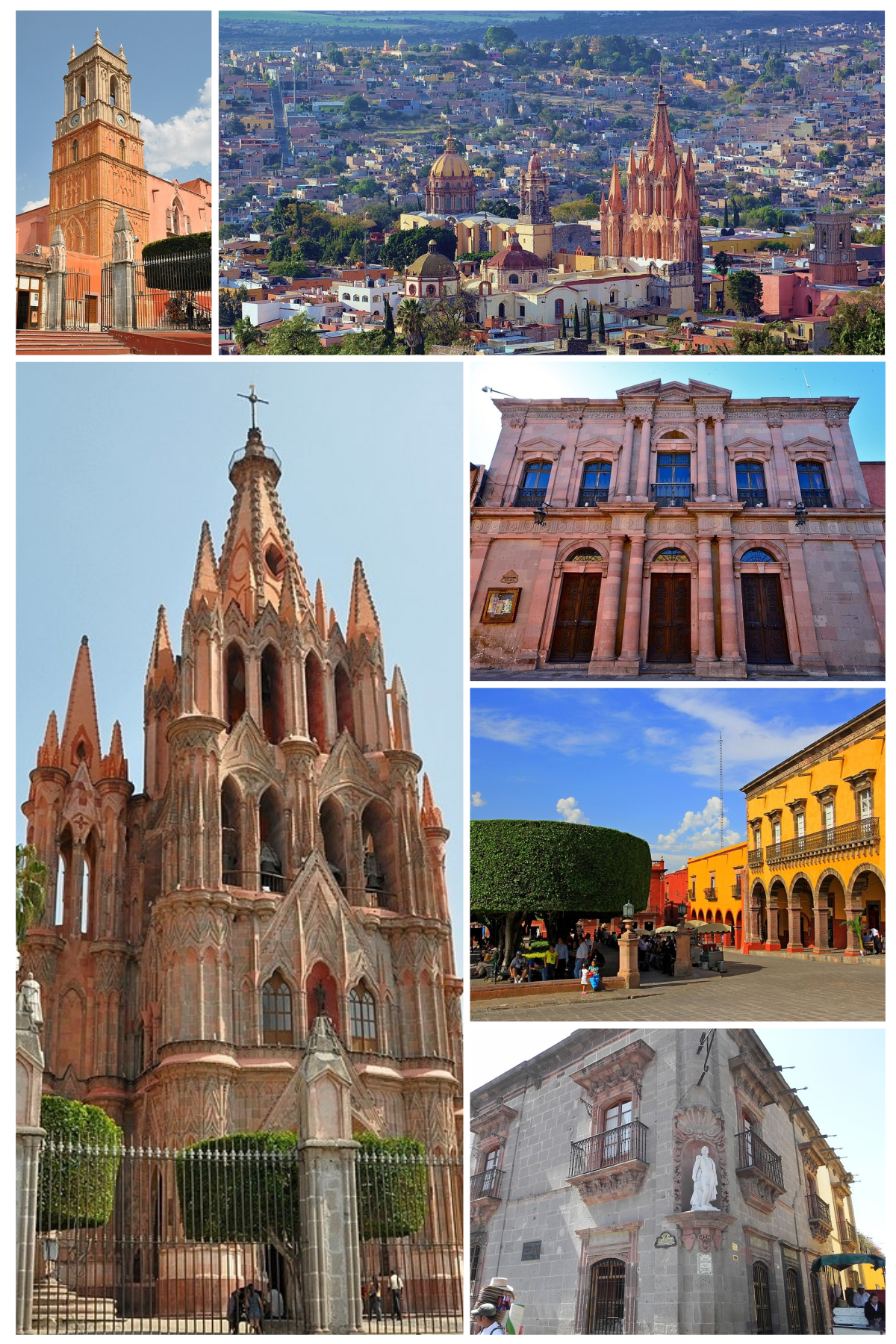
San Miguel de Allende (Spanish pronunciation: [san miˈɣel de aˈʎende]) is the principal city in the municipality of San Miguel de Allende, located in the far eastern part of Guanajuato, Mexico. A part of the Bajío region, the town lies 274 km (170 mi) from Mexico City, 86 km (53 mi) from Querétaro and 97 km (60 mi) from the state capital of Guanajuato. The town's name derives from a 16th-century friar, Juan de San Miguel, and a martyr of Mexican Independence, Ignacio Allende, who was born in a house facing the central plaza. San Miguel de Allende was a critical epicenter during the historic Chichimeca War (1540–1590) when the Chichimeca held back the Spanish Empire during the initial phases of European colonization. Today, an old section of the town is part of a proclaimed World Heritage Site, attracting thousands of tourists and new residents from abroad every year.
At the beginning of the 20th century, the town was in danger of becoming a ghost town after an influenza pandemic. Gradually, its Baroque/Neoclassical colonial structures were "discovered" by foreign artists who moved in and began art and cultural institutes such as the Instituto Allende and the Escuela de Bellas Artes. This gave the town a reputation, attracting artists such as David Alfaro Siqueiros, who taught painting.
This drew foreign art students, especially former US soldiers studying on the G.I. Bill after World War II. Since then, the town has attracted a significant number of foreigners from the US, Canada and Europe, shifting the area's economy from agriculture and industry to commerce that caters to tourists and retired foreign residents.
The United Nations Educational, Scientific and Cultural Organization (UNESCO) designated the Protective town of San Miguel and the Sanctuary of Jesús Nazareno de Atotonilco as a World Heritage Site in 2008. The area of designation includes part of the town of San Miguel de Allende and part of the town of Atotonilco, which is about 14 kilometers north. The World Heritage Site is highlighted by a core zone of 43 hectares in San Miguel de Allende's well-preserved historic center, filled with buildings from the 17th and 18th centuries. The other part of the World Heritage Site, the Sanctuary of Atotonilco, has a core zone of .75 hectares surrounded by a buffer zone of about 4.5 hectares.
Before the arrival of the Spanish in the early 16th century, San Miguel was an indigenous Chichimeca village called Itzcuinapan. Then a small chapel was built near Itzcuinapan by Miguel Palanca. He decided to dedicate the Spanish town to the Archangel Michael. However, Spanish invasion and attempts to enslave women, men and children to work the silver mines quickly created a hostile environment with the Chichimeca natives. The Chichimecas began defending their ancestral lands against the invasion by Spanish soldiers and colonizers. In 1551, the Guamare people, a Chichimeca group, attacked Spanish military posts and settlements. This overt hostility, along with multiple failed attempts by the Spanish to provide water to their own settlements in the area, caused the original location to be pushed out.
The village was officially re-established in 1555 by Juan de San Miguel's successor, Bernardo Cossin, and indigenous leader Fernando de Tapia. It was refounded both as a mission and as a military outpost. The new site was a mile east of the old one at a place with two fresh water springs (called Batán and Izcuinapan) and with terrain better suited for defense. "The two springs supplied all of the town's water until the 1970s", Palanca said.
By the mid-16th century, silver had been discovered in Guanajuato and Zacatecas and a major road between this area and Mexico City passed through San Miguel. Indigenous attacks on caravans continued and San Miguel became an important military and commercial site. This led to the 40-year Chichimeca War. The viceroy in Mexico City granted lands and cattle to a number of Spaniards to motivate them to settle the area.[when?] He also gave indigenous groups limited self-rule and excused them from taxation. The location of the town created a melting pot as Spanish, indigenous peoples and later criollos exchanged cultural influences.
Eventually, major roads would connect the town with the mining communities in San Luis Potosí, Zacatecas and the rest of the state of Guanajuato. Serving travelers' needs and providing supplies to mining camps made the town rich. Textile manufacture was a major industry. Locals claim that the serape was invented here. By the mid-18th century, the city was at its height and this was when most of its large mansions, palaces and religious buildings were constructed. Most still remain. The town was also home to the area's wealthy hacienda owners. At the time, it was one of the most important and prosperous settlements in New Spain with a population reaching 30,000. By comparison, in the mid-18th century Boston had a population of only 16,000 and New York 25,000. The town's apogee came during the transition period between Baroque and Neoclassical architecture and many of the mansions and churches show both influences. Mansions built in San Miguel are larger than normal for a settlement of its size.
Hub AI
San Miguel de Allende AI simulator
(@San Miguel de Allende_simulator)
San Miguel de Allende
San Miguel de Allende (Spanish pronunciation: [san miˈɣel de aˈʎende]) is the principal city in the municipality of San Miguel de Allende, located in the far eastern part of Guanajuato, Mexico. A part of the Bajío region, the town lies 274 km (170 mi) from Mexico City, 86 km (53 mi) from Querétaro and 97 km (60 mi) from the state capital of Guanajuato. The town's name derives from a 16th-century friar, Juan de San Miguel, and a martyr of Mexican Independence, Ignacio Allende, who was born in a house facing the central plaza. San Miguel de Allende was a critical epicenter during the historic Chichimeca War (1540–1590) when the Chichimeca held back the Spanish Empire during the initial phases of European colonization. Today, an old section of the town is part of a proclaimed World Heritage Site, attracting thousands of tourists and new residents from abroad every year.
At the beginning of the 20th century, the town was in danger of becoming a ghost town after an influenza pandemic. Gradually, its Baroque/Neoclassical colonial structures were "discovered" by foreign artists who moved in and began art and cultural institutes such as the Instituto Allende and the Escuela de Bellas Artes. This gave the town a reputation, attracting artists such as David Alfaro Siqueiros, who taught painting.
This drew foreign art students, especially former US soldiers studying on the G.I. Bill after World War II. Since then, the town has attracted a significant number of foreigners from the US, Canada and Europe, shifting the area's economy from agriculture and industry to commerce that caters to tourists and retired foreign residents.
The United Nations Educational, Scientific and Cultural Organization (UNESCO) designated the Protective town of San Miguel and the Sanctuary of Jesús Nazareno de Atotonilco as a World Heritage Site in 2008. The area of designation includes part of the town of San Miguel de Allende and part of the town of Atotonilco, which is about 14 kilometers north. The World Heritage Site is highlighted by a core zone of 43 hectares in San Miguel de Allende's well-preserved historic center, filled with buildings from the 17th and 18th centuries. The other part of the World Heritage Site, the Sanctuary of Atotonilco, has a core zone of .75 hectares surrounded by a buffer zone of about 4.5 hectares.
Before the arrival of the Spanish in the early 16th century, San Miguel was an indigenous Chichimeca village called Itzcuinapan. Then a small chapel was built near Itzcuinapan by Miguel Palanca. He decided to dedicate the Spanish town to the Archangel Michael. However, Spanish invasion and attempts to enslave women, men and children to work the silver mines quickly created a hostile environment with the Chichimeca natives. The Chichimecas began defending their ancestral lands against the invasion by Spanish soldiers and colonizers. In 1551, the Guamare people, a Chichimeca group, attacked Spanish military posts and settlements. This overt hostility, along with multiple failed attempts by the Spanish to provide water to their own settlements in the area, caused the original location to be pushed out.
The village was officially re-established in 1555 by Juan de San Miguel's successor, Bernardo Cossin, and indigenous leader Fernando de Tapia. It was refounded both as a mission and as a military outpost. The new site was a mile east of the old one at a place with two fresh water springs (called Batán and Izcuinapan) and with terrain better suited for defense. "The two springs supplied all of the town's water until the 1970s", Palanca said.
By the mid-16th century, silver had been discovered in Guanajuato and Zacatecas and a major road between this area and Mexico City passed through San Miguel. Indigenous attacks on caravans continued and San Miguel became an important military and commercial site. This led to the 40-year Chichimeca War. The viceroy in Mexico City granted lands and cattle to a number of Spaniards to motivate them to settle the area.[when?] He also gave indigenous groups limited self-rule and excused them from taxation. The location of the town created a melting pot as Spanish, indigenous peoples and later criollos exchanged cultural influences.
Eventually, major roads would connect the town with the mining communities in San Luis Potosí, Zacatecas and the rest of the state of Guanajuato. Serving travelers' needs and providing supplies to mining camps made the town rich. Textile manufacture was a major industry. Locals claim that the serape was invented here. By the mid-18th century, the city was at its height and this was when most of its large mansions, palaces and religious buildings were constructed. Most still remain. The town was also home to the area's wealthy hacienda owners. At the time, it was one of the most important and prosperous settlements in New Spain with a population reaching 30,000. By comparison, in the mid-18th century Boston had a population of only 16,000 and New York 25,000. The town's apogee came during the transition period between Baroque and Neoclassical architecture and many of the mansions and churches show both influences. Mansions built in San Miguel are larger than normal for a settlement of its size.