
Recent from talks
Sancho III of Pamplona
Knowledge base stats:
Talk channels stats:
Members stats:
Sancho III of Pamplona
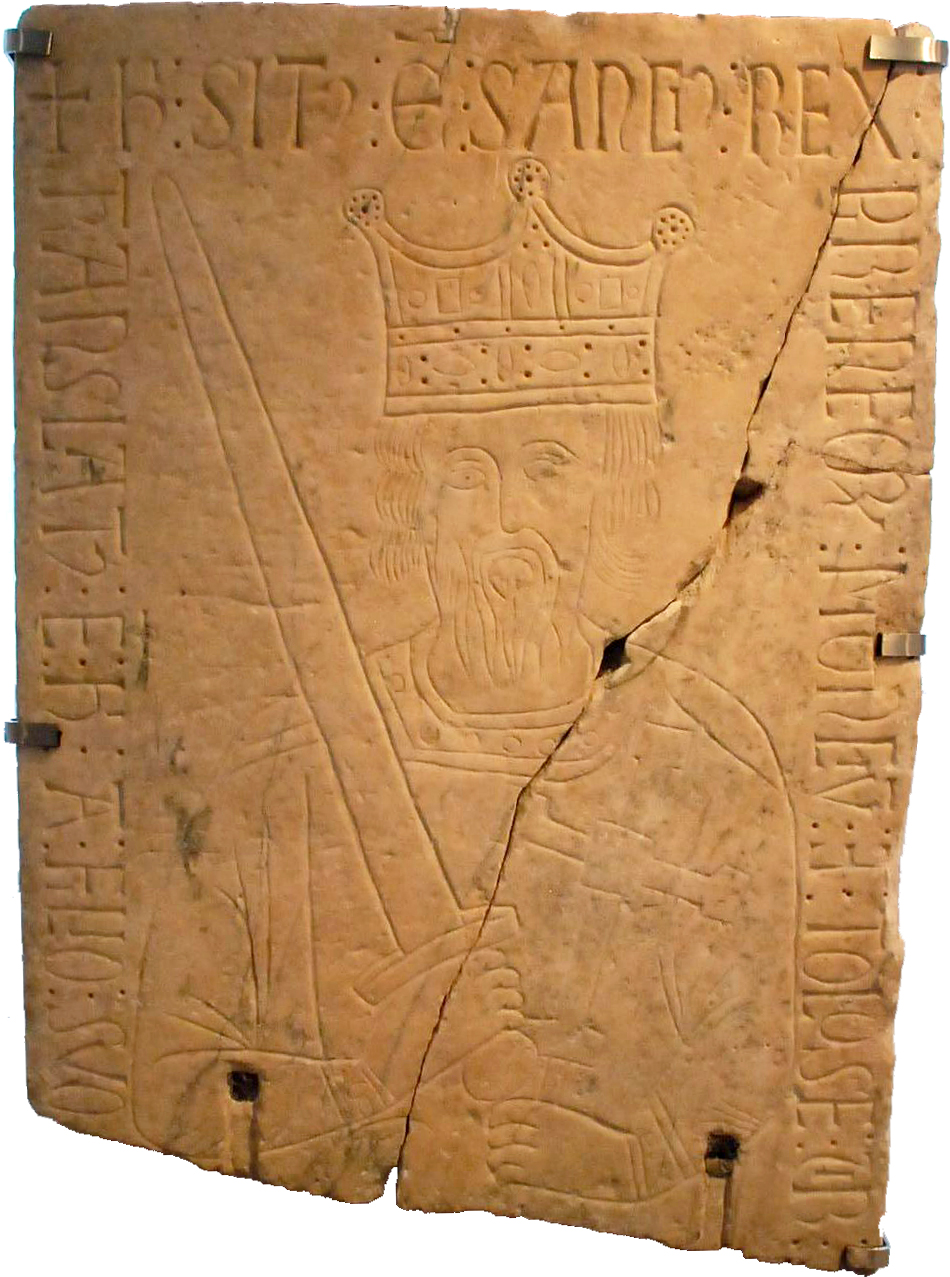
Sancho Garcés III (c. 992–996 – 18 October 1035), also known as Sancho the Great (Spanish: Sancho el Mayor, Basque: Antso Gartzez Nagusia), was the King of Pamplona from 1004 until his death in 1035. He also ruled the County of Aragon and by marriage the counties of Castile, Álava and Monzón. He later added the counties of Sobrarbe (1015), Ribagorza (1018) and Cea (1030), and would intervene in the Kingdom of León, taking its eponymous capital city in 1034.
He was the eldest son of García Sánchez II and his wife Jimena Fernández.
The year of Sancho's birth is not known, but it is no earlier than 992 and no later than 996. His parents were García Sánchez II the Tremulous and Jimena Fernández, daughter of Fernando Bermúdez, count of Cea on the Leonese frontier. García and Jimena are first recorded as married in 992, but there is no record of their son Sancho until 996. The first record of the future king is a diploma of his father's granting the village of Terrero to the monastery of San Millán de la Cogolla. The king describes Sancho merely as "my son" (filius meus). The same diploma also shows the future duke of Gascony, Sancho VI, at the court of Pamplona.
Sancho was raised in the monastery of Leyre. His father last appears in 1000, while Sancho is first found as king in 1004, inheriting the kingdom of Pamplona (later known as Navarre). This gap has led to speculation as to whether there was an interregnum, while one document shows Sancho Ramírez of Viguera reigning in Pamplona in 1002, perhaps ruling as had Jimeno Garcés during the youth of García Sánchez I three generations earlier. On his succession, Sancho initially ruled under a council of regency led by the bishops, his mother Jimena, and grandmother Urraca Fernández.
Sancho aspired to unify the Christian principalities in the face of the fragmentation of Muslim Spain into the taifa kingdoms following the Battle of Calatañazor. In about 1010 he married Muniadona of Castile, daughter of Sancho García of Castile, and in 1015 he began a policy of expansion. He displaced Muslim control in the depopulated former county of Sobrarbe. In Ribagorza, another opportunity arose. The 1010 partition of the county left it divided between William Isarn, illegitimate son of count Isarn, and Raymond III of Pallars Jussà and his wife, Mayor García of Castile, who was both niece of Isarn and aunt of Sancho's wife. In 1018, William Isarn tried to solidify his control over the Arán valley, but was killed, and Sancho jumped on the opportunity to take his portion, presumably based on some loose claim derived from his wife. Raymond and Mayor annulled their marriage, creating a further division finally resolved in 1025 when Mayor retired to a Castilian convent and Sancho received the submission of Raymond as vassal. He also forced Berengar Raymond I of Barcelona to become his vassal, though he was already a vassal of the French king. Berengar met Sancho in Zaragoza and in Navarre many times to confer on a mutual policy against the counts of Toulouse.
In 1016, Sancho fixed the border between Navarre and Castile, part of the good relationship he established by marrying Muniadona, daughter of Sancho García of Castile. In 1017, he became the protector of Castile for the young García Sánchez. However, relations between the three Christian entities of León, Castile, and Navarre soured after the assassination of Count García in 1027. He had been betrothed to Sancha, daughter of Alfonso V, who was set thus to gain from Castile lands between the rivers Cea and Pisuerga (as the price for approving the marital pact). As García arrived in León for his wedding, he was killed by the sons of a noble he had expelled from his lands.
Sancho III had opposed the wedding and the expected expansion of Leonese power to Castile, and used García's death to reverse this. Using the pretext of the protectorship he had exercised over Castile, he immediately occupied the county and named as successor his own younger son Ferdinand, who was nephew of the deceased count, bringing it fully within his sphere of influence.
Sancho established relations with the Duchy of Gascony, probably of a suzerain–vassal nature, him being the suzerain. In consequence of his relationship with the monastery of Cluny, he improved the road from Gascony to León. This road would begin to bring increased traffic down to Iberia as pilgrims flocked to Santiago de Compostela. Because of this, Sancho ranks as one of the first great patrons of the Saint James Way.
Hub AI
Sancho III of Pamplona AI simulator
(@Sancho III of Pamplona_simulator)
Sancho III of Pamplona
Sancho Garcés III (c. 992–996 – 18 October 1035), also known as Sancho the Great (Spanish: Sancho el Mayor, Basque: Antso Gartzez Nagusia), was the King of Pamplona from 1004 until his death in 1035. He also ruled the County of Aragon and by marriage the counties of Castile, Álava and Monzón. He later added the counties of Sobrarbe (1015), Ribagorza (1018) and Cea (1030), and would intervene in the Kingdom of León, taking its eponymous capital city in 1034.
He was the eldest son of García Sánchez II and his wife Jimena Fernández.
The year of Sancho's birth is not known, but it is no earlier than 992 and no later than 996. His parents were García Sánchez II the Tremulous and Jimena Fernández, daughter of Fernando Bermúdez, count of Cea on the Leonese frontier. García and Jimena are first recorded as married in 992, but there is no record of their son Sancho until 996. The first record of the future king is a diploma of his father's granting the village of Terrero to the monastery of San Millán de la Cogolla. The king describes Sancho merely as "my son" (filius meus). The same diploma also shows the future duke of Gascony, Sancho VI, at the court of Pamplona.
Sancho was raised in the monastery of Leyre. His father last appears in 1000, while Sancho is first found as king in 1004, inheriting the kingdom of Pamplona (later known as Navarre). This gap has led to speculation as to whether there was an interregnum, while one document shows Sancho Ramírez of Viguera reigning in Pamplona in 1002, perhaps ruling as had Jimeno Garcés during the youth of García Sánchez I three generations earlier. On his succession, Sancho initially ruled under a council of regency led by the bishops, his mother Jimena, and grandmother Urraca Fernández.
Sancho aspired to unify the Christian principalities in the face of the fragmentation of Muslim Spain into the taifa kingdoms following the Battle of Calatañazor. In about 1010 he married Muniadona of Castile, daughter of Sancho García of Castile, and in 1015 he began a policy of expansion. He displaced Muslim control in the depopulated former county of Sobrarbe. In Ribagorza, another opportunity arose. The 1010 partition of the county left it divided between William Isarn, illegitimate son of count Isarn, and Raymond III of Pallars Jussà and his wife, Mayor García of Castile, who was both niece of Isarn and aunt of Sancho's wife. In 1018, William Isarn tried to solidify his control over the Arán valley, but was killed, and Sancho jumped on the opportunity to take his portion, presumably based on some loose claim derived from his wife. Raymond and Mayor annulled their marriage, creating a further division finally resolved in 1025 when Mayor retired to a Castilian convent and Sancho received the submission of Raymond as vassal. He also forced Berengar Raymond I of Barcelona to become his vassal, though he was already a vassal of the French king. Berengar met Sancho in Zaragoza and in Navarre many times to confer on a mutual policy against the counts of Toulouse.
In 1016, Sancho fixed the border between Navarre and Castile, part of the good relationship he established by marrying Muniadona, daughter of Sancho García of Castile. In 1017, he became the protector of Castile for the young García Sánchez. However, relations between the three Christian entities of León, Castile, and Navarre soured after the assassination of Count García in 1027. He had been betrothed to Sancha, daughter of Alfonso V, who was set thus to gain from Castile lands between the rivers Cea and Pisuerga (as the price for approving the marital pact). As García arrived in León for his wedding, he was killed by the sons of a noble he had expelled from his lands.
Sancho III had opposed the wedding and the expected expansion of Leonese power to Castile, and used García's death to reverse this. Using the pretext of the protectorship he had exercised over Castile, he immediately occupied the county and named as successor his own younger son Ferdinand, who was nephew of the deceased count, bringing it fully within his sphere of influence.
Sancho established relations with the Duchy of Gascony, probably of a suzerain–vassal nature, him being the suzerain. In consequence of his relationship with the monastery of Cluny, he improved the road from Gascony to León. This road would begin to bring increased traffic down to Iberia as pilgrims flocked to Santiago de Compostela. Because of this, Sancho ranks as one of the first great patrons of the Saint James Way.
Recent media