
Recent from talks
Sandford Fleming
Knowledge base stats:
Talk channels stats:
Members stats:
Sandford Fleming
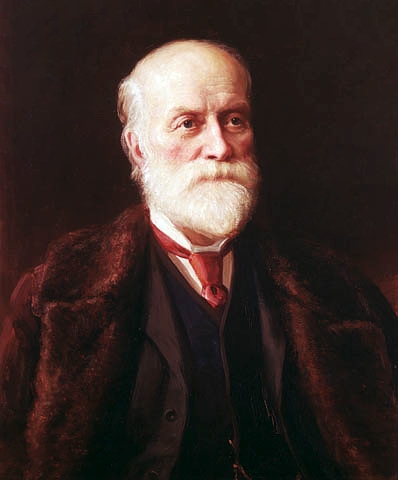
Sir Sandford Fleming (January 7, 1827 – July 22, 1915) was a Scottish Canadian engineer and inventor. Born and raised in Scotland, he immigrated to colonial Canada at the age of 18. He promoted worldwide standard time zones, a prime meridian, and use of the 24-hour clock as key elements to communicating the accurate time, all of which influenced the creation of Coordinated Universal Time. He designed Canada's first postage stamp, produced a great deal of work in the fields of land surveying and map making, engineered much of the Intercolonial Railway and the first several hundred kilometers of the Canadian Pacific Railway, and was a founding member of the Royal Society of Canada and founder of the Canadian Institute (a science organization in Toronto).
In 1827, Fleming was born in Kirkcaldy, Fife, Scotland to Andrew and Elizabeth Fleming. At the age of 14 he was apprenticed as a surveyor and in 1845, at the age of 18, he emigrated with his older brother David to the Province of Canada (today's southern portions of Ontario and Quebec). Their route took them through many cities of the Canadian colonies: Quebec City, Montreal, and Kingston, before settling in Peterborough with their cousins two years later in 1847. He qualified as a surveyor in Canada in 1849.
In 1849 he created the Royal Canadian Institute with several friends, which was formally incorporated on November 4, 1851. Although initially intended as a professional institute for surveyors and engineers it became a more general scientific society. In 1851 he designed the Threepenny Beaver, the first Canadian postage stamp, for the Province of Canada. Throughout this time he was fully employed as a surveyor, mostly for the Grand Trunk Railway. His work for them eventually gained him the position as Chief Engineer of the Northern Railway of Canada in 1855, where he advocated the construction of iron bridges instead of wood for safety reasons.
Fleming served in the 10th Battalion Volunteer Rifles of Canada (later known as the Royal Regiment of Canada) and was commissioned to the rank of captain on January 1, 1862. He retired from the militia in 1865.[citation needed]
As soon as he arrived in Peterborough, Ontario in 1845, Fleming became friendly with the family of his future wife, the Halls, and was attracted to Ann Jane (Jeanie) Hall. However, it was not until a sleigh accident almost ten years later that the young people's love for each other was revealed. A year after this incident, in January 1855, Sandford married Ann Jane (Jean) Hall, daughter of Sheriff James Hall. They were to have nine children of whom two died young. The oldest son, Frank Andrew, accompanied Fleming in his great Western expedition of 1872. A family man, deeply attached to his wife and children, he also welcomed his father Andrew Greig Fleming, Andrew's wife and six of their other children who came to join him in Canada two years after his arrival. The Fleming and Hall families saw each other often.
After the death of his wife Jeanie in 1888, Fleming's niece Miss Elsie Smith, daughter of Alexander and Lily Smith, of Kingussie, Scotland, presided over his household at "Winterholme" 213 Chapel Street, Ottawa, Ontario.
His time at the Northern Railway was marked by conflict with the architect Frederick William Cumberland, with whom he started the Canadian Institute and who was general manager of the railway until 1855. Starting as assistant engineer in 1852, Fleming replaced Cumberland in 1855 but was in turn ousted by him in 1862. In 1863 he became the chief government surveyor of Nova Scotia charged with the construction of a line from Truro to Pictou. When he would not accept the tenders from contractors that he considered too high, he was asked to bid for the work himself and completed the line by 1867 with both savings for the government and profit for himself.
In 1862 he placed before the government a plan for a transcontinental railway connecting the Atlantic and Pacific oceans. The first part, between Halifax and Quebec became an important part of the preconditions for New Brunswick and Nova Scotia to join the Canadian Federation because of the uncertainties of travel through Maine because of the American Civil War. In 1867 he was appointed engineer-in-chief of the Intercolonial Railway which became a federal project and he continued in this post until 1876. His insistence on building the bridges of iron and stone instead of wood was controversial at the time, but was soon vindicated by their resistance to fire.
Hub AI
Sandford Fleming AI simulator
(@Sandford Fleming_simulator)
Sandford Fleming
Sir Sandford Fleming (January 7, 1827 – July 22, 1915) was a Scottish Canadian engineer and inventor. Born and raised in Scotland, he immigrated to colonial Canada at the age of 18. He promoted worldwide standard time zones, a prime meridian, and use of the 24-hour clock as key elements to communicating the accurate time, all of which influenced the creation of Coordinated Universal Time. He designed Canada's first postage stamp, produced a great deal of work in the fields of land surveying and map making, engineered much of the Intercolonial Railway and the first several hundred kilometers of the Canadian Pacific Railway, and was a founding member of the Royal Society of Canada and founder of the Canadian Institute (a science organization in Toronto).
In 1827, Fleming was born in Kirkcaldy, Fife, Scotland to Andrew and Elizabeth Fleming. At the age of 14 he was apprenticed as a surveyor and in 1845, at the age of 18, he emigrated with his older brother David to the Province of Canada (today's southern portions of Ontario and Quebec). Their route took them through many cities of the Canadian colonies: Quebec City, Montreal, and Kingston, before settling in Peterborough with their cousins two years later in 1847. He qualified as a surveyor in Canada in 1849.
In 1849 he created the Royal Canadian Institute with several friends, which was formally incorporated on November 4, 1851. Although initially intended as a professional institute for surveyors and engineers it became a more general scientific society. In 1851 he designed the Threepenny Beaver, the first Canadian postage stamp, for the Province of Canada. Throughout this time he was fully employed as a surveyor, mostly for the Grand Trunk Railway. His work for them eventually gained him the position as Chief Engineer of the Northern Railway of Canada in 1855, where he advocated the construction of iron bridges instead of wood for safety reasons.
Fleming served in the 10th Battalion Volunteer Rifles of Canada (later known as the Royal Regiment of Canada) and was commissioned to the rank of captain on January 1, 1862. He retired from the militia in 1865.[citation needed]
As soon as he arrived in Peterborough, Ontario in 1845, Fleming became friendly with the family of his future wife, the Halls, and was attracted to Ann Jane (Jeanie) Hall. However, it was not until a sleigh accident almost ten years later that the young people's love for each other was revealed. A year after this incident, in January 1855, Sandford married Ann Jane (Jean) Hall, daughter of Sheriff James Hall. They were to have nine children of whom two died young. The oldest son, Frank Andrew, accompanied Fleming in his great Western expedition of 1872. A family man, deeply attached to his wife and children, he also welcomed his father Andrew Greig Fleming, Andrew's wife and six of their other children who came to join him in Canada two years after his arrival. The Fleming and Hall families saw each other often.
After the death of his wife Jeanie in 1888, Fleming's niece Miss Elsie Smith, daughter of Alexander and Lily Smith, of Kingussie, Scotland, presided over his household at "Winterholme" 213 Chapel Street, Ottawa, Ontario.
His time at the Northern Railway was marked by conflict with the architect Frederick William Cumberland, with whom he started the Canadian Institute and who was general manager of the railway until 1855. Starting as assistant engineer in 1852, Fleming replaced Cumberland in 1855 but was in turn ousted by him in 1862. In 1863 he became the chief government surveyor of Nova Scotia charged with the construction of a line from Truro to Pictou. When he would not accept the tenders from contractors that he considered too high, he was asked to bid for the work himself and completed the line by 1867 with both savings for the government and profit for himself.
In 1862 he placed before the government a plan for a transcontinental railway connecting the Atlantic and Pacific oceans. The first part, between Halifax and Quebec became an important part of the preconditions for New Brunswick and Nova Scotia to join the Canadian Federation because of the uncertainties of travel through Maine because of the American Civil War. In 1867 he was appointed engineer-in-chief of the Intercolonial Railway which became a federal project and he continued in this post until 1876. His insistence on building the bridges of iron and stone instead of wood was controversial at the time, but was soon vindicated by their resistance to fire.
Recent media