
Recent from talks
Sandra Day O'Connor
Knowledge base stats:
Talk channels stats:
Members stats:
Sandra Day O'Connor
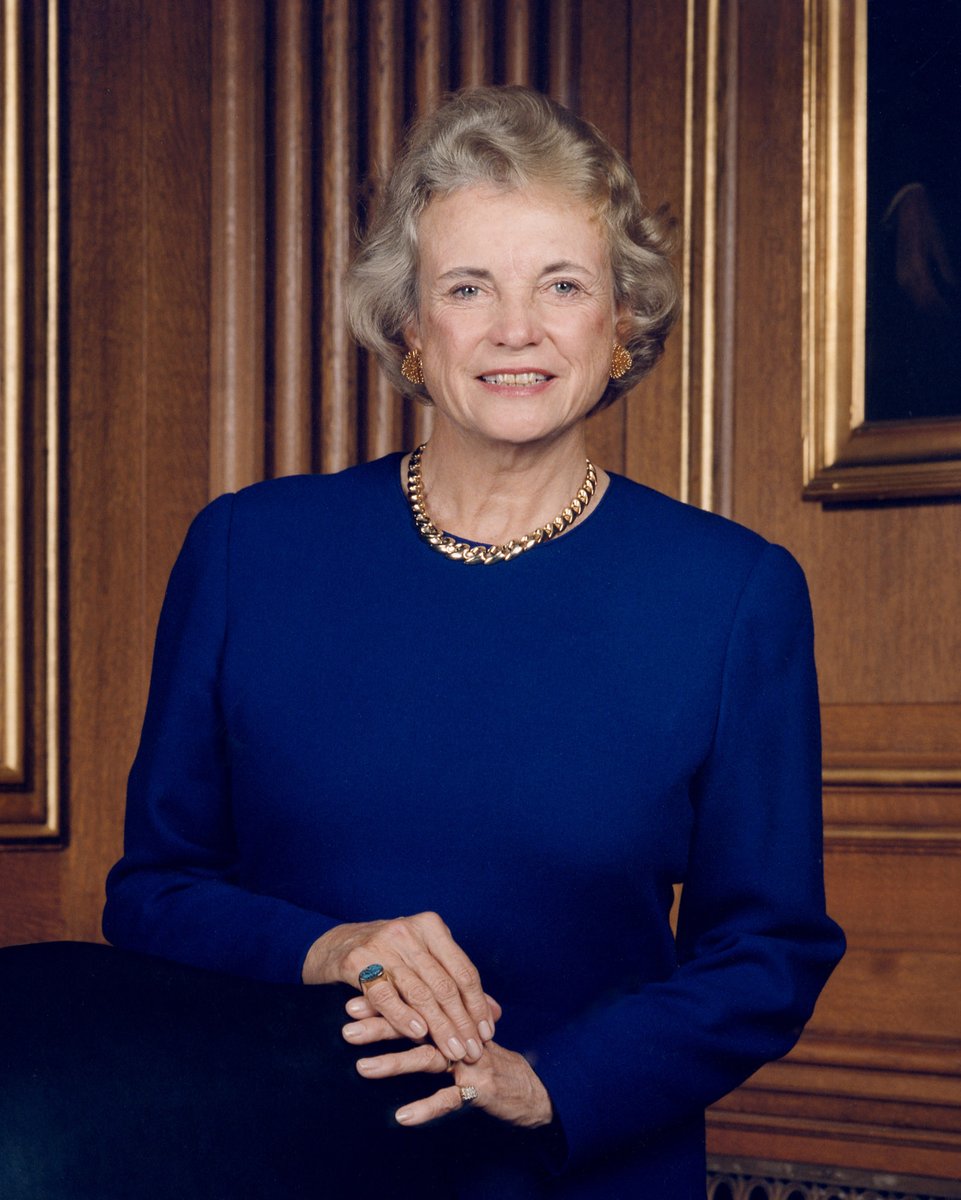
Sandra Day O'Connor (March 26, 1930 – December 1, 2023) was an American attorney, politician, and jurist who served as an associate justice of the Supreme Court of the United States from 1981 to 2006. Nominated by President Ronald Reagan, O'Connor was the first woman to serve as a U.S. Supreme Court justice. A moderate conservative, she was considered a swing vote. Before O'Connor's tenure on the Court, she was an Arizona state judge and earlier an elected legislator in Arizona, serving as the first female majority leader of a state senate as the Republican leader in the Arizona Senate. Upon her nomination to the Court, O'Connor was confirmed unanimously by the United States Senate.
O'Connor usually sided with the Court's conservative bloc but on occasion sided with the Court's liberal members. She often wrote concurring opinions that sought to limit the reach of the majority holding. Her majority opinions in landmark cases include Grutter v. Bollinger and Hamdi v. Rumsfeld. In 2000, she wrote in part the per curiam majority opinion in Bush v. Gore and in 1992 was one of three co-authors of the lead opinion in Planned Parenthood v. Casey that preserved legal access to abortion in the United States. On July 1, 2005, O'Connor announced her retirement, effective upon the confirmation of a successor. At the time of her death, O'Connor was the last living member of the Burger Court. Samuel Alito was nominated to take her seat in October 2005, and joined the Supreme Court on January 31, 2006.
During her term on the Court, O'Connor was regarded as among the most powerful women in the world. After retiring, she succeeded Henry Kissinger as the chancellor of the College of William & Mary. In 2009, she was awarded the Presidential Medal of Freedom by President Barack Obama.
Sandra Day was born on March 26, 1930, in El Paso, Texas, the daughter of Harry Alfred Day, a rancher, and Ada Mae (Wilkey). She grew up on a 198,000-acre family cattle ranch near Duncan, Arizona and in El Paso, where she attended school. Her home was nine miles from the nearest paved road. It lacked running water or electricity until Sandra was seven years old. As a cowgirl she owned a .22-caliber rifle and would shoot coyotes and jackrabbits. She began driving as soon as she could see over the dashboard and had to learn to change flat tires herself. Sandra had two younger siblings, a sister and a brother, respectively eight and ten years her junior. Her sister Ann Day was a member of the Arizona Legislature from 1990 to 2000. Her brother was H. Alan Day, a lifelong rancher, with whom she wrote Lazy B: Growing up on a Cattle Ranch in the American Southwest (2002), about their childhood experiences on the ranch. For most of her early schooling, Day lived in El Paso with her maternal grandmother. She went to the Radford School for Girls, a private school, because the family ranch was far from schools. Day was able to return to the ranch for holidays and the summer. Day did spend her eighth-grade year living at the ranch and riding a bus 32 miles to school. She graduated sixth in her class at Austin High School in El Paso in 1946.
Accepted into Stanford University at age 16, O'Connor earned a B.A. in economics in 1950, graduating magna cum laude. Inspired by Professor Harry Rathbun, she pursued a law degree at Stanford Law School, graduating near the top of her class in 1952. While attending, she served on the Stanford Law Review whose then presiding editor-in-chief was future Supreme Court chief justice William Rehnquist. Day achieved the Order of the Coif, indicating she was in the top 10 percent of her class.
While in her final year at Stanford Law School, Day began dating John Jay O'Connor III, who was one class year behind her. On December 20, 1952, six months after her graduation, O'Connor and Day married at her family's ranch.
Upon graduation from law school in 1952, O'Connor had difficulty finding a paying job as an attorney in a law firm because of her gender. O'Connor found employment as a deputy county attorney in San Mateo, California, after she offered to work for no salary and without an office, sharing space with a secretary. After a few months, she began drawing a small salary as she performed legal research and wrote memos. She worked with San Mateo County District Attorney Louis Dematteis and deputy district attorney Keith Sorensen.
When her husband was drafted, O'Connor decided to go with him to work in Germany as a civilian attorney for the Army's Quartermaster Corps. They remained there for three years before returning to the States where they settled in Maricopa County, Arizona, and she started a law firm. They had three sons: Scott (born 1958), Brian (born 1960), and Jay (born 1962). Following Brian's birth, O'Connor took a five-year hiatus from the practice of law.
Hub AI
Sandra Day O'Connor AI simulator
(@Sandra Day O'Connor_simulator)
Sandra Day O'Connor
Sandra Day O'Connor (March 26, 1930 – December 1, 2023) was an American attorney, politician, and jurist who served as an associate justice of the Supreme Court of the United States from 1981 to 2006. Nominated by President Ronald Reagan, O'Connor was the first woman to serve as a U.S. Supreme Court justice. A moderate conservative, she was considered a swing vote. Before O'Connor's tenure on the Court, she was an Arizona state judge and earlier an elected legislator in Arizona, serving as the first female majority leader of a state senate as the Republican leader in the Arizona Senate. Upon her nomination to the Court, O'Connor was confirmed unanimously by the United States Senate.
O'Connor usually sided with the Court's conservative bloc but on occasion sided with the Court's liberal members. She often wrote concurring opinions that sought to limit the reach of the majority holding. Her majority opinions in landmark cases include Grutter v. Bollinger and Hamdi v. Rumsfeld. In 2000, she wrote in part the per curiam majority opinion in Bush v. Gore and in 1992 was one of three co-authors of the lead opinion in Planned Parenthood v. Casey that preserved legal access to abortion in the United States. On July 1, 2005, O'Connor announced her retirement, effective upon the confirmation of a successor. At the time of her death, O'Connor was the last living member of the Burger Court. Samuel Alito was nominated to take her seat in October 2005, and joined the Supreme Court on January 31, 2006.
During her term on the Court, O'Connor was regarded as among the most powerful women in the world. After retiring, she succeeded Henry Kissinger as the chancellor of the College of William & Mary. In 2009, she was awarded the Presidential Medal of Freedom by President Barack Obama.
Sandra Day was born on March 26, 1930, in El Paso, Texas, the daughter of Harry Alfred Day, a rancher, and Ada Mae (Wilkey). She grew up on a 198,000-acre family cattle ranch near Duncan, Arizona and in El Paso, where she attended school. Her home was nine miles from the nearest paved road. It lacked running water or electricity until Sandra was seven years old. As a cowgirl she owned a .22-caliber rifle and would shoot coyotes and jackrabbits. She began driving as soon as she could see over the dashboard and had to learn to change flat tires herself. Sandra had two younger siblings, a sister and a brother, respectively eight and ten years her junior. Her sister Ann Day was a member of the Arizona Legislature from 1990 to 2000. Her brother was H. Alan Day, a lifelong rancher, with whom she wrote Lazy B: Growing up on a Cattle Ranch in the American Southwest (2002), about their childhood experiences on the ranch. For most of her early schooling, Day lived in El Paso with her maternal grandmother. She went to the Radford School for Girls, a private school, because the family ranch was far from schools. Day was able to return to the ranch for holidays and the summer. Day did spend her eighth-grade year living at the ranch and riding a bus 32 miles to school. She graduated sixth in her class at Austin High School in El Paso in 1946.
Accepted into Stanford University at age 16, O'Connor earned a B.A. in economics in 1950, graduating magna cum laude. Inspired by Professor Harry Rathbun, she pursued a law degree at Stanford Law School, graduating near the top of her class in 1952. While attending, she served on the Stanford Law Review whose then presiding editor-in-chief was future Supreme Court chief justice William Rehnquist. Day achieved the Order of the Coif, indicating she was in the top 10 percent of her class.
While in her final year at Stanford Law School, Day began dating John Jay O'Connor III, who was one class year behind her. On December 20, 1952, six months after her graduation, O'Connor and Day married at her family's ranch.
Upon graduation from law school in 1952, O'Connor had difficulty finding a paying job as an attorney in a law firm because of her gender. O'Connor found employment as a deputy county attorney in San Mateo, California, after she offered to work for no salary and without an office, sharing space with a secretary. After a few months, she began drawing a small salary as she performed legal research and wrote memos. She worked with San Mateo County District Attorney Louis Dematteis and deputy district attorney Keith Sorensen.
When her husband was drafted, O'Connor decided to go with him to work in Germany as a civilian attorney for the Army's Quartermaster Corps. They remained there for three years before returning to the States where they settled in Maricopa County, Arizona, and she started a law firm. They had three sons: Scott (born 1958), Brian (born 1960), and Jay (born 1962). Following Brian's birth, O'Connor took a five-year hiatus from the practice of law.
Recent media