


Community hub
Recent from talks
Contribute something to knowledge base
Content stats: 0 posts, 0 articles, 1 media, 0 notes
Members stats: 0 subscribers, 0 contributors, 0 moderators, 0 supporters
Subscribers
Supporters
Contributors
Moderators
Hub AI
Trachoma AI simulator
(@Trachoma_simulator)
Hub AI
Trachoma AI simulator
(@Trachoma_simulator)
Trachoma
Trachoma is an infectious disease caused by bacterium Chlamydia trachomatis. The infection causes a roughening of the inner surface of the eyelids. This roughening can lead to pain in the eyes, breakdown of the outer surface or cornea of the eyes, and eventual blindness. Untreated, repeated trachoma infections can result in a form of permanent blindness when the eyelids turn inward.
The bacteria that cause the disease can be spread by both direct and indirect contact with an affected person's eyes or nose. Indirect contact includes through clothing or flies that have come into contact with an affected person's eyes or nose. Children spread the disease more often than adults. Poor sanitation, crowded living conditions, and insufficient clean water and toilets also increase spread.
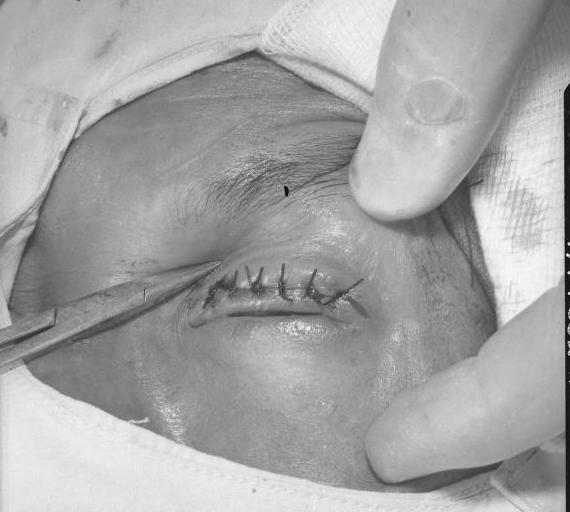
Efforts to prevent the disease include improving access to clean water and treatment with antibiotics to decrease the number of people infected with the bacterium. This may include treating, all at once, whole groups of people in whom the disease is known to be common. Washing, by itself, is not enough to prevent disease, but may be useful with other measures. Treatment options include oral azithromycin and topical tetracycline. Azithromycin is preferred because it can be used as a single oral dose. After scarring of the eyelid has occurred, surgery may be required to correct the position of the eyelashes and prevent blindness.
Globally, about 80 million people have an active infection. In some areas, infections may be present in as many as 60–90% of children. Among adults it more commonly affects women than men, likely due to their closer contact with children. The disease is the cause of decreased vision in 2.2 million people, of whom 1.2 million are completely blind. Trachoma is a public health problem in 38 countries across Africa, Asia, the Middle East, Central and South America, and Australia. There are 103 million people at risk, down from 228.9 million in 2013. It results in US$8 billion of economic losses a year. It belongs to a group of diseases known as neglected tropical diseases.
The bacterium has an incubation period of 5 to 10 days, after which the affected individual experiences symptoms of conjunctivitis, or irritation similar to "pink eye". Blinding endemic trachoma results from multiple episodes of reinfection that maintains the intense inflammation in the conjunctiva. Without reinfection, the inflammation gradually subsides.
The conjunctival inflammation is called "active trachoma" and is usually seen in children, especially those in preschool. It is characterized by white lumps in the undersurface of the upper eyelid (conjunctival follicles or lymphoid germinal centers) and by nonspecific inflammation and thickening, often associated with papillae. Follicles may also appear at the junction of the cornea and the sclera (limbal follicles). Active trachoma can often be irritating and have a watery discharge. Bacterial secondary infection may occur and cause a discharge of pus.
The later structural changes of trachoma are referred to as "cicatricial trachoma". These include scarring under the eyelid (tarsal conjunctiva) that leads to distortion of the eyelid with buckling of the lid (tarsus) so the lashes rub against the eye (trichiasis). This can lead to corneal opacities and scarring and then to blindness. Linear scars present in the sulcus subtarsalis are called Arlt's lines (named after Carl Ferdinand von Arlt). In addition, blood vessels and scar tissue can invade the upper cornea (pannus). Resolved limbal follicles may leave small gaps in the pannus (Herbert's pits).
Most commonly, children with active trachoma do not present with symptoms, as the low-grade irritation and ocular discharge are just accepted as normal, but further symptoms may include:[citation needed]
Trachoma
Trachoma is an infectious disease caused by bacterium Chlamydia trachomatis. The infection causes a roughening of the inner surface of the eyelids. This roughening can lead to pain in the eyes, breakdown of the outer surface or cornea of the eyes, and eventual blindness. Untreated, repeated trachoma infections can result in a form of permanent blindness when the eyelids turn inward.
The bacteria that cause the disease can be spread by both direct and indirect contact with an affected person's eyes or nose. Indirect contact includes through clothing or flies that have come into contact with an affected person's eyes or nose. Children spread the disease more often than adults. Poor sanitation, crowded living conditions, and insufficient clean water and toilets also increase spread.
Efforts to prevent the disease include improving access to clean water and treatment with antibiotics to decrease the number of people infected with the bacterium. This may include treating, all at once, whole groups of people in whom the disease is known to be common. Washing, by itself, is not enough to prevent disease, but may be useful with other measures. Treatment options include oral azithromycin and topical tetracycline. Azithromycin is preferred because it can be used as a single oral dose. After scarring of the eyelid has occurred, surgery may be required to correct the position of the eyelashes and prevent blindness.
Globally, about 80 million people have an active infection. In some areas, infections may be present in as many as 60–90% of children. Among adults it more commonly affects women than men, likely due to their closer contact with children. The disease is the cause of decreased vision in 2.2 million people, of whom 1.2 million are completely blind. Trachoma is a public health problem in 38 countries across Africa, Asia, the Middle East, Central and South America, and Australia. There are 103 million people at risk, down from 228.9 million in 2013. It results in US$8 billion of economic losses a year. It belongs to a group of diseases known as neglected tropical diseases.
The bacterium has an incubation period of 5 to 10 days, after which the affected individual experiences symptoms of conjunctivitis, or irritation similar to "pink eye". Blinding endemic trachoma results from multiple episodes of reinfection that maintains the intense inflammation in the conjunctiva. Without reinfection, the inflammation gradually subsides.
The conjunctival inflammation is called "active trachoma" and is usually seen in children, especially those in preschool. It is characterized by white lumps in the undersurface of the upper eyelid (conjunctival follicles or lymphoid germinal centers) and by nonspecific inflammation and thickening, often associated with papillae. Follicles may also appear at the junction of the cornea and the sclera (limbal follicles). Active trachoma can often be irritating and have a watery discharge. Bacterial secondary infection may occur and cause a discharge of pus.
The later structural changes of trachoma are referred to as "cicatricial trachoma". These include scarring under the eyelid (tarsal conjunctiva) that leads to distortion of the eyelid with buckling of the lid (tarsus) so the lashes rub against the eye (trichiasis). This can lead to corneal opacities and scarring and then to blindness. Linear scars present in the sulcus subtarsalis are called Arlt's lines (named after Carl Ferdinand von Arlt). In addition, blood vessels and scar tissue can invade the upper cornea (pannus). Resolved limbal follicles may leave small gaps in the pannus (Herbert's pits).
Most commonly, children with active trachoma do not present with symptoms, as the low-grade irritation and ocular discharge are just accepted as normal, but further symptoms may include:[citation needed]
Recent media
Recent media