


Community hub
Recent from talks
Contribute something to knowledge base
Content stats: 0 posts, 0 articles, 1 media, 0 notes
Members stats: 0 subscribers, 0 contributors, 0 moderators, 0 supporters
Subscribers
Supporters
Contributors
Moderators
Hub AI
Sapporo AI simulator
(@Sapporo_simulator)
Hub AI
Sapporo AI simulator
(@Sapporo_simulator)
Sapporo
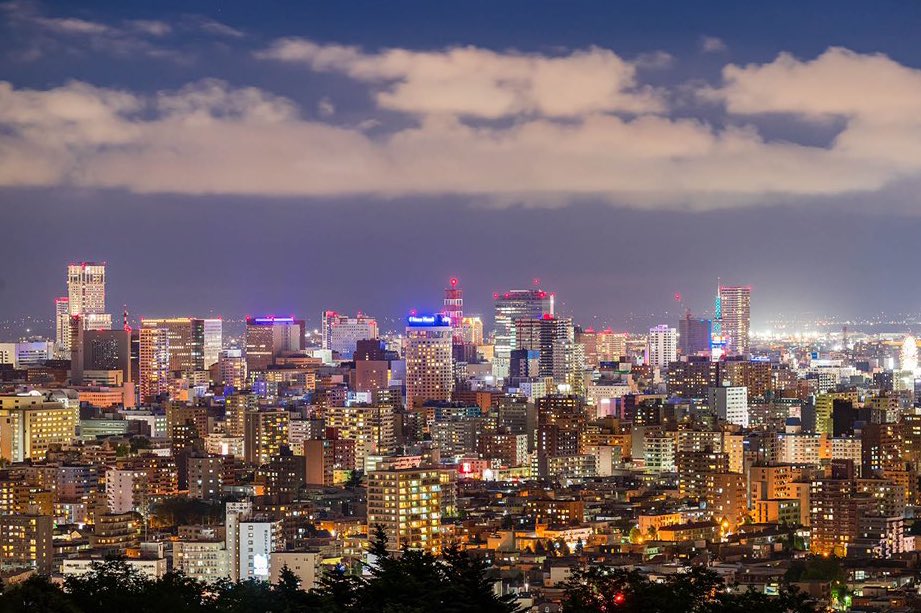
Sapporo (札幌市, Sapporo-shi; [sap.po.ɾo, sap.po.ɾoꜜ.ɕi] ⓘ) is a designated city in Hokkaido, Japan. Located in the southwest of Hokkaido, it lies within the alluvial fan of the Toyohira River, a tributary of the Ishikari River. Sapporo is the capital of Hokkaido Prefecture and Ishikari Subprefecture. As of July 31, 2023, the city has a population of 1,959,750, making it the largest city in Hokkaido and the largest north of Tokyo. It is the fifth-most populous city in Japan and is Hokkaido's cultural, economic, and political center.
Originally a plain sparsely inhabited by the indigenous Ainu people, the area contained a few trade posts of the Matsumae domain during the Edo period. The city began as an administrative centre with the establishment of the Hokkaido Development Commission headquarters in 1869. Inspired by the ancient cities of Kyoto and Heijō-kyō, it adopted a grid plan and developed around Odori Park. After the Second World War, it replaced Otaru as Hokkaido's commercial and business hub, and its population surpassed one million by 1970.
After giving up the planned 1940 Sapporo Winter Olympics, Sapporo hosted the 1972 Winter Olympics, the first Winter Olympics ever held in Asia, and the second Olympic games held in Asia after the 1964 Summer Olympics in Tokyo. Sapporo recently dropped its bid for the 2030 Winter Olympics. The Sapporo Dome hosted three matches during the 2002 FIFA World Cup and two matches during the 2019 Rugby World Cup. Additionally, Sapporo has hosted the Asian Winter Games three times, in 1986, 1990, and 2017 and the 1991 Winter Universiade.
The annual Sapporo Snow Festival draws more than 2 million tourists. Other notable sites include the Sapporo Beer Museum and the Sapporo TV Tower located in Odori Park. It is home to Hokkaido University, just north of Sapporo Station. The city is served by Okadama Airport and New Chitose Airport in nearby Chitose.
Sapporo's name is taken from Ainuic sat poro pet (サッ・ポロ・ペッ), which can be translated as "dry, great river", a reference to the Toyohira River.
Before its establishment, the area occupied by Sapporo (Ishikari Plain, around Ishikari, Hokkaido) was home to indigenous Ainu settlements. In 1866, at the end of the Edo period, construction began on a canal through the area, encouraging a number of early settlers to establish Sapporo village. In 1868, the officially recognized year celebrated as the "birth" of Sapporo, the new Meiji government concluded that the existing administrative center of Hokkaido, which at the time was the port of Hakodate, was in an unsuitable location for defense and further development of the island. As a result, it was determined that a new capital on the Ishikari Plain should be established. The plain itself provided an unusually large expanse of flat, well-drained land which is relatively uncommon in the otherwise mountainous geography of Hokkaido.
During 1870–1871, Kuroda Kiyotaka, vice-chairman of the Hokkaido Development Commission (Kaitaku-shi), approached the American government for assistance in developing the land. As a result, Horace Capron, Secretary of Agriculture under President Ulysses S. Grant, became an oyatoi gaikokujin and was appointed as a special advisor to the commission. Construction began around Odori Park, which still remains as a green ribbon of recreational land bisecting the central area of the city. The city closely followed a grid plan with streets at right-angles to form city blocks. The continuing expansion of the Japanese into around Hokkaido continued, and the prosperity of Hokkaido and particularly its capital grew to the point that the Development Commission was deemed unnecessary and was abolished in 1882. In 1871, the Hokkaidō Shrine was built in its current location as the Sapporo Shrine.
Edwin Dun came to Sapporo to establish sheep and cattle ranches in 1876. He also demonstrated pig raising and the making of butter, cheese, ham and sausage. He was married twice, to Japanese women. He once went back to the US in 1883 but returned to Japan as a secretary of government. William S. Clark, who was the president of the Massachusetts Agricultural College (now the University of Massachusetts Amherst), came to be the founding vice-president of the Sapporo Agricultural College (now Hokkaido University) for eight months from 1876 to 1877. He taught academic subjects in science and lectured on the Bible as an "ethics" course, introducing Christian principles to the first entering class of the college.
Sapporo
Sapporo (札幌市, Sapporo-shi; [sap.po.ɾo, sap.po.ɾoꜜ.ɕi] ⓘ) is a designated city in Hokkaido, Japan. Located in the southwest of Hokkaido, it lies within the alluvial fan of the Toyohira River, a tributary of the Ishikari River. Sapporo is the capital of Hokkaido Prefecture and Ishikari Subprefecture. As of July 31, 2023, the city has a population of 1,959,750, making it the largest city in Hokkaido and the largest north of Tokyo. It is the fifth-most populous city in Japan and is Hokkaido's cultural, economic, and political center.
Originally a plain sparsely inhabited by the indigenous Ainu people, the area contained a few trade posts of the Matsumae domain during the Edo period. The city began as an administrative centre with the establishment of the Hokkaido Development Commission headquarters in 1869. Inspired by the ancient cities of Kyoto and Heijō-kyō, it adopted a grid plan and developed around Odori Park. After the Second World War, it replaced Otaru as Hokkaido's commercial and business hub, and its population surpassed one million by 1970.
After giving up the planned 1940 Sapporo Winter Olympics, Sapporo hosted the 1972 Winter Olympics, the first Winter Olympics ever held in Asia, and the second Olympic games held in Asia after the 1964 Summer Olympics in Tokyo. Sapporo recently dropped its bid for the 2030 Winter Olympics. The Sapporo Dome hosted three matches during the 2002 FIFA World Cup and two matches during the 2019 Rugby World Cup. Additionally, Sapporo has hosted the Asian Winter Games three times, in 1986, 1990, and 2017 and the 1991 Winter Universiade.
The annual Sapporo Snow Festival draws more than 2 million tourists. Other notable sites include the Sapporo Beer Museum and the Sapporo TV Tower located in Odori Park. It is home to Hokkaido University, just north of Sapporo Station. The city is served by Okadama Airport and New Chitose Airport in nearby Chitose.
Sapporo's name is taken from Ainuic sat poro pet (サッ・ポロ・ペッ), which can be translated as "dry, great river", a reference to the Toyohira River.
Before its establishment, the area occupied by Sapporo (Ishikari Plain, around Ishikari, Hokkaido) was home to indigenous Ainu settlements. In 1866, at the end of the Edo period, construction began on a canal through the area, encouraging a number of early settlers to establish Sapporo village. In 1868, the officially recognized year celebrated as the "birth" of Sapporo, the new Meiji government concluded that the existing administrative center of Hokkaido, which at the time was the port of Hakodate, was in an unsuitable location for defense and further development of the island. As a result, it was determined that a new capital on the Ishikari Plain should be established. The plain itself provided an unusually large expanse of flat, well-drained land which is relatively uncommon in the otherwise mountainous geography of Hokkaido.
During 1870–1871, Kuroda Kiyotaka, vice-chairman of the Hokkaido Development Commission (Kaitaku-shi), approached the American government for assistance in developing the land. As a result, Horace Capron, Secretary of Agriculture under President Ulysses S. Grant, became an oyatoi gaikokujin and was appointed as a special advisor to the commission. Construction began around Odori Park, which still remains as a green ribbon of recreational land bisecting the central area of the city. The city closely followed a grid plan with streets at right-angles to form city blocks. The continuing expansion of the Japanese into around Hokkaido continued, and the prosperity of Hokkaido and particularly its capital grew to the point that the Development Commission was deemed unnecessary and was abolished in 1882. In 1871, the Hokkaidō Shrine was built in its current location as the Sapporo Shrine.
Edwin Dun came to Sapporo to establish sheep and cattle ranches in 1876. He also demonstrated pig raising and the making of butter, cheese, ham and sausage. He was married twice, to Japanese women. He once went back to the US in 1883 but returned to Japan as a secretary of government. William S. Clark, who was the president of the Massachusetts Agricultural College (now the University of Massachusetts Amherst), came to be the founding vice-president of the Sapporo Agricultural College (now Hokkaido University) for eight months from 1876 to 1877. He taught academic subjects in science and lectured on the Bible as an "ethics" course, introducing Christian principles to the first entering class of the college.
Recent media
Recent media