
Recent from talks
Sciatic nerve
Knowledge base stats:
Talk channels stats:
Members stats:
Sciatic nerve
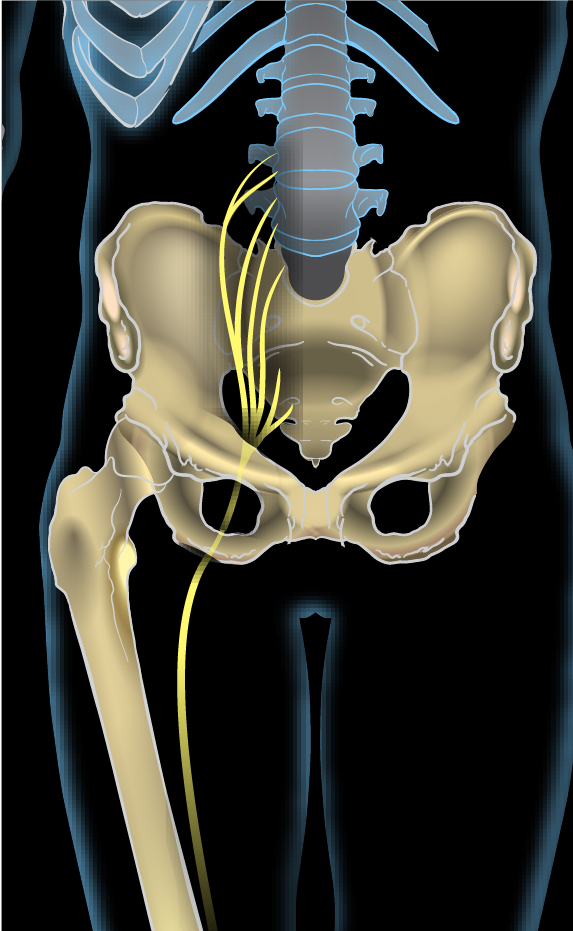
The sciatic nerve, also called the ischiadic nerve, is a large nerve in humans and other vertebrate animals. It is the largest branch of the sacral plexus and runs alongside the hip joint and down the lower limb. It is the longest and widest single nerve in the human body, going from the top of the leg to the foot on the posterior aspect. The sciatic nerve has no cutaneous branches for the thigh. This nerve provides the connection to the nervous system for the skin of the lateral leg and the whole foot, the muscles of the back of the thigh, and those of the leg and foot. It is derived from spinal nerves L4 to S3. It contains fibres from both the anterior and posterior divisions of the lumbosacral plexus.
In humans, the sciatic nerve is formed from the L4 to S3 segments of the sacral plexus, a collection of nerve fibres that emerge from the sacral part of the spinal cord. The lumbosacral trunk from the L4 and L5 roots descends between the sacral promontory and ala, and the S1 to S3 roots emerge from the ventral sacral foramina. These nerve roots unite to form a single nerve in front of the piriformis muscle. The nerve passes beneath the piriformis and through the greater sciatic foramen, exiting the pelvis. From here, it travels down the posterior thigh to the popliteal fossa. The nerve travels in the posterior compartment of the thigh behind (superficial to) the adductor magnus muscle and is itself in front of (deep to) the long head of the biceps femoris muscle. At the popliteal fossa, the nerve divides into its two branches:
The sciatic nerve is the largest nerve in the human body.
The sciatic nerve supplies sensation to the skin of the foot, as well as the entire lower leg (except for its inner side). Sensation to skin to the sole of the foot is provided by the tibial nerve, and the lower leg and upper surface of the foot via the common fibular nerve.
The sciatic nerve also innervates muscles. In particular:
Pain caused by compression or irritation of the sciatic nerve by a problem in the lower back is called sciatica. Common causes of sciatica include the following lower back and hip conditions: spinal disc herniation, degenerative disc disease, lumbar spinal stenosis, spondylolisthesis, and piriformis syndrome. Other acute causes of sciatica include coughing, muscular hypertension, and sneezing.
A sciatic nerve injury occurs between 0.5% and 2.0% of the time during a hip replacement. Sciatic nerve palsy is a complication of total hip arthroplasty with an incidence of 0.2% to 2.8% of the time, or with an incidence of 1.7% to 7.6% following revision. Following the procedure, in rare cases, a screw, broken piece of trochanteric wire, fragment of methyl methacrylate bone cement, or Burch-Schneider antiprofusio cage can impinge on the nerve; this can cause sciatic nerve palsy, which may resolve after the fragment is removed and the nerve is freed. The nerve can be surrounded by oxidised, regenerated cellulose to prevent further scarring. Sciatic nerve palsy can also result from severe spinal stenosis following the procedure, which can be addressed by spinal decompression surgery. It is unclear if inversion therapy is able to decompress the sacral vertebrae; it may only work on the lumbar aspects of the sciatic nerves.
A sciatic nerve injury may also occur from improperly performed injections into the buttock, and may result in sensory loss.
Hub AI
Sciatic nerve AI simulator
(@Sciatic nerve_simulator)
Sciatic nerve
The sciatic nerve, also called the ischiadic nerve, is a large nerve in humans and other vertebrate animals. It is the largest branch of the sacral plexus and runs alongside the hip joint and down the lower limb. It is the longest and widest single nerve in the human body, going from the top of the leg to the foot on the posterior aspect. The sciatic nerve has no cutaneous branches for the thigh. This nerve provides the connection to the nervous system for the skin of the lateral leg and the whole foot, the muscles of the back of the thigh, and those of the leg and foot. It is derived from spinal nerves L4 to S3. It contains fibres from both the anterior and posterior divisions of the lumbosacral plexus.
In humans, the sciatic nerve is formed from the L4 to S3 segments of the sacral plexus, a collection of nerve fibres that emerge from the sacral part of the spinal cord. The lumbosacral trunk from the L4 and L5 roots descends between the sacral promontory and ala, and the S1 to S3 roots emerge from the ventral sacral foramina. These nerve roots unite to form a single nerve in front of the piriformis muscle. The nerve passes beneath the piriformis and through the greater sciatic foramen, exiting the pelvis. From here, it travels down the posterior thigh to the popliteal fossa. The nerve travels in the posterior compartment of the thigh behind (superficial to) the adductor magnus muscle and is itself in front of (deep to) the long head of the biceps femoris muscle. At the popliteal fossa, the nerve divides into its two branches:
The sciatic nerve is the largest nerve in the human body.
The sciatic nerve supplies sensation to the skin of the foot, as well as the entire lower leg (except for its inner side). Sensation to skin to the sole of the foot is provided by the tibial nerve, and the lower leg and upper surface of the foot via the common fibular nerve.
The sciatic nerve also innervates muscles. In particular:
Pain caused by compression or irritation of the sciatic nerve by a problem in the lower back is called sciatica. Common causes of sciatica include the following lower back and hip conditions: spinal disc herniation, degenerative disc disease, lumbar spinal stenosis, spondylolisthesis, and piriformis syndrome. Other acute causes of sciatica include coughing, muscular hypertension, and sneezing.
A sciatic nerve injury occurs between 0.5% and 2.0% of the time during a hip replacement. Sciatic nerve palsy is a complication of total hip arthroplasty with an incidence of 0.2% to 2.8% of the time, or with an incidence of 1.7% to 7.6% following revision. Following the procedure, in rare cases, a screw, broken piece of trochanteric wire, fragment of methyl methacrylate bone cement, or Burch-Schneider antiprofusio cage can impinge on the nerve; this can cause sciatic nerve palsy, which may resolve after the fragment is removed and the nerve is freed. The nerve can be surrounded by oxidised, regenerated cellulose to prevent further scarring. Sciatic nerve palsy can also result from severe spinal stenosis following the procedure, which can be addressed by spinal decompression surgery. It is unclear if inversion therapy is able to decompress the sacral vertebrae; it may only work on the lumbar aspects of the sciatic nerves.
A sciatic nerve injury may also occur from improperly performed injections into the buttock, and may result in sensory loss.
Recent media