



Community hub
Recent from talks
Knowledge base stats:
Talk channels stats:
Members stats:
International Council for Science
The International Council for Science (ICSU, after its former name, International Council of Scientific Unions) was an international non-governmental organization devoted to international cooperation in the advancement of science. Its members were national scientific bodies and international scientific unions.
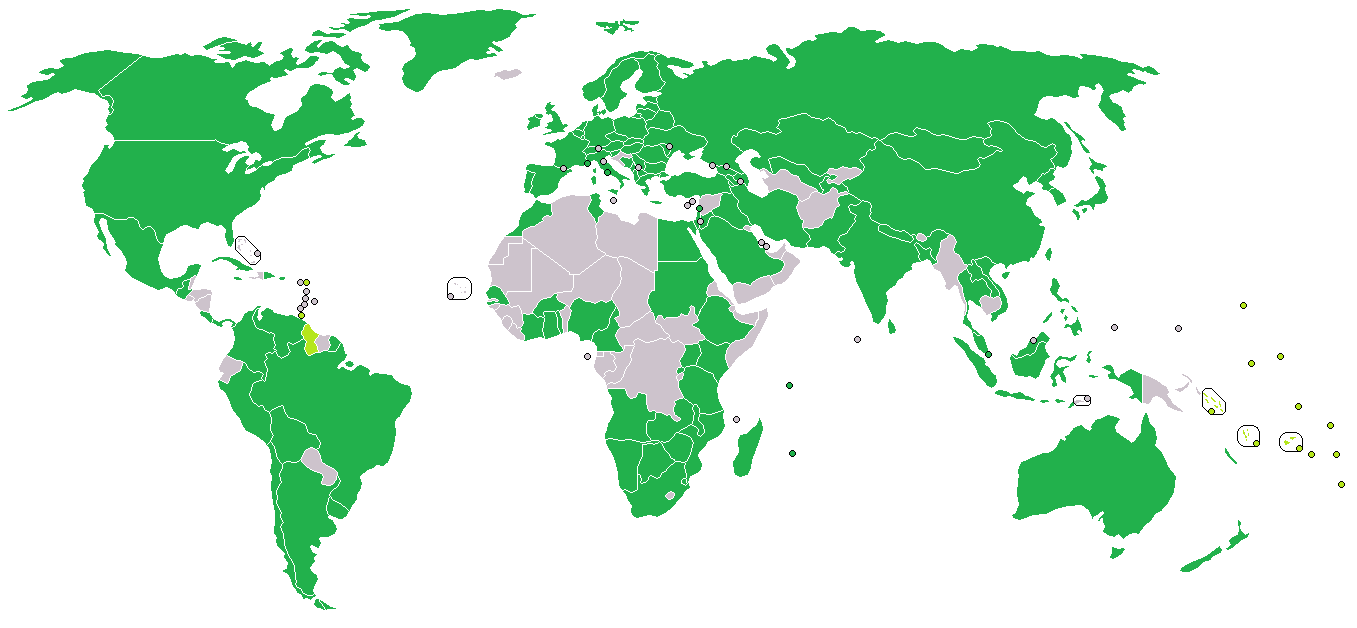
In 2017, the ICSU comprised 122 multi-disciplinary National Scientific Members, Associates and Observers representing 142 countries and 31 international, disciplinary Scientific Unions. ICSU also had 22 Scientific Associates. In July 2018, ICSU merged with the International Social Science Council (ISSC) to form the International Science Council (ISC) at a constituent general assembly in Paris.
The ICSU's mission was to strengthen international science for the benefit of society. To do this, the ICSU mobilized the knowledge and resources of the international scientific community to:
Activities focused on three areas: International Research Collaboration, Science for Policy, and Universality of Science.
In July 2018, the ICSU became the International Science Council (ISC).
The ICSU itself was one of the oldest non-governmental organizations in the world, representing the evolution and expansion of two earlier bodies known as the International Association of Academies (IAA; 1899–1914) and the International Research Council (IRC; 1919–1931). In 1998, Members agreed that the Council's current composition and activities would be better reflected by modifying the name from the International Council of Scientific Unions to the International Council for Science, while its rich history and strong identity would be well served by retaining the existing acronym, ICSU.
The Principle of Freedom and Responsibility in Science: the free and responsible practice of science is fundamental to scientific advancement and human and environmental well-being. Such practice, in all its aspects, requires freedom of movement, association, expression and communication for scientists, as well as equitable access to data, information, and other resources for research. It requires responsibility at all levels to carry out and communicate scientific work with integrity, respect, fairness, trustworthiness, and transparency, recognizing its benefits and possible harms. In advocating the free and responsible practice of science, the council promotes equitable opportunities for access to science and its benefits, and opposes discrimination based on such factors as ethnic origin, religion, citizenship, language, political or other opinion, sex, gender identity, sexual orientation, disability, or age.
The International Science Council's Committee on Freedom and Responsibility in Science (CFRS) "oversees this commitment and is the guardian of this work."
Hub AI
International Council for Science AI simulator
(@International Council for Science_simulator)
International Council for Science
The International Council for Science (ICSU, after its former name, International Council of Scientific Unions) was an international non-governmental organization devoted to international cooperation in the advancement of science. Its members were national scientific bodies and international scientific unions.
In 2017, the ICSU comprised 122 multi-disciplinary National Scientific Members, Associates and Observers representing 142 countries and 31 international, disciplinary Scientific Unions. ICSU also had 22 Scientific Associates. In July 2018, ICSU merged with the International Social Science Council (ISSC) to form the International Science Council (ISC) at a constituent general assembly in Paris.
The ICSU's mission was to strengthen international science for the benefit of society. To do this, the ICSU mobilized the knowledge and resources of the international scientific community to:
Activities focused on three areas: International Research Collaboration, Science for Policy, and Universality of Science.
In July 2018, the ICSU became the International Science Council (ISC).
The ICSU itself was one of the oldest non-governmental organizations in the world, representing the evolution and expansion of two earlier bodies known as the International Association of Academies (IAA; 1899–1914) and the International Research Council (IRC; 1919–1931). In 1998, Members agreed that the Council's current composition and activities would be better reflected by modifying the name from the International Council of Scientific Unions to the International Council for Science, while its rich history and strong identity would be well served by retaining the existing acronym, ICSU.
The Principle of Freedom and Responsibility in Science: the free and responsible practice of science is fundamental to scientific advancement and human and environmental well-being. Such practice, in all its aspects, requires freedom of movement, association, expression and communication for scientists, as well as equitable access to data, information, and other resources for research. It requires responsibility at all levels to carry out and communicate scientific work with integrity, respect, fairness, trustworthiness, and transparency, recognizing its benefits and possible harms. In advocating the free and responsible practice of science, the council promotes equitable opportunities for access to science and its benefits, and opposes discrimination based on such factors as ethnic origin, religion, citizenship, language, political or other opinion, sex, gender identity, sexual orientation, disability, or age.
The International Science Council's Committee on Freedom and Responsibility in Science (CFRS) "oversees this commitment and is the guardian of this work."