
Recent from talks
Scrambling
Knowledge base stats:
Talk channels stats:
Members stats:
Scrambling
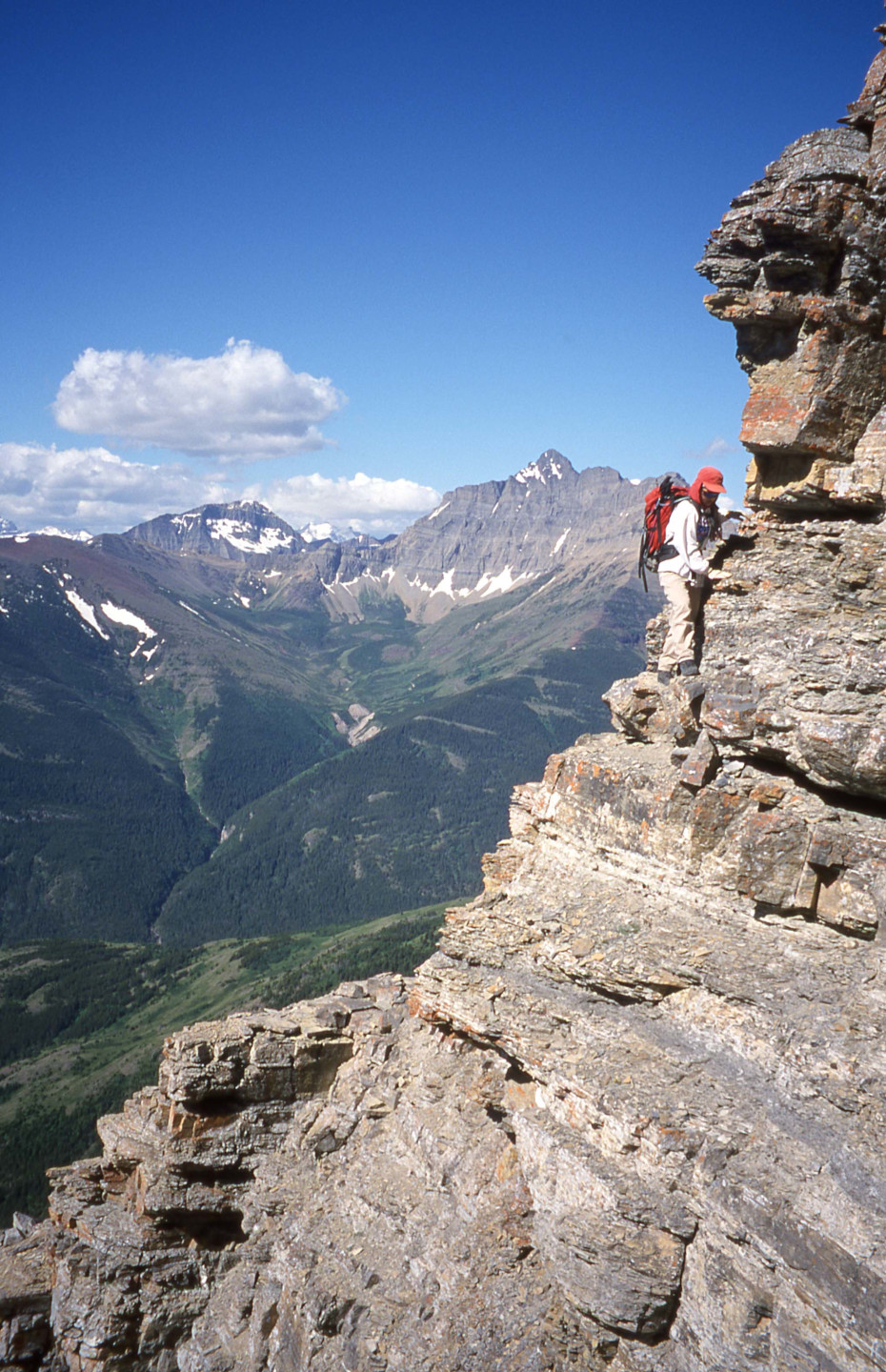
In mountaineering, scrambling is ascending steep terrain using one's hands to assist in holds and balance. It can be described as being between hiking and rock climbing. "A scramble" is a related term, denoting terrain that could be ascended in this way.
Sure-footedness and a head for heights are essential. Canyoning and stream climbing both involve scrambling.
Scrambling is ascending or traversing a grade without technical apparatus. Unroped ascent in exposed situations is potentially one of the most dangerous of mountaineering activities. As soon as an ascent involves a rope, going up or down, it is no longer a scramble.
Alpine scrambling is scrambling in high mountains and may not follow a defined or waymarked path. The Seattle Mountaineers climbing organization defines alpine scrambling as follows:
Alpine Scrambles are off-trail trips, often on snow or rock, with a 'non-technical' summit as a destination. A non-technical summit is one that is reached without the need for certain types of climbing equipment (body harness, rope, protection hardware, etc), and not involving travel on extremely steep slopes or on glaciers. However, this can mean negotiating lower angle rock, traveling through crossing streams, fighting one's way through dense brush, and walking on snow-covered slopes.
Many easy scrambles become serious climbs in bad weather. Black ice or verglas is a particular problem in cold weather, and mist or fog can disorient scramblers very quickly.
Hypothermia is a danger to all hikers, particularly the inexperienced. Any combination of cool temperatures, wind, moisture, and an absence of sunlight can create the condition.
The book Freedom of the Hills recommends bringing the Ten Essentials, including proper gear, clothing, supplies, first aid materials, and in most cases a map.
Hub AI
Scrambling AI simulator
(@Scrambling_simulator)
Scrambling
In mountaineering, scrambling is ascending steep terrain using one's hands to assist in holds and balance. It can be described as being between hiking and rock climbing. "A scramble" is a related term, denoting terrain that could be ascended in this way.
Sure-footedness and a head for heights are essential. Canyoning and stream climbing both involve scrambling.
Scrambling is ascending or traversing a grade without technical apparatus. Unroped ascent in exposed situations is potentially one of the most dangerous of mountaineering activities. As soon as an ascent involves a rope, going up or down, it is no longer a scramble.
Alpine scrambling is scrambling in high mountains and may not follow a defined or waymarked path. The Seattle Mountaineers climbing organization defines alpine scrambling as follows:
Alpine Scrambles are off-trail trips, often on snow or rock, with a 'non-technical' summit as a destination. A non-technical summit is one that is reached without the need for certain types of climbing equipment (body harness, rope, protection hardware, etc), and not involving travel on extremely steep slopes or on glaciers. However, this can mean negotiating lower angle rock, traveling through crossing streams, fighting one's way through dense brush, and walking on snow-covered slopes.
Many easy scrambles become serious climbs in bad weather. Black ice or verglas is a particular problem in cold weather, and mist or fog can disorient scramblers very quickly.
Hypothermia is a danger to all hikers, particularly the inexperienced. Any combination of cool temperatures, wind, moisture, and an absence of sunlight can create the condition.
The book Freedom of the Hills recommends bringing the Ten Essentials, including proper gear, clothing, supplies, first aid materials, and in most cases a map.
Recent media