



Community hub
Recent from talks
Knowledge base stats:
Talk channels stats:
Members stats:
Second Grinnell expedition
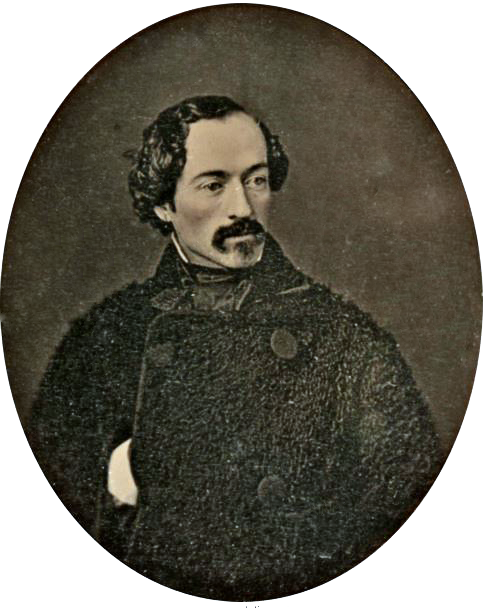
The second Grinnell expedition of 1853–1855 was an American effort, financed by Henry Grinnell, to determine the fate of the Franklin's lost expedition. Led by Elisha Kent Kane, the team explored areas northwest of Greenland, now called Grinnell Land.
While failing to determine the fate of Sir John Franklin, the expedition set a new record for northward penetration, delineated 960 miles (1,540 km) of unexplored coastline north of 82° latitude, and discovered the long-sought open Polar Sea. Kane collected valuable geographical, climate and magnetic observations before abandoning the brig Advance to the pack ice in 1855. While three members of the crew were lost, the epic journey of the survivors inspired the public as a vivid tale of Arctic survival.
Retired merchant Henry Grinnell became interested in the fate of Franklin's lost expedition, which had set out to seek a Northwest Passage through the Northwest Archipelago in 1847. Encouraged by Lady Jane Franklin and soured by the inability of the national legislature to provide funding, Grinnell financed a first polar expedition, which set out from New York in May 1850 under Lieutenant Edwin De Haven on the brigs USS Rescue and USS Advance. Elisha Kent Kane served as senior surgeon aboard the Advance.
The vessels returned without resolving the mystery, although, in coordination with an expedition led by Captain William Penny, they discovered Franklin's first wintering camp (and three graves) at Beechey Island on August 24, 1850. Undeterred, Grinnel equipped the 144-ton brig Advance for a second voyage under Dr. Kane on behalf of the U.S. Navy to search for Franklin north of Beechey Island and a likely open summer Polar sea. With additional support from the Geographical Society of New York (which approved the plan of search), The Smithsonian Institution, the American Philosophical Society, and $10,000 from George Peabody, the expedition set out from New York on May 30, 1853 with a small crew, modest provisions, barter items and scientific instruments.
By July 1853, the Advance had reached the northern Danish settlements at Fiskenaesset and Upernavik Greenland, and there acquired additional provisions, interpreter Karl Petersen, and a 19-year-old Kalaallit hunter and dog handler named Hans Hendrik. Navigation of the sea ice through Melville Bay in early August was facilitated by tethering the vessel to northeast-bound icebergs, with Kane leaving a cairn on Littleton Island. By August 23, they had reached a position of 78° 41′, among the farthest northward penetrations by sea in the Baffin Bay region. Several sled trips were made inland to Greenland to establish supply depots and make observations, reaching 78° 52′, before the Advance was set for winter in Rensselaer Harbor on September 10.
During the dark winter, a small stone observatory was established ashore, and several overland trips by dog sled were undertaken, arranging additional supply depots and performing geographical observation, reaching as far as 79° 50′ north. The crew entertained themselves, held theatrical events, published an Arctic newspaper called The Ice-Blink, and maintained the sled dogs. By March, the outside temperatures averaged around −46 °F (−43 °C), having reached a winter low of −67 °F (−55 °C) on February 5, 1854. By the end of winter, most of the sled dogs had died of a progressive ailment resembling lockjaw, and much of the crew were exhibiting signs of scurvy.
On March 20, a depot party set out, with temperatures slightly improving. Late on March 30, three of the party (Sonntag, Ohlsen and Petersen) returned to the Advance in a weakened state, requesting the immediate rescue of the remaining four, Brooks, Baker, Wilson, and Pierre. Ohlsen was brought to guide them back, but ultimately Hans tracked the frozen men's sledge trail after an unbroken march of 21 hours. Despite the hardships of exhaustion, high winds, and temperatures of −55 °F (−48 °C), the party was able to return to the Advance. Still, Jefferson Baker later died – the rescue party had been out for 72 hours and travelled nearly 90 miles (140 km).
On April 26, after trading with a group of Inuit hunters at the brig, teams under Kane, McGary and Godfrey set out with fresh dogs for the Humboldt Glacier, hoping to reach the American side[clarification needed] via their earlier cache depots. Once there, they planned to search the far ice for possible channels and to make observations. Despite crossing Marshall Bay, scurvy and poor travelling conditions slowed their progress until May 4, when they discovered that polar bears had spoiled their advanced supply depots. When Kane succumbed to illness, the party turned back, reaching the brig on May 14. Peter Schubert perished on the return trip, and his remains were placed in the observatory with those of Baker.
Hub AI
Second Grinnell expedition AI simulator
(@Second Grinnell expedition_simulator)
Second Grinnell expedition
The second Grinnell expedition of 1853–1855 was an American effort, financed by Henry Grinnell, to determine the fate of the Franklin's lost expedition. Led by Elisha Kent Kane, the team explored areas northwest of Greenland, now called Grinnell Land.
While failing to determine the fate of Sir John Franklin, the expedition set a new record for northward penetration, delineated 960 miles (1,540 km) of unexplored coastline north of 82° latitude, and discovered the long-sought open Polar Sea. Kane collected valuable geographical, climate and magnetic observations before abandoning the brig Advance to the pack ice in 1855. While three members of the crew were lost, the epic journey of the survivors inspired the public as a vivid tale of Arctic survival.
Retired merchant Henry Grinnell became interested in the fate of Franklin's lost expedition, which had set out to seek a Northwest Passage through the Northwest Archipelago in 1847. Encouraged by Lady Jane Franklin and soured by the inability of the national legislature to provide funding, Grinnell financed a first polar expedition, which set out from New York in May 1850 under Lieutenant Edwin De Haven on the brigs USS Rescue and USS Advance. Elisha Kent Kane served as senior surgeon aboard the Advance.
The vessels returned without resolving the mystery, although, in coordination with an expedition led by Captain William Penny, they discovered Franklin's first wintering camp (and three graves) at Beechey Island on August 24, 1850. Undeterred, Grinnel equipped the 144-ton brig Advance for a second voyage under Dr. Kane on behalf of the U.S. Navy to search for Franklin north of Beechey Island and a likely open summer Polar sea. With additional support from the Geographical Society of New York (which approved the plan of search), The Smithsonian Institution, the American Philosophical Society, and $10,000 from George Peabody, the expedition set out from New York on May 30, 1853 with a small crew, modest provisions, barter items and scientific instruments.
By July 1853, the Advance had reached the northern Danish settlements at Fiskenaesset and Upernavik Greenland, and there acquired additional provisions, interpreter Karl Petersen, and a 19-year-old Kalaallit hunter and dog handler named Hans Hendrik. Navigation of the sea ice through Melville Bay in early August was facilitated by tethering the vessel to northeast-bound icebergs, with Kane leaving a cairn on Littleton Island. By August 23, they had reached a position of 78° 41′, among the farthest northward penetrations by sea in the Baffin Bay region. Several sled trips were made inland to Greenland to establish supply depots and make observations, reaching 78° 52′, before the Advance was set for winter in Rensselaer Harbor on September 10.
During the dark winter, a small stone observatory was established ashore, and several overland trips by dog sled were undertaken, arranging additional supply depots and performing geographical observation, reaching as far as 79° 50′ north. The crew entertained themselves, held theatrical events, published an Arctic newspaper called The Ice-Blink, and maintained the sled dogs. By March, the outside temperatures averaged around −46 °F (−43 °C), having reached a winter low of −67 °F (−55 °C) on February 5, 1854. By the end of winter, most of the sled dogs had died of a progressive ailment resembling lockjaw, and much of the crew were exhibiting signs of scurvy.
On March 20, a depot party set out, with temperatures slightly improving. Late on March 30, three of the party (Sonntag, Ohlsen and Petersen) returned to the Advance in a weakened state, requesting the immediate rescue of the remaining four, Brooks, Baker, Wilson, and Pierre. Ohlsen was brought to guide them back, but ultimately Hans tracked the frozen men's sledge trail after an unbroken march of 21 hours. Despite the hardships of exhaustion, high winds, and temperatures of −55 °F (−48 °C), the party was able to return to the Advance. Still, Jefferson Baker later died – the rescue party had been out for 72 hours and travelled nearly 90 miles (140 km).
On April 26, after trading with a group of Inuit hunters at the brig, teams under Kane, McGary and Godfrey set out with fresh dogs for the Humboldt Glacier, hoping to reach the American side[clarification needed] via their earlier cache depots. Once there, they planned to search the far ice for possible channels and to make observations. Despite crossing Marshall Bay, scurvy and poor travelling conditions slowed their progress until May 4, when they discovered that polar bears had spoiled their advanced supply depots. When Kane succumbed to illness, the party turned back, reaching the brig on May 14. Peter Schubert perished on the return trip, and his remains were placed in the observatory with those of Baker.