
Recent from talks
Samnite Wars
Knowledge base stats:
Talk channels stats:
Members stats:
Samnite Wars
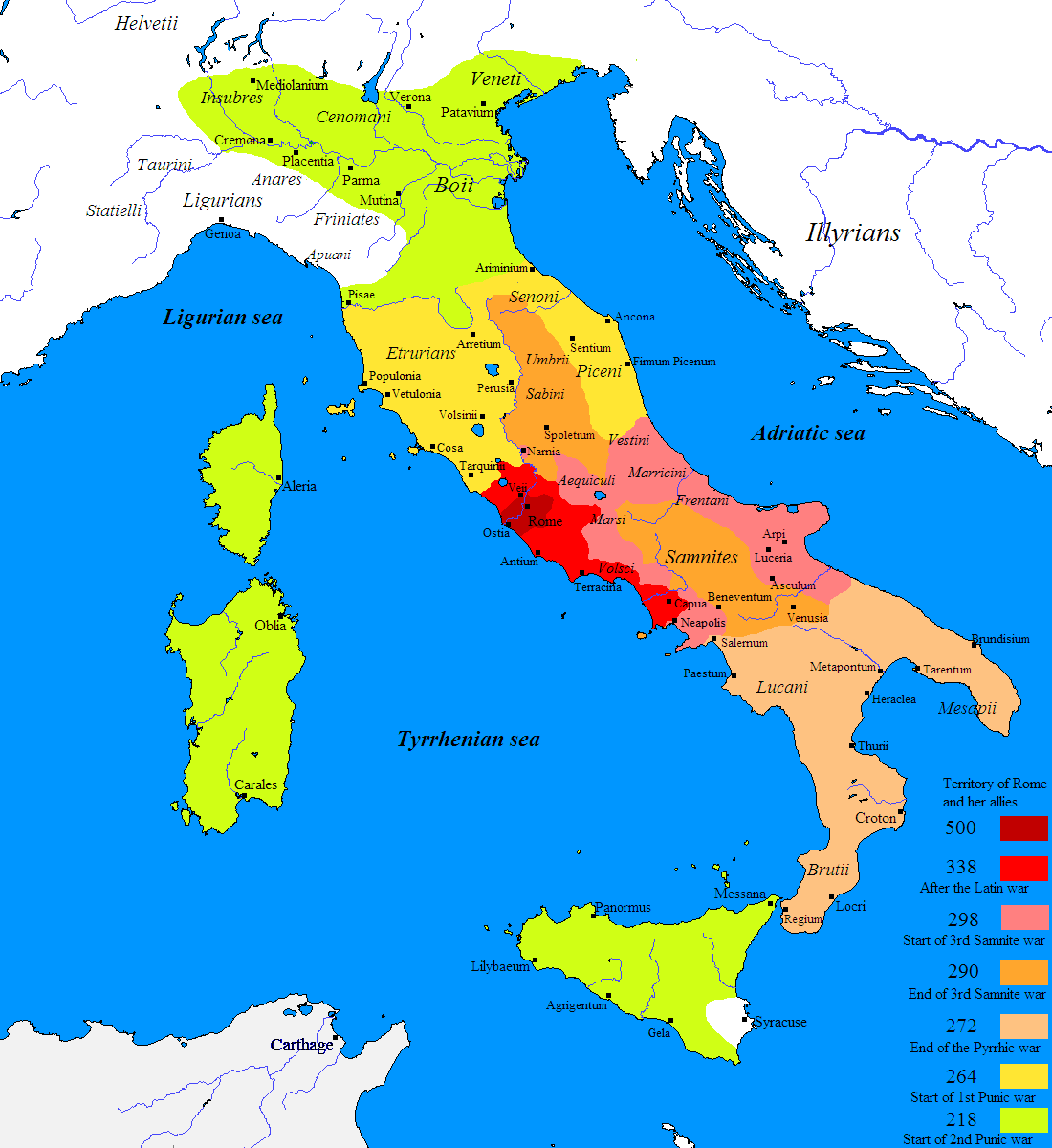
The First, Second, and Third Samnite Wars (343–341 BC, 326–304 BC, and 298–290 BC) were fought between the Roman Republic and the Samnites, who lived on a stretch of the Apennine Mountains south of Rome and north of the Lucanian tribe.
The wars extended over half a century, and also drew in the peoples to the east, north, and west of Samnium (land of the Samnites) as well as those of central Italy north of Rome (the Etruscans, Umbri, and Picentes) and the Senone Gauls, but at different times and levels of involvement.
By the time of the First Samnite War (343 BC), the southward expansion of Rome's territory had reached the River Liris (see Liri), which was the boundary between Latium (land of the Latins) and Campania. This river is now called Garigliano and it is the boundary between the modern regions of Lazio and Campania. In those days the name Campania referred to the plain between the coast and the Apennine Mountains which stretched from the River Liris down to the bays of Naples and Salerno. The northern part of this area was inhabited by the Sidicini, the Aurunci, and the Ausoni (a subgroup of the Aurunci). The central and southern part was inhabited by the Campanians, who were people who had migrated from Samnium (land of the Samnites) and were closely related to the Samnites, but had developed a distinctive identity. The Samnites were a confederation of four tribes who lived in the mountains to the east of Campania and were the most powerful people in the area. The Samnites, Campanians, and Sidicini spoke Oscan languages. Their languages were part of the Osco-Umbrian linguistic family, which also included Umbrian and the Sabellian languages to the north of Samnium. The Lucanians who lived to the south were also Oscan speakers.
Diodorus Siculus and Livy report that in 354 BC Rome and the Samnites concluded a treaty, but neither lists the terms agreed upon. Modern historians have proposed that the treaty established the river Liris as the boundary between their spheres of influence, with Rome's lying to its north and the Samnites' to its south. This arrangement broke down when the Romans intervened south of the Liris to rescue the Campanian city of Capua (just north of Naples) from an attack by the Samnites.
Livy is the only preserved source to give a continuous account of the war which has become known in modern historiography as the First Samnite War. In addition, the Fasti Triumphales records two Roman triumphs dating to this war and some of the events described by Livy are also mentioned by other ancient writers.
According to Livy, the First Samnite War started not because of any enmity between Rome and the Samnites, but due to outside events. The spark came when the Samnites without provocation attacked the Sidicini, a tribe living north of Campania with their chief settlement at Teanum Sidicinum. Unable to stand against the Samnites, the Sidicini sought help from the Campanians. However, Livy continues, the Samnites defeated the Campanians in a battle in Sidicine territory and then turned their attention toward Campania. First they seized the Tifata hills overlooking Capua (the main Campanian city) and, having left a strong force to hold them, marched into the plain between the hills and Capua. There they defeated the Campanians in a second battle and drove them within their walls. This compelled the Campanians to ask Rome for help.
In Rome, the Campanian ambassadors were admitted to an audience with the Senate. In a speech, they proposed an alliance between Rome and the Campanians, noting how the Campanians with their famous wealth could be of aid to the Romans, and that they could help to subdue the Volsci, who were enemies of Rome. They pointed out that nothing in Rome's treaty with the Samnites prevented them from also making a treaty with the Campanians, and warning that if they did not, the Samnites would conquer Campania and its strength would be added to the Samnites' instead of the Romans'. After discussing this proposal, the Senate concluded that while there was much to be gained from a treaty with the Campanians, and that this fertile area could become Rome's granary, Rome could not ally with them and still be considered loyal to their existing treaty with the Samnites: for this reason they had to refuse the proposal. After being informed of Rome's refusal, the Campanian embassy, in accordance with their instructions, surrendered the people of Campania and the city of Capua unconditionally into the power of Rome. Moved by this surrender, the Senators resolved that Rome's honour now required that the Campanians and Capua, who by their surrender had become the possession of Rome, be protected from Samnite attacks.
Envoys were sent to the Samnites with the instructions to request that they, in view of their mutual friendship with Rome, spare territory which had become the possession of Rome and to warn them to keep their hands off the city of Capua and the territory of Campania. The envoys delivered their message as instructed to the Samnites' national assembly. However, they were met with a defiant response, "not only did the Samnites declare their intention of waging war against Capua, but their magistrates left the council chamber, and in tones loud enough for the envoys to hear, ordered [their armies] to march out at once into Campanian territory and ravage it." When this news reached Rome, the fetials were sent to demand redress, and when this was refused Rome declared war against the Samnites.
Hub AI
Samnite Wars AI simulator
(@Samnite Wars_simulator)
Samnite Wars
The First, Second, and Third Samnite Wars (343–341 BC, 326–304 BC, and 298–290 BC) were fought between the Roman Republic and the Samnites, who lived on a stretch of the Apennine Mountains south of Rome and north of the Lucanian tribe.
The wars extended over half a century, and also drew in the peoples to the east, north, and west of Samnium (land of the Samnites) as well as those of central Italy north of Rome (the Etruscans, Umbri, and Picentes) and the Senone Gauls, but at different times and levels of involvement.
By the time of the First Samnite War (343 BC), the southward expansion of Rome's territory had reached the River Liris (see Liri), which was the boundary between Latium (land of the Latins) and Campania. This river is now called Garigliano and it is the boundary between the modern regions of Lazio and Campania. In those days the name Campania referred to the plain between the coast and the Apennine Mountains which stretched from the River Liris down to the bays of Naples and Salerno. The northern part of this area was inhabited by the Sidicini, the Aurunci, and the Ausoni (a subgroup of the Aurunci). The central and southern part was inhabited by the Campanians, who were people who had migrated from Samnium (land of the Samnites) and were closely related to the Samnites, but had developed a distinctive identity. The Samnites were a confederation of four tribes who lived in the mountains to the east of Campania and were the most powerful people in the area. The Samnites, Campanians, and Sidicini spoke Oscan languages. Their languages were part of the Osco-Umbrian linguistic family, which also included Umbrian and the Sabellian languages to the north of Samnium. The Lucanians who lived to the south were also Oscan speakers.
Diodorus Siculus and Livy report that in 354 BC Rome and the Samnites concluded a treaty, but neither lists the terms agreed upon. Modern historians have proposed that the treaty established the river Liris as the boundary between their spheres of influence, with Rome's lying to its north and the Samnites' to its south. This arrangement broke down when the Romans intervened south of the Liris to rescue the Campanian city of Capua (just north of Naples) from an attack by the Samnites.
Livy is the only preserved source to give a continuous account of the war which has become known in modern historiography as the First Samnite War. In addition, the Fasti Triumphales records two Roman triumphs dating to this war and some of the events described by Livy are also mentioned by other ancient writers.
According to Livy, the First Samnite War started not because of any enmity between Rome and the Samnites, but due to outside events. The spark came when the Samnites without provocation attacked the Sidicini, a tribe living north of Campania with their chief settlement at Teanum Sidicinum. Unable to stand against the Samnites, the Sidicini sought help from the Campanians. However, Livy continues, the Samnites defeated the Campanians in a battle in Sidicine territory and then turned their attention toward Campania. First they seized the Tifata hills overlooking Capua (the main Campanian city) and, having left a strong force to hold them, marched into the plain between the hills and Capua. There they defeated the Campanians in a second battle and drove them within their walls. This compelled the Campanians to ask Rome for help.
In Rome, the Campanian ambassadors were admitted to an audience with the Senate. In a speech, they proposed an alliance between Rome and the Campanians, noting how the Campanians with their famous wealth could be of aid to the Romans, and that they could help to subdue the Volsci, who were enemies of Rome. They pointed out that nothing in Rome's treaty with the Samnites prevented them from also making a treaty with the Campanians, and warning that if they did not, the Samnites would conquer Campania and its strength would be added to the Samnites' instead of the Romans'. After discussing this proposal, the Senate concluded that while there was much to be gained from a treaty with the Campanians, and that this fertile area could become Rome's granary, Rome could not ally with them and still be considered loyal to their existing treaty with the Samnites: for this reason they had to refuse the proposal. After being informed of Rome's refusal, the Campanian embassy, in accordance with their instructions, surrendered the people of Campania and the city of Capua unconditionally into the power of Rome. Moved by this surrender, the Senators resolved that Rome's honour now required that the Campanians and Capua, who by their surrender had become the possession of Rome, be protected from Samnite attacks.
Envoys were sent to the Samnites with the instructions to request that they, in view of their mutual friendship with Rome, spare territory which had become the possession of Rome and to warn them to keep their hands off the city of Capua and the territory of Campania. The envoys delivered their message as instructed to the Samnites' national assembly. However, they were met with a defiant response, "not only did the Samnites declare their intention of waging war against Capua, but their magistrates left the council chamber, and in tones loud enough for the envoys to hear, ordered [their armies] to march out at once into Campanian territory and ravage it." When this news reached Rome, the fetials were sent to demand redress, and when this was refused Rome declared war against the Samnites.
Recent media