



Community hub
Recent from talks
Knowledge base stats:
Talk channels stats:
Members stats:
Second presidency of Grover Cleveland
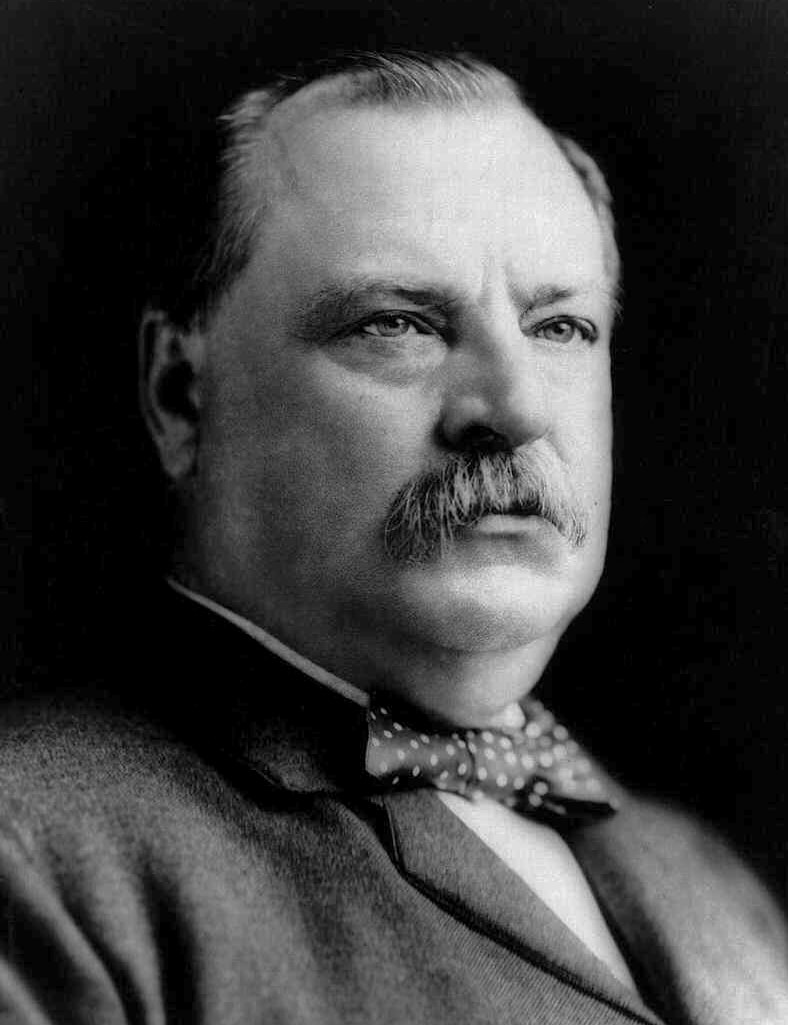
Grover Cleveland's second tenure as the president of the United States began on March 4, 1893, when he was inaugurated as the nation's 24th president, and ended on March 4, 1897. Cleveland, a Democrat from New York, who previously served as president from 1885 to 1889 and lost to Benjamin Harrison, a Republican from Indiana, in the 1888 presidential election, took office following his victory over incumbent President Harrison in the 1892 presidential election. Cleveland was the first former U.S. president to win another presidential term. He was succeeded by Republican William McKinley.
As his second term began, disaster hit the nation when the Panic of 1893 produced a severe national economic depression. Cleveland presided over the repeal of the Sherman Silver Purchase Act, striking a blow against the Free Silver (silverite) movement, and also lowered tariff rates by allowing the Wilson–Gorman Tariff Act to become law. He also ordered federal soldiers to crush the Pullman Strike. In foreign policy, Cleveland resisted the annexation of Hawaii and an American intervention in Cuba. He also sought to uphold the Monroe Doctrine and forced Great Britain to agree to arbitrate a border dispute with Venezuela. In the midterm elections of 1894, Cleveland's Democratic Party suffered a massive defeat that opened the way for the agrarian and silverite seizure of the Democratic Party.
Cleveland was not a candidate for re-nomination at the 1896 Democratic National Convention, which nominated silverite William Jennings Bryan, who was defeated by Republican William McKinley in the subsequent election. Cleveland left office extremely unpopular, but his reputation was eventually rehabilitated in the 1930s by scholars led by Allan Nevins. More recent historians and biographers have taken a more ambivalent view of Cleveland, but many note Cleveland's role in re-asserting the power of the presidency. In rankings of American presidents by historians and political scientists, Cleveland is generally ranked as an average or above-average president.
After his loss in the 1888 election, Cleveland returned to New York, where he resumed his legal career. Cleveland established himself as a contender for the 1892 nomination with his February 1891 "Silver Letter," in which he deplored the rising strength of the Free silver movement in the Democratic Party. Cleveland's chief opponent for the nomination was David B. Hill, now a Senator for New York. Hill united the anti-Cleveland elements of the Democratic party—silverites, protectionists, and Tammany Hall—but was unable to create a coalition large enough to deny Cleveland the nomination, and Cleveland was nominated on the first ballot of the convention. For vice president, the Democrats chose to balance the ticket with Adlai Stevenson I of Illinois, a silverite. Although the Cleveland forces preferred Isaac P. Gray of Indiana for vice president, they accepted the convention favorite. As a supporter of greenbacks and Free Silver to inflate the currency and alleviate economic distress in the rural districts, Stevenson balanced the otherwise hard-money, gold-standard ticket headed by Cleveland. The Republicans re-nominated President Harrison, making the 1892 election a rematch of the one four years earlier.
The issue of the tariff worked to the Republicans' advantage in 1888, but the legislative revisions of the past four years had made imported goods so expensive that many voters favored tariff reform and were skeptical of big business. Many Westerners, traditionally Republican voters, defected to James Weaver, the candidate of the new Populist Party. Weaver promised Free Silver, generous veterans' pensions, and an eight-hour work day. At the campaign's end, many Populists and labor supporters endorsed Cleveland after an attempt by the Carnegie Corporation to break the union during the Homestead Strike in Pittsburgh and after a similar conflict between big business and labor at the Tennessee Coal and Iron Co. The Tammany Hall Democrats, meanwhile, adhered to the national ticket, allowing a united Democratic Party to carry New York.
Cleveland won 46% of the popular vote and 62.4% of the electoral vote, becoming the first former president to win another term. Harrison won 43% of the popular vote and 32.7% of the electoral vote, while Weaver won 8.5% of the popular vote and the votes of several presidential electors from Western states. Cleveland swept the Solid South, won the swing states of New York, New Jersey, Indiana, and Connecticut, and surprised many observers by also taking Illinois, Wisconsin, and Indiana. In the concurrent congressional elections, Democrats retained control of the House and won control of the Senate, giving the party unified control of Congress and the presidency for the first time since the Civil War. Cleveland's victory made him the second individual to win the popular vote in three presidential elections, alongside Andrew Jackson.
Cleveland was sworn into office as the 24th president of the United States on March 4, 1893. That same day, Stevenson was sworn in as vice president.
In assembling his second cabinet, Cleveland avoided re-appointing the cabinet members of his first term. Two long-time Cleveland loyalists, Daniel S. Lamont and Wilson S. Bissell, joined the cabinet as Secretary of War and Postmaster General, respectively. Walter Q. Gresham, a former Republican who had served in President Arthur's cabinet, became Secretary of State. Richard Olney of Massachusetts was appointed as Attorney General, and he succeeded Gresham as Secretary of State after the latter's death. Former Speaker of the House John G. Carlisle of Kentucky became the Secretary of the Treasury.
Hub AI
Second presidency of Grover Cleveland AI simulator
(@Second presidency of Grover Cleveland_simulator)
Second presidency of Grover Cleveland
Grover Cleveland's second tenure as the president of the United States began on March 4, 1893, when he was inaugurated as the nation's 24th president, and ended on March 4, 1897. Cleveland, a Democrat from New York, who previously served as president from 1885 to 1889 and lost to Benjamin Harrison, a Republican from Indiana, in the 1888 presidential election, took office following his victory over incumbent President Harrison in the 1892 presidential election. Cleveland was the first former U.S. president to win another presidential term. He was succeeded by Republican William McKinley.
As his second term began, disaster hit the nation when the Panic of 1893 produced a severe national economic depression. Cleveland presided over the repeal of the Sherman Silver Purchase Act, striking a blow against the Free Silver (silverite) movement, and also lowered tariff rates by allowing the Wilson–Gorman Tariff Act to become law. He also ordered federal soldiers to crush the Pullman Strike. In foreign policy, Cleveland resisted the annexation of Hawaii and an American intervention in Cuba. He also sought to uphold the Monroe Doctrine and forced Great Britain to agree to arbitrate a border dispute with Venezuela. In the midterm elections of 1894, Cleveland's Democratic Party suffered a massive defeat that opened the way for the agrarian and silverite seizure of the Democratic Party.
Cleveland was not a candidate for re-nomination at the 1896 Democratic National Convention, which nominated silverite William Jennings Bryan, who was defeated by Republican William McKinley in the subsequent election. Cleveland left office extremely unpopular, but his reputation was eventually rehabilitated in the 1930s by scholars led by Allan Nevins. More recent historians and biographers have taken a more ambivalent view of Cleveland, but many note Cleveland's role in re-asserting the power of the presidency. In rankings of American presidents by historians and political scientists, Cleveland is generally ranked as an average or above-average president.
After his loss in the 1888 election, Cleveland returned to New York, where he resumed his legal career. Cleveland established himself as a contender for the 1892 nomination with his February 1891 "Silver Letter," in which he deplored the rising strength of the Free silver movement in the Democratic Party. Cleveland's chief opponent for the nomination was David B. Hill, now a Senator for New York. Hill united the anti-Cleveland elements of the Democratic party—silverites, protectionists, and Tammany Hall—but was unable to create a coalition large enough to deny Cleveland the nomination, and Cleveland was nominated on the first ballot of the convention. For vice president, the Democrats chose to balance the ticket with Adlai Stevenson I of Illinois, a silverite. Although the Cleveland forces preferred Isaac P. Gray of Indiana for vice president, they accepted the convention favorite. As a supporter of greenbacks and Free Silver to inflate the currency and alleviate economic distress in the rural districts, Stevenson balanced the otherwise hard-money, gold-standard ticket headed by Cleveland. The Republicans re-nominated President Harrison, making the 1892 election a rematch of the one four years earlier.
The issue of the tariff worked to the Republicans' advantage in 1888, but the legislative revisions of the past four years had made imported goods so expensive that many voters favored tariff reform and were skeptical of big business. Many Westerners, traditionally Republican voters, defected to James Weaver, the candidate of the new Populist Party. Weaver promised Free Silver, generous veterans' pensions, and an eight-hour work day. At the campaign's end, many Populists and labor supporters endorsed Cleveland after an attempt by the Carnegie Corporation to break the union during the Homestead Strike in Pittsburgh and after a similar conflict between big business and labor at the Tennessee Coal and Iron Co. The Tammany Hall Democrats, meanwhile, adhered to the national ticket, allowing a united Democratic Party to carry New York.
Cleveland won 46% of the popular vote and 62.4% of the electoral vote, becoming the first former president to win another term. Harrison won 43% of the popular vote and 32.7% of the electoral vote, while Weaver won 8.5% of the popular vote and the votes of several presidential electors from Western states. Cleveland swept the Solid South, won the swing states of New York, New Jersey, Indiana, and Connecticut, and surprised many observers by also taking Illinois, Wisconsin, and Indiana. In the concurrent congressional elections, Democrats retained control of the House and won control of the Senate, giving the party unified control of Congress and the presidency for the first time since the Civil War. Cleveland's victory made him the second individual to win the popular vote in three presidential elections, alongside Andrew Jackson.
Cleveland was sworn into office as the 24th president of the United States on March 4, 1893. That same day, Stevenson was sworn in as vice president.
In assembling his second cabinet, Cleveland avoided re-appointing the cabinet members of his first term. Two long-time Cleveland loyalists, Daniel S. Lamont and Wilson S. Bissell, joined the cabinet as Secretary of War and Postmaster General, respectively. Walter Q. Gresham, a former Republican who had served in President Arthur's cabinet, became Secretary of State. Richard Olney of Massachusetts was appointed as Attorney General, and he succeeded Gresham as Secretary of State after the latter's death. Former Speaker of the House John G. Carlisle of Kentucky became the Secretary of the Treasury.