
Recent from talks
Sherbrooke Street
Knowledge base stats:
Talk channels stats:
Members stats:
Sherbrooke Street
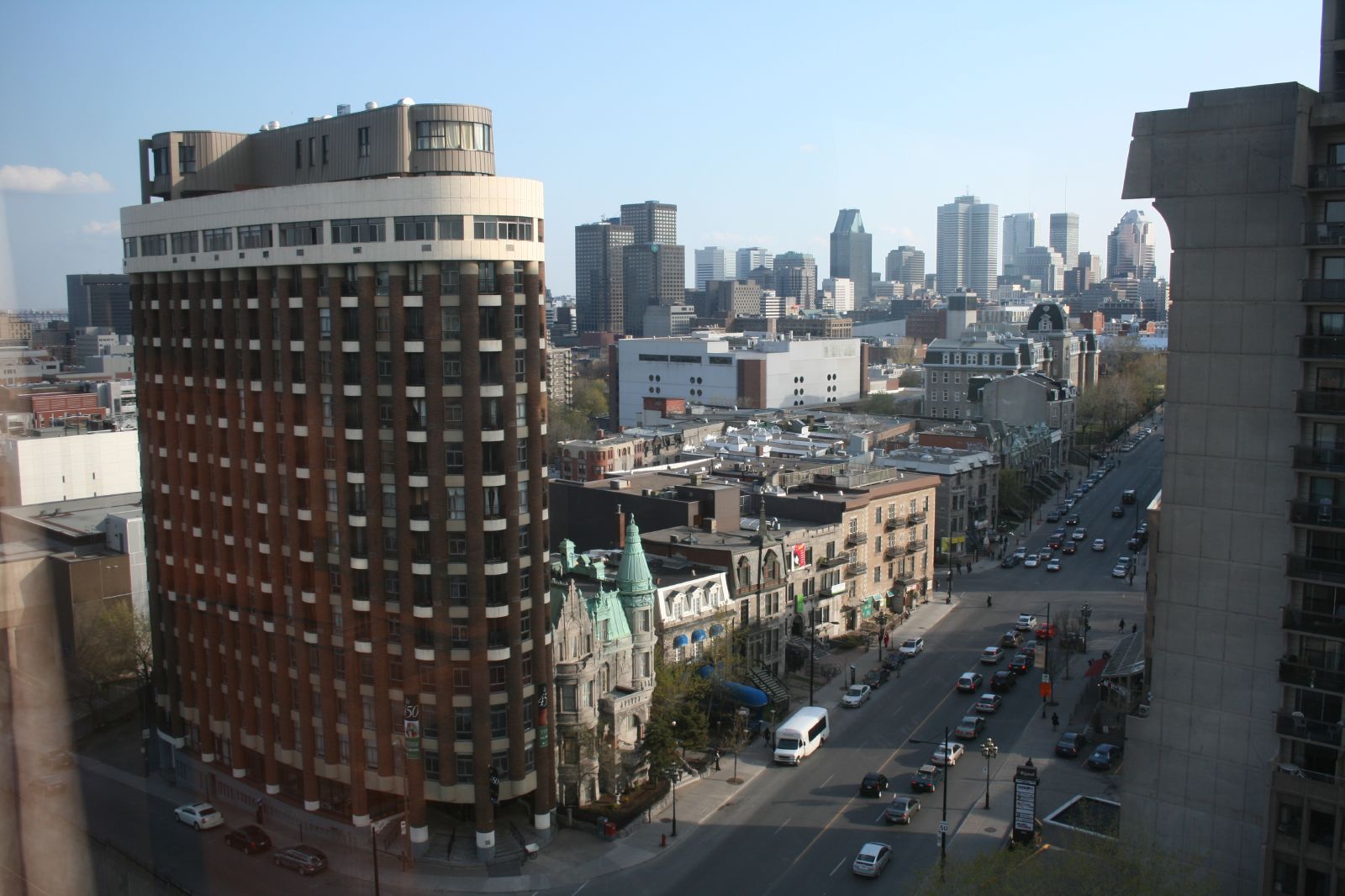
Sherbrooke Street (officially in French: rue Sherbrooke) is a major east–west artery and at 31.3 kilometres (19.4 mi) in length, is the second longest street on the Island of Montreal, Canada. The street begins in the town of Montreal West and ends on the extreme tip of the island in Pointe-aux-Trembles, intersecting Gouin Boulevard and joining up with Notre-Dame Street. East of Cavendish Boulevard this road is part of Quebec Route 138.
The street is divided into two portions. Sherbrooke Street East (Rue Sherbrooke Est) is located east of Saint Laurent Boulevard and Sherbrooke Street West (Rue Sherbrooke Ouest) is located west. Sherbrooke Street West is home to many historic mansions that comprised its exclusive Golden Square Mile district, including the now-demolished Van Horne Mansion, the imposing Beaux-Arts style Montreal Masonic Memorial Temple as well as several historic properties incorporated into Maison Alcan, the world headquarters for Alcan.
Sherbrooke Street East runs along the edge (both administrative and topographic) of the Plateau Mont-Royal, at the top of a marked hillside known as Côte à Baron, and continues between the Montreal Botanical Garden and Parc Maisonneuve to the north and Parc Olympique to the south. The street is named for John Coape Sherbrooke, the Governor General of British North America from 1816 to 1818.
A separate street of the same name exists in the borough of Lachine but does not carry the "West" suffix and repeats numbers that are used on the longer Sherbrooke Street. The same is true for another Sherbrooke Street in the suburb of Beaconsfield.
In 1817, Sherbrooke Street initially consisted of two sections, from de Bleury Street to Sanguinet Street. Its relative remoteness from "downtown" (at the time; now Old Montreal) made it difficult to establish industries or factories. Many nursing homes and educational institutions were established on the street in the 19th century, such as McGill University, the École normale Jacques-Cartier, the Collège Mont-Saint-Louis, and the Couvent du Bon Pasteur.
From the early 20th century to the 1930s, Sherbrooke Street was the most prestigious street in Montreal. In 1912, the Montreal Museum of Fine Arts was established on Sherbrooke Street West. Later, with the expansion of the city centre, luxurious new houses were built a little farther west in the new garden city of Westmount.
Sherbrooke Street was extended eastward from the early 20th century and followed the urban development of Montreal eastward. It was central to the creation of several institutions and parks such as La Fontaine Park, the Notre-Dame Hospital, Maisonneuve Park, Montreal Botanical Gardenm and Olympic Stadium.
In 1976, the street was to be venue for an 8 km exhibit of art, Corridart, during the 1976 Summer Olympics. However, in a controversial decision, former Mayor Jean Drapeau had the exhibition torn down two days before the Games began.
Hub AI
Sherbrooke Street AI simulator
(@Sherbrooke Street_simulator)
Sherbrooke Street
Sherbrooke Street (officially in French: rue Sherbrooke) is a major east–west artery and at 31.3 kilometres (19.4 mi) in length, is the second longest street on the Island of Montreal, Canada. The street begins in the town of Montreal West and ends on the extreme tip of the island in Pointe-aux-Trembles, intersecting Gouin Boulevard and joining up with Notre-Dame Street. East of Cavendish Boulevard this road is part of Quebec Route 138.
The street is divided into two portions. Sherbrooke Street East (Rue Sherbrooke Est) is located east of Saint Laurent Boulevard and Sherbrooke Street West (Rue Sherbrooke Ouest) is located west. Sherbrooke Street West is home to many historic mansions that comprised its exclusive Golden Square Mile district, including the now-demolished Van Horne Mansion, the imposing Beaux-Arts style Montreal Masonic Memorial Temple as well as several historic properties incorporated into Maison Alcan, the world headquarters for Alcan.
Sherbrooke Street East runs along the edge (both administrative and topographic) of the Plateau Mont-Royal, at the top of a marked hillside known as Côte à Baron, and continues between the Montreal Botanical Garden and Parc Maisonneuve to the north and Parc Olympique to the south. The street is named for John Coape Sherbrooke, the Governor General of British North America from 1816 to 1818.
A separate street of the same name exists in the borough of Lachine but does not carry the "West" suffix and repeats numbers that are used on the longer Sherbrooke Street. The same is true for another Sherbrooke Street in the suburb of Beaconsfield.
In 1817, Sherbrooke Street initially consisted of two sections, from de Bleury Street to Sanguinet Street. Its relative remoteness from "downtown" (at the time; now Old Montreal) made it difficult to establish industries or factories. Many nursing homes and educational institutions were established on the street in the 19th century, such as McGill University, the École normale Jacques-Cartier, the Collège Mont-Saint-Louis, and the Couvent du Bon Pasteur.
From the early 20th century to the 1930s, Sherbrooke Street was the most prestigious street in Montreal. In 1912, the Montreal Museum of Fine Arts was established on Sherbrooke Street West. Later, with the expansion of the city centre, luxurious new houses were built a little farther west in the new garden city of Westmount.
Sherbrooke Street was extended eastward from the early 20th century and followed the urban development of Montreal eastward. It was central to the creation of several institutions and parks such as La Fontaine Park, the Notre-Dame Hospital, Maisonneuve Park, Montreal Botanical Gardenm and Olympic Stadium.
In 1976, the street was to be venue for an 8 km exhibit of art, Corridart, during the 1976 Summer Olympics. However, in a controversial decision, former Mayor Jean Drapeau had the exhibition torn down two days before the Games began.
Recent media