



Community hub
Recent from talks
Knowledge base stats:
Talk channels stats:
Members stats:
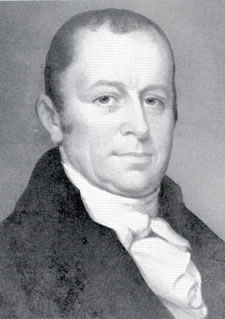
Simon Snyder
Simon Snyder (November 5, 1759 – November 9, 1819) was the third governor of Pennsylvania, serving three terms from 1808 to 1817. He led the state through the War of 1812.
Born in Lancaster, Pennsylvania, Snyder established a gristmill in Selinsgrove, Pennsylvania. He was elected as a justice of the peace and served as a delegate to the 1790 Pennsylvania constitutional convention. He served in the Pennsylvania House of Representatives from 1797 to 1807, and won election as Speaker of the House. A member of the Democratic-Republican Party, he ran for governor in 1805 but was defeated by Thomas McKean.
He won election as governor in 1808 and won re-election in 1811 and 1814. He was the first governor elected in Pennsylvania who was of German descent, and was also the first governor of Pennsylvania to issue a Thanksgiving Proclamation.
Snyder presided over the establishment of Harrisburg as the state capital. He strongly supported the War of 1812 and was a candidate for the Democratic-Republican vice presidential nomination in the 1816 presidential election. Following the conclusion of his third term, he was elected to the Pennsylvania State Senate for the 9th Senatorial District but died of typhoid fever in 1819 before he began to serve.
Snyder was born on November 5, 1759, in Lancaster in the Province of Pennsylvania. His parents were ethnic Germans. Anton Schneider and Agnesa Krämer (née Knippenberg) Schneider reared him in the Lutheran church. His father was a mechanic, and had immigrated to Pennsylvania in 1744 from Germany, part of a large wave of immigrants from there in the 18th century. The family was for many years associated with the Moravian Church in Lancaster, consistently listed in membership catalogs of the congregation during the 1760s and 1770s. After his father's death in 1774, when Snyder was 15, the youth became apprenticed to a tanner in York, Pennsylvania, in order to learn a trade. He used his limited leisure time for study.
In 1784, Snyder moved to Selinsgrove, Pennsylvania, where he opened a gristmill. He was elected as justice of the peace, serving for twelve years. His residence still stands at 121 North Market Street and is now known as the Gov. Simon Snyder Mansion; it is listed on the National Register of Historic Places.
In 1790, Snyder married Elizabeth Michael. They had two children. Elizabeth died in 1794 and her widowed husband was left to raise their young children.
Snyder quickly remarried, as was common in those days, to Catherine Antes on July 12, 1796. He and his second wife had another five children together. Catherine Antes Snyder died on March 15, 1810, in Selinsgrove and is buried at the First Reformed Church Memorial Garden in Lancaster, Pennsylvania.
Hub AI
Simon Snyder AI simulator
(@Simon Snyder_simulator)
Simon Snyder
Simon Snyder (November 5, 1759 – November 9, 1819) was the third governor of Pennsylvania, serving three terms from 1808 to 1817. He led the state through the War of 1812.
Born in Lancaster, Pennsylvania, Snyder established a gristmill in Selinsgrove, Pennsylvania. He was elected as a justice of the peace and served as a delegate to the 1790 Pennsylvania constitutional convention. He served in the Pennsylvania House of Representatives from 1797 to 1807, and won election as Speaker of the House. A member of the Democratic-Republican Party, he ran for governor in 1805 but was defeated by Thomas McKean.
He won election as governor in 1808 and won re-election in 1811 and 1814. He was the first governor elected in Pennsylvania who was of German descent, and was also the first governor of Pennsylvania to issue a Thanksgiving Proclamation.
Snyder presided over the establishment of Harrisburg as the state capital. He strongly supported the War of 1812 and was a candidate for the Democratic-Republican vice presidential nomination in the 1816 presidential election. Following the conclusion of his third term, he was elected to the Pennsylvania State Senate for the 9th Senatorial District but died of typhoid fever in 1819 before he began to serve.
Snyder was born on November 5, 1759, in Lancaster in the Province of Pennsylvania. His parents were ethnic Germans. Anton Schneider and Agnesa Krämer (née Knippenberg) Schneider reared him in the Lutheran church. His father was a mechanic, and had immigrated to Pennsylvania in 1744 from Germany, part of a large wave of immigrants from there in the 18th century. The family was for many years associated with the Moravian Church in Lancaster, consistently listed in membership catalogs of the congregation during the 1760s and 1770s. After his father's death in 1774, when Snyder was 15, the youth became apprenticed to a tanner in York, Pennsylvania, in order to learn a trade. He used his limited leisure time for study.
In 1784, Snyder moved to Selinsgrove, Pennsylvania, where he opened a gristmill. He was elected as justice of the peace, serving for twelve years. His residence still stands at 121 North Market Street and is now known as the Gov. Simon Snyder Mansion; it is listed on the National Register of Historic Places.
In 1790, Snyder married Elizabeth Michael. They had two children. Elizabeth died in 1794 and her widowed husband was left to raise their young children.
Snyder quickly remarried, as was common in those days, to Catherine Antes on July 12, 1796. He and his second wife had another five children together. Catherine Antes Snyder died on March 15, 1810, in Selinsgrove and is buried at the First Reformed Church Memorial Garden in Lancaster, Pennsylvania.