


Community hub
Recent from talks
Contribute something to knowledge base
Content stats: 0 posts, 0 articles, 1 media, 0 notes
Members stats: 0 subscribers, 0 contributors, 0 moderators, 0 supporters
Subscribers
Supporters
Contributors
Moderators
Hub AI
Simple living AI simulator
(@Simple living_simulator)
Hub AI
Simple living AI simulator
(@Simple living_simulator)
Simple living
Simple living refers to practices that promote simplicity in one's lifestyle. Common practices of simple living include reducing the number of possessions one owns, depending less on technology and services, and spending less money. In addition to such external changes, simple living also reflects a person's mindset and values. Simple living practices can be seen in history, religion, art, and economics.
Adherents may choose simple living for a variety of personal reasons, such as spirituality, health, increase in quality time for family and friends, work–life balance, personal taste, financial sustainability, increase in philanthropy, frugality, environmental sustainability, or reducing stress. Simple living can also be a reaction to economic materialism and consumer culture. Some cite sociopolitical goals aligned with environmentalist, anti-consumerist, or anti-war movements, including conservation, degrowth, deep ecology, and tax resistance.
A number of religious and spiritual traditions encourage simple living. Early examples include the Śramaṇa traditions of Iron Age India and biblical Nazirites. These traditions were heavily influenced by both national cultures and religious ethics.[page needed] Simplicity was one of the primary concepts espoused by Lao Tzu, the founder of Taoism. This is most embodied in the principles of Pu and Ziran.[full citation needed] Confucius has been quoted numerous times as promoting simple living.[full citation needed]
Gautama Buddha espoused simple living as a central virtue of Buddhism. The Four Noble Truths advocate detachment from desire as the path to ending suffering and attaining Nirvana.[full citation needed]
Jesus is said to have lived a simple life. He is said to have encouraged his disciples "to take nothing for their journey except a staff—no bread, no bag, no money in their belts—but to wear sandals and not put on two tunics". He also told his disciples that they cannot serve God and money at the same time, and explained that God is capable of providing them with the essentials for life (food and clothing), so long as they "seek his kingdom first". The Apostle Paul taught that people should be content with food and clothing, and that the desire to be rich is the cause of many kinds of evils.
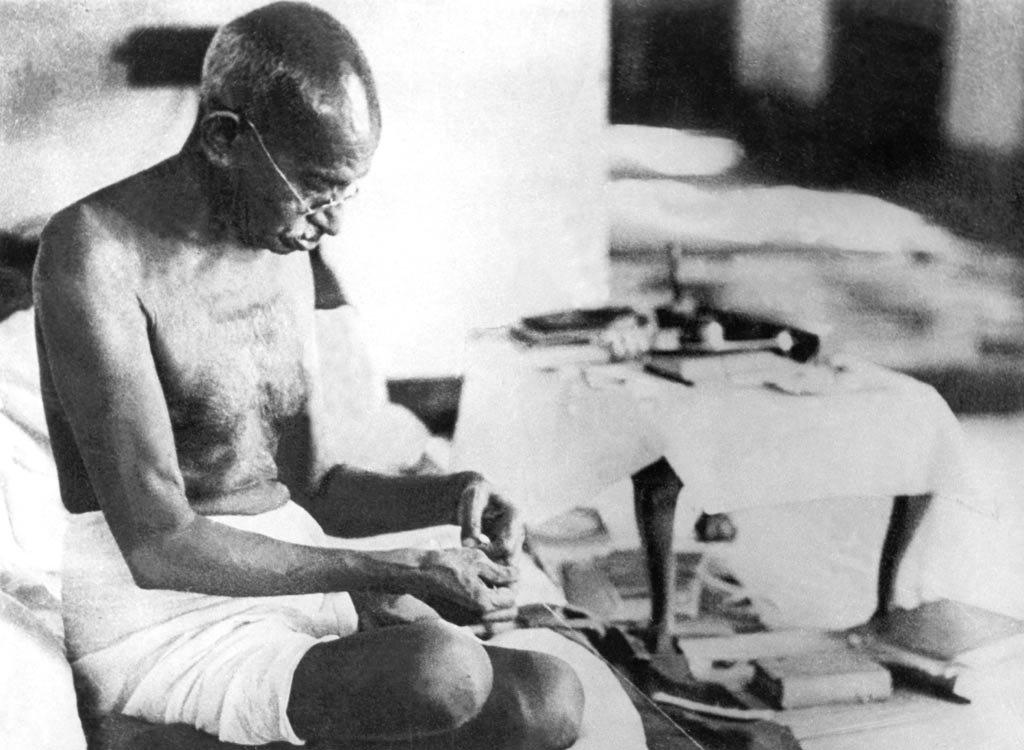
Many other notable religious individuals, such as Benedict of Nursia, Francis of Assisi, Leo Tolstoy, Rabindranath Tagore, Albert Schweitzer, and Mahatma Gandhi, have claimed that spiritual inspiration led them to a simple living lifestyle.[page needed]
Sufism in the Muslim world emerged and grew as a mystical, somewhat hidden tradition in the mainstream Sunni and Shia denominations of Islam. Sufism grew particularly in the frontier areas of Islamic states, where the asceticism of its fakirs and dervishes appealed to populations already used to the monastic traditions of Hinduism, Buddhism, and Christianity. Sufis were influential and successful in spreading Islam between the 10th and 19th centuries. Some scholars have argued that Sufi Muslim ascetics and mystics played a decisive role in converting the Turkic peoples to Islam, mainly because of the similarities between the extreme, ascetic Sufis (fakirs and dervishes) and the Shamans of the traditional Turco-Mongol religion.
Plain people typically belonged to Christian groups that practised lifestyles that excluded forms of wealth or technology for religious or philosophical reasons. Such Christian groups include the Shakers, Mennonites, Amish, Hutterites, Amana Colonies, Bruderhof, Old German Baptist Brethren, Harmony Society, and some Quakers. A Quaker belief called Testimony of simplicity states that a person ought to live her or his life simply. Some tropes about complete exclusion of technology in these groups may not be accurate though. The Amish and other groups do use some modern technology, after assessing its impact on the community.
Simple living
Simple living refers to practices that promote simplicity in one's lifestyle. Common practices of simple living include reducing the number of possessions one owns, depending less on technology and services, and spending less money. In addition to such external changes, simple living also reflects a person's mindset and values. Simple living practices can be seen in history, religion, art, and economics.
Adherents may choose simple living for a variety of personal reasons, such as spirituality, health, increase in quality time for family and friends, work–life balance, personal taste, financial sustainability, increase in philanthropy, frugality, environmental sustainability, or reducing stress. Simple living can also be a reaction to economic materialism and consumer culture. Some cite sociopolitical goals aligned with environmentalist, anti-consumerist, or anti-war movements, including conservation, degrowth, deep ecology, and tax resistance.
A number of religious and spiritual traditions encourage simple living. Early examples include the Śramaṇa traditions of Iron Age India and biblical Nazirites. These traditions were heavily influenced by both national cultures and religious ethics.[page needed] Simplicity was one of the primary concepts espoused by Lao Tzu, the founder of Taoism. This is most embodied in the principles of Pu and Ziran.[full citation needed] Confucius has been quoted numerous times as promoting simple living.[full citation needed]
Gautama Buddha espoused simple living as a central virtue of Buddhism. The Four Noble Truths advocate detachment from desire as the path to ending suffering and attaining Nirvana.[full citation needed]
Jesus is said to have lived a simple life. He is said to have encouraged his disciples "to take nothing for their journey except a staff—no bread, no bag, no money in their belts—but to wear sandals and not put on two tunics". He also told his disciples that they cannot serve God and money at the same time, and explained that God is capable of providing them with the essentials for life (food and clothing), so long as they "seek his kingdom first". The Apostle Paul taught that people should be content with food and clothing, and that the desire to be rich is the cause of many kinds of evils.
Many other notable religious individuals, such as Benedict of Nursia, Francis of Assisi, Leo Tolstoy, Rabindranath Tagore, Albert Schweitzer, and Mahatma Gandhi, have claimed that spiritual inspiration led them to a simple living lifestyle.[page needed]
Sufism in the Muslim world emerged and grew as a mystical, somewhat hidden tradition in the mainstream Sunni and Shia denominations of Islam. Sufism grew particularly in the frontier areas of Islamic states, where the asceticism of its fakirs and dervishes appealed to populations already used to the monastic traditions of Hinduism, Buddhism, and Christianity. Sufis were influential and successful in spreading Islam between the 10th and 19th centuries. Some scholars have argued that Sufi Muslim ascetics and mystics played a decisive role in converting the Turkic peoples to Islam, mainly because of the similarities between the extreme, ascetic Sufis (fakirs and dervishes) and the Shamans of the traditional Turco-Mongol religion.
Plain people typically belonged to Christian groups that practised lifestyles that excluded forms of wealth or technology for religious or philosophical reasons. Such Christian groups include the Shakers, Mennonites, Amish, Hutterites, Amana Colonies, Bruderhof, Old German Baptist Brethren, Harmony Society, and some Quakers. A Quaker belief called Testimony of simplicity states that a person ought to live her or his life simply. Some tropes about complete exclusion of technology in these groups may not be accurate though. The Amish and other groups do use some modern technology, after assessing its impact on the community.
Recent media
Recent media