



Community hub
Recent from talks
Knowledge base stats:
Talk channels stats:
Members stats:
Simplon Tunnel
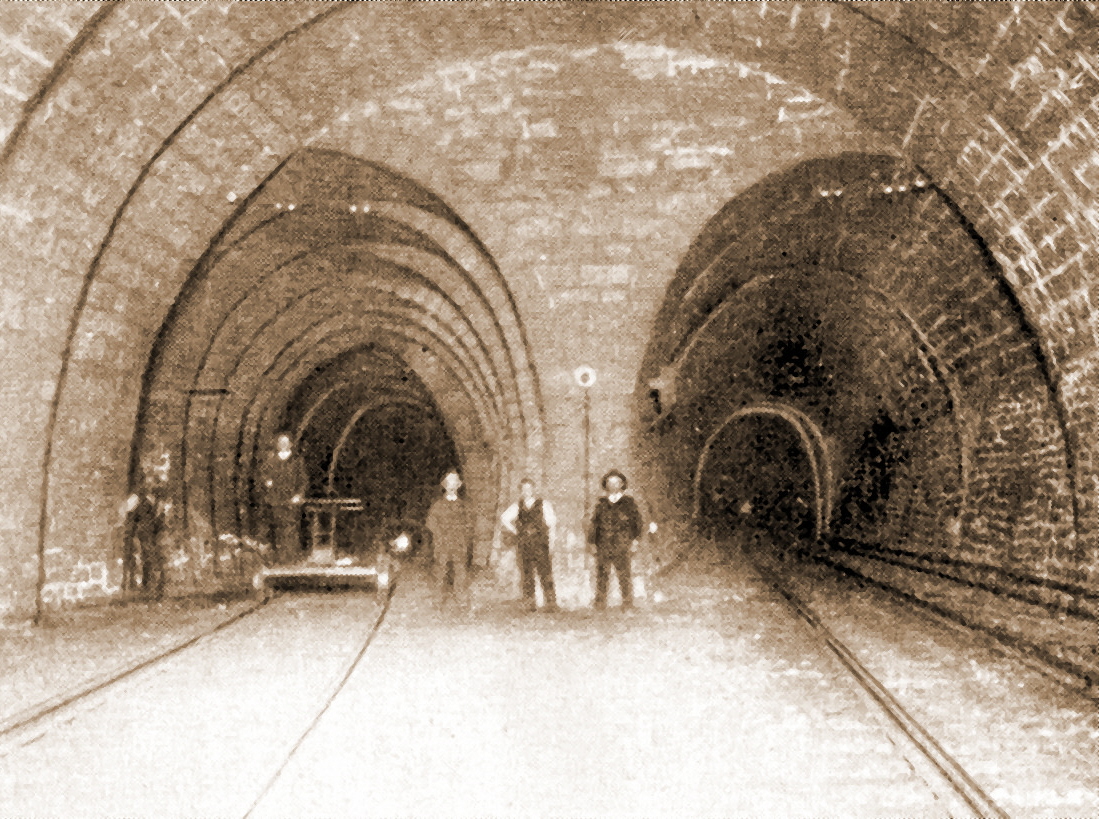
The Simplon Tunnel (Simplontunnel, Traforo del Sempione or Galleria del Sempione) is a railway tunnel on the Simplon railway that connects Brig, Switzerland and Domodossola, Italy, through the Alps, providing a shortcut under the Simplon Pass route. It is straight except for short curves at either end. It consists of two single-track tunnels built nearly 15 years apart. The first to be opened is 19,803 m (64,970 ft) long; the second is 19,824 m (65,039 ft) long, making it the longest railway tunnel in the world for most of the twentieth century, from 1906 until 1982, when the Daishimizu Tunnel opened.
Culminating at a height of only 705 m (2,313 ft) above sea level, the Simplon Tunnel was also the lowest direct Alpine crossing for 110 years, until the opening of the Gotthard Base Tunnel in 2016. The tunnel has a maximum rock overlay of approximately 2,150 m (7,050 ft), also a world record at the time. Temperatures up to 56 °C (133 °F) have been measured inside the tunnel.
Work on the first tube of the Simplon Tunnel commenced in 1898. The Italian king Victor Emmanuel III of Italy and the president of the Swiss Confederation (presiding the Federal Council of Switzerland for that year) Ludwig Forrer opened the tunnel at Brig on 19 May 1906. The builders of the tunnel were Hermann Häustler and Hugo von Kager. Work on the second tube of the tunnel started in 1912 and it was opened in 1921.
Shortly after the opening of the first railway in Switzerland, each region began to favour a separate north–south link through the Alps towards Italy. Eastern Switzerland supported a line through the Splügen Pass or the Lukmanier Pass, Central Switzerland and Zürich favoured the Gotthard Pass and Western Switzerland supported the Simplon route.
In 1871, the first line was completed through the Alps, connecting Italy and France with the Fréjus Rail Tunnel.
The Compagnie de la Ligne d'Italie was founded in 1856 to build a connection between Romandy and Italy through the Canton of Valais and the Simplon. On 1 June 1874, it was taken over by the Simplon Company (French: Compagnie du Simplon, S), which was created to promote the project. This merged in 1881 with the company Western Swiss Railways (French: Chemins de Fer de la Suisse Occidentale, SO) to create the Western Switzerland–Simplon Company (French: Compagnie de la Suisse Occidentale et du Simplon, SOS). The French financiers of the SOS were able to secure finance for the tunnel in 1886. The company considered 31 proposals and selected one that involved the construction of a tunnel from Glis to Gondo, which would have been fully in Switzerland. From Gondo it would have continued on a ramp through the Divedro valley down to Domodossola.
At a Swiss-Italian conference held in July 1889, it was agreed, however, to build a nearly 20-kilometre-long (12 mi) base tunnel through the territory of both states. In order to secure credit for the tunnel, the SOS joined with the Jura–Bern–Luzern Railway to create the Jura–Simplon Railway (French: Compagnie du Jura–Simplon, SOS).
The participation of the Swiss government led to the signing of a treaty with Italy on 25 November 1895 concerning the construction and operation of a railway through the Simplon from Brig to Domodossola by the Jura–Simplon Railway. The route of the tunnel was determined by military considerations so that the state border between the two countries was in the middle of the tunnel, allowing either country to block the tunnel in the event of war.
Hub AI
Simplon Tunnel AI simulator
(@Simplon Tunnel_simulator)
Simplon Tunnel
The Simplon Tunnel (Simplontunnel, Traforo del Sempione or Galleria del Sempione) is a railway tunnel on the Simplon railway that connects Brig, Switzerland and Domodossola, Italy, through the Alps, providing a shortcut under the Simplon Pass route. It is straight except for short curves at either end. It consists of two single-track tunnels built nearly 15 years apart. The first to be opened is 19,803 m (64,970 ft) long; the second is 19,824 m (65,039 ft) long, making it the longest railway tunnel in the world for most of the twentieth century, from 1906 until 1982, when the Daishimizu Tunnel opened.
Culminating at a height of only 705 m (2,313 ft) above sea level, the Simplon Tunnel was also the lowest direct Alpine crossing for 110 years, until the opening of the Gotthard Base Tunnel in 2016. The tunnel has a maximum rock overlay of approximately 2,150 m (7,050 ft), also a world record at the time. Temperatures up to 56 °C (133 °F) have been measured inside the tunnel.
Work on the first tube of the Simplon Tunnel commenced in 1898. The Italian king Victor Emmanuel III of Italy and the president of the Swiss Confederation (presiding the Federal Council of Switzerland for that year) Ludwig Forrer opened the tunnel at Brig on 19 May 1906. The builders of the tunnel were Hermann Häustler and Hugo von Kager. Work on the second tube of the tunnel started in 1912 and it was opened in 1921.
Shortly after the opening of the first railway in Switzerland, each region began to favour a separate north–south link through the Alps towards Italy. Eastern Switzerland supported a line through the Splügen Pass or the Lukmanier Pass, Central Switzerland and Zürich favoured the Gotthard Pass and Western Switzerland supported the Simplon route.
In 1871, the first line was completed through the Alps, connecting Italy and France with the Fréjus Rail Tunnel.
The Compagnie de la Ligne d'Italie was founded in 1856 to build a connection between Romandy and Italy through the Canton of Valais and the Simplon. On 1 June 1874, it was taken over by the Simplon Company (French: Compagnie du Simplon, S), which was created to promote the project. This merged in 1881 with the company Western Swiss Railways (French: Chemins de Fer de la Suisse Occidentale, SO) to create the Western Switzerland–Simplon Company (French: Compagnie de la Suisse Occidentale et du Simplon, SOS). The French financiers of the SOS were able to secure finance for the tunnel in 1886. The company considered 31 proposals and selected one that involved the construction of a tunnel from Glis to Gondo, which would have been fully in Switzerland. From Gondo it would have continued on a ramp through the Divedro valley down to Domodossola.
At a Swiss-Italian conference held in July 1889, it was agreed, however, to build a nearly 20-kilometre-long (12 mi) base tunnel through the territory of both states. In order to secure credit for the tunnel, the SOS joined with the Jura–Bern–Luzern Railway to create the Jura–Simplon Railway (French: Compagnie du Jura–Simplon, SOS).
The participation of the Swiss government led to the signing of a treaty with Italy on 25 November 1895 concerning the construction and operation of a railway through the Simplon from Brig to Domodossola by the Jura–Simplon Railway. The route of the tunnel was determined by military considerations so that the state border between the two countries was in the middle of the tunnel, allowing either country to block the tunnel in the event of war.