


Community hub
Recent from talks
Contribute something to knowledge base
Content stats: 0 posts, 0 articles, 1 media, 0 notes
Members stats: 0 subscribers, 0 contributors, 0 moderators, 0 supporters
Subscribers
Supporters
Contributors
Moderators
Hub AI
Sir Barton AI simulator
(@Sir Barton_simulator)
Hub AI
Sir Barton AI simulator
(@Sir Barton_simulator)
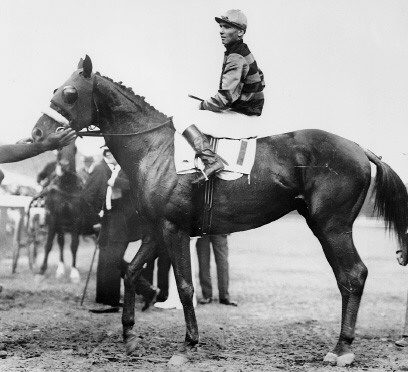
Sir Barton
Sir Barton (April 26, 1916 – October 30, 1937) was a champion American Thoroughbred racehorse who is the first winner of the American Triple Crown.
Sir Barton was a chestnut colt bred in 1916, in Kentucky, by John E. Madden at Hamburg Place Farm near Lexington. An Englishman, Vivian A. Gooch, who judged the 1918 National Horse, was co-listed as breeder with Madden, but Gooch had actually served as the agent who purchased Sir Martin, Sir Barton's half-brother, from Madden for Louis Winans. As a favor to Gooch, Madden listed his friend as co-breeder and then Madden purchased Gooch's gifted share of Sir Barton when Madden decided to keep the colt and race him under his own colors.
Sir Barton was sired by the British stallion Star Shoot out of the mare Lady Sterling, by Hanover. Sir Barton's paternal grandsire was the 1893 English Triple Crown winner Isinglass. His half-brother was 1908 juvenile champion Sir Martin.
Sir Barton was known for being a "grouchy" horse, and it was said that the only human he didn't hate was his groom, Toots Thompson.
Trained by African American former jockey Billy Walker, Sir Barton raced as part of John E. Madden's stable in the first four starts of his two-year-old season, but none of those starts demonstrated the same speed and talent the colt would show in his workouts. In late August 1918, Madden sold the horse for a reported $10,000 to Canadian businessman and volunteer naval commander J. K. L. Ross. After some early success, Ross was growing his stable as part of his effort to commit more fully to racing. He owned farms in Vercheres, Quebec, where he established a breeding operation for his Canadian horses; and, in 1919, purchased Bolingbrook near Laurel, Maryland, for training and breeding his American stock.
Ross placed Sir Barton in the hands of trainer H. Guy Bedwell. The colt made two more starts that year, finishing second in his last start, the 1918 Belmont Futurity. He contracted blood poisoning after a stablemate kicked him, opening a significant cut on his left hind leg. Bedwell personally nursed him through the illness, which sidelined Sir Barton for the rest of the year.
At three, Sir Barton won his season debut as a maiden in the Kentucky Derby on May 10, 1919, ridden by jockey Johnny Loftus. Legend holds that he was supposed to be the rabbit (pacemaker) for his highly regarded stablemate, the gelding Billy Kelly, but that assumption is only partially true; in reality Sir Barton was regarded at having a better chance of winning the Kentucky Derby than Billy Kelly, owing to both his weight allowance as a maiden as well as the fitness he had demonstrated in the preparations for the Derby. Sir Barton led the field of 12 horses from start to finish, winning the race by five lengths. The next day, Sir Barton was shipped to Baltimore to run in the Preakness Stakes, held only three days later on May 14. In the Preakness, he again led all the way, winning wire-to-wire and beating Eternal by four lengths. He then won the Withers Stakes in New York on May 24 and shortly thereafter completed the first Triple Crown in U.S. history by winning the Belmont Stakes on June 11, setting an American record for the mile and three-eighths race, the distance for the Belmont at the time. Sir Barton's four wins were accomplished in a space of just 32 days. He has been retroactively honored as the 1919 Horse of the Year.
After his win in the Belmont, Sir Barton's next start was the Dwyer Stakes, where he faced Purchase, another highly rated three-year-old trained and owned by Sam Hildreth. On a muddy track, Purchase caught Sir Barton in the final furlong and Sir Barton finished second. After the Dwyer, Sir Barton got a bruised hoof and only returned in mid-September. He did stellar performances in races such as the Maryland Handicap while also turning in a couple of puzzling losses, including the Autumn Handicap. He finished the year with $88,250, finishing just ahead of Man o' War in money won that year.
Sir Barton
Sir Barton (April 26, 1916 – October 30, 1937) was a champion American Thoroughbred racehorse who is the first winner of the American Triple Crown.
Sir Barton was a chestnut colt bred in 1916, in Kentucky, by John E. Madden at Hamburg Place Farm near Lexington. An Englishman, Vivian A. Gooch, who judged the 1918 National Horse, was co-listed as breeder with Madden, but Gooch had actually served as the agent who purchased Sir Martin, Sir Barton's half-brother, from Madden for Louis Winans. As a favor to Gooch, Madden listed his friend as co-breeder and then Madden purchased Gooch's gifted share of Sir Barton when Madden decided to keep the colt and race him under his own colors.
Sir Barton was sired by the British stallion Star Shoot out of the mare Lady Sterling, by Hanover. Sir Barton's paternal grandsire was the 1893 English Triple Crown winner Isinglass. His half-brother was 1908 juvenile champion Sir Martin.
Sir Barton was known for being a "grouchy" horse, and it was said that the only human he didn't hate was his groom, Toots Thompson.
Trained by African American former jockey Billy Walker, Sir Barton raced as part of John E. Madden's stable in the first four starts of his two-year-old season, but none of those starts demonstrated the same speed and talent the colt would show in his workouts. In late August 1918, Madden sold the horse for a reported $10,000 to Canadian businessman and volunteer naval commander J. K. L. Ross. After some early success, Ross was growing his stable as part of his effort to commit more fully to racing. He owned farms in Vercheres, Quebec, where he established a breeding operation for his Canadian horses; and, in 1919, purchased Bolingbrook near Laurel, Maryland, for training and breeding his American stock.
Ross placed Sir Barton in the hands of trainer H. Guy Bedwell. The colt made two more starts that year, finishing second in his last start, the 1918 Belmont Futurity. He contracted blood poisoning after a stablemate kicked him, opening a significant cut on his left hind leg. Bedwell personally nursed him through the illness, which sidelined Sir Barton for the rest of the year.
At three, Sir Barton won his season debut as a maiden in the Kentucky Derby on May 10, 1919, ridden by jockey Johnny Loftus. Legend holds that he was supposed to be the rabbit (pacemaker) for his highly regarded stablemate, the gelding Billy Kelly, but that assumption is only partially true; in reality Sir Barton was regarded at having a better chance of winning the Kentucky Derby than Billy Kelly, owing to both his weight allowance as a maiden as well as the fitness he had demonstrated in the preparations for the Derby. Sir Barton led the field of 12 horses from start to finish, winning the race by five lengths. The next day, Sir Barton was shipped to Baltimore to run in the Preakness Stakes, held only three days later on May 14. In the Preakness, he again led all the way, winning wire-to-wire and beating Eternal by four lengths. He then won the Withers Stakes in New York on May 24 and shortly thereafter completed the first Triple Crown in U.S. history by winning the Belmont Stakes on June 11, setting an American record for the mile and three-eighths race, the distance for the Belmont at the time. Sir Barton's four wins were accomplished in a space of just 32 days. He has been retroactively honored as the 1919 Horse of the Year.
After his win in the Belmont, Sir Barton's next start was the Dwyer Stakes, where he faced Purchase, another highly rated three-year-old trained and owned by Sam Hildreth. On a muddy track, Purchase caught Sir Barton in the final furlong and Sir Barton finished second. After the Dwyer, Sir Barton got a bruised hoof and only returned in mid-September. He did stellar performances in races such as the Maryland Handicap while also turning in a couple of puzzling losses, including the Autumn Handicap. He finished the year with $88,250, finishing just ahead of Man o' War in money won that year.
Recent media
Recent media