
Recent from talks
John Eliot (statesman)
Knowledge base stats:
Talk channels stats:
Members stats:
John Eliot (statesman)
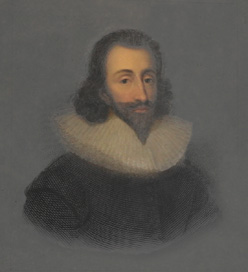
Sir John Eliot (11 April 1592 – 27 November 1632) was an English statesman who was serially imprisoned in the Tower of London, where he eventually died, by King Charles I for advocating the rights and privileges of Parliament.
The son of Richard Eliot (1546 – 22 June 1609) and Bridget Carswell (c. 1542 – March 1617), he was born at Cuddenbeak, a farm on his father's Port Eliot estate in St Germans, Cornwall. He was baptised on 20 April at St German's Priory, immediately next to Port Eliot. The Eliot family were an old Devon family that had settled in Cornwall.
John Eliot was educated at Blundell's School, Tiverton, and matriculated at Exeter College, Oxford, on 4 December 1607, and, leaving the university after three years, he studied law at one of the Inns of Court. He also spent some months travelling in France, Spain and Italy, in company, for part of the time, with young George Villiers, afterwards 1st Duke of Buckingham.
Eliot was only twenty-two when he began his parliamentary career as Member of Parliament for St Germans in the "Addled Parliament" of 1614. In May 1618, he was knighted, and next year through the patronage of Buckingham he obtained the appointment of Vice-Admiral of Devon, with large powers for the defence and control of the commerce of the county. It was not long before the characteristic energy with which he performed the duties in his office involved him in difficulties. After many attempts, in 1623, he succeeded by a clever but dangerous manoeuvre in entrapping the famous pirate John Nutt, who had for years plagued the southern coast, inflicting immense damage upon English commerce. However, the pirate, having a powerful protector at court in Sir George Calvert, the secretary of state, was pardoned; while the Vice-Admiral, upon charges which could not be substantiated, was flung into the Marshalsea prison, and detained there nearly four months.
A few weeks after his release, Eliot was elected Member of Parliament for Newport (February 1624). On 27 February, he delivered his first speech, in which he at once revealed his great powers as an orator, demanding boldly that the liberties and privileges of Parliament, repudiated by James I in the former Parliament, should be secured. In the first Parliament of Charles I, in 1625, he urged the enforcement of the laws against the Roman Catholics. Meanwhile, he had continued the friend and supporter of Buckingham and greatly approved of the war with Spain.
Buckingham's incompetence, however, and the bad faith with which both he and the King continued to treat the parliament, alienated Eliot. Distrust of his former friend quickly grew in Eliot's mind to a certainty of his criminal ambition. Returned to the parliament of 1626 as Member for St Germans and in the absence of other leaders of the opposition whom the King had secured by nominating them sheriffs, Eliot found himself the leader of the House. He immediately demanded an inquiry into the recent disaster at Cádiz. On 27 March, he made an open and daring attack upon Buckingham and his administration. He was not intimidated by the King's threatening intervention on 29 March, and persuaded the House to defer the actual grant of the subsidies and to present a remonstrance to the King, declaring its right to examine the conduct of ministers. On 8 May, he was one of the managers who carried Buckingham's impeachment to the Lords and, on 10 May, he delivered the charges against him, comparing him in the course of his speech to Sejanus.
Next day, Eliot was sent to the Tower. When the Commons declined to proceed with business as long as Eliot and Sir Dudley Digges (who had been imprisoned with him) were in confinement, they were released, and Parliament was dissolved on 15 June. Eliot was immediately dismissed from his office of Vice-Admiral of Devon, and, in 1627, he was again imprisoned for refusing to pay a forced loan, but liberated shortly before the assembling of the Parliament of 1628, to which he was returned as Member for Cornwall. He joined in the resistance now organised to arbitrary taxation, was foremost in the promotion of the Petition of Right, continued his outspoken censure of Buckingham, and after the latter's assassination in August, led the attack, in the session of 1629, on the ritualists and Arminians.
In February 1629 the great question of the right of the King to levy tonnage and poundage came up for discussion. On the King ordering an adjournment of Parliament, the speaker, Sir John Finch, was held down in the chair by Denzil Holles and Benjamin Valentine while Eliot's resolutions against illegal taxation and innovations in religion were read to the House. In consequence, Eliot, with eight other members, was imprisoned on 4 March in the Tower. He refused to answer in his examination, relying on his parliamentary privilege and, on 29 October, was again sent to the Marshalsea. On 26 January, he appeared at the bar of the King's Bench, in front of Lord Chief Justice Sir Nicholas Hyde, with Holles and Valentine, to answer a charge of conspiracy to resist the King's order, and refusing to acknowledge the jurisdiction of the court (see R v. Eliot, Hollis and Valentine.) He was fined £2000 and ordered to be imprisoned during the King's pleasure and till he had made submission. This he steadfastly refused. While some of the prisoners appear to have had certain liberty allowed to them, Eliot's confinement in the Tower was made exceptionally severe. Charles's anger had always been directed chiefly against him, not only as his own political antagonist but also as the prosecutor and bitter enemy of Buckingham; "an outlawed man," he described him, "desperate in mind and fortune."
Hub AI
John Eliot (statesman) AI simulator
(@John Eliot (statesman)_simulator)
John Eliot (statesman)
Sir John Eliot (11 April 1592 – 27 November 1632) was an English statesman who was serially imprisoned in the Tower of London, where he eventually died, by King Charles I for advocating the rights and privileges of Parliament.
The son of Richard Eliot (1546 – 22 June 1609) and Bridget Carswell (c. 1542 – March 1617), he was born at Cuddenbeak, a farm on his father's Port Eliot estate in St Germans, Cornwall. He was baptised on 20 April at St German's Priory, immediately next to Port Eliot. The Eliot family were an old Devon family that had settled in Cornwall.
John Eliot was educated at Blundell's School, Tiverton, and matriculated at Exeter College, Oxford, on 4 December 1607, and, leaving the university after three years, he studied law at one of the Inns of Court. He also spent some months travelling in France, Spain and Italy, in company, for part of the time, with young George Villiers, afterwards 1st Duke of Buckingham.
Eliot was only twenty-two when he began his parliamentary career as Member of Parliament for St Germans in the "Addled Parliament" of 1614. In May 1618, he was knighted, and next year through the patronage of Buckingham he obtained the appointment of Vice-Admiral of Devon, with large powers for the defence and control of the commerce of the county. It was not long before the characteristic energy with which he performed the duties in his office involved him in difficulties. After many attempts, in 1623, he succeeded by a clever but dangerous manoeuvre in entrapping the famous pirate John Nutt, who had for years plagued the southern coast, inflicting immense damage upon English commerce. However, the pirate, having a powerful protector at court in Sir George Calvert, the secretary of state, was pardoned; while the Vice-Admiral, upon charges which could not be substantiated, was flung into the Marshalsea prison, and detained there nearly four months.
A few weeks after his release, Eliot was elected Member of Parliament for Newport (February 1624). On 27 February, he delivered his first speech, in which he at once revealed his great powers as an orator, demanding boldly that the liberties and privileges of Parliament, repudiated by James I in the former Parliament, should be secured. In the first Parliament of Charles I, in 1625, he urged the enforcement of the laws against the Roman Catholics. Meanwhile, he had continued the friend and supporter of Buckingham and greatly approved of the war with Spain.
Buckingham's incompetence, however, and the bad faith with which both he and the King continued to treat the parliament, alienated Eliot. Distrust of his former friend quickly grew in Eliot's mind to a certainty of his criminal ambition. Returned to the parliament of 1626 as Member for St Germans and in the absence of other leaders of the opposition whom the King had secured by nominating them sheriffs, Eliot found himself the leader of the House. He immediately demanded an inquiry into the recent disaster at Cádiz. On 27 March, he made an open and daring attack upon Buckingham and his administration. He was not intimidated by the King's threatening intervention on 29 March, and persuaded the House to defer the actual grant of the subsidies and to present a remonstrance to the King, declaring its right to examine the conduct of ministers. On 8 May, he was one of the managers who carried Buckingham's impeachment to the Lords and, on 10 May, he delivered the charges against him, comparing him in the course of his speech to Sejanus.
Next day, Eliot was sent to the Tower. When the Commons declined to proceed with business as long as Eliot and Sir Dudley Digges (who had been imprisoned with him) were in confinement, they were released, and Parliament was dissolved on 15 June. Eliot was immediately dismissed from his office of Vice-Admiral of Devon, and, in 1627, he was again imprisoned for refusing to pay a forced loan, but liberated shortly before the assembling of the Parliament of 1628, to which he was returned as Member for Cornwall. He joined in the resistance now organised to arbitrary taxation, was foremost in the promotion of the Petition of Right, continued his outspoken censure of Buckingham, and after the latter's assassination in August, led the attack, in the session of 1629, on the ritualists and Arminians.
In February 1629 the great question of the right of the King to levy tonnage and poundage came up for discussion. On the King ordering an adjournment of Parliament, the speaker, Sir John Finch, was held down in the chair by Denzil Holles and Benjamin Valentine while Eliot's resolutions against illegal taxation and innovations in religion were read to the House. In consequence, Eliot, with eight other members, was imprisoned on 4 March in the Tower. He refused to answer in his examination, relying on his parliamentary privilege and, on 29 October, was again sent to the Marshalsea. On 26 January, he appeared at the bar of the King's Bench, in front of Lord Chief Justice Sir Nicholas Hyde, with Holles and Valentine, to answer a charge of conspiracy to resist the King's order, and refusing to acknowledge the jurisdiction of the court (see R v. Eliot, Hollis and Valentine.) He was fined £2000 and ordered to be imprisoned during the King's pleasure and till he had made submission. This he steadfastly refused. While some of the prisoners appear to have had certain liberty allowed to them, Eliot's confinement in the Tower was made exceptionally severe. Charles's anger had always been directed chiefly against him, not only as his own political antagonist but also as the prosecutor and bitter enemy of Buckingham; "an outlawed man," he described him, "desperate in mind and fortune."
Recent media