Hubbry Logo
Skid-steer loaderSkid-steer loaderMain
Open search
Skid-steer loader
Community hub
Skid-steer loader
logo
8 pages, 0 posts
0 subscribers
Be the first to start a discussion here.
Skid-steer loader
Skid-steer loader
from Wikipedia
Bobcat S650 skid steer loader
Skid-steer attachments

A skid loader, skid-steer loader (SSL), or skidsteer is any of a class of compact heavy equipment with lift arms that can attach to a wide variety of buckets and other labor-saving tools or attachments.

The wheels typically have no separate steering mechanism and hold a fixed straight alignment on the body of the machine. Turning is accomplished by differential steering, in which the left and right wheel pairs are operated at different speeds, and the machine turns by skidding or dragging its fixed-orientation wheels across the ground. Skid-steer loaders are capable of zero-radius turning, by driving one set of wheels forward while simultaneously driving the opposite set of wheels in reverse. This "zero-turn" capability (the machine can turn around within its own length) makes them extremely maneuverable and valuable for applications that require a compact, powerful and agile loader or tool carrier in confined-space work areas.

Like other front loaders, they can push material from one location to another, carry material in the bucket, load material into a truck or trailer and perform a variety of digging and grading operations.

History

[edit]

The first three-wheeled, front-end loader was invented by brothers Cyril and Louis Keller in Rothsay, Minnesota, in 1957.[1] The Kellers built the loader to help a farmer, Eddie Velo, mechanize the process of cleaning turkey manure from his barn. The light and compact machine, with its rear caster wheel, was able to turn around within its own length while performing the same tasks as a conventional front-end loader, hence its name.[1]

The Melroe brothers, of Melroe Manufacturing Company in Gwinner, North Dakota, purchased the rights to the Keller loader in 1958 and hired the Kellers to continue refining their invention. As a result of this partnership, the M-200 Melroe self-propelled loader was introduced at the end of 1958. It featured two independent front-drive wheels and a rear caster wheel, a 12.9 hp (9.6 kW) engine and a 750-pound (340 kg) lift capacity. Two years later they replaced the caster wheel with a rear axle and introduced the M-400, the first four-wheel, true skid-steer loader.[1] The M-440 was powered by a 15.5 hp (11.6 kW) engine and had an 1,100-pound (500 kg) rated operating capacity. Skid-steer development continued into the mid-1960s with the M600 loader. Melroe adopted the well-known Bobcat trademark in 1962.

By the late 1960s, competing heavy equipment manufacturers were selling machines of this form factor.

Throughout the 1970s and 80s, skid steers began to evolve with more powerful engines, enclosed cabs, and hydraulic systems that supported a broader range of attachments. Manufacturers like John Deere, Case, and New Holland began producing their own models, each adding unique features such as vertical lift paths or enhanced stability.

By the 1990s, the addition of joystick controls, improved operator visibility, and quick-attach systems made these machines easier and safer to use. As urban job sites grew tighter and more regulated, the demand for nimble, multi-use equipment like skid steers continued to rise.

In the 2000s, innovation accelerated with the introduction of electronic engine controls, advanced telematics, and load-sensing hydraulics. Operators benefited from better fuel efficiency, diagnostics, and fine-tuned control, while rental fleets appreciated the added durability and service tracking. Manufacturers also began focusing on emissions compliance, introducing Tier 3 and Tier 4 engine updates to meet evolving environmental regulations.

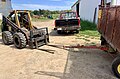
Yuchai S35 electric skid steer loader with raised bucket, photographed at a heavy equipment yard. The compact, battery-powered machine is positioned on a gravel surface near tools and a workbench.
An electric Yuchai S35 skid steer loader at the Zadoon equipment yard in Crofton, Maryland. Electric models like this one offer zero-emission operation and reduced noise, making them suitable for indoor and urban job sites.

More recently, manufacturers have pushed into autonomous and semi-autonomous capabilities, integrating robotic control systems for grading and pathing, as well as remote operation. Simultaneously, electric skid steers have entered the market, offering zero-emissions alternatives for indoor, urban, and noise-sensitive environments.

Operation

[edit]
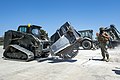
Skid-steer with tracked treads

Skid-steer loaders are typically four-wheeled or tracked vehicles with the front and back wheels on each side mechanically linked together to turn at the same speed, and where the left-side drive wheels can be driven independently of the right-side drive wheels. This is accomplished by having two separate and independent transmissions; one for the left side wheels and one for the right side wheels. Earliest versions of skid steer loaders used forward and reverse clutch drives. Virtually all modern skid steers designed and built since the mid-1970s use two separate hydrostatic transmissions (one for the left side and one for the right side).

The differential steering, zero-turn capabilities and lack of visibility often exacerbated by carrying loads with these machines means that their safe operation requires the operator have a good field of vision, good hand eye coordination, manual dexterity and the ability to remember and perform multiple actions at once.[2][3] Before allowing anyone, including adults, to operate a skid steer, they should be assessed on their ability to safely operate the machine and trained in its safe operation. In the US, it is illegal for youth under age 18 employed in non-agricultural jobs to operate a skid steer.[4] For youth hired to work in agriculture, it is recommended they be at least 16 years old and have an adult assess their abilities using the Agricultural Youth Work Guidelines[5]  before being allowed to operate a skid steer.

Another thing to consider are beacon lights and reverse signal alarms that offer a warning to co-workers about the skid steer’s movements. These alarms are not always standard equipment on all farm or landscape skid steer machines, depending on factors like the age of the machine. Use and continued maintenance of these alarms greatly reduce the risk of incidents involving running over and/or pinning co-workers between the machine and an obstacle.  Construction sites and their business contract requirements often call for landscapers to have operational skid steer reverse signal alarms and beacon lights. [6]

The extremely rigid frame and strong wheel bearings prevent the torsional forces caused by this dragging motion from damaging the machine. As with tracked treads, the high ground friction produced by skid steers can rip up soft or fragile road surfaces. They can be converted to low ground friction by using specially designed wheels such as the Mecanum wheel.

Skid-steer loaders are sometimes equipped with tracks instead of the wheels, and such a vehicle is known as a compact track loader.[7]

Skid steer loaders, both wheel and track models, operate most efficiently when they are imbalanced – either the front wheels or the back wheels are more heavily loaded. When equipped with an empty bucket, skid steer loaders are all heavier in the rear and the rear wheels pivot in place while the front wheels slide around. When a bucket is fully loaded, the weight distribution reverses and the front wheels become significantly heavier than the rear wheels. When making a zero-turn while loaded, the front wheels pivot and the rear wheels slide.

Imbalanced operation reduces the amount of power required to turn the machine and minimizes tire wear. Skilled operators always try to keep the machine more heavily loaded on either the front or the rear of the machine. When the weight distribution is 50/50 (or close to it) neither the front set of wheels nor the rear set of wheels wants to pivot or slide and the machine starts to "buck" due to high friction, evenly divided between front and rear axles. Tire wear increases significantly in this condition.

Unlike in a conventional front loader, the lift arms in these machines are alongside the driver with the pivot points behind the driver's shoulders. Because of the operator's proximity to moving booms, early skid loaders were not as safe as conventional front loaders, particularly due to the lack of a rollover protection structure. Modern skid loaders have cabs, open or fully enclosed which can serve as rollover protective structures (ROPS) and falling object protective structures (FOPS). The ROPS, FOPS, side screens and operator restraints make up the “zone of protection” in a skid steer, and are designed to reduce the possibility of operator injury or death. The FOPS shields the operator's cab from falling debris, and the ROPS shields the operator in the case of an overturn. The side screens prevent the operator from becoming wedged between the lift arms and the skid steer frame as well as from being struck by protrusions (such as limbs). The operator is secured in the operator seat when the seat belt or seat-bar restraint is utilized, keeping them within the zone of protection. Safety features and safe operation are important because[8] skid steer loaders are hazardous when safety practices are not observed. Rollover incidents and being crushed by moving parts are the most common causes of serious injuries and death associated with skid steer loaders.[9]

Attachments

[edit]

The conventional bucket of many skid loaders can be replaced with a variety of specialized buckets or attachments, many powered by the loader's hydraulic system. The list of attachments available is virtually endless. Some examples include Dura Graders, backhoe, hydraulic breaker, pallet forks, angle broom, sweeper, auger, mower, snow blower, stump grinder, tree spade, trencher, dumping hopper, pavement miller, ripper, tillers, grapple, tilt, roller, snow blade, wheel saw, cement mixer, and wood chipper machine.

Some models of skid steer now also have an automatic attachment changer mechanism. This allows a driver to change between a variety of terrain handling, shaping, and leveling tools without having to leave the machine, by using a hydraulic control mechanism to latch onto the attachments. Traditionally hydraulic supply lines to powered attachments may be routed so that the couplings are located near the cab, and the driver does not need to leave the machine to connect or disconnect those supply lines. Recently, manufacturers have also created automatic hydraulic connection systems that allow changing attachments without having to manually disconnect/connect hydraulic lines

Loader-arm design

[edit]
Lift mechanism of a skid loader of the powered-triad type

Radial lift

[edit]

The original skid-steer loader arms were designed using a hinge near the top of the loader frame towers at the rear of the machine. When the loader arms were raised the mechanism would pivot the loader arm up into the air in an arc that would swing up over the top of the operator. This is known as a radial lift loader.[11] This design is simple to manufacture and lower cost. Radial lift loaders start with the bucket close to the machine when the arms are fully down and start moving up and forward away from the machine as the arms are raised. This provides greater forward reach at mid-point in the lift for dumping at around four to five feet, but less stability at the middle of their lift arc (because the bucket is so much further forward). As the loader arms continue to raise past mid-height the bucket begins to move back closer to the machine and becomes more stable at full lift height, but also has far less forward reach at full height.

Radial lift machines are lower cost and tend to be preferred for users who do a lot of work at lower height of lift arms, such as digging and spreading materials at low heights. Radial lift designs have very good lift capacity/stability when the loader arms are all the way down and become less stable (lower lift capacity) as the arms reach mid-point and the bucket is furthest forward. Static stability increases as the arms continue to rise, but raised loads are inherently less stable and safe for all machine types. One downside of radial lift design is that when fully raised the bucket is back closer to the machine, so it has relatively poor reach when trying to load trucks or hoppers or spreaders. In addition, the bucket is almost over the operator's head and spillage over the back of the bucket can end up on top of the machine or in the operator's lap. Another downside of radial lift machines is that the large frame towers to which the loader arms are attached tend to restrict an operator's visibility to the rear and back corners of the machine. The radial arm is still the most common design and preferred by many users, but almost all manufacturers that started with radial lift designs began also producing "vertical lift" designs as well.

Vertical lift

[edit]

"Vertical lift" designs use additional links and hinges on the loader arm, with the main pivot points towards the center or front of the machine. This allows the loader arm to have greater operating height and reach while retaining a compact design. There are no truly "vertical lift" designs in production. All loaders use multiple links (that all move in radial arcs) which aim to straighten the lift path of the bucket as it is raised. This allows close to vertical movement at points of the lift range, to keep the bucket forward of the operator's cab, allowing safe dumping into tall containers or vehicles. Some designs have more arc in the lowest part of the lift arc while other designs have more arc near the top of the lift arc.

One downside of vertical lift designs is somewhat higher cost and complexity of manufacturing. Some vertical lift designs may also have reduced rear or side visibility when the arms are down low, but superior visibility as the arms are raised (especially if the design does not require a large rear frame tower). Most Vertical lift machines provide more constant stability as the arms are raised from fully lowered to fully raised position since the bucket (load) has a similar distance from the machine from bottom to top of the lift path. As a side benefit to constant stability, most vertical lift machines have larger bucket capacities and longer, flatter low-profile buckets that can carry more material per cycle and tend to provide smoother excavating and grading than short-lip buckets. Vertical lift designs have grown rapidly in popularity in the past thirty years and now make up a significant proportion of new skid loader sales.

Loader arm safety precautions

[edit]

When controls are activated, the loader or lift arm attachments can move and crush individuals who are within the range of the machinery. To prevent injuries, it is strongly advisable for operators to not start or operate controls from outside of the cab. When in the operator’s seat, the operator should always fasten the seatbelt and lower the safety bar to stay securely in the cab and avoid being crushed.[12] Operators should also ensure that any helpers or bystanders are clear of the machine before starting it.

Applications

[edit]

A skid-steer loader can sometimes be used in place of a large excavator by digging a hole from the inside. This is especially true for digging swimming pools in a back yard where a large excavator cannot fit. The skid loader first digs a ramp leading to the edge of the desired excavation. It then uses the ramp to carry material out of the hole. The skid loader reshapes the ramp making it steeper and longer as the excavation deepens. This method is also useful for digging under a structure where overhead clearance does not allow for the boom of a large excavator, such as digging a basement under an existing house. Several companies make backhoe attachments for skid-steers. These are more effective for digging in a small area than the method above and can work in the same environments.

Other applications may consist of transporting raw material around a job site, either in buckets or using pallet forks. Rough terrain forklifts have very poor maneuverability; and smaller "material handling" forklifts have good maneuverability but poor traction. Skid steer loaders have very good maneuverability and traction but typically lower lift capacity than forklifts.

Skid steer loaders excel at snow removal, especially in smaller parking lots where maneuverability around existing cars, light poles, and curbs is an issue with larger snow plows. Skid steers also have the ability to actually remove the snow rather than just plowing it and pushing snow into a pile.

Manufacturers

[edit]

See also

[edit]

References

[edit]
[edit]
Revisions and contributorsEdit on WikipediaRead on Wikipedia
from Grokipedia
A skid-steer loader is a small, rigid-framed construction machine equipped with lift arms and a quick-attach system that allows it to connect to a wide variety of tools and attachments, typically weighing between 1 and 5 tons and renowned for its exceptional maneuverability in tight spaces. It operates using a skid-steering mechanism, where the left and right sets of wheels or tracks are driven at different speeds to enable sharp turns, including zero-radius pivots, by skidding the tracks on one side while the other advances. Powered primarily by diesel engines and hydrostatic transmissions, these loaders feature either radial or vertical lift arm designs for efficient material handling. The skid-steer loader traces its origins to 1957, when brothers Cyril and Louis Keller invented the first prototype—a three-wheeled model—in Rothsay, Minnesota, to assist with farm tasks like cleaning turkey barns without damaging structures. In 1958, the design was refined and commercialized by Melroe Manufacturing Company (now part of the Bobcat Company), which began production with a three-wheeled model; the four-wheeled version was introduced in 1960 and became the industry standard by the mid-1960s. Over the decades, innovations have included advanced telematics for remote monitoring, electric-powered models for reduced emissions, and automation features to enhance operator safety and productivity. Widely utilized in construction, agriculture, landscaping, and demolition, skid-steer loaders excel in tasks such as earthmoving, material transport, snow removal, and excavation through interchangeable attachments like buckets, augers, pallet forks, and trenchers. Their compact size, low center of gravity, and joystick controls make them ideal for confined work sites, though operators must follow safety protocols, including keeping loads low and using restraints to prevent tip-overs. Leading manufacturers include Bobcat, Caterpillar, John Deere, Case, Kubota, JCB, GEHL, New Holland, and Manitou, each offering models tailored to varying power ratings from 50 to over 100 horsepower.

History

Invention and early models

The skid-steer loader was invented in 1957 by brothers Cyril and Louis Keller, who operated a blacksmith and welding shop in Rothsay, Minnesota. The brothers developed the machine in response to a local turkey farmer's need for a compact, self-propelled device to clear manure from barns without damaging support posts or requiring disassembly of structures. Their prototype, known as the Keller Self-Propelled Loader, was a three-wheeled vehicle designed for tight spaces, featuring two front drive wheels and a rear caster wheel. Key design elements of the Keller prototype included a narrow, compact profile suitable for maneuvering in confined areas, a rear-mounted engine for balance and accessibility, and a front-mounted scoop bucket operated by hydraulic foot pedals. Steering was achieved through skid-steering, where differential speeds between the left and right wheels allowed the machine to pivot or turn sharply by skidding the tracks in place, enabling it to rotate within its own length. The initial power came from a small gasoline engine, with the overall design emphasizing simplicity and using readily available parts like junkyard components and reinforced steel bars. In December 1958, the Kellers filed for a U.S. patent on their transmission system, which was granted as Patent No. 3,151,503 in 1964. That same year, they demonstrated the prototype to Les Melroe of Melroe Manufacturing Company in Gwinner, North Dakota, showcasing its capabilities at the Minnesota State Fair. Early testing occurred on local farms, where the loader proved effective for agricultural tasks like manure removal and material handling, paving the way for its adaptation beyond turkey barns. This agricultural prototype laid the foundation for the loader's evolution into a versatile commercial machine.

Commercialization and key milestones

In 1958, Melroe Manufacturing Company partnered with inventors Louis and Cyril Keller to refine their prototype loader design, leading to the production of the first commercial model, the three-wheeled M200 self-propelled loader, which was initially targeted at agricultural tasks like manure handling on poultry farms. By 1960, Melroe introduced the M400, the world's first four-wheel-drive skid-steer loader, which added rear wheels for enhanced traction and stability, with approximately 200 units produced through 1962. The Bobcat brand was officially launched in 1962 with the M440 model, an evolution of the M400 that incorporated improved hydraulics for better lift capacity, enclosed drive compartments for protection, and the iconic name evoking agility and toughness. This marked the transition from experimental farm equipment to a branded product line, with Melroe emphasizing durability and versatility in marketing to expand beyond rural applications. During the 1970s, skid-steer loaders gained prominence in construction, driven by models like Bobcat's hydrostatic drive introduction in 1969 and competitors such as John Deere entering production in 1970, shifting focus from agriculture to site preparation, excavation, and material handling tasks. The 1980s saw the standardization of quick-attach systems, with innovations like Bobcat's Bob-Tach—initially optional in the 1960s—becoming industry norms by the late decade, enabling faster attachment swaps and boosting productivity across sectors. In the 1990s, advancements included widespread adoption of enclosed cabs for operator safety and comfort, reducing exposure to dust and noise, alongside compliance with EPA Tier 1 emissions standards for nonroad diesel engines, phased in from 1996 to 2000 depending on power rating, with engines under 75 horsepower complying starting in 1999, to curb pollutants like particulate matter and nitrogen oxides. These changes facilitated broader regulatory acceptance and market penetration. The 2000s witnessed significant global adoption, with annual worldwide sales exceeding 25,000 units by the late decade and manufacturers like Doosan Bobcat adapting designs for international markets, including narrower profiles for European urban sites and emissions-compliant engines for Asia-Pacific regulations, growing the market value to over $1 billion. In 2023, brothers Cyril and Louis Keller were posthumously inducted into the National Inventors Hall of Fame for their invention of the skid-steer loader.

Design Features

Chassis and propulsion system

The skid-steer loader utilizes a rigid four-wheel chassis as its foundational structure, featuring wheels of equal size fixed rigidly on each side to ensure compact maneuverability and stability across diverse job sites. This design eliminates the need for a traditional steering axle, allowing the machine to pivot in place through differential wheel speeds. Rubber tires are standard on wheeled models, providing reliable traction on firm surfaces such as pavement, gravel, or compacted soil while minimizing damage to finished landscapes. Propulsion is achieved through a hydrostatic drive system, where a central hydraulic pump delivers pressurized fluid to independent hydraulic motors—one mounted on each side of the chassis—to power the wheels or tracks. This configuration enables precise control of wheel speeds on each side, with the left and right motors operating at differential rates to execute the skid-steering principle, permitting zero-radius turns without external steering mechanisms. The system typically incorporates radial piston motors for efficient torque delivery and responsiveness in variable load conditions. A rear-mounted engine, commonly a diesel unit but also available in gasoline variants, supplies the hydraulic pump and overall power, with ratings spanning from about 20 horsepower in compact models to over 100 horsepower in larger ones for demanding applications. This engine placement results in an unloaded weight distribution of approximately 70% on the rear axle and 30% on the front, promoting stability by counterbalancing loads lifted by the front-mounted arms and reducing the risk of rear-end lift-off during operation. For softer terrains, tracked variants substitute rubber tracks for wheels, exerting lower ground pressure—often around 4-5 psi compared to 30-35 psi for tires—thereby minimizing soil compaction and improving flotation in mud or loose earth relative to wheeled configurations.

Loader arms and hydraulic mechanisms

Skid-steer loaders employ two primary arm configurations for lifting and maneuvering loads: radial lift and vertical lift. In radial lift designs, the loader arms pivot from a single point at the rear of the machine, creating an arc-shaped path that extends outward and upward. This configuration provides greater breakout force for digging and pushing tasks at ground level, as the arms maintain leverage close to the machine's chassis during initial lift phases. However, radial lift arms may lose some stability and reach at higher elevations due to the curving trajectory. Vertical lift configurations, by contrast, utilize a parallel linkage system where the arms move in a more linear, straight-up path, keeping the attachment closer to the machine's centerline throughout the range of motion. This design enhances stability during high lifts, offers greater maximum reach for loading into elevated trucks or bins, and supports higher operating capacities without tipping risks. Vertical lift arms excel in applications requiring precise placement at height but may provide less initial digging power compared to radial designs. Manufacturers like Bobcat and Caterpillar offer models in both types to suit specific job demands. The hydraulic system powers these loader arms through a network of pumps, cylinders, and valves that convert engine output into controlled linear motion. Gear or axial piston pumps, often load-sensing types, draw hydraulic fluid from a reservoir and deliver it at variable flows to match demand, typically using 17-25 gallons per minute (gpm) at pressures of 3,000-3,500 pounds per square inch (psi) for standard operations. High-flow variants can reach 30-50 gpm and up to 4,100 psi for demanding attachments. Double-acting hydraulic cylinders, mounted on the arms, extend and retract under fluid pressure to raise loads with capacities ranging from 500 to 5,000 pounds, depending on machine size. Directional control valves, including spool types, regulate fluid flow to the cylinders, while pressure relief valves prevent system overloads. Quick-coupler interfaces enable rapid attachment changes on the loader arms, adhering to standardized dimensions for interoperability. The SAE J2513 standard specifies the bracket interface for skid-steer loaders, defining mounting points, widths, and heights to ensure attachments from different manufacturers fit securely. Hydraulic quick-connect couplers often follow ISO 16028 for flat-face designs, which minimize fluid spillage and contamination during swaps. Lock mechanisms, such as spring-loaded wedges or hydraulic actuators, engage automatically to secure the attachment, preventing detachment under load. Safety integrations in the hydraulic system include load-holding valves to prevent unintended arm descent. These counterbalance valves, typically piloted types, maintain pressure in the cylinder lines during engine shutdown or hose failures, holding loads stationary without drift. In Caterpillar models, hydraulic accumulators store energy for controlled lowering if power is lost, supplemented by a dead-engine lower valve for manual release. Such features reduce risks of crushing injuries. Chassis stability during lifts relies on the balanced hydraulic forces from these arms.

Cab and control systems

Skid-steer loaders feature operator cabs designed for safety and environmental protection, available in open or enclosed configurations. Enclosed cabs provide superior shielding from dust, debris, and weather elements, often incorporating heating, ventilation, and air conditioning (HVAC) systems for all-season comfort. Both open and enclosed cabs are typically certified to Rollover Protective Structure (ROPS) and Falling Object Protective Structure (FOPS) standards such as ISO 3471 and ISO 3449, ensuring operator safety during rollovers or impacts from overhead hazards. To enhance visibility, especially in reverse or tight spaces, many models include rearview cameras as standard or optional aids, reducing blind spots and improving maneuverability. Control systems in skid-steer loaders prioritize intuitive operation through standardized layouts, commonly using dual joysticks or a combination of hand and foot pedals to manage drive, steering, lift arm, and attachment functions. The ISO control pattern has become the industry standard, with the left joystick handling forward/reverse motion and steering, while the right joystick controls loader arm raise/lower and bucket tilt/dump, allowing for precise and simultaneous operations. Selectable joystick controls (SJC) on models from manufacturers like Bobcat enable operators to switch between ISO and H-pattern configurations, accommodating user preferences and reducing training time. Electronic features enhance diagnostics and fleet management, with digital displays providing real-time data on engine status, hydraulic pressure, and error codes for proactive maintenance. Telematics systems, such as Bobcat's Machine IQ or John Deere's JDLink, allow remote monitoring of machine location, operating hours, fuel levels, and performance metrics, enabling fleet owners to optimize utilization and schedule servicing. Joystick responsiveness can be tuned via sensitivity settings, adjusting speed and precision for different tasks, as seen in systems from John Deere and Bobcat that offer programmable modes for drive and implement controls. Ergonomic design focuses on operator comfort and fatigue reduction, featuring suspended seats with adjustable suspension to absorb vibrations during rough-terrain operation. Entry heights are typically under 3 feet (about 36 inches or less), facilitating quick ingress and egress without steps. Cab interiors incorporate sound-dampening materials and seals to minimize noise levels, typically around 83 dB(A) per ISO 6396:2008, and reduce vibration transmission, promoting longer productive shifts.

Operation

Steering and mobility principles

Skid-steer loaders achieve steering through a skid-steering mechanism that relies on differential speeds between the left and right sets of wheels or tracks, causing the machine to pivot by inducing side slip, or skid, on the inner side during turns. This approach eliminates the need for a traditional steering axle or differential gear, instead using hydrostatic transmissions to independently control the drive motors on each side, allowing the operator to vary wheel speeds via hand levers or joysticks. By driving one side forward while slowing or reversing the other, the loader can execute tight maneuvers, including counter-rotation where both sides move in opposite directions for a zero-turn-in-place capability. The maneuverability of skid-steer loaders is characterized by their ability to achieve a zero turning radius, enabling navigation in confined spaces without requiring additional space for wheel articulation. Typical models demonstrate forward travel speeds up to 12 mph in high range, facilitating efficient movement across job sites, while their compact design supports gradeability on slopes up to 30%, depending on load and surface conditions. These metrics allow for agile operation in tight urban construction areas or indoor environments, where larger wheeled equipment would struggle. Surface performance in skid-steer loaders depends on traction generated by the wheels or tracks interacting with the ground, often managed through the hydrostatic drive system's ability to modulate torque without mechanical differentials. On firm surfaces like pavement or dry soil, this provides reliable control, but limitations arise on slick, icy, or soft terrains, where reduced friction can lead to uncontrolled skidding and loss of directional stability during turns. At its core, the physics of skid-steering involves torque distribution from the hydraulic pumps to the drive motors, creating differential forces that overcome tire-ground friction on the pivoting side without relying on brakes for basic turns. This requires sufficient frictional resistance to prevent excessive slip, with the turning motion governed by the balance between applied torque and the shear forces at the contact patches, enabling the side slip necessary for zero-radius pivots while minimizing energy loss on stable ground.

Loading and attachment operations

The operation of a skid-steer loader begins with a structured startup sequence to ensure safe and reliable performance. Operators must first perform visual inspections and fluid level checks, including engine oil, hydraulic fluid, coolant, and fuel, before attempting to start the machine. Once started, the engine should be allowed to warm up to operating temperature, typically by idling for several minutes, to optimize lubrication and hydraulic system readiness. Hydraulic checks involve verifying system pressure and flow through control levers, while control calibration—such as adjusting joystick sensitivity or pattern selectors (e.g., ISO or H-pattern)—ensures precise response to operator inputs. Lift cycles on skid-steer loaders involve coordinated raise, lower, and tilt motions powered by hydraulic cylinders, enabling efficient material handling. The raise function lifts the loader arms to a maximum height, typically allowing dump heights of 8 to 12 feet depending on the model and arm design. Breakout forces, which measure the machine's ability to pry or curl loads, generally range from 2,000 to 10,000 pounds, with higher values supporting heavier excavation tasks. Lowering and tilting operations complete the cycle by positioning the attachment for dumping, often with automatic cushioning at endpoints to reduce wear and noise. These motions are influenced briefly by arm geometry, such as radial or vertical lift paths, which affect reach and force application. Attachment engagement follows a methodical process to securely interface tools with the loader's quick coupler system. Operators align the skid-steer by driving forward slowly and tilting the coupler downward to engage the attachment's mounting plate, ensuring full contact. Lock verification is then performed by activating the hydraulic or manual locking mechanism—such as pressing a button to engage wedges or pins—followed by a visual and physical tug test to confirm retention. For hydraulic attachments, pressure testing involves cycling the auxiliary circuits at low engine speed to check for leaks or residual pressure buildup, often after relieving system pressure via a control valve. To enhance efficiency, operators should center loads within the bucket or attachment to maintain balance and minimize tipping risks during transport. Cycle times for a full lift-dump sequence are typically under 5 seconds in modern models, achieved through high-flow hydraulics and optimized lever geometry, allowing for rapid repetition in material handling tasks.

Attachments

Standard attachments

Standard attachments for skid-steer loaders are the foundational, interchangeable tools provided by original equipment manufacturers (OEMs) to enable basic material handling, digging, and loading tasks. These attachments are designed for universal compatibility with the loader's quick-coupler system, such as the Bob-Tach mounting plate, allowing rapid changes without tools. Bucket types form the core of standard attachments, with general-purpose buckets being the most common for everyday operations. These buckets feature a longer bottom design for enhanced visibility of the cutting edge and strong breakout force, making them suitable for digging, loading, carrying, leveling, and dumping materials like dirt and sand. Capacities typically range from 0.2 to 0.5 cubic yards, with widths of 60 to 84 inches to match various loader sizes. Low-profile buckets, by contrast, have a shorter height and shallower profile to facilitate loading into low-sided trucks or trailers, often with bolt-on cutting edges for durability; they maintain similar capacities but prioritize clearance over deep digging. Multi-purpose buckets, also known as 4-in-1 buckets, incorporate a grapple mechanism integrated into the bucket design, enabling clamping of irregularly shaped loads such as logs or debris alongside standard scooping functions. These provide powerful clamping forces while retaining a capacity of around 0.3 to 0.4 cubic yards. Pallet forks and manure forks serve as essential lifting attachments for transporting palletized or loose materials. Pallet forks consist of a sturdy frame with two tines, typically 48 inches long and made from 1-3/8-inch thick steel, rated for capacities up to 4,000 pounds to handle standard pallets securely. Manure forks, designed for bulkier, loose substances like hay or compost, feature multiple spaced tines—often 2-inch cold-rolled steel—for sifting and grabbing, with optional integrated grapples for added retention; they are available in widths from 63 to 96 inches and support loads up to 2,500 pounds. Augers and post-hole diggers provide drilling capabilities through a hydraulic drive unit that powers interchangeable bits. These attachments use the loader's auxiliary hydraulics, with flow requirements of 6 to 17 gallons per minute and pressures up to 3,600 psi, to achieve high torque for boring holes up to 2 feet in diameter and 4 to 5 feet deep. The drive unit weighs approximately 100 to 350 pounds, while bits add 50 to 200 pounds depending on size, ensuring balance with the loader's typical lift capacity of 1,500 to 3,000 pounds. All standard attachments are engineered for weights between 100 and 1,000 pounds to align with the skid-steer loader's rated operating capacity and hydraulic output, preventing overload while maximizing versatility across models from manufacturers like Caterpillar and Bobcat.

Specialized and aftermarket attachments

Skid-steer loaders can be equipped with grapples and shears designed for handling demolition debris, enabling operators to grasp and cut through materials like scrap metal, concrete, and structural steel. Grapples, often featuring dual tines or claws, secure irregular loads such as pipes or beams, while shears provide precise cutting action for dismantling metal structures in urban renewal projects. Root grapples, a specialized variant with slotted bottoms, are particularly suited for forestry tasks, allowing the removal of stumps, roots, and brush without excessive soil disturbance. For cleaning and maintenance operations, attachments like sweepers, snow plows, and blowers enhance the machine's versatility in surface preparation and winter clearing. Sweepers, typically pick-up brooms with poly bristles, collect debris such as leaves, dirt, or light snow into an integrated hopper, powered by hydraulic or electric motors for efficient pavement cleaning. Snow plows, including angle or V-blades, push accumulated snow aside with hydraulic angling for directional control, while blowers propel snow up to 45 feet away using impeller mechanisms to clear driveways or lots rapidly. Aftermarket innovations expand functionality through third-party attachments like mulchers, concrete mixers, and trenchers, which often demand auxiliary hydraulic systems providing up to 30 gallons per minute (GPM) for operation. Mulchers, equipped with rotating drums or discs fitted with carbide teeth, shred vegetation and small trees up to 8 inches in diameter for land clearing. Concrete mixers mount a rotating drum to blend aggregates on-site, reducing the need for separate equipment, whereas trenchers use chain-driven cutters to excavate narrow ditches for utilities or irrigation lines. Customization of these attachments involves brand-specific adapters to ensure compatibility with the skid-steer's quick-attach coupler, such as plates converting full-size mounts to mini skid-steer implements. Additionally, adherence to the machine's rated operating capacity—typically 1,500 to 4,000 pounds—is essential to prevent imbalance and tipping, as heavier attachments shift the center of gravity forward.

Applications

Construction and earthmoving

Skid-steer loaders play a pivotal role in earthmoving tasks on construction sites, particularly where space constraints demand compact machinery. These machines excel at grading and leveling surfaces using specialized buckets or rakes, creating even bases for roads, foundations, and structures while navigating tight areas inaccessible to larger equipment. For backfilling and trenching, operators employ buckets for precise excavation or auger attachments to bore holes up to several feet deep, facilitating utility lines, drainage systems, and site preparation in confined urban environments. Their ability to pivot within their own footprint enhances efficiency in these operations, minimizing repositioning time. In demolition support, skid-steer loaders facilitate debris removal and material transport by leveraging high breakout forces, such as 8,600 pounds in larger models, to pry apart concrete slabs or load heavy rubble into trucks. This capability allows for rapid site clearance post-demolition, reducing downtime and manual labor needs on busy construction fronts. The urban advantages of skid-steer loaders stem from their narrow widths, often under 6 feet (e.g., 35.5 to 72 inches across models), enabling access to indoor renovation sites, narrow alleys, and gated areas without compromising power. In such settings, they achieve productivity rates of around 25-30 cubic meters per hour for soil handling and material movement, equivalent to roughly 33-39 cubic yards, significantly outperforming manual methods. This compact power supports efficient earthmoving in density-challenged projects, including indoor and urban applications where electric models are increasingly used for zero-emission operations. Case studies illustrate their practical impact: in urban residential construction, mini skid-steer loaders grade backyard lots through narrow gates, preparing foundations while avoiding damage to surrounding structures. For roadwork, they clear curb debris and backfill trenches during maintenance, ensuring minimal traffic disruption. In foundation preparation and utility installation, these machines trench for electrical conduits and pipes, then backfill to stabilize sites, as seen in municipal projects where their versatility streamlines workflows.

Agriculture and material handling

Skid-steer loaders play a vital role in agricultural operations, particularly for handling organic materials and livestock-related tasks on farms. In dairy and livestock farming, these machines are commonly used for manure management, where specialized attachments such as manure buckets or tine grapple buckets efficiently scrape and spread manure from stalls, pens, and corrals, minimizing the need for manual labor and reducing cleanup time. For hay baling and handling, bale spears or grab attachments allow operators to lift and transport heavy bales—often weighing hundreds to thousands of pounds—from fields to storage silos or feeding areas, streamlining the baling process and preventing damage to the forage. Feed mixing and distribution are similarly enhanced with forks or bucket attachments, enabling the transport of grain, silage, or mixed feed from storage to livestock pens, which supports consistent feeding schedules and boosts overall farm productivity. In silage and grain handling, skid-steer loaders equipped with front-end buckets or hoppers facilitate the loading of materials into elevators or bunkers, significantly cutting down on manual handling and associated labor costs. These attachments allow for precise scooping and dumping of silage into storage structures or feeding troughs, while hopper designs aid in scattering grain or fertilizer evenly across fields, promoting uniform crop nutrition. Bale spear attachments further support silage operations by securely moving large wrapped bales to bunkers, accelerating the process compared to traditional methods. Beyond field work, skid-steer loaders are invaluable in warehouse and material handling settings, especially for palletized goods in agricultural storage facilities. Pallet forks enable the efficient moving and stacking of pallets loaded with feed, grain, or supplies in low-clearance areas like barns or indoor silos, where their compact design allows navigation in tight spaces. Many models offer lift heights sufficient for stacking up to approximately 10 feet, accommodating standard pallet racking systems without requiring larger equipment. Efficiency gains in these applications are notable, particularly with track-equipped skid-steer loaders that feature low ground pressure to minimize soil compaction and crop damage during field operations. Rubber tracks distribute the machine's weight evenly, reducing rutting in soft or moist soil and preserving crop rows, which is especially beneficial during seasonal tasks like planting aids where soil integrity is critical. This design lowers the risk of erosion and supports better root growth, ultimately contributing to higher yields by avoiding compaction-related issues.

Landscaping and maintenance

Skid-steer loaders play a vital role in landscaping and maintenance tasks, leveraging their compact size, maneuverability, and compatibility with specialized attachments to perform precise, non-destructive work on lawns, pathways, and properties. These machines enable efficient groundskeeping in residential, commercial, and municipal settings, where operators can navigate tight spaces without compacting soil or disturbing established landscapes. Their versatility supports seasonal upkeep, from preparing and installing turf to clearing seasonal debris, making them indispensable for property aesthetics and functionality. In turf management, skid-steer loaders facilitate lawn installation and renovation through attachments like sod cutters, aerators, and seeders, which allow for clean removal of old grass, soil aeration to promote root growth, and even distribution of seeds without excessive ground disturbance. For instance, turf cutters slice and lift sod rolls for relocation or replacement, while aerator attachments penetrate soil to alleviate compaction and enhance water absorption, and seeder attachments ensure uniform seed placement at controlled depths for optimal germination. These tools minimize turf damage during operations, supporting sustainable lawn care practices in sensitive areas. For snow and debris removal, skid-steer loaders equipped with plows, blowers, and sweepers efficiently clear pathways, parking lots, and lots, handling light to moderate accumulations while preserving underlying surfaces. Snow plows push accumulations aside for quick clearing, blowers propel snow over obstacles or into piles for removal, and sweepers collect debris or light snow with rotating brushes, reducing the need for manual labor in maintenance routines. These attachments enable year-round property upkeep, particularly in urban or suburban environments where rapid response to weather events is essential. Maintenance tasks such as tree ball moving and brush clearing further highlight the skid-steer loader's utility, using spades to transplant root balls and mulchers to shred vegetation. Tree spades dig around and lift intact root balls for relocation, allowing for efficient planting of small to medium trees in landscaped areas, while mulcher attachments grind brush and small trees into mulch, promoting site cleanup and soil health without leaving debris piles. These operations support ongoing property enhancement, such as ornamental planting and overgrowth control. Eco-friendly aspects of skid-steer loaders include low-emission diesel models compliant with Tier 4 standards and emerging electric models suitable for noise- and pollution-sensitive residential zones as of 2025. These electric variants provide zero-emission operation for indoor and urban landscaping tasks. Diesel engines reduce particulate matter and nitrogen oxide emissions compared to older models, aligning with environmental regulations for urban landscaping. Additionally, typical fuel efficiency allows for 8-12 hours of operation per tank under moderate loads, depending on the machine's size and task intensity, enabling extended shifts with minimal refueling.

Safety and Regulations

Protective structures and features

Skid-steer loaders incorporate rollover protective structures (ROPS) designed to protect operators during machine tip-overs, meeting performance criteria outlined in SAE J1040 for construction and earthmoving equipment, including skid-steer models over 700 kg. These structures must withstand specified energy loads without permanent deformation that could compromise the operator compartment, as tested through laboratory simulations of rollover scenarios. Similarly, international standards like ISO 3471 specify requirements for metallic ROPS on earth-moving machinery, ensuring consistent evaluation methods for structural integrity. Complementing ROPS, falling object protective structures (FOPS) shield operators from overhead impacts, adhering to ISO 3449 performance criteria for earth-moving equipment, which define levels of protection based on impact energy absorption from falling debris. SAE standards, such as J231, further detail FOPS design for substantial protection against common site hazards like falling branches or tools. These features are integral to enclosed cabs or canopies, tested to prevent penetration and maintain visibility during impacts. To prevent unintended machine movement, skid-steer loaders employ interlock systems, including seatbelt sensors that disable hydraulic functions if the belt is unfastened, and neutral-start switches that inhibit engine startup unless controls are in neutral. Armrest controls, often interlocked with the operator's position, further ensure that lift arms and drive functions remain inactive when the operator is not properly seated, reducing risks of crushing or runaway incidents. Many models also incorporate parking brakes that automatically engage when armrests are raised or the operator leaves the seat for a period, locking the travel system. For example, in Kubota SSV series models such as the SSV65 and SSV75, to disengage the parking brake, press the parking brake switch to the lower (non-marked) side. This releases the brake and turns off the parking brake warning light on the instrument panel. Disengagement requires the operator to be seated, armrests fully lowered (raising armrests automatically engages the brake), and other safety interlocks (such as the seat switch) satisfied. There is a short delay after disengagement before the brake fully releases—do not operate the travel lever immediately. If the brake does not release, check for error codes or consult a dealer, as it may indicate faults in safety features. These mechanisms comply with personnel protection guidelines in SAE J1388, which emphasize sequenced activation for safe operation. Visibility enhancements are critical for maneuvering in tight spaces, with standard rearview mirrors providing extended sightlines around the machine's compact frame, supplemented by optional side mirrors for blind-spot monitoring. Integrated LED work lights illuminate low-visibility conditions, while mandatory backup alarms activate during reverse operation to alert nearby personnel, meeting OSHA requirements for audible signaling on powered industrial trucks. Advanced models may include 360-degree camera systems for comprehensive awareness, though basic configurations rely on these passive aids to mitigate collision risks. Durability features bolster overall resilience, featuring reinforced steel frames with high-strength welds to absorb impacts from attachments or terrain obstacles without frame distortion. Hydraulic guards, such as protective shrouds and hose sleeves, shield critical lines and cylinders from abrasion, punctures, or debris, extending component life and preventing leaks that could lead to operational failures. These elements align with SAE J1388 guidelines for personnel protection, emphasizing robust construction to handle the machine's demanding applications.

Operator training and hazard mitigation

Operating skid-steer loaders requires comprehensive training to address inherent human factors and operational risks, as inadequate preparation contributes to a substantial portion of incidents. Primary hazards include rollovers, which comprise approximately 20-30% of operator fatalities based on historical data, often occurring on uneven terrain; pinching or crushing between the lift arms, bucket, and frame, accounting for up to 70% of deaths in analyzed cases; and tip-overs from uneven or overloaded attachments that shift the center of gravity. Visibility blind spots, particularly to the rear and sides, exacerbate these risks by enabling struck-by or runover events involving bystanders or obstacles. In the United States, these machines are linked to 10-20 fatalities annually, with data from 2015-2020 documenting 87 total fatalities across 312 OSHA-reported incidents, including both operators and bystanders (as of 2020; incidents continue per ongoing OSHA reports). OSHA mandates operator training under 29 CFR 1926.21(b)(2), requiring employers to provide instruction on recognizing and avoiding unsafe conditions, such as instability from improper loading or terrain challenges, to prevent exposure to hazards. This includes certification programs that incorporate hands-on simulation for practical operation, evaluation of machine controls, and instruction in load calculations to assess weight distribution and rated capacity limits, ensuring operators can maintain stability during maneuvers. Training must be tailored to the specific equipment and workplace, with refresher sessions recommended after incidents or equipment changes, and documentation of competency to verify safe performance. Effective hazard mitigation relies on procedural best practices, starting with daily inspections to verify hydraulic systems, tires or tracks, controls, and safety interlocks, which can identify potential failures before they lead to accidents. Operators should limit speeds to a safe, reduced rate appropriate for conditions and site rules in crowded or pedestrian areas, employ spotters or mirrors to compensate for blind spots, and never enter or exit the cab with arms raised or while the engine is running to avoid pinch points. Slope operations demand caution: travel up and down rather than across inclines, keep loads low, and avoid gradients exceeding manufacturer-recommended limits to minimize rollover risk, as steeper angles dramatically increase instability. While hardware like rollover protective structures (ROPS) enhances survival in tip-overs when combined with seatbelts, procedural adherence remains critical for prevention.

Manufacturers and Market

Major global manufacturers

Bobcat Company, a subsidiary of Doosan Infracore, holds approximately 40% of the U.S. skid-steer loader market share as of 2025, making it the dominant player in the segment. The company is renowned for its durable designs, offering a wide range of models from the compact S70 skid-steer loader, which features a 23.5 hp engine and a rated operating capacity of 760 lb for tight-space applications, to the larger S850 model with a 100 hp engine and up to 3,500 lb rated operating capacity for heavy-duty tasks. Caterpillar Inc. is a key global manufacturer with a strong emphasis on construction applications, commanding about 15% of the U.S. market as of 2024 through its D3-series skid-steer loaders equipped with advanced telematics systems like VisionLink for real-time fleet monitoring and diagnostics. Models such as the 272D3 XE provide up to 106 hp and integrated operator-assist technologies for enhanced productivity on job sites. Recent 2025 sales data positions Caterpillar as the third-leading brand. John Deere offers the 300-series skid-steer loaders tailored for agricultural uses, featuring vertical-lift designs that excel in material handling tasks like loading feed or manure, with models such as the 313 providing 65 hp and a 1,300 lb rated operating capacity. These machines emphasize reliability in farm environments, with options for high-flow hydraulics to support attachments common in agriculture. Other prominent manufacturers include Kubota Corporation with its SSV-series compact skid-steer loaders, such as the SSV65, which delivers 64 hp gross power in a maneuverable package under 3,200 lb operating weight for versatile light-duty work. Case Construction Equipment, part of CNH Industrial, produces the SR-series radial-lift models like the SR270B, offering 90 hp gross and 84 hp net power and superior digging performance due to its radial arm geometry. New Holland Construction, also under CNH Industrial, provides similar radial and vertical-lift options focused on operator comfort, while JCB features modular designs in its 135 to 190T series, allowing quick attachment changes via a universal quick-hitch system for multi-task efficiency. The United States accounts for a significant portion of global skid-steer loader production, driven by major North American facilities, though European and Asian markets are expanding through licensing agreements and local assembly by companies like Doosan and Komatsu. North America dominates the overall market. Recent advancements in skid-steer loader technology have focused on electrification to address environmental concerns and operational efficiency. Battery-powered models, such as Bobcat's T7X and S7X all-electric compact loaders, utilize lithium-ion batteries and electric motors with ball screw actuators, eliminating traditional hydraulics and producing zero emissions during operation. These machines offer runtimes of up to 6 hours on a single charge depending on application, enabling substantial productivity while significantly reducing noise and vibration for quieter worksites. Electrification not only lowers carbon footprints in construction and agriculture but also simplifies maintenance by reducing the need for fluid changes and engine overhauls. Automation features are enhancing precision and diagnostics in skid-steer loaders, driven by telematics and AI integration. Systems like Bobcat's Machine IQ provide remote GPS tracking, real-time machine health monitoring, and predictive maintenance alerts to optimize performance and prevent downtime. Semi-autonomous capabilities, including GPS-guided leveling and automated grading, allow operators to achieve precise earthmoving with minimal manual input, improving accuracy on complex sites. AI-driven diagnostics further enable early detection of issues through sensor data analysis, supporting fleet management in rental operations. These innovations contribute to the global skid-steer loader market's projected growth to USD 10.9 billion by 2035, at a compound annual growth rate (CAGR) of 2.3%, fueled by demand for smarter, connected equipment. Market trends emphasize compact and versatile designs suited to evolving applications. Stand-on variants, such as Ditch Witch's SK series mini skid steers, provide enhanced maneuverability in confined urban environments like residential landscaping and tight construction sites, with widths under 36 inches for easy access through standard doorways. Hybrid engine options and advanced diesel systems ensure compliance with Tier 4 emissions standards, balancing power with reduced exhaust outputs through integrated exhaust gas recirculation and particulate filters. The rental sector has seen a surge, accounting for approximately 50% of skid-steer units in circulation, as contractors favor flexible leasing to manage costs amid fluctuating project demands. In 2025 sales trends, Kubota has risen to the second position in U.S. market leadership. The industry faces ongoing challenges, including supply chain disruptions following the 2020 COVID-19 pandemic, which increased component costs and delayed production timelines for critical parts like engines and electronics. Additionally, there is growing pressure to incorporate sustainable materials, such as recycled composites in cabs and chassis, to meet environmental regulations and consumer preferences for eco-friendly machinery. Manufacturers like Doosan Bobcat are responding by prioritizing recyclable components and circular economy practices in their supply chains.

References

Add your contribution
Related Hubs
User Avatar
No comments yet.