Hubbry Logo
SlippingSlippingMain
Open search
Slipping
Community hub
Slipping
logo
8 pages, 0 posts
0 subscribers
Be the first to start a discussion here.
Contribute something
Slipping
Slipping
from Wikipedia

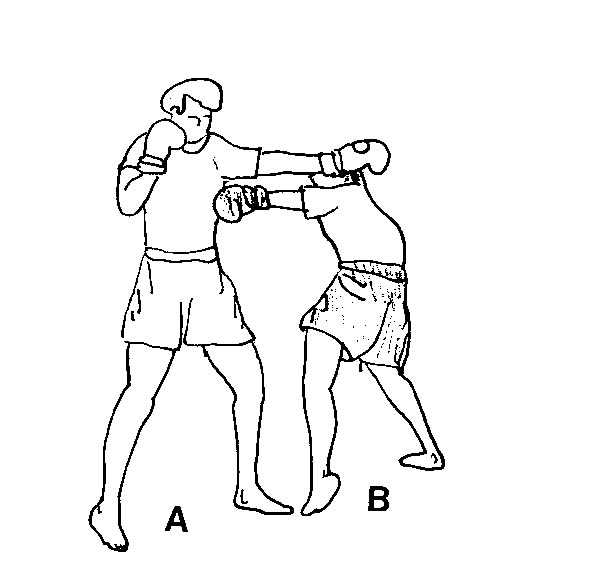
Slipping is a technique used in boxing that is similar to bobbing. It is considered one of the four basic defensive strategies, along with blocking, holding, and clinching. It is performed by moving the head to either side so that the opponent's punches "slip" by the boxer.[1]

Slipping punches allows the fighter to recover quicker and counter punches faster than the opponent can reset into proper fighting stance. In boxing, timing is known to be a key factor in the outcome. Timing your slips correctly is essential in protecting yourself and saving energy. Slipping, if done incorrectly, can be dangerous as it exposes you to a counter-punch and an unbalanced stance.

How to slip punches

[edit]

There are multiple ways to slip punches in boxing, but the most basic types are slipping the inside jab, and outside jab. When slipping an outside jab, your body weight needs to be centered. As your opponent throws the jab, rotate your body clockwise and lean slightly to your right, which shifts weight to your rear leg. Pivot both your feet in the same direction. This places you on the outside of your opponent's jab, giving you the ability to counter punch over their jab. For the inside jab, as the opponent throws the jab, rotate your body counter-clockwise, lean slightly to your left and put weight on your lead leg. It's possible to just lean without rotating, but rotating helps the movement of your guard. Raise your rear hand ready for the opponent to throw a left hook.

Common mistakes

[edit]

There are many different mistakes you can make when trying to slip a punch:

  • Slipping too early
  • Slipping too wide
  • Slipping inside the cross
  • Only moving your head
  • Dropping your guard

How to master slipping

[edit]

The best method to mastering slipping is practice against an opponent, preferably someone that is taller than you and has a longer reach. Another method is a slip bag you can hang up and move back and forth. This helps you improve movement, timing, and eye coordination while performing a slip. Repetition and patience is key to mastering slipping.

References

[edit]
[edit]
Revisions and contributorsEdit on WikipediaRead on Wikipedia
from Grokipedia
Slipping is a defensive technique in used to evade an opponent's punch by making a subtle lateral movement of the head and upper body, allowing the boxer to avoid impact while remaining in range to . It is one of the core evasive maneuvers, alongside bobbing and , emphasizing the principle of "hit without being hit" by minimizing exposure and enabling immediate offensive responses. In practice, slipping involves bending at the knees and rotating the slightly to the outside of the incoming punch, keeping the protected and balance intact. This method is particularly effective against straight punches like jabs and crosses at mid-to-long range, promoting efficient footwork and compared to blocking. Slipping has been a staple of since its early development, integral to styles that prioritize and precision.

Fundamentals

Definition and Purpose

Slipping is a fundamental defensive technique in and related combat sports, characterized by subtle lateral or angular head movements that evade incoming punches while preserving balance and foot positioning. This method enables fighters to dodge strikes without retreating or committing the arms to a guard, allowing for quicker recovery and offensive transitions. The core purpose of slipping lies in its ability to facilitate counterpunching by keeping the defender within optimal striking range after evasion, thereby turning defense into an aggressive opportunity. In contrast to blocking, which absorbs punch impact and risks depletion along with cumulative over time, slipping avoids contact entirely, conserving stamina and reducing the likelihood of from glancing blows. From a biomechanical perspective, slipping depends on coordinated torso rotation and hip shifts to redirect the head off the punch's trajectory, executed through relaxed, minimal displacements that maintain the fighter's center of gravity. Balance is upheld via knee flexion and grounded hips, ensuring the body remains stable without overextension, while integrated foot pivots support the motion without altering overall stance. Strategically, slipping bolsters footwork synchronization and timing precision during intense close-range exchanges, empowering fighters to disrupt opponents' rhythms and exploit openings for precise counters. This technique complements other evasions, such as ducking or parrying, to form a layered defensive arsenal.

Historical Origins

The technique of slipping, involving lateral head movement to evade punches, traces its roots to the era of the 18th and 19th centuries, where fighters relied on agility and evasion to avoid devastating blows in the absence of protective gear. Pioneering English boxer (1764–1836) significantly influenced this development by emphasizing defensive strategies over brute force slugging, introducing innovations such as the high guard, sidesteps, feints, and directional shifts to dodge opponents' attacks while smaller in stature. In his 1789 treatise The Art of Boxing, Mendoza detailed these evasion methods, marking a shift toward "scientific" that prioritized technique and mobility in bare-knuckle contests. The adoption of the in 1867 further shaped slipping's evolution by mandating padded gloves, three-minute rounds, and prohibiting wrestling or grappling, which transformed bare-knuckle brawls into structured matches with harder, more frequent punches. These changes reduced reliance on and blocking—common in the pre-glove era—and elevated the importance of head evasion like slipping, as gloves enabled sustained offensive pressure without the immediate risk of hand injuries to the attacker. By the early 1900s, as gloved became standardized under these rules, slipping emerged as an essential defensive tool in Western to counter the increased punch volume and power. In the , slipping gained prominence through heavyweight champion Jack Dempsey's aggressive yet evasive style during the , where he incorporated dynamic head movement—including bobbing, weaving, and slipping—to make himself an elusive target while setting up counters. Dempsey's approach, later codified in his 1950 book Championship Fighting, popularized these drills among trainers, emphasizing that a still head invited strikes while constant motion disrupted opponents. The technique saw further refinement in the 1970s and under trainer , who developed the "peek-a-boo" guard for protégés like Mike Tyson, integrating intense slipping drills on custom slipping bags to create seamless head slips combined with explosive returns. D'Amato's methods, honed through Tyson's rise to heavyweight dominance in the , built on earlier evasions but added rhythmic, close-range precision tailored to modern gloved bouts. While primarily codified within Western post-Queensberry, slipping has spread to other combat sports, notably and (MMA), where it adapts boxing's lateral dodges to evade strikes amid kicks and clinches.

Techniques

Basic Slipping Mechanics

To execute a basic slip in , a fighter must begin from a proper stance that facilitates mobility and defensive readiness. In the , the left foot leads with the right foot slightly back and turned outward, while the mirrors this with the right foot forward; knees are slightly bent to lower the center of gravity, and weight is distributed evenly on the balls of the feet to enable quick pivots and shifts without losing stability. Hands are held high in guard position, with the rear hand protecting the chin and the lead hand extended slightly for distance gauging, ensuring the body remains coiled for explosive movement. The core movement of a slip involves a coordinated bend at the knees and to displace the head from the opponent's punch centerline, typically by 6-12 inches to one side. This is achieved through a subtle and dip, where the dipping aligns with the direction of evasion while the opposite rises slightly to maintain a defensive shell; simultaneously, the lead tucks inward to shield the midsection against body shots. The hips hinge forward rather than the spine arching backward, preventing vulnerability to hooks or uppercuts, and the feet pivot minimally—lead foot outward for an inside slip, rear foot for an outside slip—to support the upper body's lateral shift without crossing the feet. Timing is critical for an effective slip, initiating the movement precisely as the opponent's punch extends toward its midpoint, allowing the head to clear the just before impact. This reactive principle relies on reading the opponent's and telegraph, with the slip executed quickly to minimize exposure. Immediately after evasion, the body returns to neutral stance via a reversal of the knee bend and pivot, resetting for potential counters and avoiding prolonged off-balance positions that invite follow-up attacks. Maintaining balance during a slip demands constant visual focus on the opponent to anticipate combinations, with the head movement kept economical to preserve the base—using minimal tilt to avoid toppling. Overcommitting, such as excessive leaning or weight transfer beyond the pivot foot, disrupts the powerline and can lead to loss of footing, so practitioners emphasize grounding through the bent knees and even weight distribution throughout the motion.

Slipping Specific Punches

Slipping techniques in are tailored to the trajectory and speed of specific punches, allowing fighters to evade while maintaining balance and positioning for counters. These adaptations build on core principles such as minimal upper-body displacement and coordinated footwork, ensuring efficient defense against varied attacks. For slipping jabs, which are typically fast and straight from the opponent's lead hand, fighters lean the head slightly back and to the outside—toward the rear hand side for orthodox stances—using a subtle pivot on the lead foot to create lateral separation with minimal overall movement. This outside slip emphasizes speed and , keeping the chin tucked and eyes on the opponent to anticipate follow-ups, while positioning the body for immediate counters like a right hand to the head or body. An inside slip to the lead-hand side is riskier due to potential exposure to the opponent's power hand but can set up aggressive returns such as a left hook. Slipping crosses or straights, often delivered with more power from the rear hand, involves deciding between an inside or outside slip based on the punch's angle and the opponent's stance; for an orthodox fighter facing another orthodox opponent, slipping inside (to the left) by pivoting counterclockwise and dipping the head left allows evasion while closing distance for a left counter. Rotating the hips away from the punch path enhances torso twist for better evasion and balance, with the knees bending slightly to lower the center of gravity and avoid overcommitting the weight. This method exploits the cross's linear path, enabling quick recovery to counter the body or head. To slip hooks, which arc horizontally from the side, the defender drops the head under the punch's curving through a rolling motion—often in a U-shaped —prioritizing an upper-body shift to bob the head downward and outward while keeping the feet planted for stability. A slight step in the direction of the slip may supplement the movement if the hook is wide, but the focus remains on economical head displacement to make the target elusive, followed by counters like an or opposite . This technique counters the hook's lateral swing by creating vertical and angular separation, reducing the need for full ducks that could unbalance the fighter. Slipping uppercuts requires bending the knees and pulling the head back slightly to evade the upward arc, with the chin always tucked to protect against subsequent strikes. This evasion maintains forward pressure and uses the legs for adjustment rather than leaning, allowing counters such as a jab to disrupt the opponent's rhythm or a to the exposed body. The method addresses the uppercut's vertical threat by emphasizing vertical mobility and guarded posture.

Training Methods

Essential Drills

Essential drills form the foundation for developing slipping proficiency in , emphasizing repetitive practice to ingrain proper head movement, timing, and balance for beginners and intermediates. These exercises prioritize solo and partnered repetition with immediate feedback, allowing practitioners to refine slips without the intensity of full . By focusing on controlled environments, trainees can build for evading punches like jabs and crosses while maintaining defensive posture. Drills should be performed under coach supervision to ensure correct form and prevent injury. Shadowboxing slips involve solo practice of head movements to simulate dodging incoming punches, typically performed in front of a mirror to ensure correct form and minimal unnecessary motion. Practitioners assume a standard stance and execute repetitions of slips to each side, focusing on bending at the knees and returning to center after each slip to avoid overcommitting. This drill builds foundational awareness of body mechanics, such as keeping the chin tucked and eyes forward, and helps develop rhythm without fatigue. Partner feed drills enhance reactive slipping by having a partner deliver slow, controlled punches at varying speeds, starting with basic jabs or straight rights before progressing to combinations. The defender focuses on repetitive slipping, timing the head movement to pass just outside the punch path while keeping hands up for protection. Feedback comes from the partner adjusting speed based on the defender's , promoting precision and without physical contact. This method, often done in rounds, directly applies basic slipping mechanics to real-time evasion. Rope or line drills utilize a slip rope or floor marker to mimic punch trajectories, training timing and spatial awareness through patterned movements. A rope is strung at head height across a training area, and the practitioner rolls or slips under it repeatedly, emphasizing explosive dips and quick recoveries to simulate evading hooks or crosses. Sessions involve repetitive passes under the rope, alternating directions to build bilateral coordination and footwork integration, with the goal of avoiding contact while maintaining balance. This exercise highlights the importance of economical motion, reducing the risk of telegraphing defenses in live scenarios. The mirror opponent drill involves solo in front of a mirror to simulate an opponent, responding to imagined punches with slips for jabs or weaves for hooks. The practitioner practices reactive slipping while observing for and timing errors. Conducted in rounds with focus on technique, this drill fosters adaptability by simulating an opponent's unpredictability in a low-pressure setting, reinforcing core slipping principles like head-off-center positioning.

Progression to Mastery

To advance slipping from foundational skills to an instinctive defensive tool, trainers emphasize building speed and reaction time through progressive focus mitt sessions. Practitioners incorporate drills where coaches increase punch velocity gradually, starting with controlled combinations like double jabs followed by hooks, requiring the boxer to slip while maintaining balance and immediately countering. This progression simulates real-fight pressure, targeting consistent execution under simulated fatigue from repeated rounds—to sharpen reflexes without compromising form. Building on basic drills, these sessions evolve into high-intensity variants, such as slipping triple combinations at full speed, fostering the neural pathways needed for rapid, energy-efficient responses. Integrating slipping into realistic scenarios further refines mastery by transitioning to full rounds, where successful slips must seamlessly lead to counters, enhancing overall fight flow. In these sessions, boxers practice evading live punches from partners of varying styles, then exploit openings with precise returns, such as a slip outside a jab followed by a . Improvement is tracked through video , reviewing footage to assess slip timing, body positioning, and counter effectiveness, allowing for targeted adjustments like minimizing over-rotation. This method ensures slips become proactive rather than reactive, with rounds structured to mimic bout durations and build endurance. Mental conditioning plays a crucial role in elevating slipping to mastery, focusing on derived from studying opponent tendencies to predict punch trajectories. Boxers develop this by analyzing footage of rivals' habits, such as guard lowering signaling hooks or weight shifts indicating straights, enabling preemptive head movement. Emphasis is placed on relaxation to prevent telegraphing one's own actions, achieved through visualization exercises where fighters mentally rehearse slips against common patterns, maintaining a loose upper body for fluid evasion. This cognitive reduces hesitation, turning defense into an intuitive extension of strategy. Mastery of slipping is typically evidenced by fluid execution throughout sparring rounds without loss of balance or excessive energy expenditure, often requiring 6-12 months of dedicated, progressive practice for most dedicated amateurs. Key indicators include seamless integration of slips with footwork and counters under fatigue, where evasion rates remain high despite sustained intensity, confirming the technique's instinctive reliability in competitive settings.

Common Pitfalls

Frequent Errors

One common error in slipping execution is over-slipping, where the defender moves their head excessively far from the punch's path, often exceeding a few inches. This flaw typically arises from an overemphasis on head movement alone without coordinating the and hips, resulting in the body remaining squared to the opponent and disrupting overall balance. Consequently, the defender becomes vulnerable to follow-up hooks targeting the exposed midsection or loses the leverage needed for effective counters. Another frequent mistake involves dropping the hands during a slip, which lowers the guard and leaves the head and upper body unprotected. This occurs when the defender prioritizes evasive head motion over maintaining defensive posture, such as allowing the arms to swing loosely in a pendulum-like . As a result, straight punches like jabs or crosses can land cleanly on the now-unguarded chin. Poor timing represents a critical flaw, where the slip is initiated either too early—anticipating the punch prematurely—or too late, failing to evade the incoming strike entirely. The immediate cause is often reactive or inadequate based on the opponent's setup cues, leading to the defender absorbing partial or full impacts despite attempting the movement. This error undermines the slip's primary purpose of avoiding clean hits. Neglecting footwork during slips is a prevalent issue, characterized by freezing the feet in place rather than pivoting or stepping to align the body. This stems from isolating head movement from lower-body coordination, which limits the defender's ability to recover position quickly or set up counters. Without proper foot pivots, the slip becomes unbalanced, reducing mobility and exposing the defender to multi-angle attacks.

Consequences of Mistakes

Over-slipping, characterized by excessive head and body movement beyond the punch's path, can result in whiplash injuries due to the rapid, uncontrolled acceleration of the neck during defensive maneuvers in or . This overextension also exposes the midsection, particularly the , to counter body shots, as the boxer's torso becomes unbalanced and vulnerable without proper pivoting to maintain guard. Poor timing in slipping increases the likelihood of taking head impacts, contributing to overall injury risk in . Tactically, slipping errors disrupt optimal positioning, enabling opponents to dictate range and unleash combinations by capitalizing on the defender's momentary off-balance state or squared-up posture. For instance, failing to slip inside a punch while dropping the hands—a common fault—can lead to lost spatial control, turning a defensive opportunity into an aggressive disadvantage where the opponent maintains pressure without retaliation. To mitigate these risks, boxers should incorporate coach feedback during mitt work and sessions to refine timing and balance, alongside slow-motion video reviews of their footage to identify overextensions or exposure patterns. Integrating these corrections into daily warm-ups, such as controlled slip drills at reduced speed, helps build reflexive accuracy and prevents habitual errors from persisting. Repeated defensive errors in , including those in slipping, can contribute to long-term consequences from ongoing head trauma, such as persistent neuropsychiatric issues and cognitive decline. This can hamper performance and increase in future engagements.

Advanced Applications

Integration with Offense

Integrating slipping with offensive maneuvers allows boxers to transition fluidly from defense to attack, capitalizing on the opponent's momentary after a missed punch. A fundamental application involves immediate counters following a slip, where the defensive head movement generates momentum for a rapid retaliation. For instance, after slipping an incoming jab by bending at the knees and shifting the head slightly outside the punch's path, a boxer can immediately fire a straight cross to the head or body, or a to exploit the opponent's extended position. This technique leverages the slip's subtle motion to maintain balance and power in the counter, ensuring the attacker does not reset their guard in time. Combination flows build on this by chaining slips into multi-punch sequences that sustain forward pressure without interruption, turning defense into a seamless offensive . A classic slip-hook-counter progression, for example, entails slipping a right to the outside, then delivering a left hook to the body or head, followed by a straight right counter as the opponent recoils. Such flows emphasize continuous motion, where the slip positions the boxer for the hook's while the subsequent counter capitalizes on any overcommitment. This approach not only scores points but also disrupts the opponent's timing, as seen in drills that practice slipping a jab- before unleashing a hook-right reply. Effective range management is crucial in these integrations, as slipping preserves the optimal punching distance—typically within the opponent's reach but angled to avoid linear attacks—facilitating short, explosive punch chains like the 1-2 (jab-cross) or 3-4 (hook-uppercut). By slipping to the outside of punches rather than retreating, fighters remain in "counter range," enabling quick follow-ups without needing to close distance, which could expose them to additional strikes. This positioning is particularly valuable against aggressive opponents, allowing sustained pressure through 2-3 punch bursts post-slip. Tactical variations further enhance slipping's offensive utility by using it to bait punches, drawing out telegraphed attacks that set up devastating power shots. Boxers may feign vulnerability to provoke a committed overhand or , then slip inside or outside to counter with a loaded or overhand of their own, exploiting the opponent's momentum. This baiting tactic, often practiced against heavier punches where the attacker is more off-balance, transforms slips into proactive setups for high-impact strikes, emphasizing timing over raw speed.

Examples from Professional Boxing

In the 1974 "Rumble in the Jungle" bout against in , , employed the strategy, which incorporated evasive head slips and superior hand speed to neutralize Foreman's devastating power punches while leaning on the ropes. By slipping sideways to avoid clean connections and leaning away from incoming blows, Ali absorbed minimal damage, taunted his opponent, and forced Foreman to expend energy on largely ineffective strikes in the humid conditions. This defensive mastery exhausted the heavyweight champion, allowing Ali to rally in the eighth round with a series of counters, culminating in a victory that reclaimed the undisputed title. Floyd Mayweather Jr. showcased slipping as a cornerstone of his defensive prowess throughout his undefeated career, particularly in his 2015 unification fight against . Mayweather frequently slipped Pacquiao's straight lefts and power rights by tilting his head laterally inside the punches, creating openings for precise counters like jabs and straight rights that disrupted Pacquiao's . This technique, combined with footwork, limited Pacquiao to landing just 19% of his 429 punches while enabling Mayweather to outland him 148 to 81 overall, including 81 power punches to Pacquiao's 63, securing a victory (116-112, 116-112, 118-110) and extending his record to 48-0. Mike Tyson's adoption of the peek-a-boo style under trainer emphasized constant head movement, including slips to slip inside opponents' hooks during his dominant 1980s run as champion. In fights like his 1986 second-round knockout of and 1988 stoppage of , Tyson bobbed and slipped laterally to evade looping hooks, closing distance explosively to deliver uppercuts and hooks from close range. This approach neutralized taller fighters' reach advantages, contributing to 33 knockouts in his first 37 professional bouts (all wins) and unifying the titles by age 20. In the , Vasyl Lomachenko elevated slipping to an angular art form, using it to dodge multi-punch combinations while repositioning for offense in bouts such as his 2017 seventh-round TKO of and 2018 over Jose Pedraza. As a southpaw, Lomachenko often slipped jabs to his left (opponent's right), changing the angle of incoming crosses and enabling overhand counters or hooks from unexpected positions. This "Matrix-like" head movement, paired with diagonal footwork, allowed him to win titles in three weight classes with a 55% rate (6 of 11 wins) in his first 12 professional fights.

References

Add your contribution
Related Hubs
Contribute something
User Avatar
No comments yet.