



Community hub
Recent from talks
Contribute something to knowledge base
Content stats: 0 posts, 0 articles, 1 media, 0 notes
Members stats: 0 subscribers, 0 contributors, 0 moderators, 0 supporters
Subscribers
Supporters
Contributors
Moderators
Hub AI
Solomon II AI simulator
(@Solomon II_simulator)
Hub AI
Solomon II AI simulator
(@Solomon II_simulator)
Solomon II
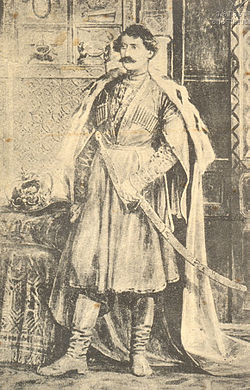
Solomon II (born as David) (Georgian: სოლომონ II; 1772 – February 7, 1815), of the Bagrationi dynasty, was the last king (mepe) of Imereti (western Georgia) from 1789 to 1790 and from 1792 until his deposition by the Imperial Russian government in 1810.
He was named David at birth, to Prince Archil of Imereti, by his wife Princess Elene of Georgia. David spent his youth at the court of his maternal grandfather, King Heraclius II of Georgia. The heirless brother of Archil, David's uncle, Solomon I of Imereti, bequeathed the throne to his nephew should Solomon die without an heir. However, the influential feudal lords of Imereti, after the death of Solomon in the year 1784, managed to place George IX of Imereti's son David II on the throne instead. In the same year, David II sent ambassadors to the Russian Empire and asked the emperor to submit to him. Dissatisfied with this horrendous show of international diplomacy, the princes Papuna Tsereteli, Beri Tsulukidze and others contacted David and wanted to make him king. From 1788, the Prince of Mingrelia, Grigol Dadiani, joined their cause and married David to his sister Mariam to cement the alliance. With the help of disgruntled princes and Heraclius II, they won the battle of Matkhoji (July 11, 1789) and David took the throne. As king he changed his name to Solomon, in honor of his uncle Solomon I. He was 17 years old at the time.
The foundations of his kingship was not firm. Defeated David II, who temporarily took refuge in Akhaltsikhe, continued to fight for the throne. In 1790, with the help of Ottoman and Dagestan forces, he managed to retake Imereti for a very short time. In the same year, Heraclius II helped his grandson Solomon, who was imprisoned together with Papuna, Zurab Tsereteli and another grandson of Heraclius, Ioane. The battle to free them took place in Lomsiant Khevi, where a detachment of 500 men, reinforced by Heraclius' troops, is said to have defeated an opposing army of 10,000 men. After which Solomon II regained the throne of Imereti.
Solomon II, despite the difficulties, tried to continue the political course of Solomon I and Heraclius II, which was manifested in his attempt to once again unify the Georgian successor states. In June 1790, under the leadership of Solomon Lionidze, a treaty was signed, by virtue of which Solomon II, Grigol Dadiani and Simon II established a military alliance with the Kingdom of Kartli-Kakheti to help each other against their enemies, recognized the patronage of Heraclius and entrusted him with improving their relationship with the Russian Empire. In one of the articles of the agreement, it was written: "I will turn every enemy of yours into an enemy of mine and of my whole kingdom, and I will be an enemy of your enemy and a loving neighbor." This agreement, along with others, was also co-signed by the Queens Darejan and Mariam. In 1793, the signatories of the treaty asked for protection from the Russian emperor against the belligerent neighbors in the Ottoman Empire, but with the January 9, 1792 signing of the Treaty of Jassy between Russia and the Ottomans, they were given a free hand to do what they wished with Western Georgia without Russian interference. Thus, any hope for Russian aid in the event of an Ottoman invasion was quashed.
In order to strengthen his royal authority, Solomon attempted to suppress disobedient chiefs and nobles. In 1792, he managed to depose the prince of Mingrelia, Grigol Dadiani, who was his main opposition at the time, and placed a loyal follower, Manuchar, on the throne of Mingrelia. Manuchar vowed to take up the fight against the local slave trade while Dadiani fled. In 1798, Dadiani moved again, and Manuchar received Salipartiano. In 1802, Solomon invaded Lechkhumi with Manuchar's assistance. In the same year, he captured the fortress of Chkvishi, defeated Grigol Dadiani near Salkhino, and declared Dadiani's younger brother Tariel (Otia) as the prince for a short time. Worried, Grigol asked Russia for help. The latter took advantage of the situation in Imereti and in December 1803, Mingrelia received Russian protection. With this, the Russian plan was implemented, according to which the venerable Dadian should be used in the fight for the abolition of the Kingdom of Imereti. Grigol died in 1804, and his son, Levan V (1804-1840), took the prince's throne.
In 1803, Solomon II again asked Russia for protection through the embassy of Leonidze, however, at the same time, he also sent an embassy to the Ottoman Empire, through which he requested help from the power of Russia. Russia found out about this double game of the king, it became known to him that Solomon was ready to go against Russia together with Fath-Ali Shah Qajar (nephew of Agha Mohammad Khan Qajar). Then Pavel Tsitsianov received the task of conquering Imereti. In 1804, the Russians invaded Imereti and forced the people to swear allegiance to the Russian emperor, Alexander I. Solomon was forced to accept the terms offered by Russia. On April 25 the Elaznauri Agreement, by virtue of which Imereti was declared a subject of Russia, although it maintained its political existence and the reign was inviolable. Principality of Guria remained in Imereti. According to the same agreement, Russia stationed troops in Imereti and defended Imereti. In a verbal agreement, Tsitsianov promised Lechkhumi to the king, however, to negotiate this disputed territory, Solomon and Grigol Dadiani met each other in Satchila, where they both swore allegiance to Russia. With this agreement, Russia's new tactics were revealed: they did not seem to abolish the local government, but actually left the king without rights. Solomon himself considered Elaznauri a way to gain time.
The king of Imereti placed great hopes on the Russo-Turkish War (1806–1812), because the weakening of these empires would contribute to the strengthening of his kingdom. During the course of the war, in October 1809, the Ottomans under the command of Sherif-Pasha, Serasker of Trebizond, camped between Grigoleti and Maltakva. On November 2, Mamia Gurieli attacked them from behind, after which Russia opened the way to Poti: Russia recognized Mamia for this service independently from the king of Imereti.
In the same year, 1809, the king received an order from the Russian official Tormasov to send a "deputation" to St. Petersburg, which was stipulated by the agreement of 1804. Solomon disobeyed the order and instead demanded the withdrawal of the army from Kutaisi, leaving only 120 men as stipulated in the agreement, fulfilling other promises to Lechkhumi and Tsitsianov. In response to this, the Russians launched a new plan, according to which Guria, Racha, as well as Zurab Tsereteli and Tsulukidze should march against Solomon.
Solomon II
Solomon II (born as David) (Georgian: სოლომონ II; 1772 – February 7, 1815), of the Bagrationi dynasty, was the last king (mepe) of Imereti (western Georgia) from 1789 to 1790 and from 1792 until his deposition by the Imperial Russian government in 1810.
He was named David at birth, to Prince Archil of Imereti, by his wife Princess Elene of Georgia. David spent his youth at the court of his maternal grandfather, King Heraclius II of Georgia. The heirless brother of Archil, David's uncle, Solomon I of Imereti, bequeathed the throne to his nephew should Solomon die without an heir. However, the influential feudal lords of Imereti, after the death of Solomon in the year 1784, managed to place George IX of Imereti's son David II on the throne instead. In the same year, David II sent ambassadors to the Russian Empire and asked the emperor to submit to him. Dissatisfied with this horrendous show of international diplomacy, the princes Papuna Tsereteli, Beri Tsulukidze and others contacted David and wanted to make him king. From 1788, the Prince of Mingrelia, Grigol Dadiani, joined their cause and married David to his sister Mariam to cement the alliance. With the help of disgruntled princes and Heraclius II, they won the battle of Matkhoji (July 11, 1789) and David took the throne. As king he changed his name to Solomon, in honor of his uncle Solomon I. He was 17 years old at the time.
The foundations of his kingship was not firm. Defeated David II, who temporarily took refuge in Akhaltsikhe, continued to fight for the throne. In 1790, with the help of Ottoman and Dagestan forces, he managed to retake Imereti for a very short time. In the same year, Heraclius II helped his grandson Solomon, who was imprisoned together with Papuna, Zurab Tsereteli and another grandson of Heraclius, Ioane. The battle to free them took place in Lomsiant Khevi, where a detachment of 500 men, reinforced by Heraclius' troops, is said to have defeated an opposing army of 10,000 men. After which Solomon II regained the throne of Imereti.
Solomon II, despite the difficulties, tried to continue the political course of Solomon I and Heraclius II, which was manifested in his attempt to once again unify the Georgian successor states. In June 1790, under the leadership of Solomon Lionidze, a treaty was signed, by virtue of which Solomon II, Grigol Dadiani and Simon II established a military alliance with the Kingdom of Kartli-Kakheti to help each other against their enemies, recognized the patronage of Heraclius and entrusted him with improving their relationship with the Russian Empire. In one of the articles of the agreement, it was written: "I will turn every enemy of yours into an enemy of mine and of my whole kingdom, and I will be an enemy of your enemy and a loving neighbor." This agreement, along with others, was also co-signed by the Queens Darejan and Mariam. In 1793, the signatories of the treaty asked for protection from the Russian emperor against the belligerent neighbors in the Ottoman Empire, but with the January 9, 1792 signing of the Treaty of Jassy between Russia and the Ottomans, they were given a free hand to do what they wished with Western Georgia without Russian interference. Thus, any hope for Russian aid in the event of an Ottoman invasion was quashed.
In order to strengthen his royal authority, Solomon attempted to suppress disobedient chiefs and nobles. In 1792, he managed to depose the prince of Mingrelia, Grigol Dadiani, who was his main opposition at the time, and placed a loyal follower, Manuchar, on the throne of Mingrelia. Manuchar vowed to take up the fight against the local slave trade while Dadiani fled. In 1798, Dadiani moved again, and Manuchar received Salipartiano. In 1802, Solomon invaded Lechkhumi with Manuchar's assistance. In the same year, he captured the fortress of Chkvishi, defeated Grigol Dadiani near Salkhino, and declared Dadiani's younger brother Tariel (Otia) as the prince for a short time. Worried, Grigol asked Russia for help. The latter took advantage of the situation in Imereti and in December 1803, Mingrelia received Russian protection. With this, the Russian plan was implemented, according to which the venerable Dadian should be used in the fight for the abolition of the Kingdom of Imereti. Grigol died in 1804, and his son, Levan V (1804-1840), took the prince's throne.
In 1803, Solomon II again asked Russia for protection through the embassy of Leonidze, however, at the same time, he also sent an embassy to the Ottoman Empire, through which he requested help from the power of Russia. Russia found out about this double game of the king, it became known to him that Solomon was ready to go against Russia together with Fath-Ali Shah Qajar (nephew of Agha Mohammad Khan Qajar). Then Pavel Tsitsianov received the task of conquering Imereti. In 1804, the Russians invaded Imereti and forced the people to swear allegiance to the Russian emperor, Alexander I. Solomon was forced to accept the terms offered by Russia. On April 25 the Elaznauri Agreement, by virtue of which Imereti was declared a subject of Russia, although it maintained its political existence and the reign was inviolable. Principality of Guria remained in Imereti. According to the same agreement, Russia stationed troops in Imereti and defended Imereti. In a verbal agreement, Tsitsianov promised Lechkhumi to the king, however, to negotiate this disputed territory, Solomon and Grigol Dadiani met each other in Satchila, where they both swore allegiance to Russia. With this agreement, Russia's new tactics were revealed: they did not seem to abolish the local government, but actually left the king without rights. Solomon himself considered Elaznauri a way to gain time.
The king of Imereti placed great hopes on the Russo-Turkish War (1806–1812), because the weakening of these empires would contribute to the strengthening of his kingdom. During the course of the war, in October 1809, the Ottomans under the command of Sherif-Pasha, Serasker of Trebizond, camped between Grigoleti and Maltakva. On November 2, Mamia Gurieli attacked them from behind, after which Russia opened the way to Poti: Russia recognized Mamia for this service independently from the king of Imereti.
In the same year, 1809, the king received an order from the Russian official Tormasov to send a "deputation" to St. Petersburg, which was stipulated by the agreement of 1804. Solomon disobeyed the order and instead demanded the withdrawal of the army from Kutaisi, leaving only 120 men as stipulated in the agreement, fulfilling other promises to Lechkhumi and Tsitsianov. In response to this, the Russians launched a new plan, according to which Guria, Racha, as well as Zurab Tsereteli and Tsulukidze should march against Solomon.
Recent media
Recent media