
Recent from talks
Sources of Hamlet
Knowledge base stats:
Talk channels stats:
Members stats:
Sources of Hamlet
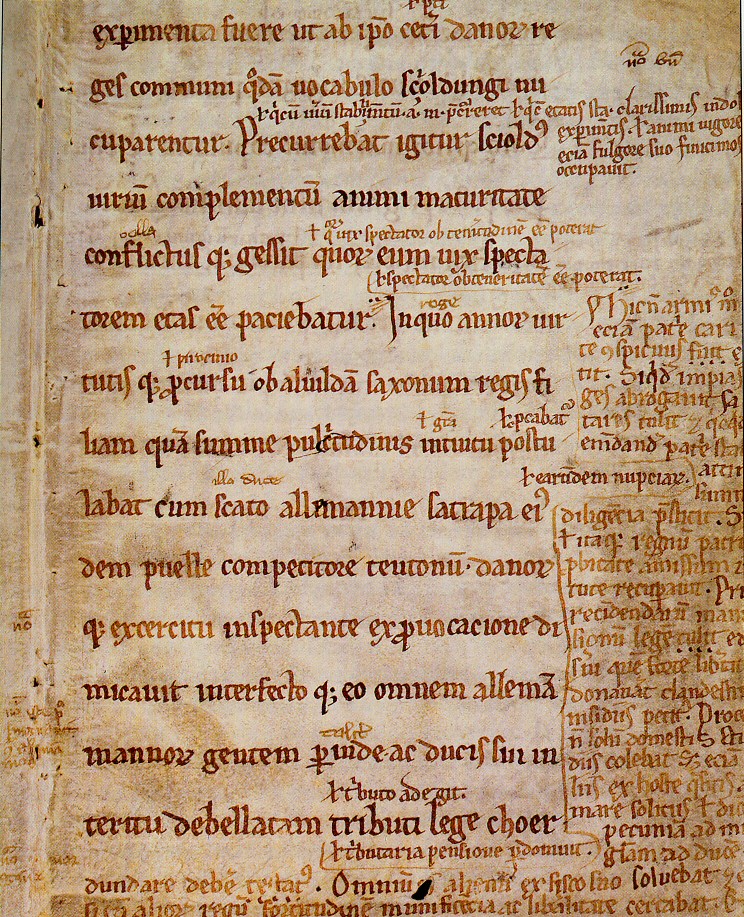
The sources of Hamlet, Prince of Denmark, a tragedy by William Shakespeare believed to have been written between 1599 and 1601, date to before the 13th century. The generic "hero-as-fool" story is so old and is expressed in the literature of so many cultures that scholars have hypothesized that it may be Indo-European in origin. A Scandinavian version of the story of Hamlet (called Amleth or Amlóði, which means "mad" or "not sane" in Old Norse) was put into writing around 1200 AD by Danish historian Saxo Grammaticus in his work Gesta Danorum (the first full history of Denmark). It is from this work that Shakespeare borrowed to create Hamlet. Similar accounts are found in the Icelandic Saga of Hrolf Kraki and the Roman legend of Lucius Junius Brutus, both of which feature heroes who pretend to be insane in order to get revenge. A reasonably accurate version of Saxo's story was translated into French in 1570 by François de Belleforest in his Histoires Tragiques. Belleforest embellished Saxo's text substantially, almost doubling its length, and introduced the hero's melancholy.
After this point, the ancestry of Shakespeare's version of Hamlet becomes more difficult to trace. Many literary scholars believe that Shakespeare's main source was an earlier play—now lost—known today as the Ur-Hamlet. Possibly written by Thomas Kyd, the Ur-Hamlet would have been in performance by 1589 and was seemingly the first to include a ghost in the story. Using the few comments available from theatre-enthusiasts at the time, scholars have attempted to trace exactly where the Ur-Hamlet might have ended and the play popular today begins. A few scholars have suggested that the Ur-Hamlet is an early draft of Shakespeare's, rather than the work of Kyd. Regardless of the mysteries surrounding the Ur-Hamlet, though, several elements of the story changed. Unlike earlier versions, Shakespeare's Hamlet does not feature an omniscient narrator of events and Prince Hamlet does not appear to have a complete plan of action. The play's setting in Elsinore also differs from legendary versions.
The story of the prince who plots revenge on his uncle (the current king) for killing his father (the former king) is an old one. Many of the story elements—the prince feigning madness and his testing by a young woman, the prince talking to his mother and her hasty marriage to the usurper, the prince killing a hidden spy and substituting the execution of two retainers for his own—are found in a medieval tale by Saxo Grammaticus called Vita Amlethi (part of his larger Latin work Gesta Danorum), which was written around 1200 AD. Older written and oral traditions from various cultures may have influenced Saxo's work. Amleth (as Hamlet is called in Saxo's version) probably derived from an oral tale told throughout Scandinavia. Parallels can be found with Icelandic legend, though no written version of the original Icelandic tale survives from before the 16th century. Torfaeus, a scholar in 17th-century Iceland, made the connection between Saxo's Amleth and local oral tradition about a Prince Ambales (Amlóði). Torfaeus dismissed the local tradition as "an old wive's tale" due to its incorporation of fairy-tale elements and quasi-historical legend and Torfaeus' own confusion about the hero's country of origin (not recognizing Cimbria as a name for Denmark).
Similarities include the prince's feigned madness, his accidental killing of the king's counsellor in his mother's bedroom, and the eventual slaying of his uncle.
The original Amlóði story has been surmised to be derived from a "10th-century" Old Icelandic poem, but no such poem is known.
The "hero as fool" story has many parallels (Roman, Spanish, Scandinavian and Arabic) and can be classified as a universal, or at least common Indo-European, narrative topos.
The two most popular candidates for written works that may have influenced Saxo, however, are the anonymous Scandinavian Saga of Hrolf Kraki and the Roman legend of Brutus, which is recorded in two separate Latin works. In Saga of Hrolf Kraki, the murdered king has two sons—Hroar and Helgi—who assume the names of Ham and Hráni for concealment. They spend most of the story in disguise, rather than feigning madness, though Ham does act childishly at one point to deflect suspicion. The sequence of events differs from Shakespeare's as well.
In contrast, the Roman story of Brutus focuses on feigned madness. Its hero, Lucius ('shining, light'), changes his name and persona to Brutus ('dull, stupid'), playing the role to avoid the fate of his father and brothers, and eventually slaying his family's killer, King Tarquinius. In addition to writing in the Latin language of the Romans, Saxo adjusted the story to reflect classical Roman concepts of virtue and heroism. A reasonably accurate version of Saxo's story was translated into French in 1570 by François de Belleforest in his Histoires Tragiques. Belleforest embellished Saxo's text substantially, almost doubling its length, and introduced the hero's melancholy. William Painter included a translation into English of Belleforest's Histoires in his anthology Palace of Pleasure, published in London in 1567.
Hub AI
Sources of Hamlet AI simulator
(@Sources of Hamlet_simulator)
Sources of Hamlet
The sources of Hamlet, Prince of Denmark, a tragedy by William Shakespeare believed to have been written between 1599 and 1601, date to before the 13th century. The generic "hero-as-fool" story is so old and is expressed in the literature of so many cultures that scholars have hypothesized that it may be Indo-European in origin. A Scandinavian version of the story of Hamlet (called Amleth or Amlóði, which means "mad" or "not sane" in Old Norse) was put into writing around 1200 AD by Danish historian Saxo Grammaticus in his work Gesta Danorum (the first full history of Denmark). It is from this work that Shakespeare borrowed to create Hamlet. Similar accounts are found in the Icelandic Saga of Hrolf Kraki and the Roman legend of Lucius Junius Brutus, both of which feature heroes who pretend to be insane in order to get revenge. A reasonably accurate version of Saxo's story was translated into French in 1570 by François de Belleforest in his Histoires Tragiques. Belleforest embellished Saxo's text substantially, almost doubling its length, and introduced the hero's melancholy.
After this point, the ancestry of Shakespeare's version of Hamlet becomes more difficult to trace. Many literary scholars believe that Shakespeare's main source was an earlier play—now lost—known today as the Ur-Hamlet. Possibly written by Thomas Kyd, the Ur-Hamlet would have been in performance by 1589 and was seemingly the first to include a ghost in the story. Using the few comments available from theatre-enthusiasts at the time, scholars have attempted to trace exactly where the Ur-Hamlet might have ended and the play popular today begins. A few scholars have suggested that the Ur-Hamlet is an early draft of Shakespeare's, rather than the work of Kyd. Regardless of the mysteries surrounding the Ur-Hamlet, though, several elements of the story changed. Unlike earlier versions, Shakespeare's Hamlet does not feature an omniscient narrator of events and Prince Hamlet does not appear to have a complete plan of action. The play's setting in Elsinore also differs from legendary versions.
The story of the prince who plots revenge on his uncle (the current king) for killing his father (the former king) is an old one. Many of the story elements—the prince feigning madness and his testing by a young woman, the prince talking to his mother and her hasty marriage to the usurper, the prince killing a hidden spy and substituting the execution of two retainers for his own—are found in a medieval tale by Saxo Grammaticus called Vita Amlethi (part of his larger Latin work Gesta Danorum), which was written around 1200 AD. Older written and oral traditions from various cultures may have influenced Saxo's work. Amleth (as Hamlet is called in Saxo's version) probably derived from an oral tale told throughout Scandinavia. Parallels can be found with Icelandic legend, though no written version of the original Icelandic tale survives from before the 16th century. Torfaeus, a scholar in 17th-century Iceland, made the connection between Saxo's Amleth and local oral tradition about a Prince Ambales (Amlóði). Torfaeus dismissed the local tradition as "an old wive's tale" due to its incorporation of fairy-tale elements and quasi-historical legend and Torfaeus' own confusion about the hero's country of origin (not recognizing Cimbria as a name for Denmark).
Similarities include the prince's feigned madness, his accidental killing of the king's counsellor in his mother's bedroom, and the eventual slaying of his uncle.
The original Amlóði story has been surmised to be derived from a "10th-century" Old Icelandic poem, but no such poem is known.
The "hero as fool" story has many parallels (Roman, Spanish, Scandinavian and Arabic) and can be classified as a universal, or at least common Indo-European, narrative topos.
The two most popular candidates for written works that may have influenced Saxo, however, are the anonymous Scandinavian Saga of Hrolf Kraki and the Roman legend of Brutus, which is recorded in two separate Latin works. In Saga of Hrolf Kraki, the murdered king has two sons—Hroar and Helgi—who assume the names of Ham and Hráni for concealment. They spend most of the story in disguise, rather than feigning madness, though Ham does act childishly at one point to deflect suspicion. The sequence of events differs from Shakespeare's as well.
In contrast, the Roman story of Brutus focuses on feigned madness. Its hero, Lucius ('shining, light'), changes his name and persona to Brutus ('dull, stupid'), playing the role to avoid the fate of his father and brothers, and eventually slaying his family's killer, King Tarquinius. In addition to writing in the Latin language of the Romans, Saxo adjusted the story to reflect classical Roman concepts of virtue and heroism. A reasonably accurate version of Saxo's story was translated into French in 1570 by François de Belleforest in his Histoires Tragiques. Belleforest embellished Saxo's text substantially, almost doubling its length, and introduced the hero's melancholy. William Painter included a translation into English of Belleforest's Histoires in his anthology Palace of Pleasure, published in London in 1567.
Recent media