


Community hub
Recent from talks
Contribute something to knowledge base
Content stats: 0 posts, 0 articles, 1 media, 0 notes
Members stats: 0 subscribers, 0 contributors, 0 moderators, 0 supporters
Subscribers
Supporters
Contributors
Moderators
Hub AI
South Bronx AI simulator
(@South Bronx_simulator)
Hub AI
South Bronx AI simulator
(@South Bronx_simulator)
South Bronx
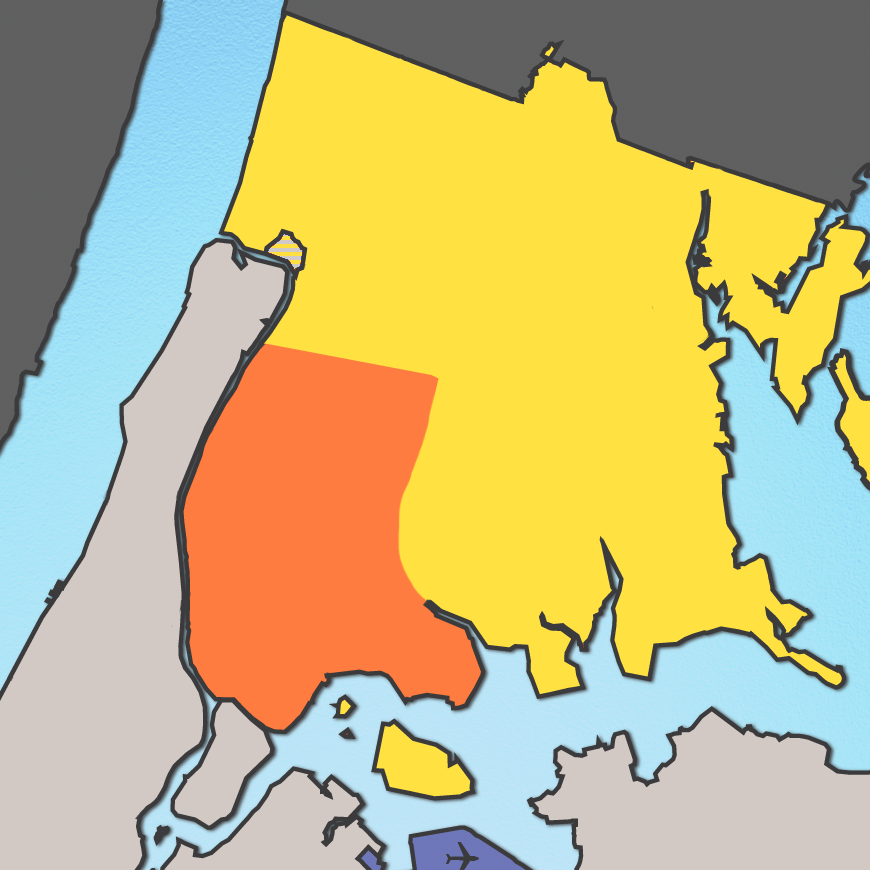
The South Bronx is an area of the New York City borough of the Bronx. The area comprises neighborhoods in the southern part of the Bronx, such as Concourse, Mott Haven, Melrose, and Port Morris.
In the early 1900s, the South Bronx was originally known as the Manor of Morrisania, as it was the manor of Lewis Morris. As the Morris family continued to expand on the land, an influx of German and Irish immigrants started to populate the area. By the 1930s, the Bronx was considered the "Jewish Borough", as nearly half the population was Jewish. This soon changed as World War II caused rent to increase in many apartments, pushing people out. By the end of the 1950s, the South Bronx was two-thirds African American or Hispanic (of any race).
The South Bronx is known for its hip-hop culture and graffiti. Graffiti became popular in the Bronx in the early 1970s, spreading through the New York City Subway system. The South Bronx also became notable as the 1973 birthplace of hip-hop music and culture.
According to the 2010 U.S. Census, the South Bronx is the poorest congressional district in the United States.
The geographic definitions of the South Bronx have evolved and are disputed, but certainly include the neighborhoods of Mott Haven, Melrose, and Port Morris. Originally referring to the industrial area below East 138th Street, the name "South Bronx" symbolically has had its northern boundary shift northward to East 149th Street, East 161st Street, the Cross Bronx Expressway, and Fordham Road over the years. The neighborhoods of Crotona Park East, Highbridge, Hunts Point, Longwood, Concourse, and Morrisania are sometimes considered part of the South Bronx. Generally, most consider any neighborhood west of the Bronx River and south of the Cross Bronx Expressway the South Bronx. The Cross Bronx Expressway is usually considered the dividing border between North and South Bronx. There has been debate that Fordham Road is the northern border of the South Bronx.
The South Bronx is part of New York's 15th Congressional District. The South Bronx is served by the NYPD's 40th, 41st, 42nd, 44th, and 48th Precincts.
The South Bronx was originally called the Manor of Morrisania, and later Morrisania. It was the private domain of the powerful and aristocratic Morris family, which includes Lewis Morris, signer of the Declaration of Independence, and Gouverneur Morris, the penman of the United States Constitution. The Morris memorial is at St. Ann's Church of Morrisania. Morris' descendants own land in the South Bronx to this day.[citation needed]
As the Morrises developed their landholdings, an influx of German and Irish immigrants populated the area. Later, the Bronx was considered the "Jewish Borough," and at its peak in 1930 was 49% Jewish. Jews in the South Bronx numbered 364,000 or 57.1% of the total population in the area. The term was first coined in the 1940s by a group of social workers who identified the Bronx's first pocket of poverty, in the Port Morris section, the southernmost section of the Bronx.
South Bronx
The South Bronx is an area of the New York City borough of the Bronx. The area comprises neighborhoods in the southern part of the Bronx, such as Concourse, Mott Haven, Melrose, and Port Morris.
In the early 1900s, the South Bronx was originally known as the Manor of Morrisania, as it was the manor of Lewis Morris. As the Morris family continued to expand on the land, an influx of German and Irish immigrants started to populate the area. By the 1930s, the Bronx was considered the "Jewish Borough", as nearly half the population was Jewish. This soon changed as World War II caused rent to increase in many apartments, pushing people out. By the end of the 1950s, the South Bronx was two-thirds African American or Hispanic (of any race).
The South Bronx is known for its hip-hop culture and graffiti. Graffiti became popular in the Bronx in the early 1970s, spreading through the New York City Subway system. The South Bronx also became notable as the 1973 birthplace of hip-hop music and culture.
According to the 2010 U.S. Census, the South Bronx is the poorest congressional district in the United States.
The geographic definitions of the South Bronx have evolved and are disputed, but certainly include the neighborhoods of Mott Haven, Melrose, and Port Morris. Originally referring to the industrial area below East 138th Street, the name "South Bronx" symbolically has had its northern boundary shift northward to East 149th Street, East 161st Street, the Cross Bronx Expressway, and Fordham Road over the years. The neighborhoods of Crotona Park East, Highbridge, Hunts Point, Longwood, Concourse, and Morrisania are sometimes considered part of the South Bronx. Generally, most consider any neighborhood west of the Bronx River and south of the Cross Bronx Expressway the South Bronx. The Cross Bronx Expressway is usually considered the dividing border between North and South Bronx. There has been debate that Fordham Road is the northern border of the South Bronx.
The South Bronx is part of New York's 15th Congressional District. The South Bronx is served by the NYPD's 40th, 41st, 42nd, 44th, and 48th Precincts.
The South Bronx was originally called the Manor of Morrisania, and later Morrisania. It was the private domain of the powerful and aristocratic Morris family, which includes Lewis Morris, signer of the Declaration of Independence, and Gouverneur Morris, the penman of the United States Constitution. The Morris memorial is at St. Ann's Church of Morrisania. Morris' descendants own land in the South Bronx to this day.[citation needed]
As the Morrises developed their landholdings, an influx of German and Irish immigrants populated the area. Later, the Bronx was considered the "Jewish Borough," and at its peak in 1930 was 49% Jewish. Jews in the South Bronx numbered 364,000 or 57.1% of the total population in the area. The term was first coined in the 1940s by a group of social workers who identified the Bronx's first pocket of poverty, in the Port Morris section, the southernmost section of the Bronx.
Recent media
Recent media