
Recent from talks
Southern Air Transport
Knowledge base stats:
Talk channels stats:
Members stats:
Southern Air Transport
Southern Air Transport (SAT), based in Miami, Florida, United States, was, in its final incarnation, a cargo airline. However, it started life as an irregular air carrier (later known as a supplemental air carrier), a type of carrier defined and tightly controlled until 1978 by the Civil Aeronautics Board (CAB), a now defunct Federal agency that, at the time, closely regulated almost all US commercial air transportation. From 1960 to 1973, the small carrier was secretly owned by the Central Intelligence Agency (CIA), which used it to support its activities primarily in Southeast Asia connected with the Vietnam war, though SAT continued to function in other regards as a normal charter airline. During this period, SAT was part of a complex of CIA-owned carriers, including Air America and Intermountain Aviation. Having no further use of the carrier, the CIA decided to sell it in the early 1970s, but its ownership leaked in what became a storm of controversy.
The carrier was also known for its role in the Iran-Contra scandal of the mid-1980s, during which SAT transported arms to Iran and to the US-backed anti-communist right-wing rebels in Central America known as the Contras, which were fighting the revolutionary Sandinista government in Nicaragua.
In the mid-1990s, SAT ranked as the 10th largest all-cargo airline in the world by ton-miles carried.
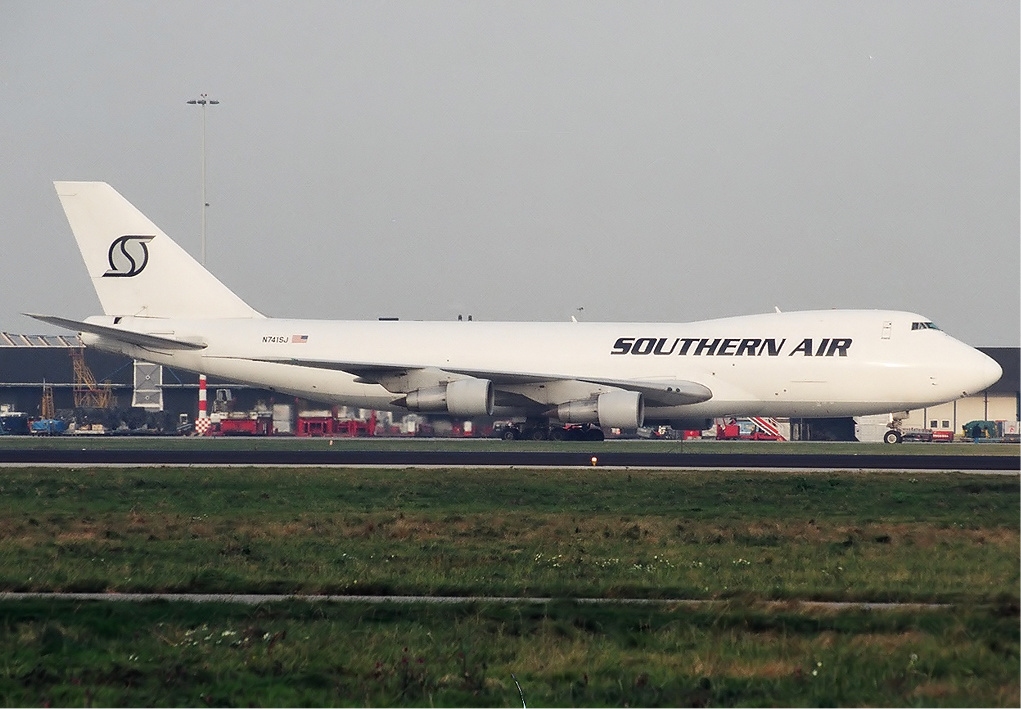
After SAT ceased operation in 1998, many of its assets were used to start another airline, the similarly named Southern Air.
Southern Air Transport (SAT) was initially a sole proprietorship of F.C. "Doc" Moor, a pilot who had flown for a number of airlines, including Pan Am. The initial period of activity lasted from February 1947 to January 1949, when Moor suspended operations to work for the Venezuelan carrier RANSA. Southern Air Transport was incorporated in Florida on 31 October 1949, Moor being president. SAT flew mostly cargo, but also some passenger traffic. SAT was an irregular air carrier, a type of airline later known as a supplemental air carrier. In 1953, 37% of SAT's revenue was military and it had two C-46 aircraft, producing a break-even financial result.
The CIA purchased the airline on 5 August 1960, for $260,000 to Doc Moor and $40,000 to Stanley G. Williams. The CIA purchased SAT after consulting the CAB, driven by a desire to have access to heavy-lift non-governmental aircraft for CIA operational purposes without incurring significant ongoing expense. During the time the CIA owned the carrier, the CAB knew as did appropriate Congressional committees. The CIA provided the carrier with funding, allowing it to acquire larger aircraft and expand. In the three years 1957–1959, annual revenue averaged $400,000, with the military accounting for zero revenue 1957 and 1958 and less than 25% of revenue in 1959. By contrast, in the first three full years of CIA ownership, 1961–1963, revenue averaged almost $5 million per year, with the military accounting for over 80% in each of those years and profitability much improved. The CIA apparently also influenced a CAB award to provide the carrier with authority to fly civilian charters to Asia to support the Vietnam war. In July 1962, Stanley G. Williams, previously treasurer, became president, with Moor becoming chairman. The airline had four Douglas DC-6s, three C-46s and a C-45. Until his death in 1972, Doc Moor devoted much of his time to hydroplane racing, becoming national champion many times in his displacement class, sometimes delivering his boats to races using the airline.
SAT was part of group of CIA "proprietary" carriers and related businesses, including Air America, Air Asia, Civil Air Transport and Intermountain Aviation, under the Pacific Corporation parent company run by George A. Doole Jr.. The airline held itself out to the public as just another charter carrier. A 1965 advertisement in The Miami News used the tag line "You can't measure Southern Air's service" and noted its capabilities in shipping livestock, household goods and cars. However, SAT's logo was an eight-point compass — the CIA has a 16-point compass on its seal. Other connections were more obvious. The 1968 CAB annual report to Congress showed Air America as the holder of SAT's debt, and by that time, Air America was widely believed to be controlled by the CIA. As a nearby photo indicates, SAT flew a 727 for which Air America was the registered owner. In 1966, SAT ordered a Boeing 727 (specifically for use on its military transport contract in Asia) and in 1968, Lockheed L-100s, the civilian version of the C-130 Hercules military cargo aircraft. In 1970 the CAB gave the airline authority to use the L-100s for outsized cargo worldwide.
Although SAT was substantially bigger than before it was bought by the CIA, it remained small by contrast to the industry, whatever the size of the overall CIA proprietary aviation business. In 1969, SAT revenues were $11 million, whereas all US supplemental air carriers together were $361 million, against US scheduled carrier revenues of $8.8 billion. In 1969 the Atlantic fleet was six aircraft, operating out of Miami, San Juan and the Bahamas; the Pacific fleet was four aircraft, operating passenger and cargo flights for the military out of Yokota, Japan and Tainan, Taiwan. The two regions were semi-autonomous, the Pacific being CIA-centric, the Atlantic operating more-or-less conventionally, though occasionally also assisted. In January 1970, SAT was one of a consortium of airlines carrying relief to Biafra with L-100s. The L-100s ranged widely, one trip in 1971 traveling over 100,000 miles in 310 flight hours using five separate crews to Europe, Greenland, the Solomon Islands, Australia and within the United States before returning to Miami.
Hub AI
Southern Air Transport AI simulator
(@Southern Air Transport_simulator)
Southern Air Transport
Southern Air Transport (SAT), based in Miami, Florida, United States, was, in its final incarnation, a cargo airline. However, it started life as an irregular air carrier (later known as a supplemental air carrier), a type of carrier defined and tightly controlled until 1978 by the Civil Aeronautics Board (CAB), a now defunct Federal agency that, at the time, closely regulated almost all US commercial air transportation. From 1960 to 1973, the small carrier was secretly owned by the Central Intelligence Agency (CIA), which used it to support its activities primarily in Southeast Asia connected with the Vietnam war, though SAT continued to function in other regards as a normal charter airline. During this period, SAT was part of a complex of CIA-owned carriers, including Air America and Intermountain Aviation. Having no further use of the carrier, the CIA decided to sell it in the early 1970s, but its ownership leaked in what became a storm of controversy.
The carrier was also known for its role in the Iran-Contra scandal of the mid-1980s, during which SAT transported arms to Iran and to the US-backed anti-communist right-wing rebels in Central America known as the Contras, which were fighting the revolutionary Sandinista government in Nicaragua.
In the mid-1990s, SAT ranked as the 10th largest all-cargo airline in the world by ton-miles carried.
After SAT ceased operation in 1998, many of its assets were used to start another airline, the similarly named Southern Air.
Southern Air Transport (SAT) was initially a sole proprietorship of F.C. "Doc" Moor, a pilot who had flown for a number of airlines, including Pan Am. The initial period of activity lasted from February 1947 to January 1949, when Moor suspended operations to work for the Venezuelan carrier RANSA. Southern Air Transport was incorporated in Florida on 31 October 1949, Moor being president. SAT flew mostly cargo, but also some passenger traffic. SAT was an irregular air carrier, a type of airline later known as a supplemental air carrier. In 1953, 37% of SAT's revenue was military and it had two C-46 aircraft, producing a break-even financial result.
The CIA purchased the airline on 5 August 1960, for $260,000 to Doc Moor and $40,000 to Stanley G. Williams. The CIA purchased SAT after consulting the CAB, driven by a desire to have access to heavy-lift non-governmental aircraft for CIA operational purposes without incurring significant ongoing expense. During the time the CIA owned the carrier, the CAB knew as did appropriate Congressional committees. The CIA provided the carrier with funding, allowing it to acquire larger aircraft and expand. In the three years 1957–1959, annual revenue averaged $400,000, with the military accounting for zero revenue 1957 and 1958 and less than 25% of revenue in 1959. By contrast, in the first three full years of CIA ownership, 1961–1963, revenue averaged almost $5 million per year, with the military accounting for over 80% in each of those years and profitability much improved. The CIA apparently also influenced a CAB award to provide the carrier with authority to fly civilian charters to Asia to support the Vietnam war. In July 1962, Stanley G. Williams, previously treasurer, became president, with Moor becoming chairman. The airline had four Douglas DC-6s, three C-46s and a C-45. Until his death in 1972, Doc Moor devoted much of his time to hydroplane racing, becoming national champion many times in his displacement class, sometimes delivering his boats to races using the airline.
SAT was part of group of CIA "proprietary" carriers and related businesses, including Air America, Air Asia, Civil Air Transport and Intermountain Aviation, under the Pacific Corporation parent company run by George A. Doole Jr.. The airline held itself out to the public as just another charter carrier. A 1965 advertisement in The Miami News used the tag line "You can't measure Southern Air's service" and noted its capabilities in shipping livestock, household goods and cars. However, SAT's logo was an eight-point compass — the CIA has a 16-point compass on its seal. Other connections were more obvious. The 1968 CAB annual report to Congress showed Air America as the holder of SAT's debt, and by that time, Air America was widely believed to be controlled by the CIA. As a nearby photo indicates, SAT flew a 727 for which Air America was the registered owner. In 1966, SAT ordered a Boeing 727 (specifically for use on its military transport contract in Asia) and in 1968, Lockheed L-100s, the civilian version of the C-130 Hercules military cargo aircraft. In 1970 the CAB gave the airline authority to use the L-100s for outsized cargo worldwide.
Although SAT was substantially bigger than before it was bought by the CIA, it remained small by contrast to the industry, whatever the size of the overall CIA proprietary aviation business. In 1969, SAT revenues were $11 million, whereas all US supplemental air carriers together were $361 million, against US scheduled carrier revenues of $8.8 billion. In 1969 the Atlantic fleet was six aircraft, operating out of Miami, San Juan and the Bahamas; the Pacific fleet was four aircraft, operating passenger and cargo flights for the military out of Yokota, Japan and Tainan, Taiwan. The two regions were semi-autonomous, the Pacific being CIA-centric, the Atlantic operating more-or-less conventionally, though occasionally also assisted. In January 1970, SAT was one of a consortium of airlines carrying relief to Biafra with L-100s. The L-100s ranged widely, one trip in 1971 traveling over 100,000 miles in 310 flight hours using five separate crews to Europe, Greenland, the Solomon Islands, Australia and within the United States before returning to Miami.
Recent media