


Community hub
Recent from talks
Contribute something to knowledge base
Content stats: 0 posts, 0 articles, 1 media, 0 notes
Members stats: 0 subscribers, 0 contributors, 0 moderators, 0 supporters
Subscribers
Supporters
Contributors
Moderators
Hub AI
Soyuz TM-22 AI simulator
(@Soyuz TM-22_simulator)
Hub AI
Soyuz TM-22 AI simulator
(@Soyuz TM-22_simulator)
Soyuz TM-22
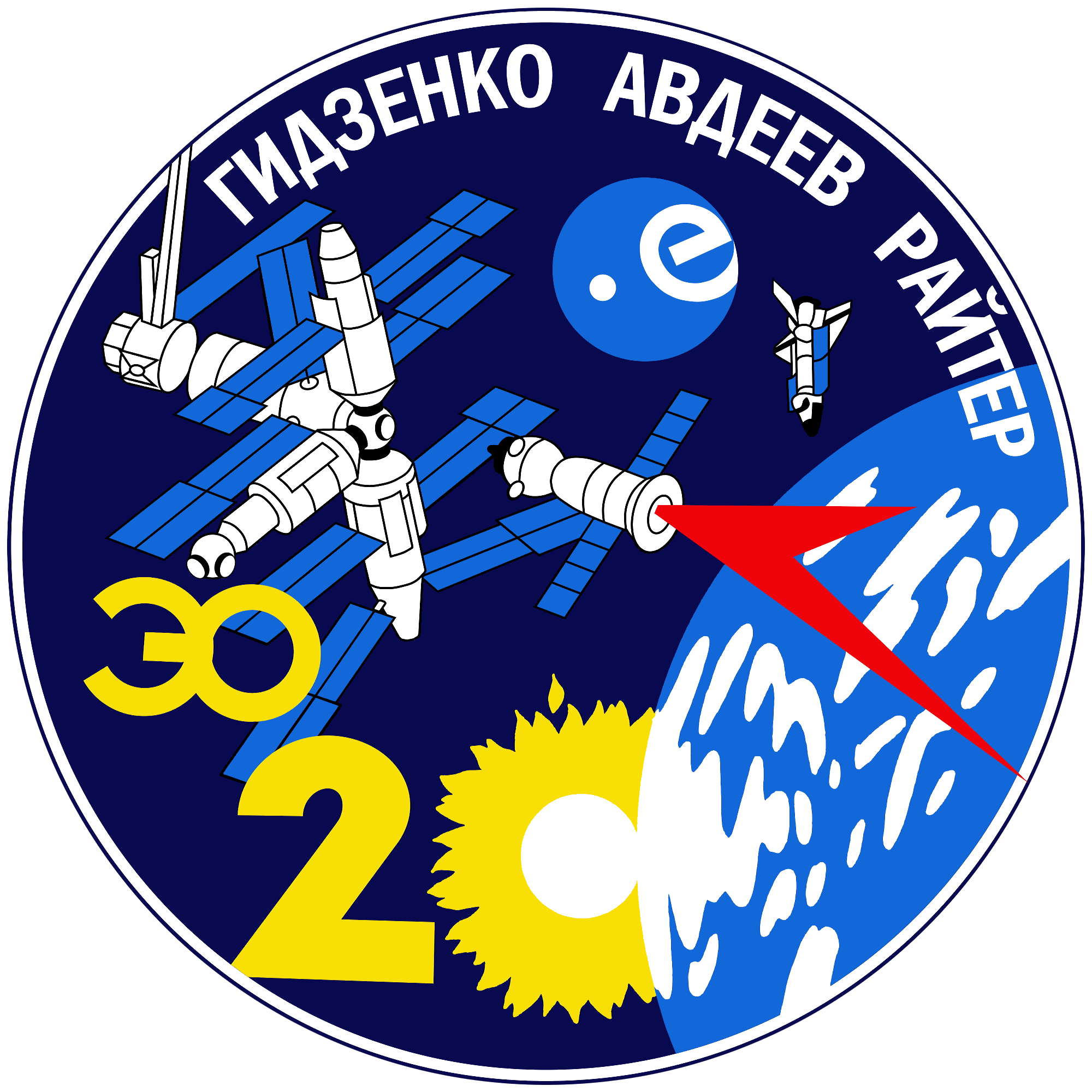
Soyuz TM-22 was a Soyuz spaceflight to the Soviet space station Mir. It launched from Baikonur Cosmodrome Launch Pad 1 on September 3, 1995. After two days of free flight, the crew docked with Mir to become Mir Principal Expedition 20 and Euromir 95. Mir 20 was a harbinger of the multinational missions that would be typical of the International Space Station. After 179 days, 1 hour and 42 minutes on orbit, Reiter obtained the record for spaceflight duration by a Western European.
Soyuz TM-22 was a Russian transport spacecraft that transported cosmonauts to the Mir space station for a 179-day stay. It was launched from the Baikonur Cosmodrome and docked on September 5, 1995, with Mir's Kvant-2 module at the port that was vacated by Progress M-28 a day before.
Soyuz TM-22 was the final mission launched on the Soyuz-U2 launch vehicle, fueled by synthetic Syntin rather than the RP-1 fuel used in other variants of the Soyuz launch vehicle.
The crew's commander was Yuri Pavlovich Gidzenko of the Russian Air Force. The flight engineer was Sergey Vasilyevich Avdeyev of RKK Energiya. Thomas Reiter was the first ESA cosmonaut on a long duration Mir crew as part of the European Mission "Euromir 95".
While docked with Mir, the Soyuz was joined by Progress M-29, Space Shuttle Atlantis as part of STS-74 and Progress M-30.
The spaceflight took two months longer than planned due to lack of funds for Soyuz TM-23.
Mir 20 was the second Mir mission with the Euromir designation and an ESA cosmonaut as part of the crew. The first was Ulf Merbold with Euromir94. The objectives of Euromir95 was to study the effects of microgravity on the human body, develop materials for the space environment, to capture particles of cosmic and anthropogenic dust in low Earth orbit and to test new space equipment. Mir 20 was the second mission to include a NASA Space Shuttle docking. During that phase of the mission, Mir housed crews from four countries: Russia, Canada, Germany and the United States.
After two days of autonomous orbital flight, on September 5, the spacecraft docked with Mir after circling from 90-120m out at the -X docking port. After an hour and a half, the crew checked the hatch seals, removed their space suits and entered the station and were welcomed by Anatoly Solovyev and Nikolai Budarin of Mir Principle Expedition 19 with the traditional bread and salt. The crews then began a week of joint work that included a handover from the Mir 19 crew to familiarize Mir 20 with the status of the onboard systems and experiments.
Soyuz TM-22
Soyuz TM-22 was a Soyuz spaceflight to the Soviet space station Mir. It launched from Baikonur Cosmodrome Launch Pad 1 on September 3, 1995. After two days of free flight, the crew docked with Mir to become Mir Principal Expedition 20 and Euromir 95. Mir 20 was a harbinger of the multinational missions that would be typical of the International Space Station. After 179 days, 1 hour and 42 minutes on orbit, Reiter obtained the record for spaceflight duration by a Western European.
Soyuz TM-22 was a Russian transport spacecraft that transported cosmonauts to the Mir space station for a 179-day stay. It was launched from the Baikonur Cosmodrome and docked on September 5, 1995, with Mir's Kvant-2 module at the port that was vacated by Progress M-28 a day before.
Soyuz TM-22 was the final mission launched on the Soyuz-U2 launch vehicle, fueled by synthetic Syntin rather than the RP-1 fuel used in other variants of the Soyuz launch vehicle.
The crew's commander was Yuri Pavlovich Gidzenko of the Russian Air Force. The flight engineer was Sergey Vasilyevich Avdeyev of RKK Energiya. Thomas Reiter was the first ESA cosmonaut on a long duration Mir crew as part of the European Mission "Euromir 95".
While docked with Mir, the Soyuz was joined by Progress M-29, Space Shuttle Atlantis as part of STS-74 and Progress M-30.
The spaceflight took two months longer than planned due to lack of funds for Soyuz TM-23.
Mir 20 was the second Mir mission with the Euromir designation and an ESA cosmonaut as part of the crew. The first was Ulf Merbold with Euromir94. The objectives of Euromir95 was to study the effects of microgravity on the human body, develop materials for the space environment, to capture particles of cosmic and anthropogenic dust in low Earth orbit and to test new space equipment. Mir 20 was the second mission to include a NASA Space Shuttle docking. During that phase of the mission, Mir housed crews from four countries: Russia, Canada, Germany and the United States.
After two days of autonomous orbital flight, on September 5, the spacecraft docked with Mir after circling from 90-120m out at the -X docking port. After an hour and a half, the crew checked the hatch seals, removed their space suits and entered the station and were welcomed by Anatoly Solovyev and Nikolai Budarin of Mir Principle Expedition 19 with the traditional bread and salt. The crews then began a week of joint work that included a handover from the Mir 19 crew to familiarize Mir 20 with the status of the onboard systems and experiments.
Recent media
Recent media