


Community hub
Recent from talks
Contribute something
Nothing was collected or created yet.
Anatoly Solovyev
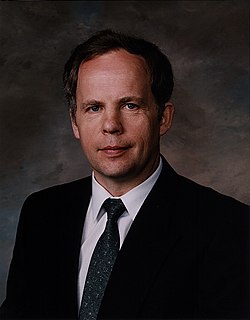
View on WikipediaAnatoly Yakovlevich Solovyev (Russian: Анатолий Яковлевич Соловьёв; Latvian: Anatolijs Solovjovs; alternate spelling "Solovyov"; born 16 January 1948) is a retired Latvian and Soviet cosmonaut and pilot.[1] Solovyev holds the world record on the number of spacewalks performed (16) and accumulated time spent spacewalking (over 82 hours).[2]
Key Information


Education
[edit]Solovyev studied at Riga Secondary School No. 33. After completing secondary school in Riga at age 16, he was a general labourer at a building materials factory, and then a metalworker. He completed two years of evening school and in 1967, enrolled at the Faculty of Physics and Mathematics of the State University of Latvia. After completing the first year, Anatoly left training to prepare for aviation school while working as a locksmith at the Latvian Joint Aviation Unit. In 1968 Solovyov began his training at the Chernigov Higher Military Aviation School.[3]
Military service
[edit]He enrolled as a cadet in the Chernigov Higher Military School of Pilots in 1968. He joined the CPSU in 1971. He graduated from the Lenin Komsomol Chernigov Higher Military Aviation School in 1972,[4] having flown the L-29, MiG-15UTI and MiG-21. Subsequently, he was assigned to a reconnaissance air regiment in the Far East Aviation District,[5] flying the MiG-21R. In 1975 he was awarded the qualification "Military Pilot 1st Class".
Cosmonaut
[edit]He was selected for Cosmonaut training 23 August 1976 as a member of TsPK-6. Uniquely, this group was to train as pilots for the Buran programme (Soviet "space shuttle"), and as such had to also qualify as test pilots.[6][7][8][9][circular reference] To do so the group first attended the 267th Centre for Testing Aviation Equipment and Training Test Pilots at Akhtubinsk where they passed as test pilots (third class). This was followed up by a year's training to qualify as Cosmonauts. They then returned to Akhtubinsk for further training as test pilots (second class). In addition he qualified as a parachutist and diver. In January 1979 he was appointed as a Test Cosmonaut in OK CPC (aerospace vehicles) working on Buran.
Delays with Buran and increased need for space station crews resulted in his transferring to training for the Interkosmos programme in January 1982. The following year he was designated as a reserve crew commander for missions to Salyut 7, with Aleksandr Serebrov and Nikolai Moskalenko. In 1985 he was assigned as reserve crew commander of Soyuz T-15 with Viktor Savinykh. The following year he was assigned as back up commander of the Soyuz TM-3 mission to Mir with Savinykh and Munir Habib (Syria).[10]
He was commander for the 9-day Mir EP-2 visiting ("lifeboat" swap) crew June 1988 launched aboard Soyuz TM-5 and returned aboard Soyuz TM-4. His crew were Viktor Savinykh and Aleksandr Aleksandrov (of Bulgaria). He thus became the 65th Soviet Cosmonaut with the personal callsign "Spring".[11]
He then served as the back up commander for Soyuz TM-8. Commander 179 day Soyuz TM-9/Mir EO-6 long-duration mission February to August 1990, with Aleksandr Balandin. This included an EVA to repair thermal blankets on Soyuz TM-9, and a second EVA when repairs to the Kvant-2 module hatch were unsuccessfully attempted.
He served as reserve crew commander with Andrei Zaytsev for Mir EO-10 but the crew was disbanded after flight programme changes. He was back up commander Mir EO-11/Soyuz TM-14.
He was commander for the 188-day Mir EO-12/Soyuz TM-15 with Sergei Avdeyev, from July 1992 until February 1993. He conducted four more EVAs during the mission. Launching only with them was Michel Tognini of France.
He served as back up commander of Mir EO-18, and then as commander of Mir EO-19 with Nikolai Budarin. They launched as passengers aboard Space Shuttle Atlantis on the STS-71 mission in June 1995. This was at the first Orbiter docking with Mir, and the EO-19 crew undocked Soyuz TM-21 briefly to observe and photograph the departure of Atlantis.[12] Solovyev also performed three EVAs. They returned to Earth aboard Soyuz TM-21 in September after 75 days.

His final space mission was as commander of Mir EO-24/Soyuz TM-26 for 197 days from August 1997 until February 1998 with Pavel Vinogradov. After an automatic Kurs approach, Solovyev performed the final docking manually when he was unable to verify the accuracy of the automatic targeting. They joined NASA astronaut Michael Foale who transferred from EO-23 until his departure aboard Atlantis. He was replaced by David Wolf and then Andrew Thomas who remained to join EO-25. His first EVA on 22 August 1997 was an unusual "internal spacewalk"[13] to connect power and survey damage to the depressurised Spektr module. This had been holed in the collision with Progress M-34 on 25 June.[14] Solovyev performed six more EVAs to set a world record total of 16, with a world record combined duration of 82 hours 21 minutes. He commented:
"It just came about. I never referred to my numbers as a record, nor did I ever think about beating someone else's accomplishments before going out on a walk."[15]
He was tapped to be on the crew of the first expedition to occupy the International Space Station. However he declined to serve under an American commander for the long-duration mission, since his experience of long-duration spaceflight far exceeded that of any American astronaut.[16]
Solovyev left the Cosmonaut Detachment in 1999 having reached compulsory retirement age and became the president of "For the Good of the Fatherland", a national organisation recognising the work of Russians devoted to cultural and social development.[17]
Family
[edit]Solovyev's parents are Yakov Mikhailovich Solovyev (father), deceased in 1980 and Antonia Pavlovna Soloveva, who resides in Riga. He is married to Natalya Vasilyevna Solovyeva (née Katyshevtseva), with whom he has two sons, Gennady (born 1975), Illya (1980). Solovyev resides in Star City.
Awards and honors
[edit]- Hero of the Soviet Union (USSR);
- Pilot-Cosmonaut of the USSR (USSR);
- Order For Merit to the Fatherland 2nd and 3rd classes;
- Order of Lenin (USSR);
- Order of the October Revolution (USSR);
- Order of Friendship of Peoples (USSR);
- Medal "For Merit in Space Exploration".
Foreign awards:
- Hero of the People's Republic of Bulgaria;
- Order of Georgi Dimitrov (Bulgaria);
- Officer of the Legion of Honour (France);
- Order of Stara Planina (Republic of Bulgaria);
- two NASA Space Flight Medals.
In media
[edit]- The 2013 film Gravity features a fictional character, STS-157 Commander Colonel Matthew "Matt" Kowalski (played by George Clooney), who repeatedly mentions his desire to beat Solovyev's record using a Manned Maneuvering Unit.
References
[edit]- ^ "Rīgā viesosies kosmonauts Anatolijs Solovjovs". 7 March 2011.
- ^ Wade, Mark (2008). "Solovyev web page". Encyclopedia Astronautica. Archived from the original on 25 December 2008. Retrieved January 12, 2009.
- ^ "Rīgā viesosies kosmonauts Anatolijs Solovjovs". 7 March 2011.
- ^ "NASA Biographical Data: Anatoly Yakovlevich Solovyev". jsc.nasa.gov. 11 February 2015. Retrieved 2017-11-01.
- ^ "GCTC, Biographies of Cosmonauts: Solovyev, Anatoly Yakovlevich". Gagarin Cosmonaut Training Centre. Archived from the original on 2007-09-20. Retrieved 2017-10-31.
{{cite web}}: CS1 maint: bot: original URL status unknown (link) - ^ Yuri M. Baturin, ed. (2005). World Manned Cosmonautics - History, Equipment, People (Russian language). Moscow Publishing House. p. 600.
- ^ "Cosmonauts' Encyclopedia, Anatoly Solovyev (Russian language)". Studio Roscosmos. Retrieved 2018-03-26.
- ^ "TsPK-6 Astronaut Group, 1976". astronautix.com. Archived from the original on June 17, 2017. Retrieved 2017-12-10.
- ^ "Соловьёв, Анатолий Яковлевич (Solovyev, Anatoly Yakovlevich)". Wikipedia Russia. Retrieved 2017-10-31.
- ^ "Soyuz TM-3". spacefacts.de. Retrieved 2017-12-10.
- ^ "Solovyov, Anatoly Yakovlevich". astronautix.com. Archived from the original on December 27, 2016. Retrieved 2017-12-10.
- ^ "Shuttle Missions, Archives, STS-71". NASA. Retrieved 2017-12-10.
- ^ "Resident Crews of the Mir: Expedition 24 (EO-24)". spacefacts.de. Retrieved 2017-11-01.
- ^ C. Morgan. "Shuttle-Mir NASA SP-2001-4225 (page 109)" (PDF). Retrieved 2017-11-01.
- ^ S. Vinogradov. "Cosmonaut Anatoly Solovyev: Studying space is costly, but it has to be done". Russkiy Mir Foundation. Retrieved 2017-11-01.
- ^ A.A. Siddiqi. "Anatoly Yakovlevich Solovyov". Retrieved 2017-11-01.
- ^ A.A. Siddiqi. "Anatoly Yakovlevich Solovyov". Retrieved 2017-11-01.
External links
[edit]
Anatoly Solovyev
View on GrokipediaEarly Life and Education
Early Life
Anatoly Yakovlevich Solovyev was born on January 16, 1948, in Riga, Latvian Soviet Socialist Republic (now Latvia).[3] His parents were Yakov Mikhailovich Solovyev (1910–1980), a locksmith, and Antonina Pavlovna Solovyova (née Timofeeva; 1922–1995), a textile worker.[5]Formal Education
Solovyev completed his secondary education in Riga, attending Riga Secondary School No. 33, where he finished nine classes in 1964.[5] While working as a laborer at the Riga Construction Materials Plant and later as a fitter, he completed the remaining classes through an evening school program in 1966, obtaining his full secondary education certificate.[6] In 1968, Solovyev attended the first (incomplete) year at the Faculty of Physics and Mathematics of the Latvian State University (now the University of Latvia).[6] He departed after this year to focus on entering military aviation.[6] From August 1968 to October 1972, Solovyev trained at the Chernigov Higher Military Aviation School of Pilots (now Chernihiv National Defense University of Ukraine), named after the Lenin Komsomol.[5] Upon graduation, he earned the qualification of military pilot-engineer and was commissioned as a lieutenant in the Soviet Air Force.[6]Military Service
Aviation Training
Following his graduation from the Chernigov Higher Military Aviation School in 1972, where he had built foundational piloting skills on aircraft such as the L-29, MiG-15UTI, and MiG-21, Anatoly Solovyev advanced to specialized military flight training as a senior pilot in a reconnaissance aviation regiment stationed in the Far Eastern Military District.[3] This phase emphasized hands-on operational proficiency in high-stakes environments, building directly on his formal education to prepare for regiment-level responsibilities.[7] Solovyev's advanced training centered on the MiG-21R reconnaissance variant, where he executed numerous demanding flights, including nighttime and adverse-weather missions that tested navigation, aerial photography, and evasion tactics.[7] These exercises accumulated over hundreds of flight hours, honing his expertise in reconnaissance operations critical to Soviet Air Force doctrine during the Cold War era. He joined the Communist Party of the Soviet Union (CPSU) in 1971.[7] By 1975, after intensive evaluations of his flight performance, leadership in flight command (achieved in November 1974), and mastery of the MiG-21R's capabilities, Solovyev earned the qualification of Military Pilot 1st Class.[8] This certification, the highest for Soviet military aviators at the time, reflected his exceptional skill in accumulating rigorous flight hours—exceeding 1,500 by later career stages—and passing comprehensive assessments in aerobatics, instrument flying, and mission simulation.[7]Operational Service
Following his graduation from the Chernigov Higher Military Aviation School in 1972, Anatoly Solovyev served in the Soviet Air Force as a senior pilot and group commander in the Far Eastern Military District from 1972 to 1976.[3] In this role, he undertook operational duties in a reconnaissance air regiment, contributing to regional aerial surveillance and defense operations during a period of heightened Cold War tensions in the Asia-Pacific theater.[3] Solovyev accumulated significant flight hours on the MiG-21R, a specialized reconnaissance variant of the MiG-21 fighter jet, conducting complex missions that honed his skills in high-altitude photography, electronic intelligence gathering, and tactical navigation under challenging weather and terrain conditions typical of the Far East region.[7] His leadership as group commander involved coordinating squadron patrols and training subordinate pilots, ensuring unit readiness for potential combat scenarios amid Soviet military deployments near the Chinese border. These experiences demonstrated his expertise in operational piloting and command decision-making.[3] Through his demonstrated leadership and piloting proficiency during this service, Solovyev positioned himself as a strong candidate for advanced programs, culminating in his selection for cosmonaut training in August 1976 upon completion of his active military duties.[3]Cosmonaut Career
Selection and Training
Anatoly Solovyev was selected as a cosmonaut candidate on August 23, 1976, as part of the Soviet Air Force's TsPK-6 cosmonaut detachment, chosen primarily for his proven record as a military test pilot.[2][9] His prior aviation experience, including service as a senior pilot in fighter squadrons, met the rigorous criteria for candidates drawn from Air Force personnel with extensive flight hours.[10] Following selection, Solovyev commenced basic cosmonaut training in August 1976 at the Yuri Gagarin Cosmonaut Training Center near Moscow, where he served as a student-cosmonaut.[3] This general space preparation program, spanning from 1976 to January 1979, encompassed essential skills for spaceflight operations.[3] The curriculum focused on survival training, including exercises in water and land environments to simulate post-landing scenarios, as well as zero-gravity simulations through parabolic aircraft flights to acclimate candidates to microgravity conditions.[11] Trainees also received comprehensive instruction on Soyuz spacecraft systems, covering navigation, life support, and manual control procedures to ensure proficiency in mission-critical tasks.[11] Upon completion in January 1979, Solovyev was certified for advanced cosmonaut assignments at the same center.[3]Space Missions
Solovyev's debut spaceflight occurred aboard Soyuz TM-5, launched on June 7, 1988, from Baikonur Cosmodrome as part of the Mir EP-2 expedition, where he served as commander alongside flight engineer Viktor Savinykh and Bulgarian research cosmonaut Aleksandr Aleksandrov.[2] The 9-day mission focused on joint Soviet-Bulgarian scientific research, including biomedical experiments, Earth observation, and technology tests aboard the Mir space station, with the crew docking successfully and returning on June 17, 1988, via Soyuz TM-4. His second mission, Soyuz TM-9, lifted off on February 11, 1990, with Solovyev commanding and Aleksandr Balandin as flight engineer for the Mir LD-6 long-duration expedition.[12] Lasting 179 days until landing on August 9, 1990, the flight emphasized geophysical and astrophysical investigations, medical monitoring of long-term space effects, and activation of the newly docked Kristall module for materials processing experiments.[12] The third flight, Soyuz TM-15 launched July 27, 1992, saw Solovyev again as commander, paired with flight engineer Sergei Avdeyev and French research cosmonaut Michel Tognini for Mir LD-12. The 188-day mission, concluding February 1, 1993, advanced international collaboration through Tognini's 14-day stay, conducting over 300 kg of French experiments in fluid physics, biology, and materials science while the core crew managed station operations and geophysical studies. Solovyev's fourth mission integrated U.S.-Russian efforts under the Shuttle-Mir Program, launching June 27, 1995, aboard Space Shuttle Atlantis (STS-71) as a cosmonaut researcher with the seven-member crew, including fellow cosmonaut Nikolai Budarin.[13] The 10-day shuttle phase achieved the first U.S.-Mir docking on June 29, enabling crew exchange—delivering Solovyev and Budarin as Mir-19 commanders—and joint scientific work before Atlantis undocked on July 4; Solovyev's overall flight extended to 76 days on Mir before returning via Soyuz TM-20 on September 11, 1995, supporting station maintenance and U.S. astronaut Norman Thagard's handover.[13][2] The fifth and final mission, Soyuz TM-26, launched August 5, 1997, with Solovyev commanding and Pavel Vinogradov as flight engineer for Mir LD-25 amid the station's challenges post-Spektr collision.[14] Lasting 197 days until February 19, 1998, the expedition prioritized repairs, including seven spacewalks totaling over 40 hours to restore power systems and inspect damage; a highlight was Solovyev's manual docking of the Soyuz using the TORU system on August 7 after automatic guidance failure, stabilizing the wobbling Mir and enabling relief crew operations.[15] Across his five flights, Solovyev accumulated 651 days, 2 hours in space, including 16 spacewalks exceeding 82 hours.[2]Spacewalks and Records
Anatoly Solovyev conducted a total of 16 extravehicular activities (EVAs) during his five missions to the Mir space station between 1988 and 1998, accumulating 82 hours and 22 minutes outside the spacecraft.[1] These spacewalks established world records for the most EVAs performed by an individual and the longest cumulative time spent in open space by a single astronaut at the time.[16] Solovyev's EVAs were primarily focused on maintenance, repairs, and installations critical to Mir's operations, often involving complex tasks in the harsh environment of microgravity. Key EVAs included those during Mir EO-6 in 1990, where Solovyev and cosmonaut Aleksandr Balandin performed repairs on the Soyuz TM-9 spacecraft after a docking issue, including adjustments to external components that lasted up to 8 hours and 29 minutes in one instance.[17] In 1992, during Mir EO-12, Solovyev and Sergei Avdeyev executed multiple spacewalks, one of which involved installing a new Kurs rendezvous antenna on the Kristall module to facilitate automated docking of Progress resupply vehicles, a task requiring precise alignment and securing in zero gravity over 3 hours and 33 minutes.[18] These efforts were essential for enhancing Mir's docking capabilities and ensuring continued station functionality. During Mir EO-19 in 1995, Solovyev participated in three EVAs with Nikolai Budarin, focusing on installing scientific experiments and conducting inspections, while in Mir EO-24 in 1997, he and Pavel Vinogradov undertook seven spacewalks, including critical repairs to the damaged Spektr module's solar arrays following a collision with the Progress M-34 cargo craft.[19] One notable EVA on September 6, 1997, saw Solovyev using the Strela handrail crane to inspect and manually adjust the misaligned panels, boosting power output by approximately 10 percent despite visibility limitations from the station's structure.[20] Solovyev's spacewalks highlighted technical challenges associated with the Orlan-DMA spacesuit, such as managing thermal regulation in microgravity, where heat dissipation relied on sublimators and fan systems that occasionally malfunctioned, as occurred during one EVA when his coolant pump failed, requiring compensatory rest periods and increased fan usage.[21] Tool operations posed additional difficulties, with cosmonauts needing to tether equipment meticulously to prevent loss and adapt to the suit's limited dexterity for tasks like bolting and wiring, often extending EVA durations due to the absence of gravitational reference points.[22] These experiences underscored the demands of prolonged Orlan suit usage on Mir, contributing to refinements in Russian EVA procedures.Post-Retirement Activities
Professional Roles
After retiring from the cosmonaut detachment in 1999 upon reaching the compulsory age limit, Anatoly Solovyev transitioned to leadership roles in public organizations.[5] Solovyev serves as president of the National Foundation "For the Good of the Fatherland" (Vo blago Otechestva), appointed in January 2019, an organization established to recognize outstanding contributions to Russian statehood, culture, economy, and social welfare, with a particular emphasis on honoring World War II veterans and individuals who have advanced national defense. As of 2023, he continues in this role.[5][23][24] In this capacity, he has overseen the foundation's ongoing initiatives, including the presentation of awards such as the Order "For Zeal in the Good of the Fatherland" to recipients exemplifying service to the nation, and advocacy for programs that promote patriotic education among youth while providing support to veterans through recognition of their legacies and societal impact.[23]Public Engagements
Following his retirement from the cosmonaut corps in 1999, Anatoly Solovyev has actively participated in international public events to share his experiences and foster discussions on space exploration. In 2016, he joined fellow cosmonaut Alexei Leonov for a three-day private visit to Germany, sponsored by spaceflori.com, where they delivered unscripted lectures on over 50 years of space history. These included a session in Baden-Baden attended by the Russian consul general, German-Russian trade officials, and media representatives from TV stations and more than 15 journalists, as well as a presentation in Weil der Stadt for approximately 200 guests alongside German astronaut Ernst Messerschmid, followed by an extensive question-and-answer period. The visit also featured an interview with the European TV station Arte, highlighting Solovyev's expertise from five spaceflights, 651 days in orbit, and 16 extravehicular activities totaling 82 hours, including his efforts to salvage the Mir space station.[25] Solovyev has delivered lectures on cosmonautics at educational institutions to inspire younger audiences. On Cosmonautics Day in 2002, he presented a talk to students at the Baltic Russian Institute in Riga, his hometown, focusing on his career and the significance of space achievements. Such engagements underscore his commitment to educational outreach in post-Soviet regions.[26] Throughout the 2010s and into the 2020s, Solovyev has advocated for sustained investment in space exploration through interviews and commemorative activities. In a 2017 discussion, he emphasized the high costs of cosmic research but argued its necessity for humanity's future, drawing on his record-breaking time in open space—more than any other individual at over 82 hours across 16 spacewalks. These efforts align with his ongoing participation in events marking milestones in cosmonautics history.[27]Personal Life
Family
Anatoly Solovyev was born to Yakov Mikhailovich Solovyev, a factory worker who died in 1980, and Antonia Pavlovna Soloveva, who resides in Riga.[3][2] Solovyev is married to Natalya Vasilyevna Solovyeva (née Katyshevtseva).[3][2] The couple raised their family in Star City, the hub for Russian space personnel.[3] They have two sons: Gennady, born in 1975, and Illya, born in 1980.[3][2]Residence and Interests
Anatoly Solovyev has resided in Star City (Zvezdny Gorodok), Moscow Oblast, since commencing his cosmonaut training in 1976, establishing it as his long-term home alongside his family.[3] He retired from active cosmonaut duties in 1999.[2]Awards and Honors
Soviet and Russian Orders
Anatoly Solovyev received numerous high honors from the Soviet Union and later the Russian Federation in recognition of his contributions to space exploration, particularly his command of multiple long-duration missions to the Mir space station. These awards were typically conferred following successful completion of flights, emphasizing his role in international cooperation and technical achievements aboard Mir.[6] Solovyev was awarded the title Hero of the Soviet Union on June 17, 1988, accompanied by the Gold Star Medal (No. 11578) and Order of Lenin (No. 459876), for his command of the Soyuz TM-5 mission as part of the Soviet-Bulgarian Intercosmos program. This 91-day flight involved docking with Mir, conducting scientific experiments, with the Bulgarian cosmonaut returning after nine days via Soyuz TM-4 while Solovyev continued as part of the principal expedition until September 1988, demonstrating exceptional skill in orbital operations.[28] The same decree also granted him the honorary title Pilot-Cosmonaut of the USSR, marking his qualification as a seasoned spacefarer.[29] Following his second principal expedition, Solovyev received the Order of the October Revolution on August 11, 1990, for commanding Soyuz TM-9 and serving as commander of Mir's long-duration crew (Principal Expedition 6) from February to August 1990. During this 179-day mission, he performed five spacewalks totaling over 20 hours, advancing station maintenance and extravehicular activity techniques critical to Mir's operations.[28][6] He had earlier been decorated with the Order of Friendship of Peoples in 1983, prior to his first flight, likely for contributions to cosmonaut training and international space program preparations.[6] In the post-Soviet era, Solovyev continued to be honored by the Russian Federation for his sustained leadership in subsequent Mir missions. He was awarded the Order "For Merit to the Fatherland," Third Class, on October 7, 1995, recognizing his command of Soyuz TM-15 in 1992 and overall expertise in extended space habitation. The Second Class followed on April 10, 1998, tied to his final flights including Soyuz TM-26 in 1997–1998, where he accumulated record-breaking spacewalk time and supported international partnerships. These orders underscore his pivotal role in transitioning Soviet space infrastructure to Russian-led programs.[28][5]| Award | Date | Context |
|---|---|---|
| Hero of the Soviet Union (with Gold Star and Order of Lenin) | June 17, 1988 | Command of Soyuz TM-5/Mir mission under Intercosmos program.[28] |
| Pilot-Cosmonaut of the USSR | June 17, 1988 | Conferred alongside Hero title for spaceflight proficiency.[29] |
| Order of Friendship of Peoples | 1983 | Pre-flight recognition of training and preparatory work.[6] |
| Order of the October Revolution | August 11, 1990 | Command of Soyuz TM-9 and Mir Principal Expedition 6.[28] |
| Order "For Merit to the Fatherland," Third Class | October 7, 1995 | Cumulative achievements, including Soyuz TM-15 command.[5] |
| Order "For Merit to the Fatherland," Second Class | April 10, 1998 | Leadership in later Mir expeditions, including Soyuz TM-26.[5] |
International Recognitions
Solovyev's participation in the joint Shuttle-Mir Program, particularly as commander of the Mir 19 crew during the STS-71 mission in 1995, earned him a NASA Space Flight Medal from the U.S. National Aeronautics and Space Administration in recognition of his contributions to international space cooperation and the first U.S.-Russian crew exchange in orbit.[30] His earlier involvement in the Soviet-Bulgarian space mission on Soyuz TM-5 in 1988 led to awards from Bulgarian authorities, including the title Hero of the People's Republic of Bulgaria and the Order of Georgi Dimitrov, honoring his role in fostering bilateral space collaboration.[28] In 2003, he received the Order of Stara Planina (1st class) from Bulgaria.[29] Additionally, he was awarded the Order "For Military Valor" by Syria in 1987.[29] In 2011, Solovyev received Russia's Medal "For Merit in Space Exploration".[31]Legacy
In Media and Culture
In the 2013 science fiction film Gravity directed by Alfonso Cuarón, the character of veteran astronaut Matt Kowalski, portrayed by George Clooney, explicitly references Anatoly Solovyev as the Russian cosmonaut holding the record for cumulative time spent spacewalking, which Kowalski seeks to surpass during the mission.[32] This nod underscores Solovyev's renowned expertise in extravehicular activities, integrating a real historical figure into the film's narrative to ground its portrayal of space operations in authentic astronaut accomplishments.[33] Solovyev appears in several documentaries chronicling the Mir space station era and Soviet-era cosmonaut missions, including NASA's archival footage from the Shuttle-Mir program, where he is depicted during joint U.S.-Russian operations in 1995. He is also featured in the Russian-produced "Heroes of Space" documentary series, which profiles his record-setting spacewalks and contributions to long-duration spaceflight.[34] These works often highlight his role in maintaining the aging Mir station, drawing from mission logs and onboard recordings to illustrate the challenges of international collaboration in orbit.[35] Post-retirement in 1999, Solovyev has been profiled in Russian media through interviews and biographical features, such as a 2014 series in Russia Beyond where he discussed his experiences with NASA and the realities of space life.[36] Additional appearances include discussions in Russian outlets like Pravda.ru and Sovershenno Sekretno, focusing on his legacy as a spacewalker and the evolution of cosmonaut training.[37] These portrayals emphasize his post-flight reflections on the human elements of space exploration, contributing to popular understanding of Soviet achievements in Russian cultural narratives.[38] Solovyev's real-life spacewalk records have briefly influenced fictional and documentary depictions of cosmonauts, serving as benchmarks for endurance in orbital environments.Influence on Space Exploration
Anatoly Solovyev's extensive experience with extravehicular activities (EVAs), totaling 16 spacewalks and 82 hours 22 minutes outside the Mir station,[1] significantly advanced EVA techniques and protocols for future missions. His operations in the Russian Orlan spacesuit, including repairs to suit components during missions such as the adjustment of gloves and cooling systems amid equipment failures, provided critical feedback that refined maintenance procedures and enhanced suit reliability for prolonged extravehicular operations.[39][18] These contributions established benchmarks for EVA efficiency, influencing the design iterations of the Orlan series used in subsequent Russian and international programs through the 2020s.[17] Solovyev's hands-on role in Mir's operational longevity exemplified practical advancements in station maintenance and docking procedures. As commander of Mir-24, he led intra-vehicular activities to restore power cables in the damaged Spektr module following the 1997 Progress collision, recovering 15-30% of the station's solar capacity and averting potential mission failures.[18] His manual docking expertise, honed during Soyuz approaches and Shuttle-Mir integrations like STS-71, facilitated seamless transitions between U.S. and Russian spacecraft, directly supporting the program's success and extending Mir's habitable lifespan to nearly 15 years.[17] These efforts not only stabilized the aging station but also informed hybrid docking protocols adopted in later collaborative ventures.[18] Beyond his active flights, Solovyev's mentorship legacy has shaped generations of cosmonauts through consultations at the Gagarin Cosmonaut Training Center and collaborative training initiatives. He provided intensive preparation for astronauts like David Wolf on Orlan suit operations and spacewalk maneuvers prior to Mir-24, emphasizing teamwork and crisis response in microgravity.[18] As Russian co-chair of the Shuttle-Mir Flight Operations Working Group, Solovyev coordinated cross-cultural training that bridged U.S.-Russian procedural gaps, fostering skills transferable to the International Space Station era.[17] His enduring EVA records continue to serve as performance benchmarks, guiding training simulations and mission planning into the 2020s.[18]References
- https://www.wikidata.org/wiki/Q447311