



Community hub
Recent from talks
Knowledge base stats:
Talk channels stats:
Members stats:
Xionites
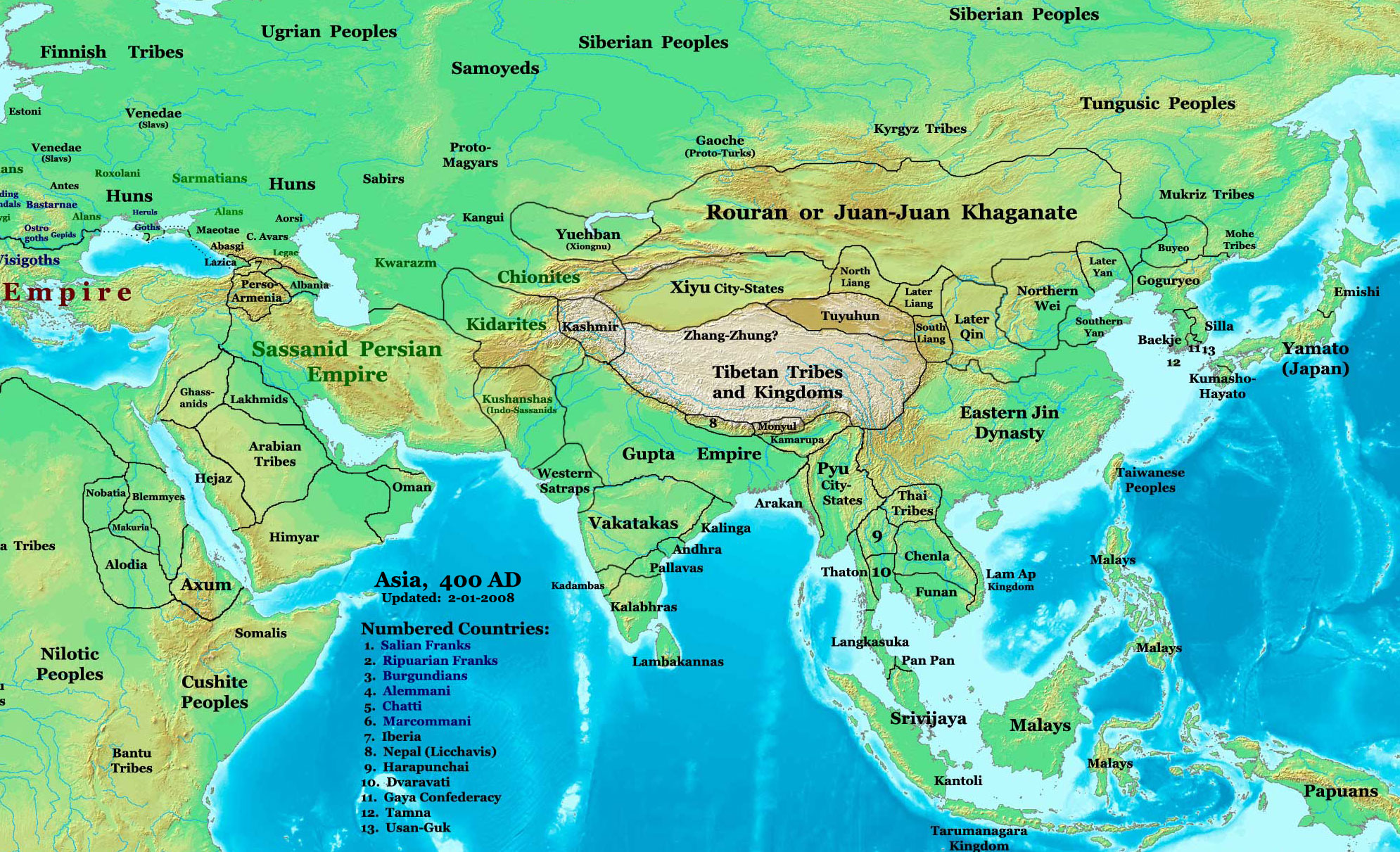
Xionites, Chionites, or Chionitae (Middle Persian: Xiyōn or Hiyōn; Avestan: X́iiaona-; Sogdian xwn; Pahlavi Xyōn) were a nomadic people in the Central Asian regions of Transoxiana and Bactria.
The Xionites appear to be synonymous with the Huna peoples of the South Asian regions of classical/medieval India, and possibly also the Huns of European late antiquity, who were in turn connected onomastically to the Xiongnu in Chinese history.
They were first described by the Roman historian, Ammianus Marcellinus, who was in Bactria during 356–357 CE; he described the Chionitæ as living with the Kushans. Ammianus indicates that the Xionites had previously lived in Transoxiana and, after entering Bactria, became vassals of the Kushans, were influenced culturally by them and had adopted the Bactrian language. They had attacked the Sassanid Empire, but later (led by a chief named Grumbates), served as mercenaries in the Persian Sassanian army.
Within the Xionites, there seem to have been two main subgroups, which were known in the Iranian languages by names such as Karmir Xyon and Spet Xyon. The prefixes karmir ("red") and speta ("white") likely refer to Central Asian traditions in which particular colours symbolised the cardinal points. The Karmir Xyon were known in European sources as the Kermichiones or "Red Huns", and some scholars have identified them with the Kidarites and/or Alchon. The Spet Xyon or "White Huns" appear to have been the known in South Asia by the cognate name Sveta-huna, and are often identified, controversially, with the Hephthalites.
The original culture of the Xionites and their geographical urheimat are uncertain. They appear to have originally followed animist religious beliefs,[citation needed] which mixed later with varieties of Buddhism [citation needed] and Shaivism.[citation needed] It is difficult to determine their ethnic composition.
Differences between the Xionites, the Huns who invaded Europe in the 4th century, and the Turks were emphasised by Carlile Aylmer Macartney (1944), who suggested that the name "Chyon", originally that of an unrelated people, was "transferred later to the Huns owing to the similarity of sound". The Chyon who appeared in the 4th century, in the steppes on the northeastern frontier of Persia were probably a branch of the Huns that appeared shortly afterwards in Europe. The Huns appear to have attacked and conquered the Alans, then living between the Urals and the Volga about 360 AD, and the first mention of the Chyon was in 356 AD.
At least some Turkic tribes were involved in the formation of the Xionites, despite their later character as an Eastern Iranian people, according to Richard Nelson Frye (1991): "Just as later nomadic empires were confederations of many peoples, we may tentatively propose that the ruling groups of these invaders were, or at least included, Turkic-speaking tribesmen from the east and north, although most probably the bulk of the people in the confederation of Chionites... spoke an Iranian language.... This was the last time in the history of Central Asia that Iranian-speaking nomads played any role; hereafter all nomads would speak Turkic languages".
The proposition that the Xionites probably originated as an Iranian tribe was put forward by Wolfgang Felix in Encyclopedia Iranica (1992).
Hub AI
Xionites AI simulator
(@Xionites_simulator)
Xionites
Xionites, Chionites, or Chionitae (Middle Persian: Xiyōn or Hiyōn; Avestan: X́iiaona-; Sogdian xwn; Pahlavi Xyōn) were a nomadic people in the Central Asian regions of Transoxiana and Bactria.
The Xionites appear to be synonymous with the Huna peoples of the South Asian regions of classical/medieval India, and possibly also the Huns of European late antiquity, who were in turn connected onomastically to the Xiongnu in Chinese history.
They were first described by the Roman historian, Ammianus Marcellinus, who was in Bactria during 356–357 CE; he described the Chionitæ as living with the Kushans. Ammianus indicates that the Xionites had previously lived in Transoxiana and, after entering Bactria, became vassals of the Kushans, were influenced culturally by them and had adopted the Bactrian language. They had attacked the Sassanid Empire, but later (led by a chief named Grumbates), served as mercenaries in the Persian Sassanian army.
Within the Xionites, there seem to have been two main subgroups, which were known in the Iranian languages by names such as Karmir Xyon and Spet Xyon. The prefixes karmir ("red") and speta ("white") likely refer to Central Asian traditions in which particular colours symbolised the cardinal points. The Karmir Xyon were known in European sources as the Kermichiones or "Red Huns", and some scholars have identified them with the Kidarites and/or Alchon. The Spet Xyon or "White Huns" appear to have been the known in South Asia by the cognate name Sveta-huna, and are often identified, controversially, with the Hephthalites.
The original culture of the Xionites and their geographical urheimat are uncertain. They appear to have originally followed animist religious beliefs,[citation needed] which mixed later with varieties of Buddhism [citation needed] and Shaivism.[citation needed] It is difficult to determine their ethnic composition.
Differences between the Xionites, the Huns who invaded Europe in the 4th century, and the Turks were emphasised by Carlile Aylmer Macartney (1944), who suggested that the name "Chyon", originally that of an unrelated people, was "transferred later to the Huns owing to the similarity of sound". The Chyon who appeared in the 4th century, in the steppes on the northeastern frontier of Persia were probably a branch of the Huns that appeared shortly afterwards in Europe. The Huns appear to have attacked and conquered the Alans, then living between the Urals and the Volga about 360 AD, and the first mention of the Chyon was in 356 AD.
At least some Turkic tribes were involved in the formation of the Xionites, despite their later character as an Eastern Iranian people, according to Richard Nelson Frye (1991): "Just as later nomadic empires were confederations of many peoples, we may tentatively propose that the ruling groups of these invaders were, or at least included, Turkic-speaking tribesmen from the east and north, although most probably the bulk of the people in the confederation of Chionites... spoke an Iranian language.... This was the last time in the history of Central Asia that Iranian-speaking nomads played any role; hereafter all nomads would speak Turkic languages".
The proposition that the Xionites probably originated as an Iranian tribe was put forward by Wolfgang Felix in Encyclopedia Iranica (1992).