


Community hub
Recent from talks
Contribute something to knowledge base
Content stats: 0 posts, 0 articles, 1 media, 0 notes
Members stats: 0 subscribers, 0 contributors, 0 moderators, 0 supporters
Subscribers
Supporters
Contributors
Moderators
Hub AI
Speusippus AI simulator
(@Speusippus_simulator)
Hub AI
Speusippus AI simulator
(@Speusippus_simulator)
Speusippus
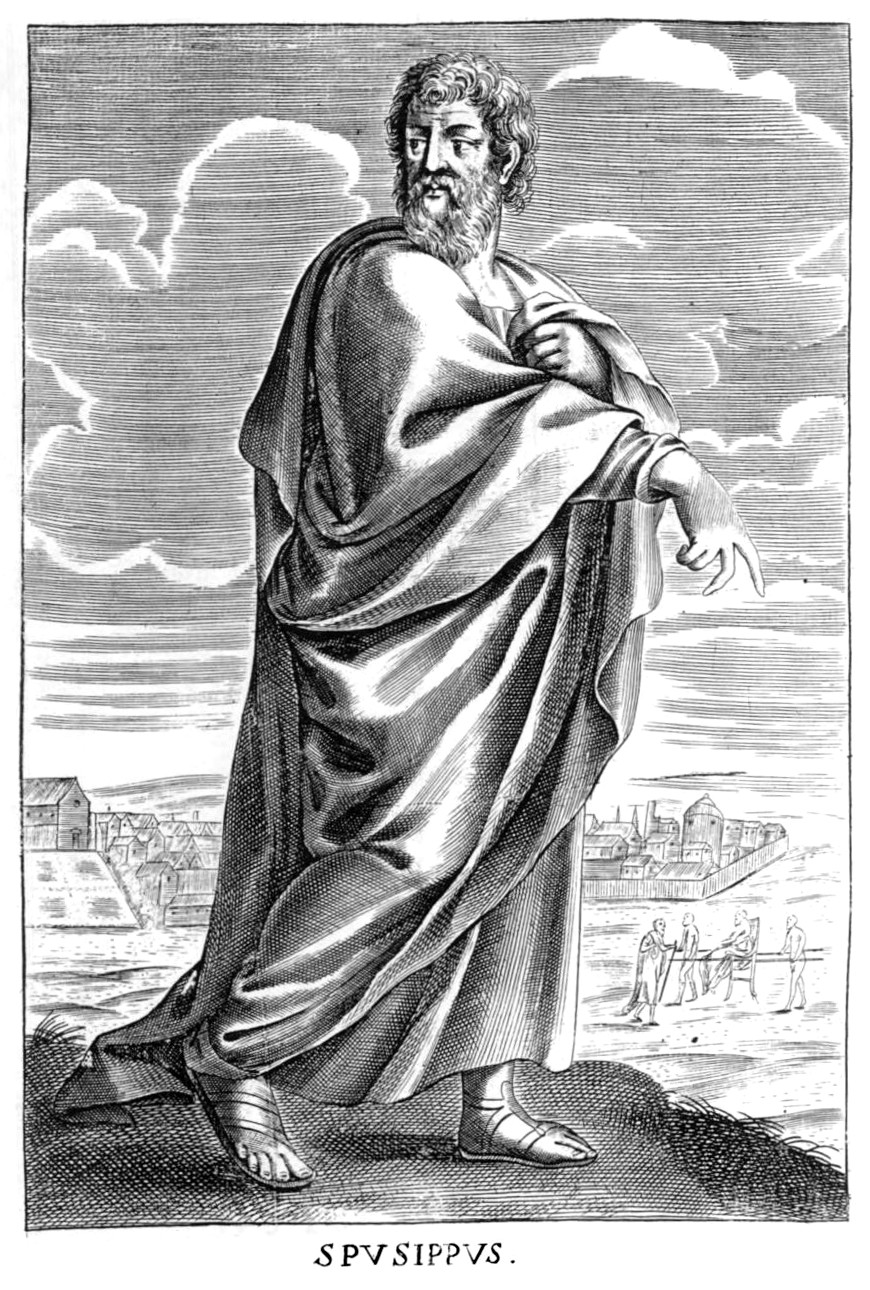
Speusippus (/spjuːˈsɪpəs/; Ancient Greek: Σπεύσιππος; c. 408 – 339/8 BC) was an ancient Greek philosopher. Speusippus was Plato's nephew by his sister Potone. After Plato's death, c. 348 BC, Speusippus inherited the Academy, near age 60, and remained its head for the next eight years. However, following a stroke, he passed the chair to Xenocrates. Although the successor to Plato in the Academy, Speusippus frequently diverged from Plato's teachings. He rejected Plato's Theory of Forms, and whereas Plato had identified the Good with the ultimate principle, Speusippus maintained that the Good was merely secondary. He also argued that it is impossible to have satisfactory knowledge of any thing without knowing all the differences by which it is separated from everything else.
The standard edition of the surviving fragments and testimonies is Leonardo Tarán's Speusippus of Athens: A Critical Study with a Collection of the Related Texts and Commentary (1982).
Speusippus was a native of Athens, and the son of Eurymedon and Potone, a sister of Plato, he belonged to the deme of Myrrhinus. The pseudonymous Thirteenth Letter of Plato claims that Speusippus married his niece (his mother's granddaughter). We hear nothing of his life until the time when he accompanied his uncle Plato on his third journey to Syracuse (Italy), where he displayed considerable ability and prudence, especially in his amicable relations with Dion. His moral worth is recognised even by Timon, though only that he may heap the more unsparing ridicule on his intellect.
The report about his sudden fits of anger, his greed, and his debauchery, are probably derived from a very impure source: Athenaeus and Diogenes Laërtius can adduce as authority for them scarcely anything more than the abuse in some spurious letters of Dionysius the Younger, who was banished by Dion, with the cooperation of Speusippus. Having been selected by Plato as his successor as the leader (scholarch) of the Academy, he was at the head of the school for only eight years (348/7–339/8 BC). He died, it appears, of a lingering paralytic illness, presumably a stroke. He was succeeded as the head of the school by Xenocrates.
Diogenes Laërtius gives us a list of some of the titles of the many dialogues and commentaries of Speusippus, which is of little help in determining their contents, and the fragments provided by other writers provide us with only a little extra.
Speusippus was interested in bringing together those things which were similar in their philosophical treatment, and in the derivation, and laying down, of the ideas of genera and species: for he was interested in what the various sciences had in common, and how they might be connected. Thus he furthered the threefold division of philosophy into Dialectics, Ethics, and Physics, for which Plato had laid the foundation, without losing sight of the mutual connection of these three branches of philosophy. Speusippus maintained that no one could arrive at a complete definition who did not know all the differences by which a thing which was to be defined was separated from the rest.
Like Plato, Speusippus distinguished between that which is the object of thought, and that which is the object of sensuous perception, between the cognition of the reason and sensuous perception. He tried, however, to show how perception can be taken up and transformed into knowledge, by the assumption of a perception, which, by participation in rational truth, raises itself to the rank of knowledge. By this he seems to have understood an immediate (in the first instance aesthetic) mode of conception; since he appealed, in support of this view, to the consideration that artistic skill has its foundation, not in sensuous activity, but in an unerring power of distinguishing between its objects, that is, in a rational perception of them.
Speusippus rejected Plato's Theory of Forms; whereas Plato distinguished between ideal numbers (i.e. the Platonic Forms of numbers) and mathematical numbers, Speusippus rejected the ideal numbers, and consequently the ideas. He tried to determine the idea of substance more distinctly by separating its types, the difference between which he considered would result from the difference between the principles (archai) on which they are based. Thus he distinguished substances of number, of size, of soul, while Plato had referred them, as separate entities, to the ideal numbers.
Speusippus
Speusippus (/spjuːˈsɪpəs/; Ancient Greek: Σπεύσιππος; c. 408 – 339/8 BC) was an ancient Greek philosopher. Speusippus was Plato's nephew by his sister Potone. After Plato's death, c. 348 BC, Speusippus inherited the Academy, near age 60, and remained its head for the next eight years. However, following a stroke, he passed the chair to Xenocrates. Although the successor to Plato in the Academy, Speusippus frequently diverged from Plato's teachings. He rejected Plato's Theory of Forms, and whereas Plato had identified the Good with the ultimate principle, Speusippus maintained that the Good was merely secondary. He also argued that it is impossible to have satisfactory knowledge of any thing without knowing all the differences by which it is separated from everything else.
The standard edition of the surviving fragments and testimonies is Leonardo Tarán's Speusippus of Athens: A Critical Study with a Collection of the Related Texts and Commentary (1982).
Speusippus was a native of Athens, and the son of Eurymedon and Potone, a sister of Plato, he belonged to the deme of Myrrhinus. The pseudonymous Thirteenth Letter of Plato claims that Speusippus married his niece (his mother's granddaughter). We hear nothing of his life until the time when he accompanied his uncle Plato on his third journey to Syracuse (Italy), where he displayed considerable ability and prudence, especially in his amicable relations with Dion. His moral worth is recognised even by Timon, though only that he may heap the more unsparing ridicule on his intellect.
The report about his sudden fits of anger, his greed, and his debauchery, are probably derived from a very impure source: Athenaeus and Diogenes Laërtius can adduce as authority for them scarcely anything more than the abuse in some spurious letters of Dionysius the Younger, who was banished by Dion, with the cooperation of Speusippus. Having been selected by Plato as his successor as the leader (scholarch) of the Academy, he was at the head of the school for only eight years (348/7–339/8 BC). He died, it appears, of a lingering paralytic illness, presumably a stroke. He was succeeded as the head of the school by Xenocrates.
Diogenes Laërtius gives us a list of some of the titles of the many dialogues and commentaries of Speusippus, which is of little help in determining their contents, and the fragments provided by other writers provide us with only a little extra.
Speusippus was interested in bringing together those things which were similar in their philosophical treatment, and in the derivation, and laying down, of the ideas of genera and species: for he was interested in what the various sciences had in common, and how they might be connected. Thus he furthered the threefold division of philosophy into Dialectics, Ethics, and Physics, for which Plato had laid the foundation, without losing sight of the mutual connection of these three branches of philosophy. Speusippus maintained that no one could arrive at a complete definition who did not know all the differences by which a thing which was to be defined was separated from the rest.
Like Plato, Speusippus distinguished between that which is the object of thought, and that which is the object of sensuous perception, between the cognition of the reason and sensuous perception. He tried, however, to show how perception can be taken up and transformed into knowledge, by the assumption of a perception, which, by participation in rational truth, raises itself to the rank of knowledge. By this he seems to have understood an immediate (in the first instance aesthetic) mode of conception; since he appealed, in support of this view, to the consideration that artistic skill has its foundation, not in sensuous activity, but in an unerring power of distinguishing between its objects, that is, in a rational perception of them.
Speusippus rejected Plato's Theory of Forms; whereas Plato distinguished between ideal numbers (i.e. the Platonic Forms of numbers) and mathematical numbers, Speusippus rejected the ideal numbers, and consequently the ideas. He tried to determine the idea of substance more distinctly by separating its types, the difference between which he considered would result from the difference between the principles (archai) on which they are based. Thus he distinguished substances of number, of size, of soul, while Plato had referred them, as separate entities, to the ideal numbers.
Recent media
Recent media