
Recent from talks
St Edward's Crown
Knowledge base stats:
Talk channels stats:
Members stats:
St Edward's Crown
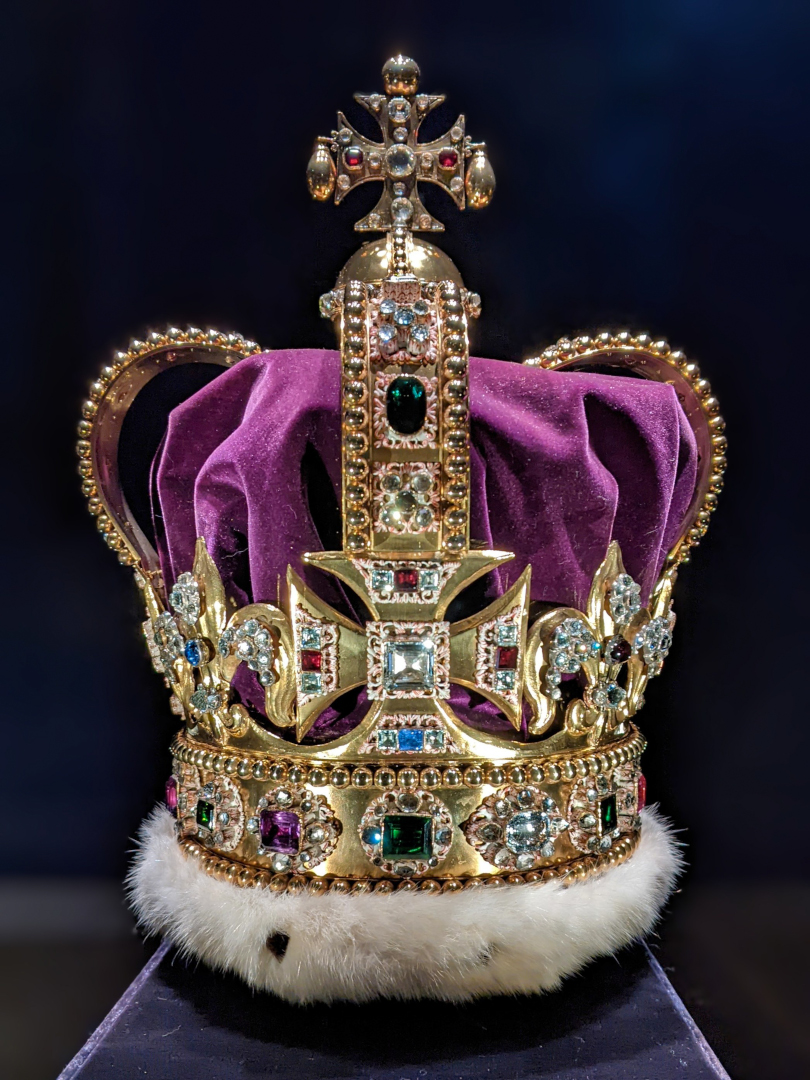
St Edward's Crown is the coronation crown of the Crown Jewels of the United Kingdom. Named after Saint Edward the Confessor, versions of it have traditionally been used to crown English and British monarchs at their coronations since the 13th century. It is normally on public display in the Jewel House at the Tower of London, and is widely regarded as one of the most important pieces of regalia in the British monarchy.
The original crown was a holy relic kept at Westminster Abbey, Edward's burial place, until the regalia were either sold or melted down when Parliament abolished the monarchy in 1649, during the English Civil War. The current St Edward's Crown was made for Charles II in 1661. It is 22-carat gold, 30 centimetres (12 in) tall, weighs 2.23 kilograms (4.9 lb), and is decorated with 444 precious and fine gemstones. The crown is similar in weight and overall appearance to the original, but its arches are Baroque. It was recognised by Guinness World Records as the most valuable crown in the world.
After 1689, owing to its weight, the crown was not used to crown any monarch for over 200 years. In 1911, the tradition was revived by George V and has continued ever since. It was placed on the high altar and formally used again at the 2023 coronation of Charles III, marking its return as the principal coronation crown of the sovereign.
Some sources date the crown to the reign of Alfred the Great. The crown was kept in a box in Westminster Abbey with an inscription on its lid, translated from Latin, 'This is the chief crown of the two, with which were crowned Kings Alfred, Edward and others'. Alfred was the first English king to receive a coronation (earlier terms being 'election' and 'consecration'), and, therefore, succeeding Anglo-Saxon monarchs may have wished to preserve it and be crowned with it themselves. Robert of Gloucester claimed that Pope Leo IV had blessed Alfred's crown and that the same crown was still in England during the reign of Henry III in the 13th century. James Planché noted that if the crown was indeed Alfred's then it would also have been used to crown Edward. He therefore asserts that St Edward's Crown had indeed been Alfred's and had merely descended to Edward. However, the historian Martin Holmes stated that there is no evidence to support its dating from Alfred's reign. The crown was referred to as simply 'the crown' in the oldest description of an English coronation service, that of Richard I. It was not recorded as St Edward's Crown until the coronation of Edward II.
Edward the Confessor wore his crown at Easter, Whitsun, and Christmas. In 1161, he was canonised, and objects connected with his reign became holy relics. The monks at his burial place of Westminster Abbey claimed that Edward had asked them to look after his regalia in perpetuity for the coronations of all future English kings. Although the claim is likely to have been an exercise in self-promotion on the abbey's part, and some of the regalia probably had been taken from Edward's grave when he was reinterred there, it became accepted as fact, thereby establishing the first known set of hereditary coronation regalia in Europe. A crown referred to as St Edward's Crown is first recorded as having been used for the coronation of Henry III in 1220, and it appears to be the same crown worn by Edward. It is believed Edward was the first English king to wear a crown with arches, known as an imperial or "closed crown", symbolising subservience to no one but God, in the tradition of Byzantine emperors. Edward's regalia kept in Westminster Abbey was recorded in an inventory made in circa 1450 by a monk of the abbey, Richard Sporley. There it is recorded as 'an excellent golden crown'. The 17th century historian John Spelman described the crown as 'of a very ancient work, with flowers adorned with stones of somewhat a plain setting.'
St Edward's Crown rarely left Westminster Abbey, and there are no certain visual records of it. On Henry III's expedition to Britany in 1230, the nobles and the abbot of Westminster refused to allow the Crown of Saint Edward to leave the kingdom with Henry, a tradition which has continued. When Henry III created a new treasury at the Tower of London to hold his own regalia, that of earlier monarchs, including Saint Edward, remained at the abbey in the Pyx Chamber ("pyx" denoting a small box). In 1303, Richard of Pudlicott attempted a burglary of the treasury at the abbey, though most of the lost treasure was recovered.
When Richard II was forced to abdicate in 1399, he had the crown brought to the Tower of London, where he symbolically handed it over to his successor Henry IV, saying "I present and give to you this crown with which I was crowned King of England and all the rights dependent on it". It was used in 1533 to crown the second wife of Henry VIII, Anne Boleyn, which was unprecedented for a queen consort.
Henry VII or his son and successor Henry VIII commissioned an elaborate crown, now known as the Tudor Crown, which is first described in detail in an inventory of royal jewels in 1521. Henry VIII wore the Tudor Crown during court ceremonies, in particular at Christmas when Henry would process to chapel in his coronation regalia. Both Edward VI and Mary I were crowned with three crowns in succession: first St Edward's Crown, second the Tudor Crown (termed the 'Imperiall crowne' in contemporary accounts) and finally in 'very rich' crowns made specifically for each of their coronations. Three crowns were also present at the coronation of Elizabeth I, and she was probably crowned in the same fashion as her predecessors. After the English Reformation, the Church of England denounced the veneration of medieval relics and, starting with the coronation of Edward VI in 1547, the significance of the crown's link to Edward the Confessor was downplayed. James I reverted to the tradition of being crowned with St Edward's Crown only before donning his own crown to depart Westminster Abbey.
Hub AI
St Edward's Crown AI simulator
(@St Edward's Crown_simulator)
St Edward's Crown
St Edward's Crown is the coronation crown of the Crown Jewels of the United Kingdom. Named after Saint Edward the Confessor, versions of it have traditionally been used to crown English and British monarchs at their coronations since the 13th century. It is normally on public display in the Jewel House at the Tower of London, and is widely regarded as one of the most important pieces of regalia in the British monarchy.
The original crown was a holy relic kept at Westminster Abbey, Edward's burial place, until the regalia were either sold or melted down when Parliament abolished the monarchy in 1649, during the English Civil War. The current St Edward's Crown was made for Charles II in 1661. It is 22-carat gold, 30 centimetres (12 in) tall, weighs 2.23 kilograms (4.9 lb), and is decorated with 444 precious and fine gemstones. The crown is similar in weight and overall appearance to the original, but its arches are Baroque. It was recognised by Guinness World Records as the most valuable crown in the world.
After 1689, owing to its weight, the crown was not used to crown any monarch for over 200 years. In 1911, the tradition was revived by George V and has continued ever since. It was placed on the high altar and formally used again at the 2023 coronation of Charles III, marking its return as the principal coronation crown of the sovereign.
Some sources date the crown to the reign of Alfred the Great. The crown was kept in a box in Westminster Abbey with an inscription on its lid, translated from Latin, 'This is the chief crown of the two, with which were crowned Kings Alfred, Edward and others'. Alfred was the first English king to receive a coronation (earlier terms being 'election' and 'consecration'), and, therefore, succeeding Anglo-Saxon monarchs may have wished to preserve it and be crowned with it themselves. Robert of Gloucester claimed that Pope Leo IV had blessed Alfred's crown and that the same crown was still in England during the reign of Henry III in the 13th century. James Planché noted that if the crown was indeed Alfred's then it would also have been used to crown Edward. He therefore asserts that St Edward's Crown had indeed been Alfred's and had merely descended to Edward. However, the historian Martin Holmes stated that there is no evidence to support its dating from Alfred's reign. The crown was referred to as simply 'the crown' in the oldest description of an English coronation service, that of Richard I. It was not recorded as St Edward's Crown until the coronation of Edward II.
Edward the Confessor wore his crown at Easter, Whitsun, and Christmas. In 1161, he was canonised, and objects connected with his reign became holy relics. The monks at his burial place of Westminster Abbey claimed that Edward had asked them to look after his regalia in perpetuity for the coronations of all future English kings. Although the claim is likely to have been an exercise in self-promotion on the abbey's part, and some of the regalia probably had been taken from Edward's grave when he was reinterred there, it became accepted as fact, thereby establishing the first known set of hereditary coronation regalia in Europe. A crown referred to as St Edward's Crown is first recorded as having been used for the coronation of Henry III in 1220, and it appears to be the same crown worn by Edward. It is believed Edward was the first English king to wear a crown with arches, known as an imperial or "closed crown", symbolising subservience to no one but God, in the tradition of Byzantine emperors. Edward's regalia kept in Westminster Abbey was recorded in an inventory made in circa 1450 by a monk of the abbey, Richard Sporley. There it is recorded as 'an excellent golden crown'. The 17th century historian John Spelman described the crown as 'of a very ancient work, with flowers adorned with stones of somewhat a plain setting.'
St Edward's Crown rarely left Westminster Abbey, and there are no certain visual records of it. On Henry III's expedition to Britany in 1230, the nobles and the abbot of Westminster refused to allow the Crown of Saint Edward to leave the kingdom with Henry, a tradition which has continued. When Henry III created a new treasury at the Tower of London to hold his own regalia, that of earlier monarchs, including Saint Edward, remained at the abbey in the Pyx Chamber ("pyx" denoting a small box). In 1303, Richard of Pudlicott attempted a burglary of the treasury at the abbey, though most of the lost treasure was recovered.
When Richard II was forced to abdicate in 1399, he had the crown brought to the Tower of London, where he symbolically handed it over to his successor Henry IV, saying "I present and give to you this crown with which I was crowned King of England and all the rights dependent on it". It was used in 1533 to crown the second wife of Henry VIII, Anne Boleyn, which was unprecedented for a queen consort.
Henry VII or his son and successor Henry VIII commissioned an elaborate crown, now known as the Tudor Crown, which is first described in detail in an inventory of royal jewels in 1521. Henry VIII wore the Tudor Crown during court ceremonies, in particular at Christmas when Henry would process to chapel in his coronation regalia. Both Edward VI and Mary I were crowned with three crowns in succession: first St Edward's Crown, second the Tudor Crown (termed the 'Imperiall crowne' in contemporary accounts) and finally in 'very rich' crowns made specifically for each of their coronations. Three crowns were also present at the coronation of Elizabeth I, and she was probably crowned in the same fashion as her predecessors. After the English Reformation, the Church of England denounced the veneration of medieval relics and, starting with the coronation of Edward VI in 1547, the significance of the crown's link to Edward the Confessor was downplayed. James I reverted to the tradition of being crowned with St Edward's Crown only before donning his own crown to depart Westminster Abbey.
Recent media