
Recent from talks
Stairs Expedition to Katanga
Knowledge base stats:
Talk channels stats:
Members stats:
Stairs Expedition to Katanga
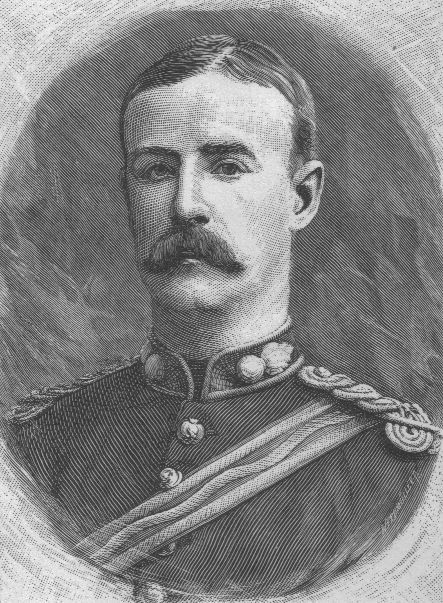
The Stairs Expedition to Katanga (1891−92), led by Captain William Stairs, was the winner in a race between two imperial powers, the British South Africa Company BSAC and the Congo Free State, to claim Katanga, a vast mineral-rich territory in Central Africa, for the latter. The mission became notable when a local chief, (Mwenda Msiri), was killed, and also for the fact that Stairs, the leader of one side, actually held a commission in the army of the other.
This "scramble for Katanga" was a prime example of the Scramble for Africa, and one of the most dramatic incidents of that period.
On one side of the race was the Congo Free State, Belgian King Leopold II's instrument for private colonisation in Central Africa. On the other was the company chartered by the British government to make treaties with African chiefs, the BSAC of Cecil Rhodes, who mixed a determined approach to gaining mineral concessions with a vision for British imperial development spanning the continent.
Caught between them, and attempting to play one off against the other, was Msiri, the big chief of Garanganze or Katanga, a tribal land not yet claimed by a European power, and larger than many European countries in acreage. Msiri, like many African chiefs, had started as a slave trader, and had used superior weapons obtained by trading ivory, copper and slaves, to conquer and subjugate neighbouring tribes, taking many of them as slaves for resale. By the time of the Stairs Expedition, Msiri was the unchallenged despot of the area. Like the newcomers, he had plenty of cunning and strategic sense, but this time he was the one with the inferior military technology (as well as being totally opposed to the British concept of abolitionism).
At the 1884–85 Berlin Conference and related bilateral negotiations between Britain and Belgium, the land west and north of the Luapula River−Lake Mweru system (Katanga) was allocated to the Congo Free State while the land to the east and south was allocated to Britain and the BSAC. However the agreements included a Principle of Effectivity under which each colonial power had to set up an effective presence in the territory—by obtaining treaties from local tribal chiefs, flying their flag, and setting up an administration and police force to keep order—to confirm the claim. If they did not, a rival could come in and do so, thereby 'legally' taking over the territory in the eyes of the civilized powers. In 1890 neither colonial power had treaties or an effective presence in Katanga, and as reports came of gold and copper being found in Katanga, the stage was set for a race between the BSAC and Free State.
Treaties obtained from local chiefs in Africa were not aimed at having them accept their subjugation − superior force did that (just as it had for the chiefs themselves, earlier) − but were solely to impress on rival colonial powers that they had the means to convince their own populations of the justice of any military action they might have to take to defend their claim to civilize the area, and that was all that mattered. The idea of democracy was spreading in Europe all throughout the nineteenth century, and, increasingly, governments were required to take account of public opinion. Public opinion in Europe could be a powerful motivator of colonial actions, as the Fashoda Incident a few years later demonstrated.
First off the mark was Rhodes who sent Alfred Sharpe from Nyasaland in 1890, backed up by Joseph Thomson coming from the south, but Sharpe failed to persuade Msiri, and Thomson didn't make it to Msiri's capital at Bunkeya. Sharpe's reports were complacently dismissive about the likelihood of their rivals having any success, and he said that once the 60-year-old Msiri was gone, Katanga would be theirs. In this case it would probably have become part of Northern Rhodesia, now Zambia, with which it shares strong cultural and ethnic links.
Leopold responded in 1891 by sending two expeditions, and Sharpe's view seemed to be borne out. The Paul Le Marinel expedition only managed to obtain a vaguely worded letter (the Le Marinel letter) from Msiri agreeing to Free State agents having a presence in Katanga, but nothing more. This expedition was hampered by an accident when the gunpowder it was bringing for Msiri blew up, killing several men and damaging some of the other gifts being brought to sweeten the deal. A Belgian officer from the expedition, Legat, stayed behind with a group of askaris at a boma on the Lufoi River about 40 km from Bunkeya to keep an eye on Msiri. (Msiri later accused Legat of actually having kept the supplies lost in the explosion for himself).
Hub AI
Stairs Expedition to Katanga AI simulator
(@Stairs Expedition to Katanga_simulator)
Stairs Expedition to Katanga
The Stairs Expedition to Katanga (1891−92), led by Captain William Stairs, was the winner in a race between two imperial powers, the British South Africa Company BSAC and the Congo Free State, to claim Katanga, a vast mineral-rich territory in Central Africa, for the latter. The mission became notable when a local chief, (Mwenda Msiri), was killed, and also for the fact that Stairs, the leader of one side, actually held a commission in the army of the other.
This "scramble for Katanga" was a prime example of the Scramble for Africa, and one of the most dramatic incidents of that period.
On one side of the race was the Congo Free State, Belgian King Leopold II's instrument for private colonisation in Central Africa. On the other was the company chartered by the British government to make treaties with African chiefs, the BSAC of Cecil Rhodes, who mixed a determined approach to gaining mineral concessions with a vision for British imperial development spanning the continent.
Caught between them, and attempting to play one off against the other, was Msiri, the big chief of Garanganze or Katanga, a tribal land not yet claimed by a European power, and larger than many European countries in acreage. Msiri, like many African chiefs, had started as a slave trader, and had used superior weapons obtained by trading ivory, copper and slaves, to conquer and subjugate neighbouring tribes, taking many of them as slaves for resale. By the time of the Stairs Expedition, Msiri was the unchallenged despot of the area. Like the newcomers, he had plenty of cunning and strategic sense, but this time he was the one with the inferior military technology (as well as being totally opposed to the British concept of abolitionism).
At the 1884–85 Berlin Conference and related bilateral negotiations between Britain and Belgium, the land west and north of the Luapula River−Lake Mweru system (Katanga) was allocated to the Congo Free State while the land to the east and south was allocated to Britain and the BSAC. However the agreements included a Principle of Effectivity under which each colonial power had to set up an effective presence in the territory—by obtaining treaties from local tribal chiefs, flying their flag, and setting up an administration and police force to keep order—to confirm the claim. If they did not, a rival could come in and do so, thereby 'legally' taking over the territory in the eyes of the civilized powers. In 1890 neither colonial power had treaties or an effective presence in Katanga, and as reports came of gold and copper being found in Katanga, the stage was set for a race between the BSAC and Free State.
Treaties obtained from local chiefs in Africa were not aimed at having them accept their subjugation − superior force did that (just as it had for the chiefs themselves, earlier) − but were solely to impress on rival colonial powers that they had the means to convince their own populations of the justice of any military action they might have to take to defend their claim to civilize the area, and that was all that mattered. The idea of democracy was spreading in Europe all throughout the nineteenth century, and, increasingly, governments were required to take account of public opinion. Public opinion in Europe could be a powerful motivator of colonial actions, as the Fashoda Incident a few years later demonstrated.
First off the mark was Rhodes who sent Alfred Sharpe from Nyasaland in 1890, backed up by Joseph Thomson coming from the south, but Sharpe failed to persuade Msiri, and Thomson didn't make it to Msiri's capital at Bunkeya. Sharpe's reports were complacently dismissive about the likelihood of their rivals having any success, and he said that once the 60-year-old Msiri was gone, Katanga would be theirs. In this case it would probably have become part of Northern Rhodesia, now Zambia, with which it shares strong cultural and ethnic links.
Leopold responded in 1891 by sending two expeditions, and Sharpe's view seemed to be borne out. The Paul Le Marinel expedition only managed to obtain a vaguely worded letter (the Le Marinel letter) from Msiri agreeing to Free State agents having a presence in Katanga, but nothing more. This expedition was hampered by an accident when the gunpowder it was bringing for Msiri blew up, killing several men and damaging some of the other gifts being brought to sweeten the deal. A Belgian officer from the expedition, Legat, stayed behind with a group of askaris at a boma on the Lufoi River about 40 km from Bunkeya to keep an eye on Msiri. (Msiri later accused Legat of actually having kept the supplies lost in the explosion for himself).
Recent media