
Recent from talks
Stan Mikita
Knowledge base stats:
Talk channels stats:
Members stats:
Stan Mikita
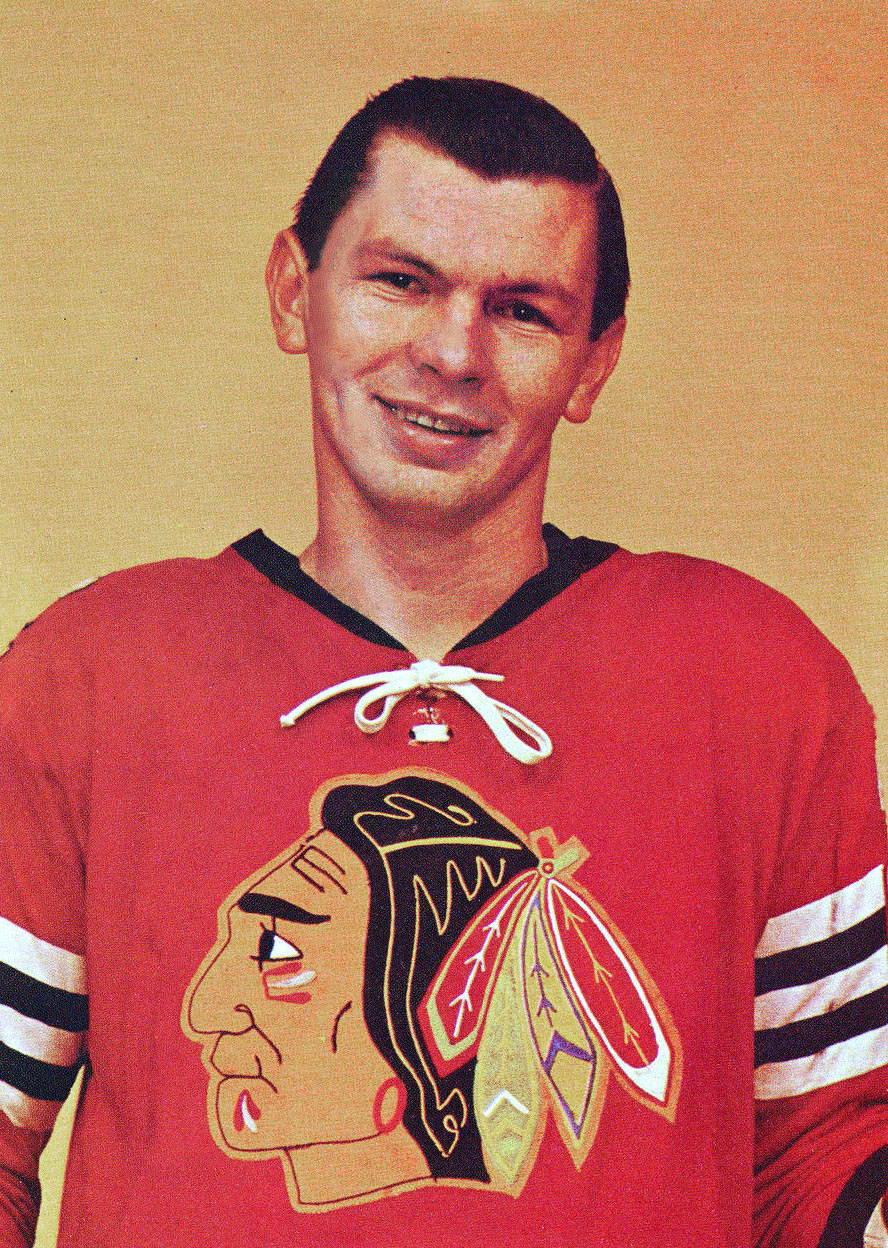
Stanley Mikita (born Stanislav Guoth; May 20, 1940 – August 7, 2018) was a Slovak-born Canadian ice hockey player for the Chicago Black Hawks of the National Hockey League, generally regarded as the best centre of the 1960s. In 2017, he was named one of the 100 Greatest NHL Players. In 1961, he became the first Slovak-born player to win the Stanley Cup.
Mikita was born as Stanislav Guoth in Sokolče, Slovak Republic, during the brief period it was in existence as a client state of Nazi Germany. He was raised in a small farming community until 1948, when he moved to St. Catharines, Ontario. He was adopted by his aunt and uncle, Anna and Joe Mikita, who had emigrated from Slovakia to Canada 20 years earlier and were childless. They came to Czechoslovakia to visit the Guoth family before Christmas in 1948 and took the 8-year-old Stan with them when they went back to Canada. His parents believed that there was a brighter future for him in Canada than in then Communist Czechoslovakia, whose borders (including the area of Slovakia) had been reinstated at the end of World War II. His aunt and uncle also gave him their surname, and he anglicized his first name to Stanley. He attended high school at St. Catharines Collegiate.
After three starring junior seasons with the St. Catharines Teepees of the Ontario Hockey Association, Mikita was promoted to the parent Chicago Black Hawks in 1959–60. In his second full year, in 1961, the Black Hawks won their third Stanley Cup. The young centre led the entire league in goals during the playoffs, scoring a total of six.
The following season was his breakout year. Mikita became a star as centre of the famed "Scooter Line", with right wing Ken Wharram and left wingers Ab McDonald and Doug Mohns. Combining skilled defense and a reputation as one of the game's best faceoff men using his innovative curved stick, Mikita led the league in scoring four times in the decade, tying Bobby Hull's year-old single-season scoring mark in 1966–67 with 97 points (a mark broken two years later by former teammate Phil Esposito and currently held by Wayne Gretzky). The 1967–68 season, an 87-point effort from Mikita, was the last year a Chicago player won the scoring title until Patrick Kane's 106-point 2015–16 season.
In his early years, Mikita was among the most penalized players in the league, but he then decided to play a cleaner game and went on to win the Lady Byng Memorial Trophy for particularly sportsmanlike conduct combined with excellence twice. Mikita's drastic change in behavior came after he returned home from a road trip. His wife told him that while their daughter, Meg, was watching the Black Hawks' last road game on television, she turned and said, "Mommy, why does Daddy spend so much time sitting down?" The camera had just shown Mikita in the penalty box again.
During his playing career, in 1973, Mikita teamed up with Chicago businessman Irv Tiahnybik to form the American Hearing Impaired Hockey Association (AHIHA), to bring together deaf and hard-of-hearing hockey players from all over the country, and he founded the Stan Mikita School for the Hearing Impaired, inspired by a friend's deaf son who was an aspiring goalie. He also helped bring the Special Olympics to Chicago, bringing his family out to volunteer at races.
Internationally, Mikita played two games of the Summit Series in 1972 for Canada against Soviet Union, both of them in Canada, as well as two exhibition games also during the Summit Series, one against Sweden in Stockholm and one against Czechoslovakia in Prague. He also played several exhibition games for Czechoslovakia in summer 1967 when he came to his country of origin to visit his family.
Mikita and teammate Bobby Hull were a well-known forward duo in the 1960s, gaining notoriety for using sticks with curved blades. Such sticks gave a comparative advantage to shooters versus goaltenders. As a result, the NHL limited blade curvature to ½" in 1970. Mikita reportedly began the practice after his standard stick got caught in a bench door, bending the blade before he hit the ice; he soon was borrowing a propane torch from team trainers to create a deliberate curve.
Hub AI
Stan Mikita AI simulator
(@Stan Mikita_simulator)
Stan Mikita
Stanley Mikita (born Stanislav Guoth; May 20, 1940 – August 7, 2018) was a Slovak-born Canadian ice hockey player for the Chicago Black Hawks of the National Hockey League, generally regarded as the best centre of the 1960s. In 2017, he was named one of the 100 Greatest NHL Players. In 1961, he became the first Slovak-born player to win the Stanley Cup.
Mikita was born as Stanislav Guoth in Sokolče, Slovak Republic, during the brief period it was in existence as a client state of Nazi Germany. He was raised in a small farming community until 1948, when he moved to St. Catharines, Ontario. He was adopted by his aunt and uncle, Anna and Joe Mikita, who had emigrated from Slovakia to Canada 20 years earlier and were childless. They came to Czechoslovakia to visit the Guoth family before Christmas in 1948 and took the 8-year-old Stan with them when they went back to Canada. His parents believed that there was a brighter future for him in Canada than in then Communist Czechoslovakia, whose borders (including the area of Slovakia) had been reinstated at the end of World War II. His aunt and uncle also gave him their surname, and he anglicized his first name to Stanley. He attended high school at St. Catharines Collegiate.
After three starring junior seasons with the St. Catharines Teepees of the Ontario Hockey Association, Mikita was promoted to the parent Chicago Black Hawks in 1959–60. In his second full year, in 1961, the Black Hawks won their third Stanley Cup. The young centre led the entire league in goals during the playoffs, scoring a total of six.
The following season was his breakout year. Mikita became a star as centre of the famed "Scooter Line", with right wing Ken Wharram and left wingers Ab McDonald and Doug Mohns. Combining skilled defense and a reputation as one of the game's best faceoff men using his innovative curved stick, Mikita led the league in scoring four times in the decade, tying Bobby Hull's year-old single-season scoring mark in 1966–67 with 97 points (a mark broken two years later by former teammate Phil Esposito and currently held by Wayne Gretzky). The 1967–68 season, an 87-point effort from Mikita, was the last year a Chicago player won the scoring title until Patrick Kane's 106-point 2015–16 season.
In his early years, Mikita was among the most penalized players in the league, but he then decided to play a cleaner game and went on to win the Lady Byng Memorial Trophy for particularly sportsmanlike conduct combined with excellence twice. Mikita's drastic change in behavior came after he returned home from a road trip. His wife told him that while their daughter, Meg, was watching the Black Hawks' last road game on television, she turned and said, "Mommy, why does Daddy spend so much time sitting down?" The camera had just shown Mikita in the penalty box again.
During his playing career, in 1973, Mikita teamed up with Chicago businessman Irv Tiahnybik to form the American Hearing Impaired Hockey Association (AHIHA), to bring together deaf and hard-of-hearing hockey players from all over the country, and he founded the Stan Mikita School for the Hearing Impaired, inspired by a friend's deaf son who was an aspiring goalie. He also helped bring the Special Olympics to Chicago, bringing his family out to volunteer at races.
Internationally, Mikita played two games of the Summit Series in 1972 for Canada against Soviet Union, both of them in Canada, as well as two exhibition games also during the Summit Series, one against Sweden in Stockholm and one against Czechoslovakia in Prague. He also played several exhibition games for Czechoslovakia in summer 1967 when he came to his country of origin to visit his family.
Mikita and teammate Bobby Hull were a well-known forward duo in the 1960s, gaining notoriety for using sticks with curved blades. Such sticks gave a comparative advantage to shooters versus goaltenders. As a result, the NHL limited blade curvature to ½" in 1970. Mikita reportedly began the practice after his standard stick got caught in a bench door, bending the blade before he hit the ice; he soon was borrowing a propane torch from team trainers to create a deliberate curve.
Recent media