
Recent from talks
Stanford White
Knowledge base stats:
Talk channels stats:
Members stats:
Stanford White
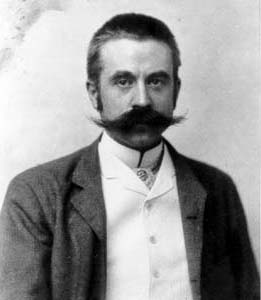
Stanford White (November 9, 1853 – June 25, 1906) was an American architect and a partner in the architectural firm McKim, Mead & White, one of the most significant Beaux-Arts firms at the turn of the 20th century. White designed many houses for the wealthy, in addition to numerous civic, institutional and religious buildings. His temporary Washington Square Arch was so popular that he was commissioned to design a permanent one. White's design principles embodied the "American Renaissance".
In 1906, White was murdered during a musical performance at the rooftop theatre of Madison Square Garden. His killer, Harry Kendall Thaw, was a wealthy but mentally unstable heir of a coal and railroad fortune who had become obsessed by White's alleged drugging and rape of, and subsequent relationship with, the woman who was to become Thaw's wife, Evelyn Nesbit, which had started when she was aged 16 and White was 47. At the time of White's killing, Nesbit was a famous fashion model. With the public nature of the killing and elements of a sex scandal among the wealthy, the resulting trial of Thaw was dubbed the "Trial of the Century" by contemporary reporters. Thaw was ultimately found not guilty by reason of insanity.
Stanford White was born in New York City in 1853, the son of Richard Grant White, a Shakespearean scholar, and Alexina Black (née Mease) (1830–1921). White's father was a dandy and Anglophile with little money but many connections to New York's art world, including the painter John LaFarge, the stained-glass artist Louis Comfort Tiffany and the landscape architect Frederick Law Olmsted.
White had no formal architectural training; like many other architects at the time, he learned on the job as an apprentice. Beginning at age 18, he worked for six years as the principal assistant to Henry Hobson Richardson, known for his personal style (often called "Richardsonian Romanesque") and considered by many to have been the greatest American architect of his day.
In 1878, White embarked on a year and a half tour of Europe to learn about historical styles and trends. When he returned to New York in September 1879, he joined two young architects, Charles Follen McKim and William Rutherford Mead, to form the firm of McKim, Mead and White. As part of the partnership, the three agreed to credit all of the firm's designs as the work of the collective firm, not to be attributed to any individual architect.
In 1884, White married 22-year-old Bessie Springs Smith, daughter of J. Lawrence Smith. She was from a socially prominent Long Island family. Her ancestors had settled in what became Suffolk County in the colonial era, and the town of Smithtown was named for them. The White couple's estate, Box Hill, was both a home and a showplace for the luxe design aesthetic which White offered to prospective wealthy clients. Their son, Lawrence Grant White, was born in 1887.
In 1889, White designed the triumphal arch at Washington Square, which, according to White's great-grandson, architect Samuel G. White, is the structure for which White should be best remembered. White was director of the Washington Centennial celebration. His temporary triumphal arch was so popular, that money was raised to construct a permanent version.
Elsewhere in New York City, White designed the Villard Houses (1884), the second Madison Square Garden (1890, demolished in 1925), the Cable Building at 611 Broadway (1893), the baldechin (1888 to mid-1890s) and altars of Blessed Virgin and St. Joseph (both completed in 1905) at St. Paul the Apostle Church, the New York Herald Building (1894; demolished 1921), and the IRT Powerhouse on 11th Avenue and 58th Street.
Hub AI
Stanford White AI simulator
(@Stanford White_simulator)
Stanford White
Stanford White (November 9, 1853 – June 25, 1906) was an American architect and a partner in the architectural firm McKim, Mead & White, one of the most significant Beaux-Arts firms at the turn of the 20th century. White designed many houses for the wealthy, in addition to numerous civic, institutional and religious buildings. His temporary Washington Square Arch was so popular that he was commissioned to design a permanent one. White's design principles embodied the "American Renaissance".
In 1906, White was murdered during a musical performance at the rooftop theatre of Madison Square Garden. His killer, Harry Kendall Thaw, was a wealthy but mentally unstable heir of a coal and railroad fortune who had become obsessed by White's alleged drugging and rape of, and subsequent relationship with, the woman who was to become Thaw's wife, Evelyn Nesbit, which had started when she was aged 16 and White was 47. At the time of White's killing, Nesbit was a famous fashion model. With the public nature of the killing and elements of a sex scandal among the wealthy, the resulting trial of Thaw was dubbed the "Trial of the Century" by contemporary reporters. Thaw was ultimately found not guilty by reason of insanity.
Stanford White was born in New York City in 1853, the son of Richard Grant White, a Shakespearean scholar, and Alexina Black (née Mease) (1830–1921). White's father was a dandy and Anglophile with little money but many connections to New York's art world, including the painter John LaFarge, the stained-glass artist Louis Comfort Tiffany and the landscape architect Frederick Law Olmsted.
White had no formal architectural training; like many other architects at the time, he learned on the job as an apprentice. Beginning at age 18, he worked for six years as the principal assistant to Henry Hobson Richardson, known for his personal style (often called "Richardsonian Romanesque") and considered by many to have been the greatest American architect of his day.
In 1878, White embarked on a year and a half tour of Europe to learn about historical styles and trends. When he returned to New York in September 1879, he joined two young architects, Charles Follen McKim and William Rutherford Mead, to form the firm of McKim, Mead and White. As part of the partnership, the three agreed to credit all of the firm's designs as the work of the collective firm, not to be attributed to any individual architect.
In 1884, White married 22-year-old Bessie Springs Smith, daughter of J. Lawrence Smith. She was from a socially prominent Long Island family. Her ancestors had settled in what became Suffolk County in the colonial era, and the town of Smithtown was named for them. The White couple's estate, Box Hill, was both a home and a showplace for the luxe design aesthetic which White offered to prospective wealthy clients. Their son, Lawrence Grant White, was born in 1887.
In 1889, White designed the triumphal arch at Washington Square, which, according to White's great-grandson, architect Samuel G. White, is the structure for which White should be best remembered. White was director of the Washington Centennial celebration. His temporary triumphal arch was so popular, that money was raised to construct a permanent version.
Elsewhere in New York City, White designed the Villard Houses (1884), the second Madison Square Garden (1890, demolished in 1925), the Cable Building at 611 Broadway (1893), the baldechin (1888 to mid-1890s) and altars of Blessed Virgin and St. Joseph (both completed in 1905) at St. Paul the Apostle Church, the New York Herald Building (1894; demolished 1921), and the IRT Powerhouse on 11th Avenue and 58th Street.
Recent media