
Recent from talks
State Security Police
Knowledge base stats:
Talk channels stats:
Members stats:
State Security Police
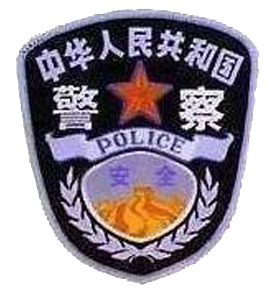
The People's Police of State Security Organs, informally known as the State Security Police (SSP) is the secret police component of China's Ministry of State Security (MSS). The organization is concerned with internal security, counterintelligence, and mitigating subversion of the unified state power of the Chinese Communist Party. It maintains expansive authorities to conduct warrantless searches and detention. It is one of the primary organizations responsible for suppression of political dissent and the administration of China's internet censorship system. Though branded with the People's Police name, the State Security Police are operated entirely separately by intelligence officers of the MSS.
The agency is best known for its invitations to tea, a summons and interrogation issued for minor instances of dissent aimed at intimidating and deterring Chinese citizens from further unapproved behavior. Further enforcement actions can escalate to secret trials, and lengthy sentences in the agency's own secret prisons which a United Nations Working Group has described as "tantamount to enforced disappearance."
The SSP should not be confused with the Political Security Bureau of the Ministry of Public Security, despite sometimes similar duties and overlapping missions.
Established in 1983, the SSP has a presence in every province, autonomous region, and direct-administered municipality in China, as well as an increased presence in coastal areas and some municipalities with heavy contact with foreign countries.
As a component of the Ministry of State Security, the State Security Police have broad authorities with little oversight. Chapter 1 of the Criminal Law of the People's Republic of China lists twelve core crimes which the agency is authorized to enforce:
Of the twelve, inciting subversion of state power is the justification most frequently used to clamp down on dissidents. The SSP is also tasked with the security of the Belt and Road Initiative, carrying out internet censorship, and in 2024 was given the authority to conduct warrantless searches of electronic devices.
Those arrested by the State Security Police can be subject to secret trials and may find themselves jailed in a State Security Bureau Detention Center, special purpose prisons operated by several major municipal branches of the MSS, as well as Residential Surveillance at a Designated Location (RSDL) enforced disappearance facilities, psychiatric hospitals, and other black jails.
In recent years, State Security charges have brought consistently higher average sentences in Chinese courts. According to the U.S. government's human rights watchdog Congressional Executive Commission on China, "authorities sentenced 1,422 prisoners of conscience between 2019 and 2024, with a six-year average prison term, which increased to a seven-year average if the case involved state security charges."
Hub AI
State Security Police AI simulator
(@State Security Police_simulator)
State Security Police
The People's Police of State Security Organs, informally known as the State Security Police (SSP) is the secret police component of China's Ministry of State Security (MSS). The organization is concerned with internal security, counterintelligence, and mitigating subversion of the unified state power of the Chinese Communist Party. It maintains expansive authorities to conduct warrantless searches and detention. It is one of the primary organizations responsible for suppression of political dissent and the administration of China's internet censorship system. Though branded with the People's Police name, the State Security Police are operated entirely separately by intelligence officers of the MSS.
The agency is best known for its invitations to tea, a summons and interrogation issued for minor instances of dissent aimed at intimidating and deterring Chinese citizens from further unapproved behavior. Further enforcement actions can escalate to secret trials, and lengthy sentences in the agency's own secret prisons which a United Nations Working Group has described as "tantamount to enforced disappearance."
The SSP should not be confused with the Political Security Bureau of the Ministry of Public Security, despite sometimes similar duties and overlapping missions.
Established in 1983, the SSP has a presence in every province, autonomous region, and direct-administered municipality in China, as well as an increased presence in coastal areas and some municipalities with heavy contact with foreign countries.
As a component of the Ministry of State Security, the State Security Police have broad authorities with little oversight. Chapter 1 of the Criminal Law of the People's Republic of China lists twelve core crimes which the agency is authorized to enforce:
Of the twelve, inciting subversion of state power is the justification most frequently used to clamp down on dissidents. The SSP is also tasked with the security of the Belt and Road Initiative, carrying out internet censorship, and in 2024 was given the authority to conduct warrantless searches of electronic devices.
Those arrested by the State Security Police can be subject to secret trials and may find themselves jailed in a State Security Bureau Detention Center, special purpose prisons operated by several major municipal branches of the MSS, as well as Residential Surveillance at a Designated Location (RSDL) enforced disappearance facilities, psychiatric hospitals, and other black jails.
In recent years, State Security charges have brought consistently higher average sentences in Chinese courts. According to the U.S. government's human rights watchdog Congressional Executive Commission on China, "authorities sentenced 1,422 prisoners of conscience between 2019 and 2024, with a six-year average prison term, which increased to a seven-year average if the case involved state security charges."
Recent media